Sacroiliac Joint Injection
Experience targeted relief from lower back and buttock discomfort with sacroiliac joint injections, designed to calm inflammation and interrupt pain signals at their source.
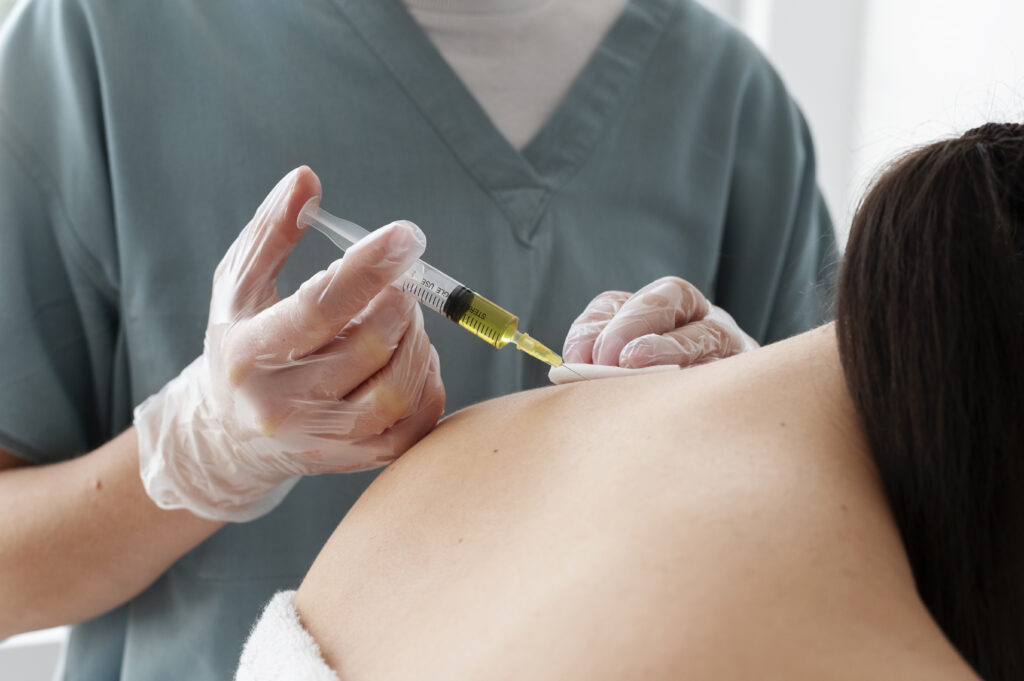

A Precise Solution
for Sacroiliac Joint Pain
For those struggling with chronic discomfort in the lower back or pelvic region, a sacroiliac joint injection may be the effective answer you need. This minimally invasive therapy delivers medication directly to the sacroiliac joints to soothe inflammation and block pain sensations, helping to ease discomfort and restore your mobility.
Understanding Sacroiliac Joint Injections
A sacroiliac joint injection is a specialized procedure designed to both diagnose and relieve discomfort originating from the sacroiliac joint, which connects the base of your spine to your pelvis. This treatment can ease the indicators of sacroiliac joint dysfunction, such as pain in the lower back, an ache in the buttocks or legs that mimics sciatica, and soreness that intensifies when you stand or walk. The injection itself is typically a blend of a corticosteroid to calm inflammation and a local anesthetic for immediate pain reduction.

What to Expect During the Procedure
The procedure is typically performed with you positioned comfortably on your stomach. To begin, the skin over the joint is thoroughly sterilized, and a local anesthetic is applied to numb the treatment area. Using the precision of fluoroscopic (X-ray) guidance, your physician will carefully navigate a fine needle into the sacroiliac joint. A therapeutic solution of corticosteroid and anesthetic is then administered to decrease inflammation and ease discomfort. The entire process is usually completed in under 30 minutes.
This injection serves a dual function, providing both diagnostic insight and therapeutic relief. As a diagnostic tool, if you experience a significant reduction in pain immediately after the injection, it helps confirm the sacroiliac joint as the pain generator. As a treatment, the goal is to reduce inflammation and deliver pain relief that can potentially last for several months.
What Are the Benefits of Sacroiliac Joint Injections?
Choosing a sacroiliac joint injection comes with multiple key advantages for individuals managing SI joint pain:
- Precise Pain Control: The procedure delivers medication directly to the inflamed joint, offering highly effective relief by addressing discomfort right at its source.
- Non-Surgical Approach: As a non-operative therapy, the procedure is performed with a thin needle, meaning there are no incisions and the recovery time is typically very short.
- Enhanced Function and Mobility: By soothing inflammation, the injection helps reduce pain and stiffness in the SI joint, which can restore function and make daily movements significantly more comfortable.
- Diagnostic Clarity: In addition to providing comfort, the procedure acts as a powerful diagnostic tool. If you experience significant relief, it confirms the SI joint is the source of your pain, which is crucial for developing an effective long-term care plan.
Preparing for and Recovering From Your Injection
BEFORE YOUR PROCEDURE
- Please arrange for a responsible adult to drive you home. It is not safe to drive immediately following the injection.
- Provide our team with a complete list of your current medications. Specific instructions may be needed for blood thinners or other drugs.
- If your procedure involves sedation, adhere strictly to the fasting instructions provided by your doctor regarding food and drink.
- Contact our office if you develop a fever, cold, or any other illness before your appointment, as it may need to be rescheduled for your well-being.
AFTER YOUR PROCEDURE
- Plan to rest and avoid any demanding physical activities for the first 24 to 48 hours to ensure the best results from the treatment.
- To soothe any minor soreness at the injection site, you can apply a cold pack for 15-20 minutes at a time.
- Please watch for any signs of a negative reaction. Contact your physician promptly if you develop a fever, severe pain, or significant swelling.
- Attending your follow-up appointment is essential for us to monitor your progress and plan the next phase of your care.
Your Path Forward After Your Injection
The outcome of your injection helps determine the next phase of your care. If the treatment successfully alleviates your pain but the effects lessen over time, repeat injections can be an effective option to manage your symptoms. For more durable, long-term relief, we may recommend complementary treatments like a personalized physical therapy regimen or a procedure such as radiofrequency ablation.
If these non-surgical methods do not offer the relief you need, we may explore the possibility of surgical solutions. At MVM Health, our goal is to support you in finding lasting pain relief. When you are ready to move toward a more active and comfortable lifestyle, reach out to us to schedule a consultation. Our team is here to create a care plan designed around your needs and guide you on your road to recovery.
Sacroiliac Joint Injection
FAQ
What is a sacroiliac joint injection?
A sacroiliac (SI) joint injection is a minimally invasive procedure that delivers a combination of a corticosteroid and a local anesthetic directly into the sacroiliac joint — the joint that connects the base of your spine to your pelvis. It is used both to relieve pain and to help identify whether the SI joint is the source of your discomfort.
What conditions is this injection used to treat?
This injection is commonly recommended for people experiencing chronic lower back pain, buttock pain, or leg pain that resembles sciatica — especially when caused by sacroiliac joint dysfunction, inflammation, or arthritis. It is typically considered after conservative treatments like medication or physical therapy have not provided adequate relief.
How do I know if my pain is coming from the sacroiliac joint?
Common signs of SI joint dysfunction include pain in the lower back, hips, buttocks, or upper legs, and discomfort that worsens when standing, walking, or climbing stairs. A physician can evaluate your symptoms and medical history, and the injection itself also serves as a diagnostic tool to confirm the source of pain.
What happens during the procedure?
You will lie face down on a procedure table. The skin over the joint is cleaned and numbed with a local anesthetic. Using fluoroscopic (X-ray) guidance for precision, the physician inserts a thin needle into the sacroiliac joint and injects a therapeutic solution. The entire procedure typically takes under 30 minutes.
Is the injection painful?
Most patients find the procedure very manageable. A local anesthetic is applied beforehand to minimize discomfort. You may feel a sensation of pressure, but significant pain is uncommon. Some mild soreness at the injection site may occur afterward, which typically resolves within 48 hours.
How long does pain relief last?
Pain relief varies from person to person depending on the underlying condition and degree of inflammation. Many patients experience relief lasting anywhere from a few weeks to several months. The severity of your condition and how your body responds to the medication are the main factors.
How soon will I feel the effects?
You may notice some immediate relief from the local anesthetic component of the injection. The corticosteroid, which reduces inflammation, typically begins to take effect within two to seven days of the procedure.
Can I receive this injection more than once?
Yes. If the initial injection provides significant relief but symptoms return over time, repeat injections may be recommended to help manage pain on an ongoing basis. The frequency of repeat injections will be based on your individual response and symptom progression.
What are the risks or side effects?
This is a generally safe procedure. The most common side effects are mild and temporary, such as bruising or soreness at the injection site. More serious complications – including infection, significant bleeding, or allergic reaction – are uncommon. Your physician will review all potential risks with you prior to the procedure.
How should I prepare before the procedure?
Arrange for someone to drive you home, as it is not safe to drive immediately after the injection. Provide your physician with a full list of your current medications, especially blood thinners. If sedation is involved, follow any fasting instructions provided. Notify the office if you develop an illness before your appointment, as it may need to be rescheduled.
What should I expect during recovery?
Plan to rest and avoid strenuous physical activity for the first 24 to 48 hours. A cold pack applied for 15 to 20 minutes at a time can help ease soreness at the injection site. Watch for warning signs such as fever, severe pain, or significant swelling and contact your physician promptly if these occur. Attending your follow-up appointment is important for monitoring your progress.
What are my options if the injection does not provide lasting relief?
If pain returns after initial relief, repeat injections may be considered. For longer-term results, complementary treatments such as physical therapy or radiofrequency ablation may be recommended. In cases where non-surgical approaches do not provide adequate relief, surgical options can also be explored as part of a comprehensive care plan.
How do I schedule my appointment?
You can schedule your appointment by calling our office directly at (610) 936-8214 or booking through our website at https://mvmhealth.com/schedule-appointment . Our team will help you find a convenient time, answer any questions about insurance or referrals, and guide you through the next steps so your visit is smooth and stress-free.