Skip to content
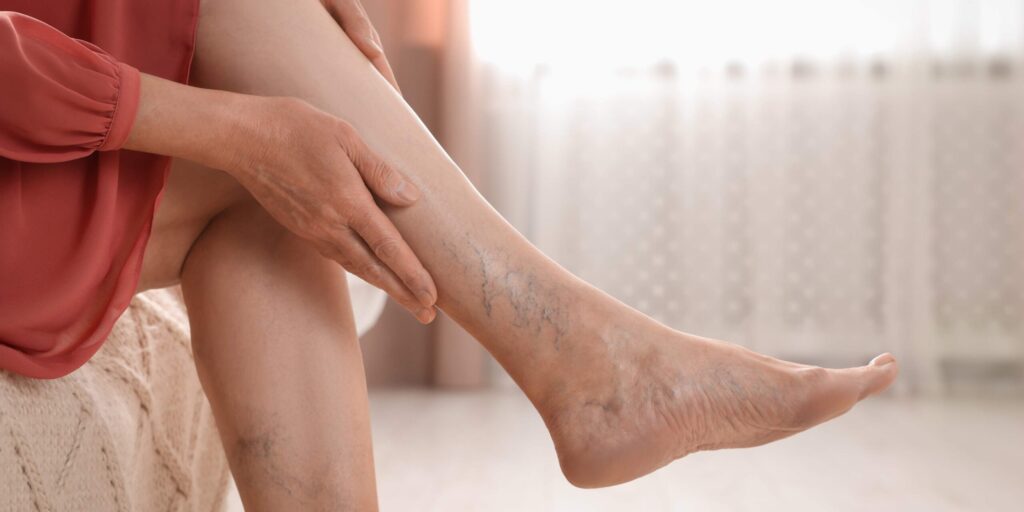
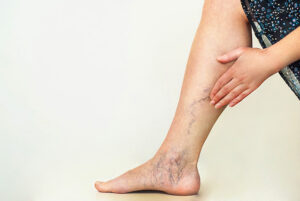
If your legs feel heavy by evening, your ankles swell after a long day, or blue, ropy veins are starting to show up, you’re not alone. Vein problems are common, and the good news is, simple at-home steps can meaningfully reduce discomfort and slow progression. Think of these as “circulation habits” that help your calf muscles and vein valves move blood back to your heart against gravity.
Move the calf pump; little and often
Your calves are your “second heart.” Every time they contract, they squeeze the deep veins and push blood upward. Long periods of stillness (sitting or standing) let blood pool and pressure build. Short, frequent movement breaks are more helpful than a single big workout.
Try this routine:
- Hourly micro-moves: If you’re at a desk or on your feet, every 45–60 minutes do 60–90 seconds of ankle pumps (toe to heel), 20 standing heel raises, and 10 gentle knee bends.
- Daily walk: 20–30 minutes at a comfortable pace. On busy days, split into two 10–15 minute walks.
- Low-impact options: Cycling or swimming are excellent if walking hurts your joints.
- Targeted mobility: Calf raises, seated heel raises, and ankle circles improve calf pump function and ankle flexibility, both linked with better venous return.
Elevate like you mean it
Elevation gives your veins a gravity assist. It’s simple and soothing.
How to do it well:
- Raise your legs so your ankles are above the level of your heart for 5–15 minutes, 3–4 times per day. A couple of pillows on a sofa or bed is fine; for deeper relief, lie on the floor and rest your calves on a chair seat.
- When sitting, use a small footstool to keep your feet from dangling, and avoid crossing your legs for long periods.
Compression you’ll actually wear
Graduated compression stockings are the single most reliable home tool for vein symptoms. They gently squeeze the ankle most, the calf a bit less, guiding blood upward and limiting vein “ballooning.”
Getting started:
- Look for graduated compression (not generic “tight socks”). Knee-highs are enough for most people.
- Typical first-line strength is 15–20 mmHg (over-the-counter). Many people with symptoms feel better with 20–30 mmHg (often prescribed). If you have diabetes, neuropathy, or possible poor arterial flow, talk to a clinician before using higher compression.
- Put them on first thing in the morning (before swelling starts) and wear them through the day. Remove at night.
- Replace every 3–6 months (the elastic “memory” fades), and re-measure your legs after large weight changes. Practical tips from major centers emphasize correct fit and consistent wear for best results.
Smart clothing, shoes, and posture
Little choices add up:
- Avoid tight waistbands or garments that squeeze the groin/upper thigh—these can act like mini tourniquets.
- Choose low-heeled shoes; they let the calf work naturally (very high heels limit the calf pump).
If your job involves standing still, shift your weight, march in place, or rock heel-to-toe every few minutes. If you sit, set a timer to stand and move.
Weight, diet, hydration, and skin
- Weight management: Even a modest loss (≈10%) can reduce leg pressure and symptoms if you live with overweight.
- Hydration & fiber: Drink water regularly and eat enough fiber to avoid constipation (bearing down increases venous pressure).
- Balanced diet: Emphasize fruits, vegetables, and lean proteins to support vessel health; limit excess salt if swelling is an issue.
- Skin care: Keep lower-leg skin moisturized to prevent itching and micro-cracks. If you have areas of darkened, tight skin around the ankle (a sign of chronic venous changes), moisturize daily and protect the skin from trauma to lower ulcer risk. Guidance for venous skin and ulcer prevention consistently pairs compression with careful skin care.
A day in the life: a simple home plan
- Morning: Put on compression after your shower. Before leaving home, do 20 heel raises and 20 ankle pumps.
- Workday: Every hour, stand (or if you already stand all day, take a brief seated break), do one minute of ankle pumps + 10 calf raises. Keep a small footrest under your desk. Avoid sitting or standing perfectly still.
- Evening: A 15–20 minute walk after dinner. Then elevate for 10 minutes while scrolling or reading.
Night: Remove compression. Moisturize ankles and shins. If legs feel “restless,” do gentle ankle circles and a calf stretch before bed.
What about “natural” remedies?
You’ll see many claims for vinegars, herbs, and supplements. The strongest, most consistently supported home measures remain movement, elevation, compression, weight management, and clothing/shoe choices. Some botanical extracts (like horse chestnut) have mixed evidence and can interact with medications. If you’re curious, ask your clinician first—don’t replace proven steps with unproven ones. Authoritative medical centers emphasize the basics above for symptom control and prevention.
When home care isn’t enough (and red flags)
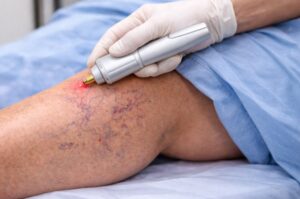
Home care eases symptoms, but it won’t make established varicose veins disappear. If your symptoms limit daily life, or the skin around your ankles is changing color/thickening, modern in-clinic treatments (like sclerotherapy, endovenous laser or radiofrequency ablation, or medical adhesive) are quick and effective.
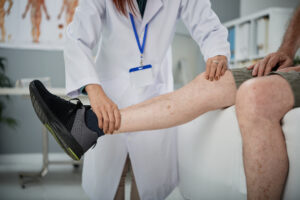
In the U.S, USA Vein Clinics provides both in-person and health consultations, offering evaluations, ultrasound diagnostics, and minimally invasive treatment options. If home care isn’t enough, scheduling a consultation can help you understand your condition better and decide on the next steps.
Seek urgent care immediately if you notice any of these:
- Sudden, severe calf pain and one-sided swelling or warmth (possible deep vein thrombosis).
- Shortness of breath or chest pain (possible pulmonary embolism).
- A vein that suddenly bleeds heavily after a small bump (apply firm pressure and elevate while seeking care).
- A rapidly spreading red, hot, tender area on the leg (possible infection).
FAQ
How long do home measures take to help?
Many people feel lighter legs within 1–2 weeks of daily compression + movement + elevation. Skin and swelling changes can take longer; consistency is key. Authoritative guidance stresses regular, ongoing use rather than occasional wear.
Can I wear compression if I have diabetes or cold feet?
Possibly, but ask a clinician first. If you have peripheral arterial disease (reduced blood flow to the feet), strong compression may be unsafe without supervision. Screening and proper fitting matter.
Will home care cure varicose veins?
No, but it often reduces aching, swelling, cramps, and itching and can help prevent complications. For visible veins you want gone, minimally invasive medical treatments are effective and widely available.
At home, you can do a lot: keep the calves pumping, elevate daily, wear well-fitted compression, and mind the small stuff (shoes, clothing, weight, skin care). These habits ease symptoms now and protect your legs for later. Pair them with clear red-flag awareness, and don’t hesitate to see a vein specialist if symptoms persist, modern treatments are fast and far gentler than most people expect.