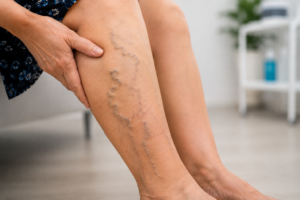
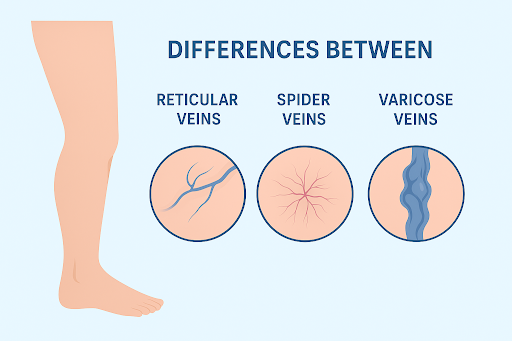
Visible veins on the legs are common, but not all visible veins are the same. Some may appear as tiny red or purple web-like lines, while others may look blue, twisted, enlarged, or raised above the skin. Understanding the difference between spider veins vs varicose veins can help you know whether your concern is mainly cosmetic or whether it may be linked to an underlying circulation problem.
Many people also notice reticular veins, which are larger than spider veins but smaller than varicose veins. These veins may appear blue or green beneath the skin and can sometimes feed into spider veins.
At MVM Health, our goal is to support patients through understanding what their visible veins may mean and when that insight warrants an evaluation, as well as which treatment options are appropriate. And spider veins are usually not much more than cosmetic issues, while varicose veins can be a sign of venous insufficiency, the inability for blood to flow back efficiently toward the heart.
Understanding parameters like symptoms, risk factors, and effective treatment helps one differentiate between reticular veins and spider veins, as well as varicose veins, to repair the vein, possibly with modern-day techniques.
What Are Spider Veins?
Spider veins are tiny, thin blood vessels that protrude close to the skin. They are typically red, blue, or purple in colour and often tend to be webbed or branching in shape. Spider veins are usually found on the legs and ankles, thighs, and occasionally the face.
Does not have a bulging appearance and is typically smaller than varicose veins. Cleveland Clinic states that spider veins don’t always need medical intervention, but treatment is offered if patients are bothered by the veins or signs and symptoms.
Common Signs of Spider Veins
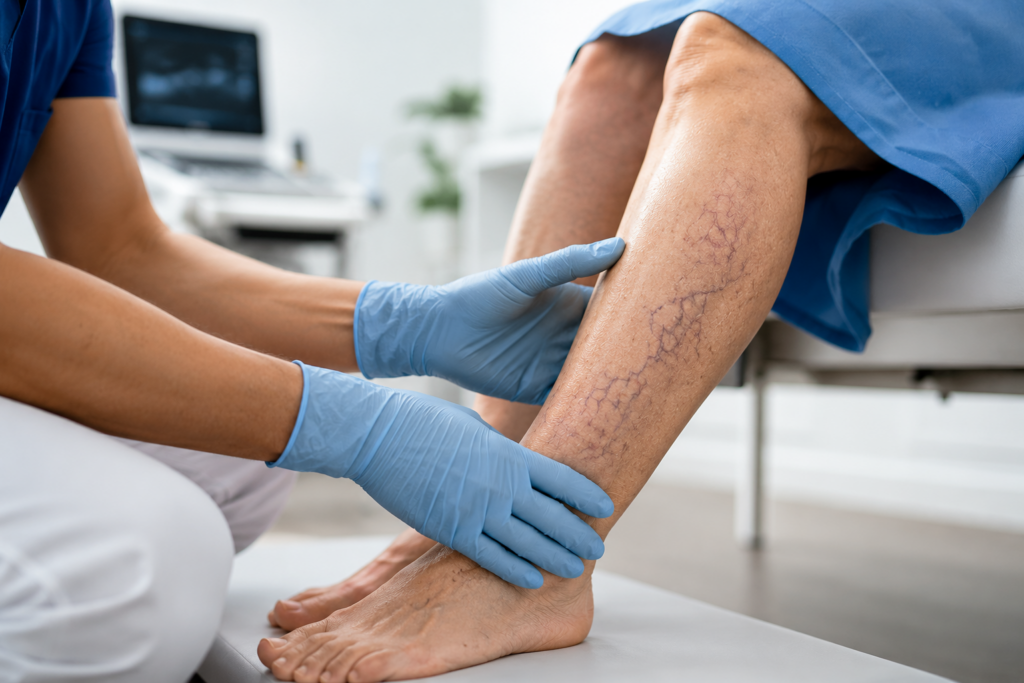
Spider veins may appear as:
- Thin red, blue, or purple lines
- Web-like clusters on the legs or face
- Small surface-level veins
- Mild burning, itching, or discomfort in some cases
- Cosmetic concerns due to visible discoloration
For many patients, spider veins are not painful. However, if they appear with leg heaviness, swelling, aching, or worsening visible veins, it may be worth seeing a vein specialist to rule out deeper vein problems.
What Are Varicose Veins?
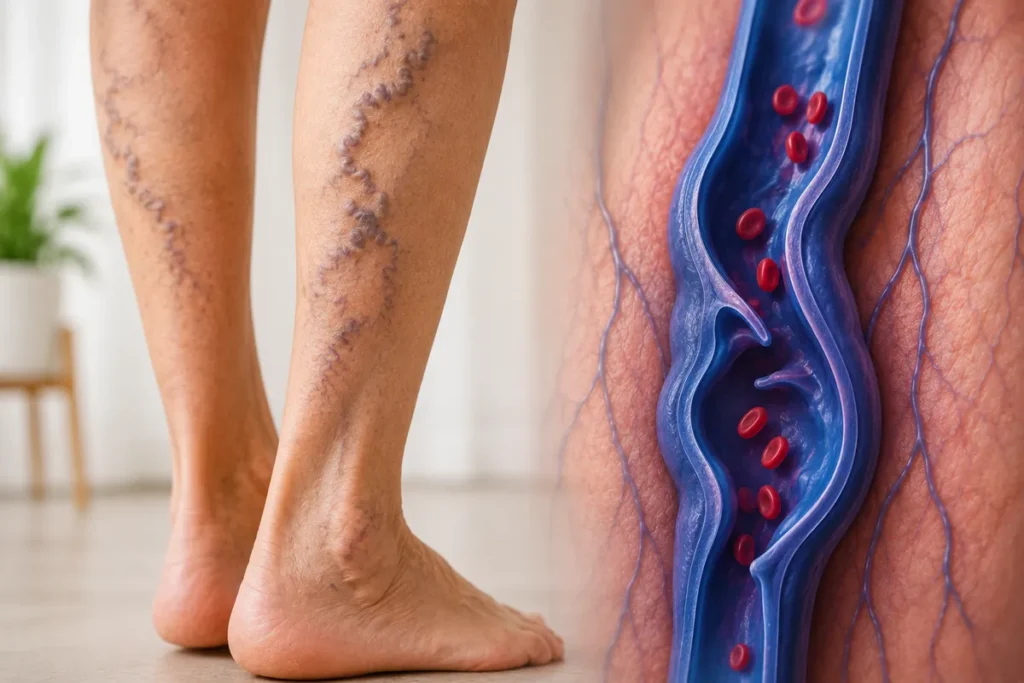
Varicose veins are larger, swollen veins that often appear twisted, rope-like, or raised above the skin. They most often develop in the legs because leg veins work against gravity to move blood back toward the heart.
Varicose veins can occur when vein valves weaken or stop working properly. When this happens, blood may pool in the vein, causing pressure, swelling, and enlargement. Mayo Clinic explains that varicose vein treatment may include self-care, compression stockings, and outpatient procedures depending on the severity of the condition.
Common Signs of Varicose Veins
Varicose veins may cause:
- Bulging or twisted veins
- Blue, purple, or enlarged veins
- Leg heaviness or fatigue
- Aching or throbbing pain
- Swelling around the ankles or lower legs
- Night cramps or restless legs
- Skin discoloration near the ankles
- Symptoms that worsen after long periods of standing or sitting
While not every varicose vein is dangerous, severe cases can sometimes lead to complications, including skin changes, ulcers, or blood clots. Cleveland Clinic notes that severe varicose veins may lead to more serious health problems in some people.
What Are Reticular Veins?
Reticular veins are medium-sized veins that usually appear blue or green beneath the skin. They are larger than spider veins but smaller than varicose veins. Reticular veins are sometimes called “feeder veins” because they may contribute to spider vein formation.
Common Signs of Reticular Veins
Reticular veins may appear as:
- Blue or green veins beneath the skin
- Flat, visible veins that do not usually bulge
- Veins commonly found behind the knees or on the thighs
- Mild aching or tenderness in some patients
- A possible source of nearby spider veins
Reticular veins are not always a serious medical issue, but if they are causing symptoms or feeding spider veins, treatment may be recommended.
Spider Veins vs Varicose Veins: Key Differences
Although spider veins and varicose veins are both visible vein conditions, they differ in size, appearance, symptoms, and possible health impact.
| Category | Spider Veins | Varicose Veins |
| Size | Very small surface veins | Larger, enlarged veins |
| Appearance | Web-like, red, blue, or purple lines | Bulging, twisted, rope-like veins |
| Location | Legs, ankles, thighs, face | Mostly legs and feet |
| Symptoms | Usually cosmetic, sometimes itching or burning | Aching, heaviness, swelling, cramps |
| Medical Concern | Often cosmetic but may signal circulation issues | May indicate venous insufficiency |
| Treatment Options | Sclerotherapy, laser treatment | Compression, ablation, phlebectomy, sclerotherapy |
The biggest difference is that spider veins are usually smaller and more superficial, while varicose veins are larger and may be connected to deeper circulation problems.
What Causes Spider Veins and Varicose Veins?
Spider veins and varicose veins can develop for many reasons. Some patients are genetically more likely to develop visible veins, while others develop them due to lifestyle, hormonal, or occupational factors.
Common Risk Factors
You may have a higher risk of visible vein problems if you have:
- A family history of vein disease
- A job that requires long periods of standing or sitting
- Pregnancy or hormonal changes
- Aging-related weakening of vein walls
- Excess body weight
- Previous leg injury
- Lack of regular movement
- History of blood clots
- Chronic venous insufficiency
People who stand for long hours, such as healthcare workers, teachers, retail workers, and service professionals, may be more likely to notice leg swelling, heaviness, or visible veins over time.
When Are Visible Veins More Than a Cosmetic Concern?
Many patients first seek care because they dislike the appearance of visible veins. However, vein problems can sometimes be more than cosmetic.
You should consider seeing a vein specialist if you notice:
- Leg pain or heaviness
- Swelling in the lower legs or ankles
- Veins that are getting larger
- Bulging or twisted veins
- Skin darkening near the ankle
- Itching, burning, or tenderness around veins
- Restless legs or night cramps
- Open sores or slow-healing wounds near the ankle
- Symptoms that interfere with walking, standing, or daily activity
If symptoms are present, your provider may recommend a vein evaluation and ultrasound to check how blood is flowing through your veins.
Best Treatment for Spider Veins
The best treatment for spider veins depends on the size, location, symptoms, and whether there is an underlying vein issue. For many patients, sclerotherapy is one of the most common treatments for spider veins on the legs.
1. Sclerotherapy
Sclerotherapy: A solution is injected into the affected vein. This solution irritates the lining of the vein, causing it to close up. Over time, the treated vein will start to disappear as your body reroutes the blood through healthier veins.
You usually treat varicose or spider veins with sclerotherapy. Cleveland Clinic lists sclerotherapy and laser treatment as treatments that eliminate or close damaged blood vessels.
- Laser Vein Treatment
A laser specialist employs focused light energy to destroy tiny visible veins by heating the blood vessel and coagulating it so that it disappears. It is also administered for small spider veins, largely located in the more sensitive regions of the skin, or when needles are not a good choice.
3. Treating Feeder Veins
Sometimes spider veins return because a deeper reticular or feeder vein is contributing to the problem. In these cases, treating only the surface spider veins may not provide long-lasting improvement. A vein specialist can determine whether feeder veins need to be treated as part of the care plan.
Varicose Vein Treatment Options
Varicose vein treatment depends on the severity of the vein problem and whether symptoms are present. Many modern treatments are minimally invasive and performed in an outpatient setting.
1. Compression Stockings
Compression stockings help support blood flow in the legs and may reduce swelling, heaviness, and discomfort. They are often recommended as part of conservative management.
2. Endovenous Laser Ablation
Endovenous laser ablation uses heat energy to close a problem vein. Once the vein is sealed, blood naturally reroutes through healthier veins.
3. Radiofrequency Ablation
Radiofrequency ablation is another heat-based treatment used to close diseased veins. It is commonly used for larger veins related to venous insufficiency.
4. Ambulatory Phlebectomy
Ambulatory phlebectomy is a minimally invasive procedure used to remove larger bulging varicose veins through tiny skin openings.
5. Ultrasound-Guided Sclerotherapy
For some veins that are not visible on the surface, ultrasound guidance may be used to help the provider treat the affected vein accurately.
Mayo Clinic notes that many varicose vein procedures are outpatient, meaning patients often go home the same day.
Can Spider Veins or Varicose Veins Come Back?
Yes, new spider veins or varicose veins can continue to form as time goes on, particularly if you have risk factors like a family history of venous insufficiency, pregnancy, prolonged standing or sitting. While treatment eliminates existing problem veins or closes the visually imperceptible veins, it cannot stop every future (seemingly invisible) vein from forming.
To support long-term vein health, your provider may recommend lifestyle changes, compression therapy, follow-up visits, or additional treatment if new veins appear.
Concerned About Visible Veins or Leg Discomfort?
Visible veins may sometimes be linked to underlying circulation issues rather than cosmetic appearance alone. MVM Health provides personalized vein evaluations and minimally invasive treatment options designed around your symptoms, vein health, and long-term comfort. Schedule a consultation better to understand your treatment options and vein health needs.
Vein Health Tips to Support Better Circulation
While lifestyle changes cannot always remove existing spider veins or varicose veins, they can support healthier circulation and may help reduce symptoms.
Helpful Vein Health Habits
- Walk regularly to activate the calf muscles
- Avoid sitting or standing in one position for long periods
- Elevate your legs when resting
- Maintain a healthy weight
- Wear compression stockings if recommended
- Stay hydrated
- Avoid crossing your legs for long periods
- Take movement breaks during work
- Schedule an evaluation if symptoms worsen
These steps are especially helpful for people who spend long hours sitting at a desk or standing at work.
Why Choose MVM Health for Vein Evaluation?
Choosing the right vein provider matters. At MVM Health, patients receive a thoughtful evaluation focused on both symptoms and long-term vein health. Visible veins may appear simple on the surface, but proper diagnosis helps determine whether the issue is cosmetic or connected to deeper venous disease.
What to Look for in a Vein Specialist
When choosing a vein care provider, look for:
- Experience treating spider veins and varicose veins
- Use of diagnostic ultrasound when appropriate
- Minimally invasive treatment options
- Clear explanation of risks, benefits, and alternatives
- Personalized treatment planning
- Strong patient safety standards
- Transparent follow-up care
A trusted provider should not only treat visible veins but also help identify the root cause of your symptoms.
Conclusion
Understanding spider veins vs varicose veins can help you make better decisions about your vein health. The smaller surface veins are called spider veins and are rarely problematic, while the larger, bulging veins are called varicose veins and can be symptomatic with pain, heaviness, and swelling.
The bright side is that vein care can provide effective solutions to both diseases. If you’re considering the best treatment for spider veins or want to find out if you are a candidate for varicose vein treatment, MVM Health can help you understand your options and determine what steps to take next.
When you notice visible veins that have an impact on your comfort, confidence, or your daily routine, it is time to make a plan to improve the health of your legs with MVM Health and take the first step.
FAQs
1. What is the main difference between spider veins and varicose veins?
Spider veins are small, thin veins that appear close to the skin’s surface, often in red, blue, or purple web-like patterns. Varicose veins are larger, swollen veins that may bulge above the skin and cause symptoms like aching, heaviness, swelling, or cramping.
2. Are spider veins dangerous?
Spider veins are often cosmetic and may not cause health problems. However, if they appear with pain, swelling, heaviness, or worsening leg symptoms, it is a good idea to see a vein specialist to check for underlying circulation issues.
3. What is the best treatment for spider veins?
The best treatment for spider veins depends on the patient’s condition. Sclerotherapy is commonly used for spider veins on the legs, while laser treatment may be recommended for smaller veins or certain treatment areas.
Do varicose veins need treatment?
Not always. Some varicose veins can be treated with lifestyle changes through compression stockings. However, in cases of pain, swelling, skin changes, or worsening symptoms, medical therapy is suggested.
Do varicose veins go away on their own?
Your varicose veins will not just go away on their own. Compression, leg elevation, and exercise might alleviate symptoms to some degree, but the dilated vein rarely resolves without intervention.
Is varicose vein treatment painful?
Minimal invasive techniques are now employed in most contemporary varicose vein treatments to minimize pain. Several operations take place on an outpatient basis with nearly no recovery time.
Can spider veins return after treatment?
Once treated, spider veins typically go away, but untreated feeder veins and other factors such as genetics, hormones, and lifestyle can contribute to the development of new spider veins over time.
You may not always need to see a vein specialist in New York.
Call your doctor if you have leg pain, swelling, heaviness, bulging veins, skin color changes or visible veins that get worse over time.