

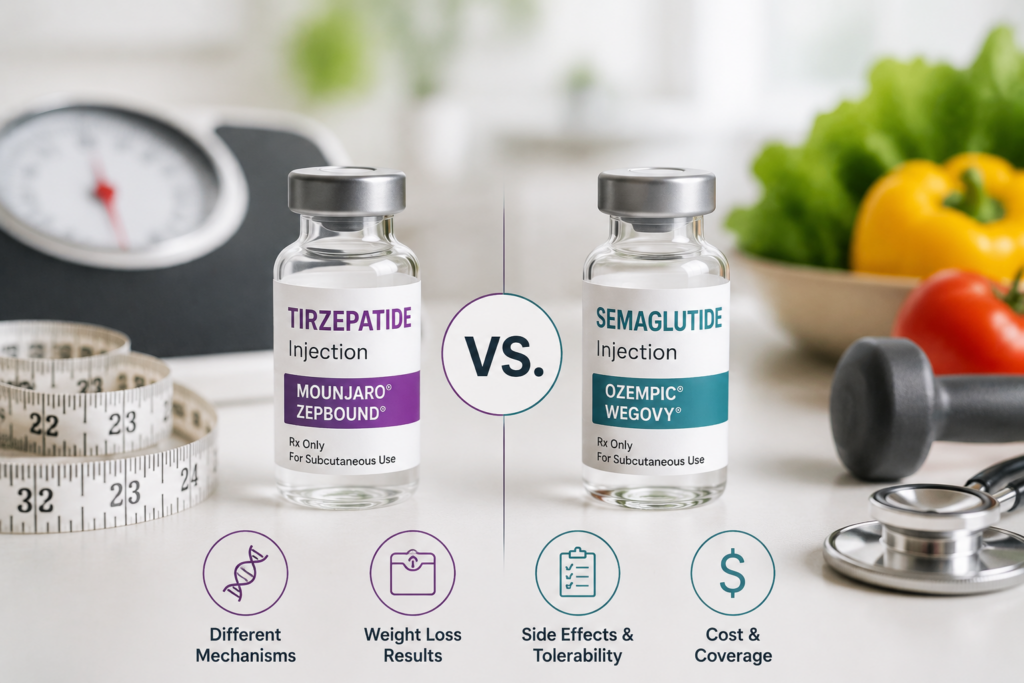
Tirzepatide vs semaglutide comes down to one core difference: tirzepatide targets two appetite-regulating hormones instead of one, and that extra mechanism tends to produce greater weight loss in head-to-head studies. Semaglutide (sold as Ozempic and Wegovy) works on the GLP-1 hormone alone. Tirzepatide (sold as Mounjaro and Zepbound) works on both GLP-1 and GIP. In direct comparison trials, patients on tirzepatide lost noticeably more weight than those on semaglutide over the same period, though both medications are effective and the right choice depends on more than just the number on the scale.
If you’ve been comparing Zepbound vs Wegovy or Mounjaro vs Ozempic and aren’t sure which one actually fits your situation, the differences go beyond brand names. Dosing, side effects, cost, and how your body responds are all factors into which medication makes more sense for you. Understanding the mechanisms behind each drug, and what the actual research shows, makes it a lot easier to have an informed conversation with a provider rather than picking based on whichever name shows up more often in ads.
How GLP-1 Medications Work
When you eat, your body naturally releases GLP-1, a hormone that slows digestion and signals to your brain that you’re full. Both semaglutide and tirzepatide mimic this hormone, which is why they’re grouped under the term GLP-1 comparison when people research weight loss medications. By enhancing that natural fullness signal, these medications reduce appetite, slow gastric emptying, and help patients eat less without constantly fighting hunger.
Tirzepatide goes a step further by also activating GIP (glucose-dependent insulinotropic polypeptide) receptors. GIP works alongside GLP-1 to improve insulin sensitivity and appears to have an additional effect on fat metabolism. That dual mechanism is one reason clinical trials have shown greater average weight loss with tirzepatide compared with semaglutide in certain patient populations, although individual results vary and both medications work through the same basic hunger-signaling pathway. Both are administered as once-weekly subcutaneous injections, and both require a gradual dose titration schedule, starting low and increasing over several weeks to help the body adjust and minimize gastrointestinal side effects.
What the Research Shows
In the SURMOUNT-5 trial, a direct head-to-head comparison of the two medications in adults with obesity, tirzepatide produced significantly greater weight loss than semaglutide at 72 weeks. A separate meta-analysis pooling data across thousands of patients found tirzepatide users were substantially more likely to reach 10% or greater weight loss compared to semaglutide users.
In practical terms, clinical trial data has shown patients on the highest tirzepatide dose losing close to 21% of their body weight, compared to roughly 15% for patients on the highest semaglutide dose. Real-world data collected outside of clinical trials shows a similar pattern, with tirzepatide patients typically losing several more kilograms on average than semaglutide patients over the same treatment window, though both groups still see meaningful, clinically significant results.
It’s worth noting that these are average outcomes across large study populations, not a guarantee for any individual patient. Response to either medication varies based on starting weight, metabolism, consistency with dosing, and whether the medication is paired with dietary and lifestyle changes. Studies consistently show that combining either drug with structured lifestyle support produces better results than medication alone.
Tirzepatide vs. Semaglutide: Key Differences
| Tirzepatide | Semaglutide | |
| Brand names | Mounjaro, Zepbound | Ozempic, Wegovy |
| Hormone targets | GLP-1 and GIP | GLP-1 only |
| Average weight loss | Up to ~21% of body weight | Up to ~15% of body weight |
| Dosing frequency | Once weekly injection | Once weekly injection |
| FDA approval | Weight management (Zepbound), type 2 diabetes (Mounjaro) | Weight management (Wegovy), type 2 diabetes (Ozempic) |
| Common side effects | Nausea, diarrhea, constipation | Nausea, diarrhea, constipation |
| GI side effect rate | Slightly higher | Slightly lower |
Both medications share a similar side effect profile, mostly gastrointestinal issues like nausea, bloating, and diarrhea that tend to improve as the body adjusts to the medication. Tirzepatide’s dual-hormone action means some patients experience these effects slightly more often, though this varies significantly from person to person. Neither medication is a fast fix. Both are designed for gradual, sustained weight loss over months, and both require ongoing use to maintain results, since appetite tends to return once the medication is stopped.
Zepbound vs Wegovy: What the Brand Names Actually Mean
Brand confusion is common here since each medication has two names depending on the approved use. Zepbound and Mounjaro are the same active ingredient, tirzepatide, with Zepbound specifically approved for weight management and Mounjaro approved for type 2 diabetes. Wegovy and Ozempic follow the same pattern with semaglutide: Wegovy for weight management, Ozempic for diabetes. For a deeper look specifically at how Ozempic and Wegovy compare to each other, our team has covered that in more detail separately.
This distinction matters for insurance purposes. A prescription written under the diabetes-approved name may be processed differently by insurance than the same drug prescribed under its weight-management brand, even though the medication itself is identical. It also matters for dosing, since the weight-management brands are sometimes available at higher maximum doses than their diabetes-focused counterparts, which is part of why a provider familiar with both formulations matters more than picking a brand name on your own.
Care Tip: Weight loss results with either medication depend heavily on dose titration and consistency. Skipping doses, stopping early, or not gradually increasing the dose as directed tends to blunt results regardless of which medication you’re on. A supervised program that adjusts your dose based on how your body responds generally produces better outcomes than following a fixed schedule alone.
Side Effects and Safety Considerations
The most common side effects for both medications are gastrointestinal: nausea, vomiting, diarrhea, constipation, and stomach discomfort, especially during the first few weeks or after a dose increase. These effects are usually manageable and tend to ease over time as your body adjusts. Eating smaller meals, avoiding high-fat foods early in treatment, and staying hydrated can all help reduce how noticeable these side effects feel.
Both medications carry a boxed warning regarding a potential risk of thyroid tumors based on animal studies, which is why they’re generally not recommended for patients with a personal or family history of medullary thyroid carcinoma or certain endocrine conditions. A proper medical evaluation before starting either medication helps screen for these and other contraindications, including a history of pancreatitis or severe gastrointestinal disease, both of which can affect whether either drug is appropriate.
Cost and Insurance Coverage
Without insurance, both medications typically run in a similar price range, often over a thousand dollars per month at retail pricing. Insurance coverage varies widely and is changing rapidly. Many plans cover these medications only when prescribed for type 2 diabetes rather than weight management specifically, though coverage for weight-loss indications continues to expand as more employers and insurers adjust their policies.
Manufacturer savings programs can significantly reduce out-of-pocket costs for patients with commercial insurance that doesn’t cover the medication for weight loss. Checking your specific plan’s formulary and any available manufacturer discount programs before starting treatment is one of the more practical steps to control cost. Some patients also find that compounded versions offer a lower-cost alternative, though these come with their own considerations around sourcing and oversight that are worth discussing directly with a provider.
Learn more about evidence-based obesity treatment from the National Institute of Diabetes and Digestive and Kidney Diseases (NIDDK).
Choosing the Right Medication for Your Goals
Tirzepatide’s dual-hormone mechanism gives it an edge in average weight loss across most studies, but that doesn’t automatically make it the better choice for every patient. Some people respond very well to semaglutide with fewer side effects, and semaglutide currently has the strongest evidence base for cardiovascular benefit in patients with existing heart disease.
A few factors that typically guide the decision:
- How your body tolerates gastrointestinal side effects
- Whether your insurance covers one medication but not the other
- Your specific health history, including cardiovascular or thyroid conditions
- Whether you’ve tried one medication before with limited results
- Your weight loss goals and timeline
Switching between the two is also common. Patients who don’t see the results they expect on semaglutide, or who experience side effects that don’t improve, often transition to tirzepatide under medical supervision, and the reverse happens as well depending on individual response. Neither switch is something to attempt without guidance, since dosing schedules differ between the two medications and starting at the wrong dose can increase side effects unnecessarily.
Inside a Supervised Program
A well-run medically supervised weight loss program typically starts with lab work and a review of your medical history to rule out contraindications, followed by a personalized starting dose that increases gradually over several weeks. Regular check-ins allow your provider to track progress, adjust the dose if needed, and address any side effects before they become a reason to quit the program altogether.
This kind of structure matters because a large part of what separates strong real-world results from disappointing ones isn’t the medication itself, it’s whether the dose was titrated properly and whether the patient stayed consistent long enough to see results. Programs that pair medication with basic nutrition and activity guidance tend to produce better outcomes than medication alone.
Medically Supervised Weight Loss at MVM Health
Choosing between tirzepatide and semaglutide isn’t something to figure out on your own. Both medications require proper dosing, monitoring, and adjustment based on how your body responds, which is why MVM Health provides medically supervised weight loss support for patients across Pennsylvania, including Bethlehem, East Stroudsburg, Reading, Wayne, and Exton.
Our team also walks patients through the practical side, including insurance verification and dose titration, so the plan actually fits your life rather than following a generic schedule. If you’ve been comparing Mounjaro vs Ozempic or trying to figure out which GLP-1 medication makes sense for your situation, a personalized evaluation is a far more reliable starting point than guessing based on average trial results. Schedule a consultation to find out which option fits your health profile.
Medical Disclaimer: This article is for educational purposes only and should not replace a medical evaluation, diagnosis, or treatment plan. Speak with a healthcare provider before starting any weight loss medication, especially if you have a personal or family history of thyroid conditions.
Frequently Asked Questions
Which is more effective, tirzepatide or semaglutide?
Clinical trials consistently show tirzepatide producing greater average weight loss than semaglutide, largely due to its dual action on GLP-1 and GIP hormones, though both are effective for most patients.
Is Zepbound the same as Mounjaro?
Yes. Both contain tirzepatide as the active ingredient. Zepbound is FDA-approved for weight management, while Mounjaro is approved for type 2 diabetes.
What are the most common side effects of tirzepatide and semaglutide?
Both cause similar gastrointestinal side effects, including nausea, diarrhea, constipation, and stomach discomfort, which typically improve as your body adjusts over the first several weeks.
Can I switch from semaglutide to tirzepatide?
Yes, switching is common when patients don’t see expected results or experience side effects that don’t improve. Any switch should be done under medical supervision to adjust dosing safely.
Does insurance cover tirzepatide or semaglutide for weight loss?
Coverage varies by plan and is changing frequently. Many insurers cover these medications for type 2 diabetes but not always for weight management specifically, so checking your plan’s formulary is an important first step.
How much weight can you lose on tirzepatide versus semaglutide?
Clinical trials show average weight loss of up to roughly 21% of body weight with tirzepatide at the highest dose, compared to around 15% with semaglutide, though individual results vary.