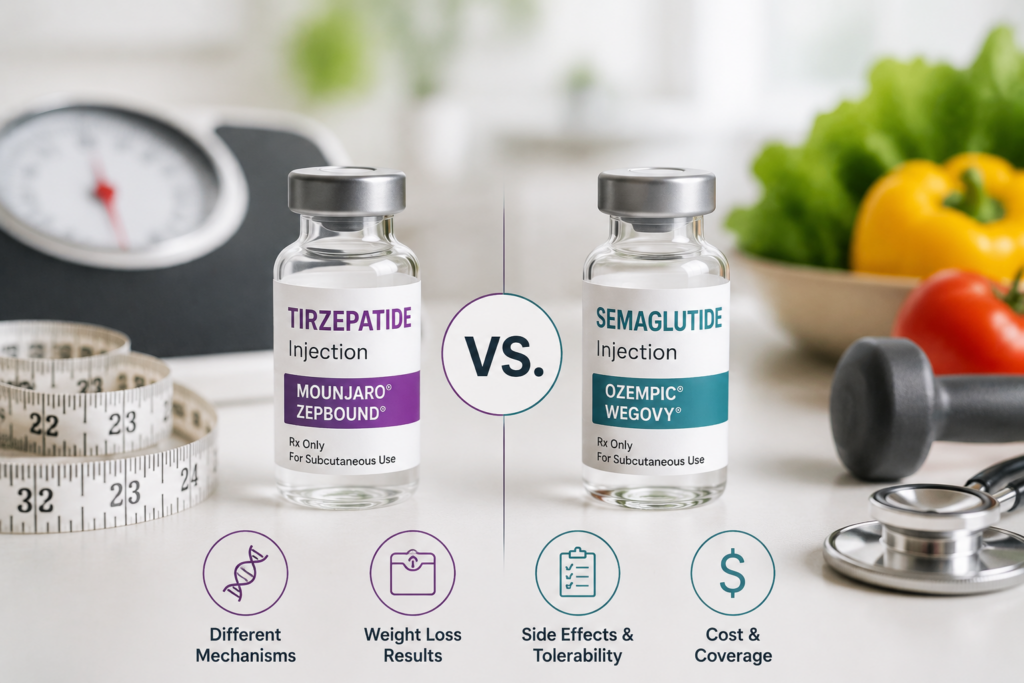


Quick answer: Sometimes, but coverage is inconsistent and has actually gotten more restrictive in 2026, not less. As of mid-2026, over 114 million Americans with commercial insurance have no coverage at all for Zepbound, and even among people who do have coverage, the vast majority still face prior authorization requirements before a claim gets approved. Medicare has historically excluded weight-loss medications entirely, though a new temporary program changes that starting July 2026. Medicaid coverage depends entirely on which state you live in.
At MVM Health, insurance is usually the first question patients ask before they ask about the medication itself, and for good reason. With brand-name GLP-1s running over $1,000 a month without coverage, whether your plan pays for it can be the difference between starting treatment and not.
Key Takeaway
Insurance coverage for weight loss medication varies enormously by plan type, employer, state, and even which specific drug you’re prescribed. Commercial insurance coverage has narrowed in 2026, Medicare is opening limited access through a new bridge program starting July 2026, and Medicaid coverage is determined state by state. Prior authorization, documented weight-related health conditions, and sometimes step therapy are required by most plans that do offer coverage.
Why Isn’t Weight Loss Medication Automatically Covered?
Weight loss medications like Wegovy, Zepbound, and Saxenda are FDA-approved for chronic weight management, but insurers don’t treat FDA approval the same way they treat medical necessity. Many plans classify weight management as elective rather than essential, largely because of cost. GLP-1 medications are expensive at scale, and insurers weigh the cost of covering them against how that raises premiums for everyone on the plan, not just the people using the drug.
This is different from how the same medications are treated when prescribed for type 2 diabetes. Ozempic and Mounjaro, the diabetes-labeled versions of semaglutide and tirzepatide, are far more likely to be covered because diabetes treatment is broadly accepted as medically necessary in a way weight management historically hasn’t been.
Commercial Insurance Coverage in 2026: What’s Actually Changed
Coverage has moved in the wrong direction this year for many patients. Compared to 2025, the number of people with no commercial coverage for Zepbound increased by 18%, leaving well over 100 million people without any coverage for it. Even patients who do have coverage aren’t in the clear: the large majority still face additional requirements like prior authorization before a claim is approved.Medicaid GLP-1 coverage.
Wegovy tells a similar story. Unrestricted access has continued to shrink, while restricted access (meaning coverage exists but with conditions attached) has grown. Millions of people gained some form of coverage for Wegovy this year, but tens of millions still have none at all.
The newest oral GLP-1, Foundayo, faces an even steeper coverage gap right now, which isn’t unusual for a medication that only recently launched. Insurers typically take time to add new drugs to formularies, and coverage tends to expand gradually as a medication becomes more established.
Some employer plans have gone the opposite direction entirely and dropped weight-loss GLP-1 coverage altogether. Several large insurers have notified members that GLP-1 coverage for weight loss will end at plan renewal in 2026, while coverage for the same drugs prescribed for type 2 diabetes continues unaffected. If your plan renews mid-year, it’s worth checking directly with your insurer rather than assuming last year’s coverage still applies.
This creates a confusing situation for patients who started treatment under one set of coverage rules and now face losing it, sometimes mid-treatment. If your employer plan is discontinuing weight-loss GLP-1 coverage, ask specifically whether your current prior authorization simply expires at renewal or whether there’s an appeal or transition process, since policies on this vary by carrier and by employer group size.
Medicare Coverage: The New Bridge Program
Traditional Medicare Part D has not covered medications prescribed specifically for weight loss. That changes, temporarily, starting July 1, 2026. The Medicare GLP-1 Bridge Program gives eligible Part D beneficiaries access to specific GLP-1 medications at a $50 monthly copay, running through the end of 2027.
Coverage under the Bridge program is limited to certain medications, including Foundayo (all formulations), Wegovy pills and injections, and Zepbound. Eligibility still depends on meeting the program’s specific clinical criteria, so approval isn’t automatic just because you’re enrolled in Medicare.
There’s an important detail for anyone using the Bridge program: it’s a temporary pilot, not a permanent benefit. If Medicare’s longer-term Medicaid and Medicare model (called BALANCE) becomes standard starting January 2027, patients using the Bridge program in 2026 may need to switch Part D plans during open enrollment to keep coverage going into 2027.
Medicaid Coverage: It Depends Entirely on Your State
Medicaid is a joint federal and state program, and federal law allows individual states to decide whether to cover GLP-1 medications for weight loss. Some states cover it. Many don’t. There’s no national standard, which means a patient with Medicaid coverage in one state may have full access while a patient in a neighboring state has none at all.
A newer federal initiative, the Medicaid BALANCE model, allows state Medicaid agencies to negotiate lower, standardized prices for GLP-1 medications when paired with lifestyle support programs. States were invited to apply to this model starting in mid-2026, so coverage in participating states may improve over the next year or two, but this rollout is still in its early stages.

What Insurers Typically Require for Coverage
When a plan does cover weight loss medication, approval almost never happens automatically. Most insurers require some combination of the following before approving a claim:
- A documented BMI threshold, typically 30 or higher, or 27 or higher with a weight-related condition
- Prior authorization, meaning your doctor has to submit clinical documentation justifying medical necessity
- Step therapy, meaning you may need to try a lower-cost medication first, such as Contrave, before the insurer approves a GLP-1
- Documentation of a supervised diet and exercise attempt, often three to six months, showing you’ve tried lifestyle changes first
- A qualifying comorbidity, such as high blood pressure, high cholesterol, sleep apnea, or type 2 diabetes, especially if your BMI falls in the lower “overweight” range
Missing even one piece of this documentation is one of the most common reasons initial claims get denied, not because the patient doesn’t qualify, but because the paperwork wasn’t complete.
How to Improve Your Chances of Getting Coverage Approved
If your plan technically covers weight loss medication but your claim was denied, a few concrete steps can help:
- Request the denial reason in writing. Insurers are required to explain why a claim was denied, and it’s often a documentation gap rather than an outright exclusion.
- Check for a missing comorbidity. A denial can sometimes come down to a doctor simply not listing a secondary condition, like high blood pressure, that would have supported approval at a lower BMI threshold.
- File a formal appeal. Most initial denials are processed automatically. A well-documented letter of medical necessity from your provider can overturn an automated denial that a human reviewer would have approved.
- Ask specifically about employer plan exceptions. Some employer group plans allow continued coverage even after a broader policy change, particularly for larger employers.
- For Medicare patients, ask about the Bridge prior-authorization pathway specifically, since it has its own separate approval process from standard Part D coverage.
What If Your Insurance Doesn’t Cover It At All?
If your plan excludes weight loss medication entirely, you still have options:
Manufacturer savings programs. Drugmakers often offer direct cash-pay pricing or savings cards that reduce the out-of-pocket cost, though these programs and prices change frequently.
Check if a diabetes-labeled version applies to you. If you have type 2 diabetes or prediabetes, medications like Ozempic or Mounjaro may be covered under their diabetes indication even if the weight-loss-labeled version isn’t.
A medically supervised weight loss program. These programs combine physician oversight, lab monitoring, and structured documentation of your treatment, which can also strengthen a future insurance appeal if your plan’s requirements change.
What We See With Patients
In practice, the biggest source of frustration isn’t usually that insurance flatly refuses to cover weight loss medication. It’s that patients assume their plan works the same way a friend’s or family member’s plan does, only to find out their specific employer group plan has different rules entirely. We’ve had patients with the exact same insurance carrier as a coworker get completely different coverage outcomes, simply because their employer selected a different plan tier.
Because of that, the most useful first step is almost always a direct call to your insurer with your specific plan details in hand, rather than assuming coverage based on the carrier name alone.
Get Help Navigating Your Options
Insurance coverage for weight loss medication is confusing by design, and it’s changed multiple times just within 2026. Rather than guessing whether your plan covers Wegovy, Zepbound, or Foundayo, a provider who handles this regularly can help you understand your actual options, including documentation that supports a prior authorization request or a cash-pay path if coverage isn’t available.
At MVM Health, our team works with patients through exactly this process every week. Schedule a consultation to find out what your plan actually covers and what your options look like either way.
Frequently Asked Questions
1. Does insurance cover Wegovy or Zepbound for weight loss?
It depends entirely on your specific plan. As of 2026, coverage for both medications has narrowed compared to 2025, and even plans that do cover them typically require prior authorization and documentation of medical necessity.
2. Will Medicare cover weight loss medication in 2026?
Traditional Medicare Part D has not covered medications prescribed specifically for weight loss. A new temporary program, the Medicare GLP-1 Bridge Program, begins July 1, 2026, offering eligible beneficiaries access to certain GLP-1 medications at a $50 monthly copay through the end of 2027.
3. Does Medicaid cover GLP-1 medications for weight loss?
It depends on your state. Federal law allows states to decide individually whether to cover weight-loss GLP-1s, so coverage varies significantly and shouldn’t be assumed to carry over if you move to a different state.
4. What BMI do I need for insurance to cover weight loss medication?
Most plans that offer coverage require a BMI of 30 or higher, or 27 to 29.9 combined with a weight-related condition like high blood pressure, high cholesterol, sleep apnea, or type 2 diabetes.
5. Why was my weight loss medication claim denied?
Common reasons include missing documentation of a qualifying comorbidity, incomplete prior authorization paperwork, or a plan-wide exclusion for weight-loss-specific indications. Requesting the denial reason in writing is the fastest way to find out which applies to you.
6. Can I appeal a denied claim for weight loss medication?
Yes. Most initial denials are processed automatically, and a detailed letter of medical necessity from your provider can often overturn a denial, especially if a documentation gap was the cause.
7. Is Ozempic covered by insurance if I don’t have diabetes?
Ozempic is FDA-approved for type 2 diabetes, not weight loss specifically. Insurers generally cover it for its labeled use, meaning coverage for weight loss alone, without a diabetes diagnosis, is far less likely.
8. What can I do if my insurance doesn’t cover weight loss medication at all?
Options include manufacturer cash-pay savings programs, checking whether a diabetes-labeled version of the medication applies to your health history, and enrolling in a medically supervised weight loss program that can also help support a future insurance appeal.