Why does the side of my knee hurt?
Knee pain can be perplexing, especially when it’s on the side. Let’s delve into the potential causes, beyond the surface, to uncover the hidden factors contributing to outer knee discomfort.
Ligaments: The Supportive Tape
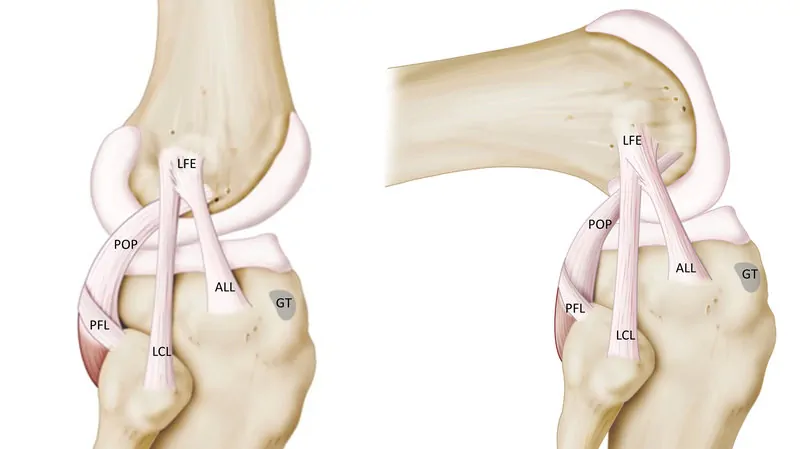
LCL and ALL Ligaments
The outer side of the knee relies on two crucial ligaments – LCL and ALL. They function like durable tape, maintaining the knee’s stability. An injury or laxity in these ligaments may lead to arthritis, emphasizing the importance of timely intervention. Platelet-rich plasma or stem cell injections can offer a non-surgical solution.
MCL and ACL: Side-to-Side and Front-Back Stability
Laxity in the MCL or LCL can cause pain on the inner or outer side of the knee, respectively. Simple at-home tests can help identify such issues, highlighting the significance of early intervention to prevent long-term complications.
Muscles and Tendons: The Silent Culprits
Popliteus, Biceps Femoris, and ITB
Several tendons and muscles surround the knee, contributing to potential pain. The popliteus muscle, located at the back, and the biceps femoris on the outside can cause discomfort, especially during specific movements. The notorious ITB, extending from the hip to the outside front of the knee, is a common source of pain, often requiring attention to the worn tendon.
Meniscus: The Protective Cushion
Understanding the Meniscus
The meniscus serves as a cushion, adapting the flat tibia to the curved femur. While trauma in youth can cause tears, age-related wear and tear are normal and may not necessarily cause pain. MRI-diagnosed tears should be approached cautiously, as surgery might not be the best solution, with studies indicating limited benefits.
Nerves: The Unseen Culprit
Lumbar Nerves and Biomechanics
Irritated lumbar nerves can manifest as knee pain, emphasizing the interconnected nature of our body. Evaluating spine health is crucial, often overlooked in traditional knee-focused examinations. Additionally, poor biomechanics can lead to knee issues, showcasing the intricate relationship between nerves and joint health.
Knee Arthritis: The Wear and Tear
Understanding Arthritis
Arthritis signifies the wear and tear of knee cartilage, leading to bone spurs and pain. Steroid shots, a common solution, might not be the best choice due to potential cartilage damage. Platelet-rich plasma injections have shown promise in alleviating pain and may aid in cartilage repair.
What Painkiller Is Best for Knee Pain?
Choosing Wisely
While seeking interventions to address the root cause is crucial, temporary relief may be needed. Avoiding NSAIDs with their side effects, opting for supplements like curcumin, glucosamine, and chondroitin can be beneficial. Steroid injections, with their associated risks, are discouraged in favor of safer alternatives.
Conclusion
In unraveling the mystery of outer knee pain, precision is key. Understanding the intricacies of ligaments, muscles, tendons, nerves, and arthritis provides a roadmap for effective treatment. Choose interventions wisely, steering clear of unnecessary surgeries. Remember, your knee pain may have a solution that doesn’t involve a major operation.
FAQs
1. Can I treat knee ligament issues without surgery?
Yes, precise injections like platelet-rich plasma or stem cells can often address ligament problems effectively.
2. Is ITB syndrome a common cause of outer knee pain?
Yes, the iliotibial band (ITB) can be a significant contributor to pain on the outer side of the knee.
3. Are meniscus tears always a cause of knee pain?
No, especially in individuals over 35, meniscus tears seen on MRI are often incidental and may not be the source of pain.
4. What alternatives exist for knee arthritis treatment?
Platelet-rich plasma and stem cell injections have shown promise in managing knee arthritis without the adverse effects associated with some traditional treatments.
5. How can I find reliable knee pain treatment clinics?
Research thoroughly, ensuring the clinic specializes in treating knee issues with proven methods. Be cautious of clinics promoting questionable treatments.