

Let’s be honest, almost everyone in Bethlehem has had a moment where they bent down to pick something up, felt that familiar twinge in their lower back, and just stood there for a second thinking, ‘Here we go again.’ Back pain is one of those problems people normalize because it’s so common. You stretch it out, take an ibuprofen, sleep it off, and tell yourself it’ll be fine by Monday.
Sometimes it is. But a lot of the time, it’s not.
The problem isn’t just the pain itself. It’s that most people don’t know what’s actually causing it. And without understanding the Causes of Back Pain, the treatments they try , whether that’s rest, heat, or a quick massage , are just managing symptoms, not fixing anything. Weeks pass. The pain keeps coming back. Activities start getting cut from the schedule. Sleep gets disrupted. The quality of life quietly erodes.
If any of that sounds familiar, this article is for you. We’re going to break down the real reasons why back pain develops, talk honestly about when it crosses the line from something you can manage at home to something that needs a professional evaluation, and explain what treatment actually looks like in a specialized setting here in the Bethlehem area.
The Real Reasons Your Back Hurts, and Why It Keeps Coming Back
Back pain is not a diagnosis. It’s a symptom. The mistake most people make is treating the pain without ever figuring out what’s driving it. Here’s a breakdown of the most common Causes of Back Pain , and why each one behaves differently.
Muscle and Ligament Strain – The Most Common and Most Misunderstood
Muscle strains are the most frequent cause of chronic back pain, and they’re usually the result of a single incident , lifting a box with a rounded back, reaching awkwardly, or a sudden twisting movement. The pain comes on fast, feels like a tight, sore ache, and typically centers around the lower back.
What makes strains tricky is that people often think they’ve healed once the sharp pain fades after a few days. In reality, the muscles may still be inflamed and compensating in ways that set you up for another injury. If the same area keeps getting strained every few months, that’s a pattern worth paying attention to, not just accepting as normal.
Herniated Discs – When the Pain Starts Radiating Outward
Between each vertebra in your spine is a disc , think of it like a small, firm water balloon that acts as a cushion. When the outer layer of that disc cracks or weakens, the inner material can push outward and press on nearby nerves. Depending on where the herniation happens, you might feel it as pain that travels into your buttock, down the back of your leg, or even into your foot.
Herniated discs don’t always cause symptoms right away. Some people have visible herniations on an MRI but feel nothing. Others feel significant pain from a relatively minor bulge. The difference usually comes down to whether or not a nerve is being compressed, and how inflamed the surrounding tissue is.
If your back pain comes with a burning or electric sensation that shoots down one leg, that’s a red flag that a disc may be involved , and it’s not something stretching alone is going to fix.
Degenerative Disc Disease – What Happens When the Cushioning Wears Down
Despite the name, degenerative disc disease isn’t really a disease, it’s a description of what happens to spinal discs as they age. Over time, discs lose their water content and become thinner. The cushioning between vertebrae decreases. Bones start to sit a little closer together. In some people, this happens faster than normal, especially in those who have physically demanding jobs, a history of spinal injuries, or a genetic predisposition.
The pain from disc degeneration tends to be a dull, chronic ache in the lower back that’s worst after long periods of sitting or standing, and often feels better with movement. People in their 40s and 50s frequently deal with this and chalk it up to ‘just getting older.’ While aging does play a role, the right treatment can dramatically reduce how much this affects your daily life.
Spinal Stenosis – When the Nerve Pathways Get Too Narrow
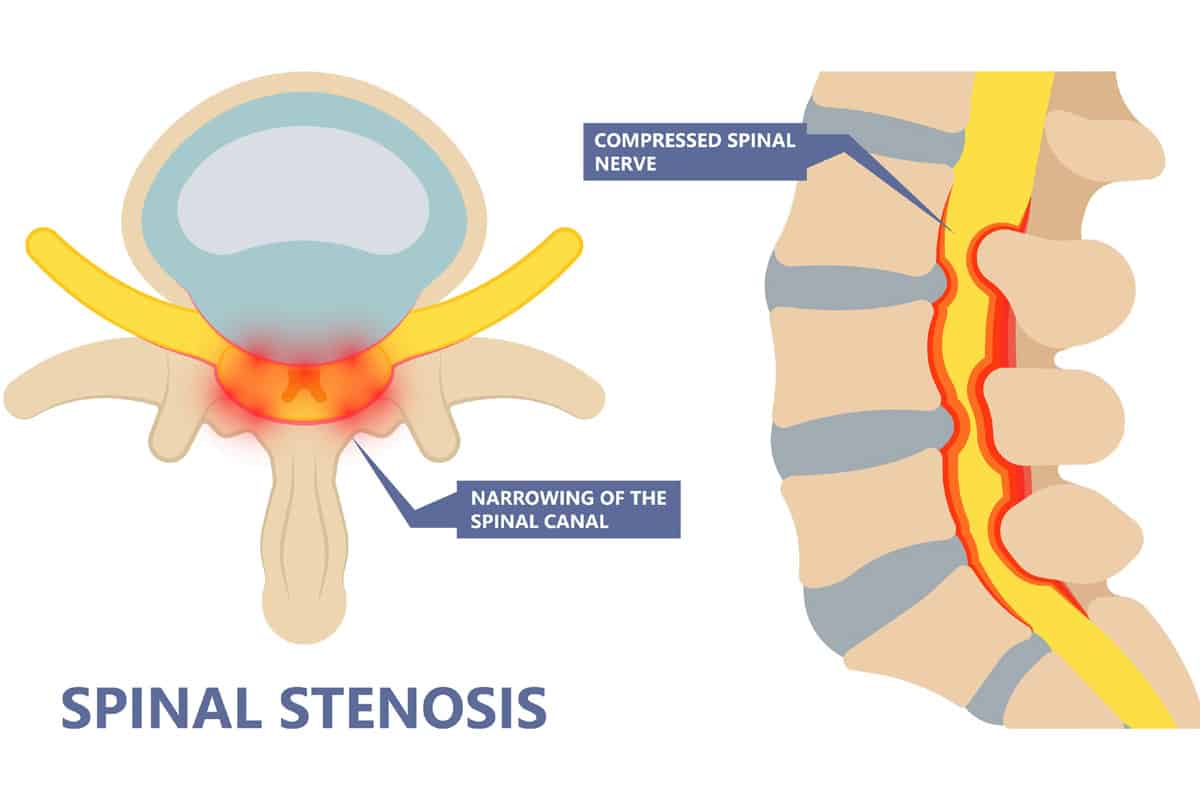
The spinal canal is essentially a tunnel that runs through your vertebrae and houses the spinal cord and nerve roots. Stenosis occurs when that tunnel narrows, usually due to bone spurs, thickened ligaments, or disc degeneration. The compressed nerves can cause pain, cramping, or heaviness that radiates into the legs , symptoms that tend to get worse with walking and ease up when you sit down or lean forward slightly.
If you’ve noticed that you can walk comfortably for a block but then need to stop and rest, or that leaning on a shopping cart makes walking much easier, spinal stenosis is worth discussing with a spine specialist. It’s very common in adults over 60 but can occur earlier, especially after spinal injuries or surgeries.
Sacroiliac Joint Dysfunction – The One That Often Gets Missed
The sacroiliac (SI) joint connects your lower spine to your pelvis, and when it becomes inflamed or moves abnormally, it can cause significant pain in the lower back, hip, and sometimes down into the thigh. What makes SI joint dysfunction particularly frustrating is that it often doesn’t show up clearly on standard imaging, which means people get treated for disc problems or muscle strains without ever addressing the actual source.
If your lower back pain is primarily on one side, gets worse when you stand on one leg, climb stairs, or get in and out of a car, the SI joint could be the culprit. A skilled pain specialist can test for this specifically during a physical examination.
Facet Joint Arthritis – The Backbone of Chronic Stiffness
Your vertebrae connect to each other through small joints called facet joints, and like any joint in the body, they can develop arthritis. Facet joint pain tends to be localized , you can often point to exactly where it hurts , and is usually worse after periods of rest, particularly in the morning. Moving around helps it ease up, which is the opposite of disc-related pain. Heat is also often more effective than ice for this type of pain.
Facet arthritis is common in people who do repetitive bending and lifting for work, and in anyone with a history of spinal injuries or abnormal spinal curvature.
Postural and Lifestyle Causes – The Silent Accumulation
Not all back pain comes from a specific structural problem. In many cases, it builds slowly over months or years through the accumulation of poor habits. Sitting for eight or more hours a day in a chair that doesn’t support the lumbar spine. Sleeping in a position that strains the lower back. Carrying a heavy bag on one shoulder. Wearing unsupportive footwear daily. Weak core muscles that put extra load on the spine.
None of these things cause dramatic, immediate pain. But over time, they erode the spine’s ability to handle stress , until one ordinary movement becomes the straw that breaks the camel’s back, so to speak. The good news is that postural and lifestyle causes are highly treatable, often without medication or procedures.
How Do You Know When Home Remedies Aren’t Enough?
Rest, heat, and over-the-counter anti-inflammatories work reasonably well for minor, acute back pain. If you strained a muscle moving furniture and the pain starts fading after a few days, you probably don’t need to see anyone.
But there are clear signs that something more is going on , and that waiting it out could actually make things worse:
- Pain that persists for more than two to three weeks without meaningful improvement, even with rest and basic care.
- Pain that’s getting worse over time, not better.
- Radiating pain, especially a burning, shooting, or electric sensation that travels into your leg, foot, or toes. This usually indicates nerve involvement.
- Numbness or tingling in your legs or feet , your nerves are telling you something.
- Leg weakness, or a feeling that your leg might give out when walking.
- Pain that significantly disrupts your sleep, night after night.
- Back pain that follows a fall, car accident, or sports injury.
- Unexplained weight loss alongside back pain, rare, but warrants prompt investigation.
- Loss of bladder or bowel control, this is a medical emergency. Go to the ER immediately.
The threshold for seeking help should also be lower for older adults, people with osteoporosis, and anyone with a prior history of cancer. In these groups, back pain can sometimes reflect something more serious, and early evaluation is always the right call.
What Does Specialized Back Pain Care Actually Look Like?
One of the biggest barriers to seeking help is simply not knowing what to expect. People imagine complicated procedures or being pushed toward surgery. In reality, the process is far more methodical and conservative than that.
A first visit to a pain and spine specialist typically starts with a conversation , a detailed one. Your doctor wants to understand when the pain started, what makes it better or worse, how it affects your daily routine, and what you’ve already tried. This history, combined with a physical examination that assesses your movement, reflexes, strength, and sensation, gives an experienced clinician a lot of information before any imaging is even ordered.
When imaging is needed, MRI is usually the most informative option for soft tissue problems (discs, nerves, ligaments), while X-rays are helpful for bony structure and alignment. Not everyone needs imaging right away, many conditions can be diagnosed and treated based on the clinical picture alone.
From there, treatment is built around the actual diagnosis. Common approaches include:
- Targeted Physical Therapy: Individualized physical therapy , not a generic set of exercises, but a targeted program designed around your specific diagnosis, your movement patterns, and your lifestyle.
- Medication Management: Prescription anti-inflammatories, muscle relaxants, or nerve pain medications when appropriate , carefully managed and monitored.
- Injection-Based Treatments: Epidural steroid injections or nerve root blocks to reduce inflammation around compressed nerves and allow function to improve.
- Joint Injections: Facet joint injections or SI joint injections for arthritis and joint-related pain.
- Radiofrequency Ablation: Radiofrequency ablation, a minimally invasive procedure that can provide longer-term relief for facet joint pain by interrupting the pain signal.
- Lifestyle and Ergonomic Coaching: Guidance on ergonomics, movement habits, sleep positioning, and activity modification to address the lifestyle factors contributing to the problem.
At MVM Health, patients in the Bethlehem area receive this kind of comprehensive, diagnosis-first approach, not a one-size-fits-all pain management protocol. The team focuses on getting to the source of the problem, which is the only way to build a plan that actually holds up long-term.
What You Can Do Right Now to Protect Your Spine
Professional care gets you far, but what you do between appointments matters just as much. A few things that genuinely make a difference:
Break up sitting time: If you sit for work, set a timer to stand and move for two to three minutes every 45 minutes. Prolonged static posture is one of the biggest contributors to disc pressure and muscle fatigue.
Build core strength consistently: Your core isn’t just your abs , it includes the deep stabilizing muscles around your spine. Even 10 minutes of targeted core work daily can significantly reduce spinal load.
Pay attention to how you sleep: Your body does most of its spinal repair during deep sleep. A mattress that’s too soft or too firm, or sleeping in a way that twists your spine for hours at a time, slows that process down.
Manage your weight: Excess body weight, especially around the abdomen, shifts your center of gravity forward and increases the load on your lumbar discs and facet joints substantially.
Keep moving – gently: Contrary to what many people believe, bed rest is rarely beneficial beyond the first day or two. Gentle movement keeps blood flowing to spinal tissues and prevents the muscle stiffness that makes recovery slower.
The Bottom Line
Back pain is one of the most common health complaints in the country, but “common” doesn’t mean you just have to live with it. The right diagnosis changes everything. When you know what’s actually wrong, treatment becomes targeted, recovery becomes faster, and you stop cycling through the same symptoms month after month.
If your back pain is affecting your sleep, your work, your ability to stay active, or simply your peace of mind, it’s worth having a specialist take a proper look. There are excellent pain and spine care options available in the Bethlehem area, and in most cases, a clear path forward is closer than you think.
Frequently Asked Questions
1. How do I know if my back pain is muscular or something more serious like a disc problem?
Muscular pain tends to be localized , you can usually point to where it hurts, it’s tender to touch, and it feels worse with movement but eases with rest. Disc-related pain often involves radiating symptoms, meaning the pain travels beyond the back itself into the buttock, leg, or foot. There may also be numbness, tingling, or a weakness in the leg. If you’re experiencing any radiating symptoms, that’s a strong signal to have the pain evaluated rather than waiting it out.
2. Can back pain go away on its own, or does it always need treatment?
Mild, acute back pain , the kind that comes from a strain or overexertion , often resolves within a few weeks with rest and basic care. However, if the pain comes from a structural issue like a herniated disc, spinal stenosis, or facet arthritis, it’s unlikely to fully resolve without targeted treatment. Leaving these conditions untreated can allow them to progress and become harder to manage over time.
3. I’ve had back pain for years and just live with it. Is it too late to get help?
Absolutely not. Chronic back pain is one of the most common conditions pain specialists treat, and there are effective options even for people who have been dealing with it for years. In some cases, earlier intervention might have prevented some of the changes that occurred , but that doesn’t mean treatment now can’t significantly improve your quality of life. Many patients find real relief after years of just ‘managing’ on their own.
4. What’s the difference between seeing my primary care doctor and going to a pain specialist?
Your primary care doctor is a great first stop, especially for new or mild back pain. They can rule out obvious causes and may prescribe basic treatments. However, if the pain is persistent, severe, or involves neurological symptoms like numbness or weakness, a pain specialist in Bethlehem has more targeted diagnostic tools and treatment options , including imaging interpretation, interventional procedures, and specialized physical therapy protocols , that go beyond what most primary care practices can offer.
5. Will I definitely need injections or procedures if I see a specialist?
Not necessarily. Many patients improve significantly with physical therapy, medication adjustments, and lifestyle changes alone. Injections and procedures are tools that specialists use when conservative approaches haven’t provided sufficient relief, or when the diagnosis points to a condition where they’re likely to be more effective. A good specialist will always explain the reasoning behind any recommendation and discuss your options before proceeding with anything. Book your appointment today to clarify your doubts & start a new journey towards healing.