What Is The Lumbar Spine?
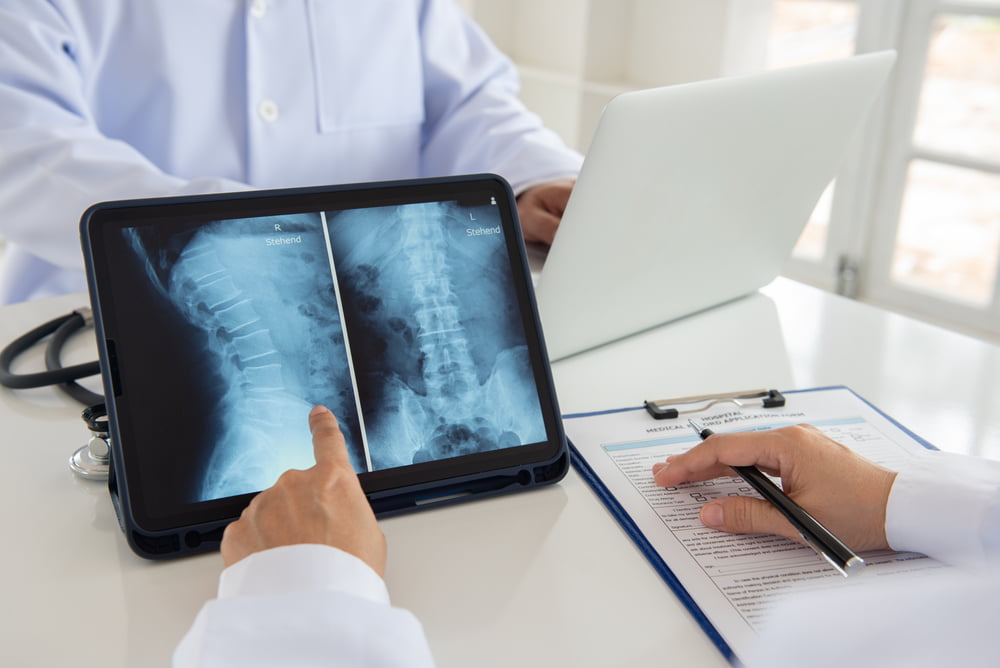
The lumbar spine of the human body is composed of five vertebrae in the lower part of the spine. Vertebrae are the small bones that make up your spinal canal. The lumbar spine specifically is located in your lower back area, between the ribs and the pelvis. These lumbar vertebrae are also the largest and are more thick and block-like compared to other vertebrae. This is very important for the role they play in supporting the human body. Your lumbar spine works to do the following:
- Supports your upper body. The lumbar spine supports the upper two sections of the spine, as well as your head and neck.
- Distributes your body weight. Your lumbar spine transfers the weight from your upper body to your legs.
- Move your body. The lumbar spine allows your torso to move front to back, side to side, full circle (rotate), and twist.
- Protect your spinal cord and cauda equina. Your spinal cord is an extension of your central nervous system, connected to your brain. The cauda equina is the name given to the nerves that descend from the end of the spinal cord.
- Control leg movements. Nerves that branch off from your spinal cord and cauda equina control movement and sensation in the legs.
What Is Facet Joint Syndrome?
Facet Joint Syndrome is a degenerative condition that can be a source of significant back and neck pain. It is similar to arthritis and is characterized by changes to the joints between spine bones, called facet joints. If the cartilage inside of a facet joint breaks down and becomes inflamed, this can trigger the pain signals of nearby nerve endings. This condition can be caused by age, injury, poor posture, repetitive movements, obesity, or other spinal conditions. In order to treat the symptoms, patients can try medication, physical therapy, joint injections, nerve blocks, or nerve ablations to ease the discomfort.
What Is Radiofrequency Neurotomy?
Radiofrequency neurotomy is a technique in which heat, generated by radio waves, is used to address pain. These radio waves target specific nerves and interfere with their ability to send pain signals. If a patient with facet joint syndrome has pain that is not alleviated by medications or physical therapy, this minimally-invasive procedure could be a beneficial option. Pain relief from this method varies from 9 months to two years. If this procedure works for you, your healthcare provider may recommend undergoing radiofrequency neurotomy again if your pain returns. If you wonder if you are a good candidate for radiofrequency neurotomy to treat your facet joint syndrome, speak to your healthcare provider. You should tell them about your symptoms, and feel free to ask questions about what to expect from the procedure.
For those who wonder if they could benefit from radiofrequency neurotomy, consider MVM Health. If you are living with chronic pain and find that it is affecting your enjoyment of day-to-day life, it may be time to seek treatment and pain management. For patients in Pennsylvania, MVM Health is glad to offer services in East Stroudsburg, Scranton, Wilkes Barre, and Lehigh Valley. The experts at MVM Health would be glad to offer guidance and a variety of treatment methods for chronic pain. Call 223-213-2084 to request an appointment.