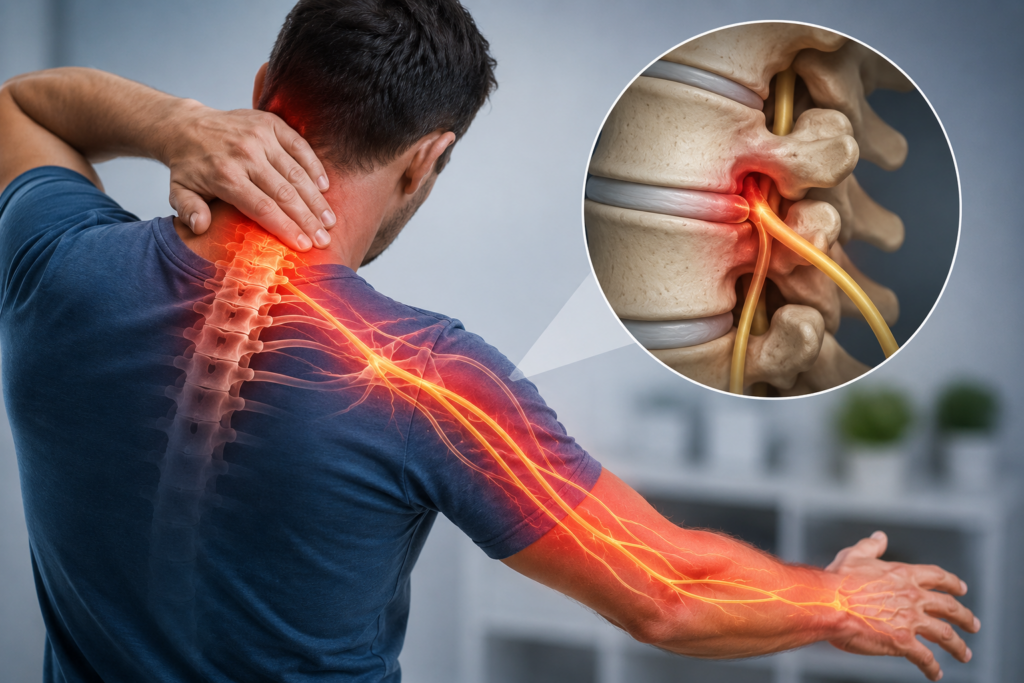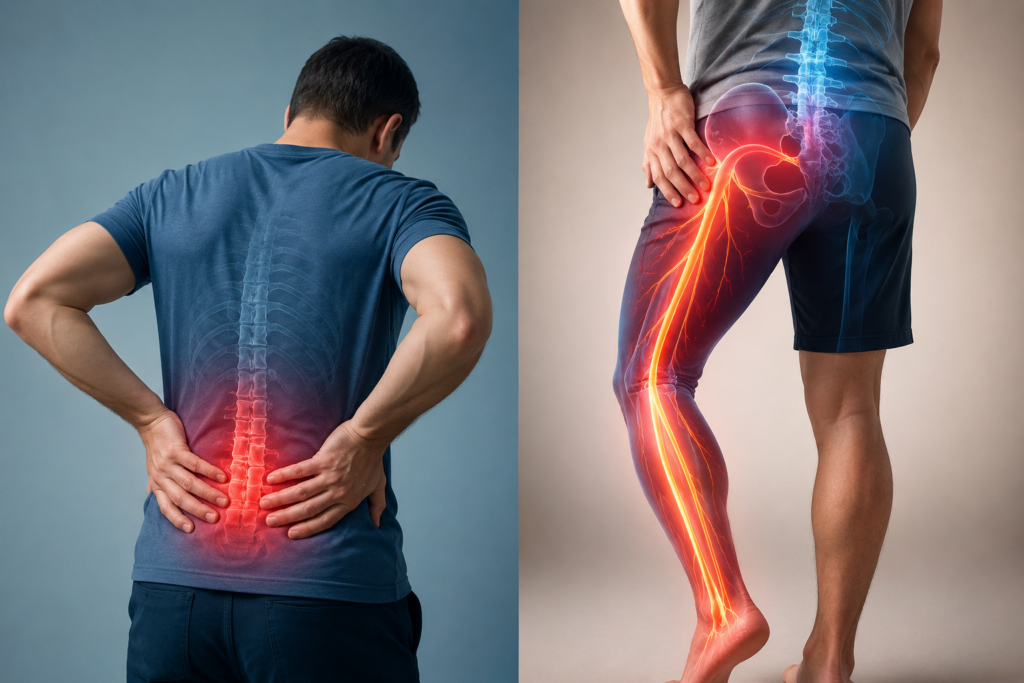

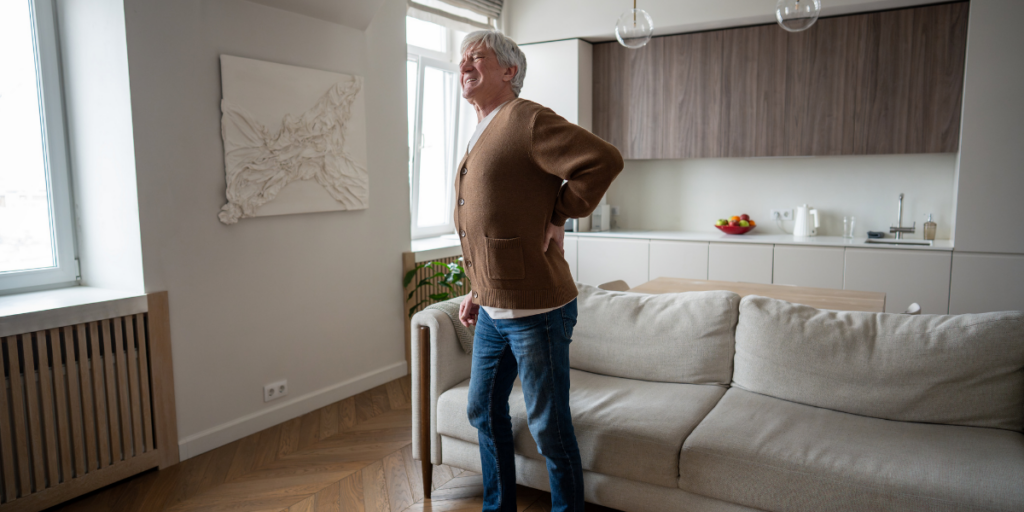
Back pain is common, but when pain travels into the leg or comes with numbness, weakness, or walking discomfort, it may point to a more serious spine-related condition. One possibility is spinal stenosis, which occurs when part of the spine narrows and the nerve roots get squeezed.
Patients do not necessarily develop the symptoms of spinal stenosis all at once. The progression tends to be gradual and may feel like periodic low back aching, heavy legs, numbness/tingling or pain that increases with standing/walking. Gradually the symptoms become increasingly disruptive to even normal, day to day functions like shopping, ascending/descending the stairs or walking across a parking lot.
At MVM Health, our goal is to help identify the source of pain or Spinal Stenosis Symptoms and create a personalized plan focused on improving mobility, function, and quality of life.
What Is Spinal Stenosis?
Spinal stenosis happens when spaces within the spine become narrowed. This narrowing can place pressure on the spinal cord or spinal nerves. When this occurs in the lower back, it is often called lumbar spinal stenosis.
Because the nerves in the lower back travel into the hips, buttocks, legs, and feet, lumbar spinal stenosis can cause both back and leg pain. This is why some patients may feel confused when their pain does not stay in one place. The issue may begin in the spine, but the symptoms can show up in the legs.
Spinal stenosis pain may feel different from person to person. Some patients feel a deep ache in the lower back. Others notice burning, tingling, numbness, or weakness in the legs. The connection between the spine and the legs is one reason it is important to see a pain management specialist when symptoms continue or begin affecting daily life.
Common Spinal Stenosis Symptoms
Spinal stenosis symptoms can vary based on where the narrowing occurs and how much pressure is placed on the nerves. In many cases, symptoms develop gradually.
Common signs may include:
- Lower back pain that may feel dull, aching, or more intense after standing for a long time
- Pain that travels into the buttocks, thighs, calves, or feet and may feel sharp, burning, or heavy
- Leg numbness or tingling that can make the legs feel weak, tired, or less steady during normal movement
- Weakness in one or both legs, especially when walking, climbing stairs, or standing upright for longer periods
- Walking pain that improves when sitting down, resting, or leaning slightly forward to reduce pressure
- Heaviness, cramping, or tightness in the legs that may limit how far a person can comfortably walk
- Trouble standing for long periods due to pressure, discomfort, or increasing leg symptoms
- Reduced balance or mobility that can make daily activities feel harder or less comfortable
This pattern may suggest irritation or compression of nerves in the lower spine In many cases, the pain can be alleviated by sitting down, stooping slightly forward, or taking a break. Some patients notice they can walk farther while leaning forward on a shopping cart but have more pain when standing upright.
This type of observation is a useful clue that the lower spinal nerves may be irritated.
Why Back and Leg Pain Are Often Connected
Back and leg pain can be connected because the nerves that control feeling and movement in the legs pass through the lower spine. When the spinal canal becomes narrowed, these nerves may become compressed or irritated.
That pressure can cause pain to travel. Instead of just experiencing the symptoms in the back alone, patients could suffer from symptoms down the leg. Often the symptoms can even be similar to sciatica with symptoms felt down the buttock and then the leg.
Specialists here at MVM Health can then determine the reason for the symptoms associated with nerve pain. This can involve taking a full history, finding out how your symptoms change when sitting, walking etc, performing a physical and neurological examination to test strength, sensation and reflex.
The goal is to understand what is causing the discomfort instead of only treating the symptoms on the surface.
When Walking Pain May Be a Warning Sign

Walking pain is one of the symptoms patients should not ignore, especially when it keeps returning or limits normal activity. You may notice that you need to stop and rest more often than before. You may avoid errands, exercise, or social activities because standing or walking becomes uncomfortable.
Examples of walking-related symptoms include:
- Pain after walking short distances, even during simple activities like shopping or moving around the house
- Leg heaviness that improves with rest but returns again when standing or walking continues
- Numbness or tingling while standing, especially when the lower back feels tight, tired, or pressured
- Pain that improves when sitting, bending forward, or leaning on a shopping cart for support
- Feeling unsteady, weak, or less confident in the legs during longer walks, stairs, or daily movement
These symptoms may gradually affect independence. A patient who once walked easily may start planning activities around how much standing or walking is required.
If spinal stenosis symptoms are affecting your mobility, it may be time to schedule an evaluation with a pain management specialist.
How Spinal Stenosis Is Evaluated
A proper diagnosis is an important step toward the right spinal stenosis treatment in Pennsylvania. Since back pain and leg pain can come from different causes, a careful evaluation helps determine whether the pain is related to spinal stenosis, a disc issue, arthritis, nerve compression, or another condition.
During a consultation, your specialist may ask:
- Where your pain starts and whether it stays in the back or travels into the legs
- Whether your symptoms become worse with walking, standing, bending, or climbing stairs
- Whether sitting, resting, or leaning forward helps reduce the pain or leg discomfort
- Whether you feel leg numbness, weakness, tingling, heaviness, or balance changes
- How long the symptoms have been present and whether they are getting worse over time
- How much the pain is affecting your work, sleep, walking ability, and daily routine
A physical and neurological exam may also be used to check strength, reflexes, sensation, and movement. Imaging such as an MRI, CT scan, or X-ray may be recommended when needed to better understand what is happening in the spine. Your provider may also discuss spine pain treatment options based on your diagnosis and symptoms.
Spinal Stenosis Treatment Options
The best way to treat spinal stenosis depends on the degree of nerve compression, the location where the nerves are being compressed and on the goals of treatment for each patient. Here at MVM Health each patient’s care will be tailored for that specific condition.
With interventional pain management the stenosis cannot be reversed but the painful nerve compression can be decreased. This will allow the patient to feel more comfortable and have a better quality of life.
Treatment options may include:
Epidural Steroid Injections
Epidural steroid injections may be used to reduce inflammation and nerve irritation in the spine. These injections can be helpful for radiating back and leg pain related to spinal nerve irritation.
Facet Joint Injections
Facet joint injections may be recommended when pain is linked to arthritis or spinal joint dysfunction. These injections help target pain coming from the small joints of the spine.
Radiofrequency Ablation
Radiofrequency ablation, also called RFA, is designed to disrupt pain signals from specific nerves. It may provide longer-lasting relief for certain types of chronic back pain.
Spinal Cord Stimulation
Spinal cord stimulation may be considered for certain chronic pain conditions when other treatments have not provided enough relief. It works by changing how pain signals are processed before they reach the brain.
Caudal Steroid Injections
Caudal steroid injections may be used for certain types of lower back and leg pain. These injections are placed through the lower part of the spine to help reduce inflammation around irritated nerves.
Your provider will determine which option is appropriate based on your symptoms, diagnosis, and overall treatment goals.
Actionable Tips for Managing Symptoms

While professional evaluation is important, patients can also take steps to better understand and manage their symptoms.
Try these simple tips:
- Track when your pain gets worse, including walking, standing, climbing stairs, or standing in one place
- Notice what helps your symptoms, such as sitting down, leaning forward, resting, or changing positions
- Avoid pushing through severe leg numbness, weakness, or pain that makes walking feel unsafe
- Write down how far you can walk before symptoms begin and whether the distance is getting shorter
- Bring your symptom notes to your appointment so your provider can better understand your pain pattern
- Seek care early if pain is affecting your sleep, work, independence, or ability to complete daily activities
These details can help your provider better understand your pain pattern and recommend a care plan that fits your daily life.
When Should You See a Pain Management Specialist?
You should consider seeing a pain management specialist in Bethlehem if spinal stenosis symptoms are becoming frequent, worsening, or interfering with your normal routine.
Schedule an evaluation if you experience:
- Ongoing chronic back pain that keeps returning or does not improve with basic home care
- Back and leg pain that becomes more noticeable when walking, standing, or staying active
- Leg numbness or tingling that affects comfort, balance, or confidence with movement
- Walking pain or difficulty standing that limits errands, work, exercise, or daily routines
- Weakness in the legs that makes stairs, long walks, or normal movement more difficult
- Pain that limits daily activities, sleep, independence, or your ability to enjoy normal life
- Symptoms that return despite rest, stretching, medication, or other basic conservative care
At MVM Health, specialists focus on treating the source of pain, not just masking symptoms. The care team works with patients to create personalized treatment plans focused on long-term relief, improved function, and better quality of life.
Take the Next Step Toward Better Back and Leg Pain Relief
Spinal stenosis symptoms can be frustrating because they often connect the back and legs in ways that are not always easy to understand. Lower back pain, leg numbness, walking pain, weakness, and discomfort that improves with sitting may all point to nerve compression in the spine.
When these symptoms start affecting how far you can walk, how long you can stand, or how comfortably you move through the day, it may be time to get a proper evaluation. Early care can help identify the source of your pain and prevent symptoms from continuing to interfere with work, sleep, errands, and daily independence.
The good news is that patients do not have to manage spinal stenosis pain alone. With the right diagnosis and a personalized spinal stenosis treatment plan, it may be possible to reduce pain, improve mobility, and return to daily activities with more confidence.
Schedule Your Appointment in Pennsylvania
If back and leg pain, leg numbness, or walking discomfort are affecting your daily life, Schedule your appointment with MVM Health. Our team can help evaluate your spinal stenosis symptoms and discuss treatment options at one of our Pennsylvania locations.
Frequently Asked Questions
What are the most common spinal stenosis symptoms?
+
Can spinal stenosis cause both back and leg pain?
+
Why does spinal stenosis pain get worse when walking?
+
Can leg numbness be a sign of lumbar spinal stenosis?
+
When should I see a pain management specialist for spinal stenosis pain?
+
What spinal stenosis treatment options are available?
+
epidural steroid injections,
facet joint injections, radiofrequency ablation, spinal cord stimulation, caudal steroid injections, or other personalized pain management options.