

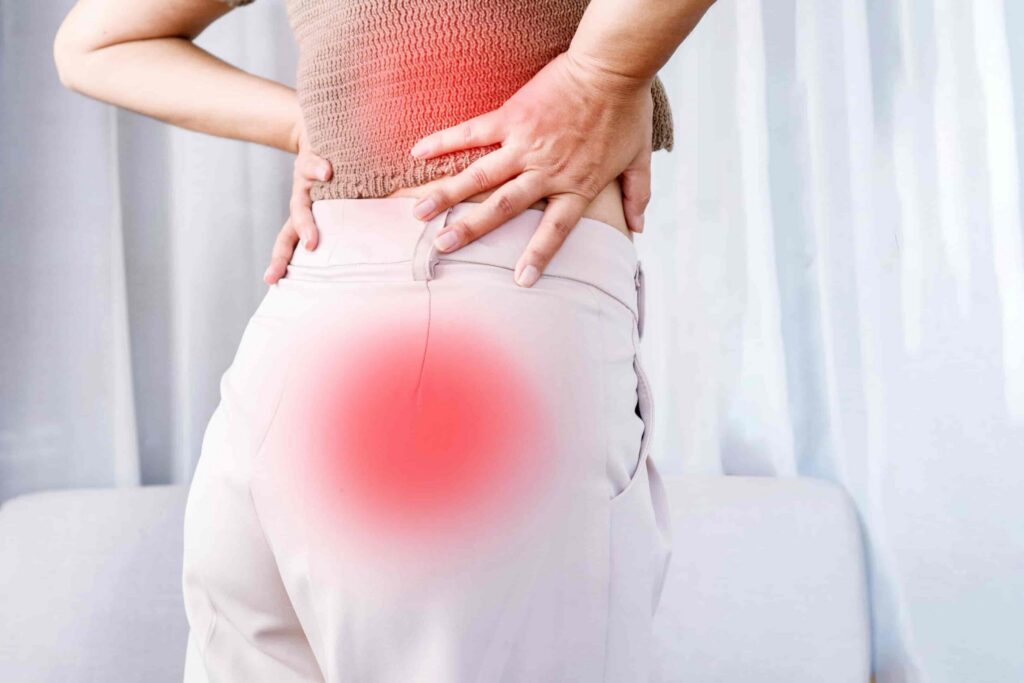
Sciatica is one of the most misidentified conditions in pain medicine. People describe it as back pain, hip pain, leg pain, or even a pulled muscle – all of which can miss the point. Sciatica is not a diagnosis in itself. It is a collection of symptoms that signal compression or irritation of the sciatic nerve, the longest nerve in the body, running from the lower lumbar spine through the buttock, down the back of the thigh, and into the calf and foot.
Understanding what is actually causing the nerve irritation and where in the spine or surrounding tissue the compression is occurring is what determines the right treatment. That is why patients who try generic remedies for months without improvement are usually working without a proper diagnosis for Sciatica Pain Treatment.
What Does Sciatica Actually Feel Like?
The symptoms of sciatica nerve pain are distinctive enough that many people recognize them before they ever see a doctor. Still, severity and presentation vary widely depending on which nerve root is involved and how much compression is present.
- Sharp, burning, or electric shooting pain from the lower back into the leg
- Numbness or tingling running down the back of the thigh into the calf or foot
- Pain that worsens significantly with prolonged sitting or standing
- Pain that is typically one-sided – affecting the left or right leg, not both
- Weakness in the leg, knee, or foot on the affected side
- Discomfort that eases temporarily when walking or changing position
In mild cases, sciatica produces intermittent discomfort that is manageable but distracting. In severe cases, the pain can be debilitating making it impossible to sit for a meeting, drive comfortably, or sleep through the night. Either way, it is not something to push through indefinitely.
What Causes Sciatica Nerve Pain?
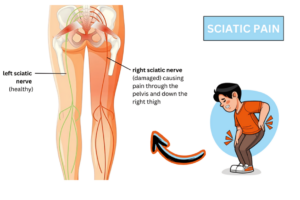
Sciatica always has a structural origin: something is pressing on the sciatic nerve or one of the nerve roots that form it. The most common causes are:
Herniated Lumbar Disc
Herniated Disc accounts for roughly 90% of sciatica cases. When the soft inner material of an intervertebral disc pushes through its outer shell at the L4-L5 or L5-S1 level, it can press directly against the nerve root. The compression produces the characteristic radiating pain and neurological symptoms down the leg.
Lumbar Spinal Stenosis
In older adults, sciatica is frequently caused by stenosis, which is a narrowing of the spinal canal that reduces the space available for nerve roots. The hallmark of stenosis-related sciatica is that symptoms worsen with walking and standing, and ease when sitting or bending forward.
Piriformis Syndrome
The piriformis muscle sits deep in the buttock, directly over the sciatic nerve. When it becomes tight or inflamed from prolonged sitting, overuse, or injury it can compress the nerve from outside the spine. This is one of the less commonly diagnosed causes of sciatica nerve pain, but it is worth noting because its treatment differs from disc-related sciatica.
Spondylolisthesis
When one vertebra slips forward over the one below it, the resulting spinal instability can narrow the nerve exit points and compress the sciatic nerve roots. This is more common in active adults and can produce both local back pain and significant leg symptoms.
Bone Spurs
Over time, the body sometimes deposits extra bone around degenerated joints and disc spaces. These bone spurs can encroach on the nerve canal and press against the nerve roots, causing symptoms that are similar to those of a herniated disc but typically more gradual in onset.
How Long Does Sciatica Last and What Speeds Up Recovery?
This depends significantly on the cause and how early treatment begins. Mild disc herniations sometimes improve within four to six weeks with conservative management. However, sciatica caused by significant nerve compression, spinal stenosis, or structural instability rarely resolves fully without targeted intervention.
The most consistent factor that predicts faster recovery is early, accurate diagnosis. Patients who get the right diagnosis and appropriate treatment quickly tend to recover faster, with less risk of the pain becoming permanent or progressively worsening.
What you should avoid is waiting six months to see if it goes away particularly if you are experiencing numbness, weakness, or severe pain that limits daily function. These symptoms suggest active nerve involvement that tends to worsen rather than improve with time alone.
Practical Tips for Managing Sciatica Day to Day
- Avoid prolonged sitting if your work requires it, stand and move briefly every 30 to 45 minutes to reduce nerve compression
- When resting, lying on your side with a pillow between your knees takes pressure off the lumbar nerve roots
- Gentle walking is generally better than complete rest movement may help promote circulation around the irritated nerve
- Cold packs in the first 48 hours of a flare can reduce inflammation; heat therapy is more helpful after that window
- Avoid heavy lifting and any movement that involves bending and twisting simultaneously, particularly during active flares
These tips can help you get through the day more comfortably, but they are not a substitute for addressing the underlying structural cause. Think of them as managing the symptoms while you work with your specialist on the root problem.
Sciatica Pain Treatment: What Your Options Are
The treatment that works best depends entirely on the cause of the nerve compression. This is why a proper diagnosis including imaging of the lumbar spine should precede any treatment plan. At MVM Health’s pain relief clinic locations in Bethlehem and across Pennsylvania and New Jersey, care begins with identifying the specific level and mechanism of compression before any intervention is recommended.
Treatment options for sciatica pain treatment include:
- Transforaminal Epidural Steroid Injections: Anti-inflammatory medication delivered precisely to the compressed nerve root level. Often provides significant relief within days, lasting weeks to months.
- Nerve Blocks: For piriformis syndrome or peripheral sciatic nerve involvement, targeted nerve blocks reduce pain and restore mobility while healing progresses.
- Spinal Cord Stimulation: For chronic or post-surgical sciatica that has not responded to other treatments, spinal cord stimulation delivers low-level electrical pulses that intercept pain signals before they reach the brain.
- Regenerative Therapies: PRP, bone marrow aspirate concentrate, or other regenerative options may be considered when clinically appropriate. These treatments are recommended only after a proper evaluation.
- Physical Therapy: After acute pain is controlled, a targeted exercise program strengthens the muscles supporting the lumbar spine and reduces the likelihood of recurrence.
- Minimally Invasive Procedures: For structural causes that do not respond to conservative care, options like discectomy or MILD procedure can address the compression directly with minimal recovery time.
Pain treatment in Bethlehem at MVM Health is delivered by board-certified specialists including Harvard Medical School-trained physicians. The clinic’s approach combines the diagnostic precision to identify exactly where the problem is with the full range of interventional tools needed to address it without unnecessary referrals or delays.
Schedule a Sciatica Pain Evaluation at MVM Health
If sciatica nerve pain is affecting your ability to sit, walk, work, drive, or sleep comfortably, MVM Health can help identify the source of your symptoms and recommend appropriate treatment options. Schedule a sciatica pain evaluation at MVM Health’s Bethlehem, PA location or one of our nearby PA and NJ clinics.
Key Takeaway
- Sciatica = compression or irritation of the sciatic nerve
- Symptoms include shooting pain, numbness, and weakness travelling down one leg
- Most common cause is a herniated disc at L4-L5 or L5-S1
- Non-surgical treatments are effective in the vast majority of cases
- Early, accurate diagnosis leads to faster, better outcomes
- MVM Health offers full-range sciatica treatment across PA and NJ