
If your knee hurts more getting out of a chair than it did climbing stairs a year ago, that stiffness is usually the first sign of knee arthritis in Wayne PA, not just “getting older.” Knee arthritis develops when the cartilage cushioning your joint wears down faster than your body can repair it, and the pain pattern (worse after rest, better after a few minutes of movement, then worse again by evening) is different from a sprain or a torn ligament. Catching that pattern early is what decides whether you manage it with a few lifestyle changes or end up choosing between injections and surgery five years from now.
Most people in Wayne wait far longer than they should before getting a knee evaluated. Some assume it’s just normal aging, some don’t know which symptoms actually matter, and some assume nothing can be done short of surgery. None of that is true. This guide breaks down what’s happening inside the joint, which symptoms deserve a same-week appointment, how the condition gets diagnosed, and what treatment actually looks like before anyone mentions the word surgery.
What’s Actually Happening Inside an Arthritic Knee
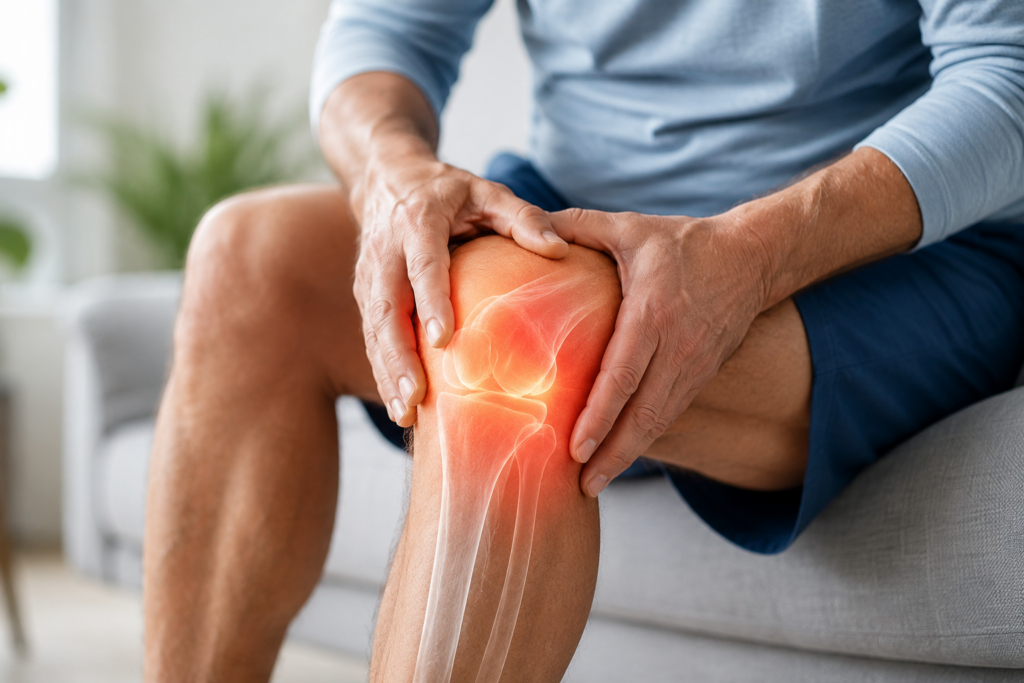
The knee is a hinge joint, and like any hinge, it depends on smooth surfaces to move without friction. Cartilage is that smooth surface, covering the ends of the femur, tibia, and kneecap. With knee arthritis, the cartilage thins, cracks, or wears away in patches, which means bone starts moving closer to bone with every step. The body responds by trying to stabilize the joint, and that response is often what causes the swelling, stiffness, and bone spurs people associate with arthritis. Over time, the synovial fluid that normally lubricates the joint also changes in quality, which is part of why movement starts to feel gritty rather than smooth.
There isn’t just one type of arthritis affecting the knee, and the differences matter for treatment:
- Osteoarthritis – the “wear and tear” kind and the most common; this guide focuses on it
- Rheumatoid arthritis – autoimmune-driven, usually affects both knees at once along with joints like the hands or wrists
- Post-traumatic arthritis – develops years after an old knee injury or accident that never fully resolved
- Gout-related arthritis – uric acid crystals build up in the joint, causing sudden, intense flare-ups rather than gradual wear
Knowing which type you’re dealing with changes the treatment plan considerably, which is one reason a proper diagnosis matters more than guessing based on symptoms alone.
Early Symptoms People in Wayne Tend to Dismiss
The symptoms of knee arthritis rarely show up all at once. They build gradually, which is exactly why so many people push through them for months, sometimes years, before scheduling an appointment.
- Morning stiffness that loosens up after 15-20 minutes of movement
- A grinding, clicking, or crackling sensation when bending or straightening the knee
- Swelling that comes and goes, especially after standing or walking for a while
- Pain that worsens with weather changes or after sitting for extended stretches
- A knee that feels like it might “give way” or buckle on stairs or uneven ground
- Reduced range of motion, noticeable when trying to kneel, squat, or sit cross-legged
- A visible change in the shape of the knee, sometimes bowed or knock-kneed compared to before
Care Tip: If knee pain has lasted more than six weeks, is limiting how far you can walk, or wakes you up at night, that’s the point to move from home remedies to a specialist evaluation. Waiting past that point rarely makes the joint better on its own.
Why the Condition Progresses Faster for Some People
Not every case of knee arthritis moves at the same speed. According to the CDC, roughly 33 million U.S. adults live with osteoarthritis, making it the most common form of arthritis by a wide margin. Extra body weight puts direct mechanical stress on the knee with every step, since extra weight puts more pressure on weight-bearing joints like the hips and knees. Even a modest amount of excess weight translates into several times that force across the knee joint with each stride, which compounds over years of walking.
Age is a factor too, since cartilage naturally becomes less resilient and repairs itself more slowly over time. A prior knee injury, whether from sports, a fall, or an old car accident, also raises the odds significantly even if it seemed to heal at the time. Women, particularly after age 50, tend to develop osteoarthritis at higher rates than men, and genetics play a role as well; a parent or sibling with significant joint arthritis raises the odds independent of weight or activity level. Occupations or hobbies involving frequent kneeling, squatting, or heavy lifting add another layer of cumulative stress over the years.
None of these factors guarantee arthritis will progress quickly, but they do mean symptoms deserve to be taken seriously earlier, especially for anyone in Wayne who spends a lot of time on their feet for work or who has an old knee injury that’s never been properly evaluated.
Knee Arthritis vs. Other Common Causes of Knee Pain
Not all knee pain is arthritis, and treating a meniscus tear like arthritis, or the reverse, wastes time and often delays real recovery.
| Condition | Typical Onset | Pain Pattern | Swelling |
| Osteoarthritis | Gradual, over months or years | Worse with activity, stiff after rest | Mild to moderate, comes and goes |
| Meniscus Tear | Sudden, often tied to a twisting injury | Sharp pain, locking or catching sensation | Often immediate and pronounced |
| Rheumatoid Arthritis | Gradual, usually affects both knees | Persistent, often worse in the morning | Significant, with warmth in the joint |
| Bursitis | Can be sudden or gradual | Localized tenderness, pain when kneeling | Localized swelling over the kneecap |
| IT Band Syndrome | Gradual, tied to repetitive activity | Sharp pain on the outer knee during motion | Rarely significant |
A physical exam combined with imaging is usually what separates these conditions from each other, since several of them feel similar in the early stages.
How Knee Arthritis Gets Diagnosed
A proper diagnosis typically starts with a conversation about when the pain began, what makes it better or worse, and whether there’s a history of injury to that knee. That’s followed by a physical exam checking range of motion, swelling, joint stability, and the exact location of tenderness, since where the pain sits often narrows down the likely cause before any imaging is even done.
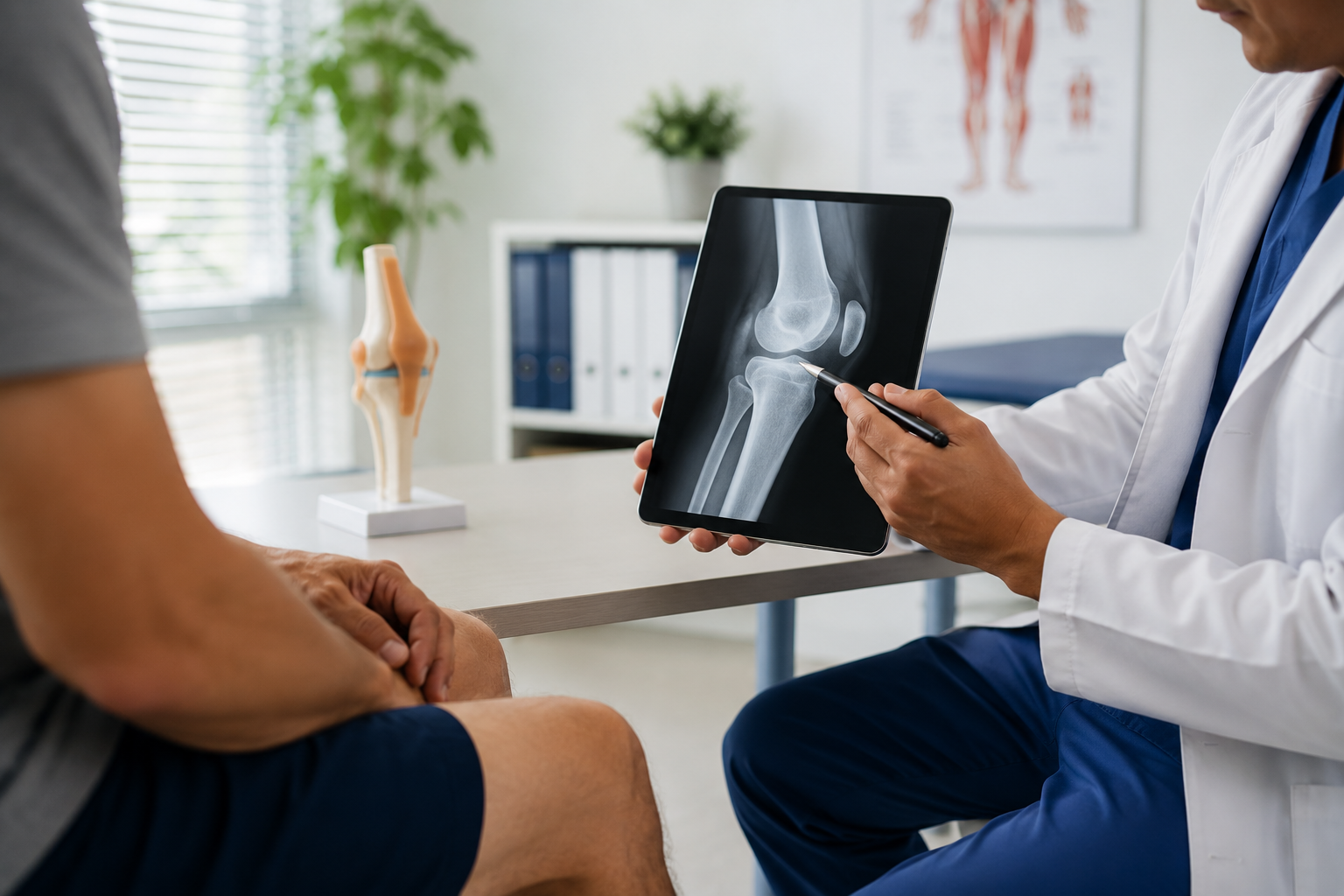
X-rays remain the standard first step for confirming osteoarthritis, since they clearly show narrowed joint space, bone spurs, and other changes typical of cartilage loss. In cases where the picture isn’t clear from an X-ray alone, an MRI provides a more detailed look at soft tissue, which helps rule out a meniscus tear or ligament damage contributing to the pain alongside arthritis. Blood work is sometimes added when rheumatoid arthritis or gout is suspected, since these conditions leave specific markers that a straightforward X-ray won’t reveal.
Non-Surgical Treatment Options Worth Trying Before Surgery
Surgery is rarely the first step for knee arthritis treatment in Wayne PA. Most patients achieve meaningful pain relief through non-surgical treatments such as physical therapy, medications, joint injections, and lifestyle changes before surgery is ever considered.
Physical therapy and targeted exercise strengthen the muscles surrounding the knee, particularly the quadriceps and hamstrings, taking pressure off the joint and improving overall stability. Low-impact activities like swimming or cycling keep the knee mobile without the jarring stress that walking on hard surfaces can cause, and a structured program often makes a bigger difference than people expect within just a few weeks.
Joint injections are often the next step when exercise and anti-inflammatory medication aren’t enough on their own. Corticosteroid injections reduce inflammation directly at the source, while hyaluronic acid injections add lubrication back into the joint space to reduce bone-on-bone friction. You can read more about how these procedures work on our joint injections page.
Shockwave therapy is a newer, non-invasive option that’s gained traction for knee arthritis specifically because it doesn’t require needles or downtime. It works by delivering acoustic wave pulses to the affected tissue, which is thought to stimulate the body’s own healing response and improve blood flow over a series of sessions.
A few other options round out the non-surgical toolkit:
- Bracing and supportive devices to offload pressure from the more damaged side of the joint
- Weight management, where even a modest reduction lowers the load on the knee with each step
For patients dealing with pain in more than one joint, our page on joint pain across shoulders, hips, and knees covers how these treatment approaches overlap and where they differ by joint.
When Home Care and Injections Aren’t Enough
Some knees reach a point where conservative treatment stops moving the needle. Persistent pain that limits basic daily tasks like walking to the mailbox or climbing a flight of stairs, a joint that’s become visibly deformed, or imaging showing advanced bone-on-bone contact are all signals that a more advanced conversation is needed, potentially including a referral to an orthopedic surgeon to evaluate partial or total knee replacement. That doesn’t mean surgery is inevitable even at this stage, but it does mean the conversation needs to happen with someone qualified to weigh every option honestly.
Choosing the right specialist at that stage matters more than people realize. Our guide on finding the right knee pain doctor walks through which type of physician to see depending on the underlying cause. For patients dealing with pain that’s spread beyond just the knee, MVM Health’s chronic pain treatment program in Wayne is built around evaluating the full picture rather than treating one joint in isolation.
Living With Knee Arthritis Day to Day
A knee arthritis diagnosis doesn’t mean giving up an active life; it means adjusting how that activity happens. Swapping high-impact activities like running for cycling or swimming keeps joints moving without the repeated jarring impact that accelerates cartilage wear. Supportive footwear with proper cushioning reduces shock transmitted up through the leg with every step, and something as simple as replacing worn-out shoes can noticeably reduce daily discomfort.
A few small daily habits help beyond footwear and activity choice:
- Use a cane or brace during flare-ups instead of avoiding activity altogether, since inactivity often makes stiffness worse
- Track which activities, foods, or weather patterns trigger flare-ups to help fine-tune treatment over time
- Apply cold compresses during active flare-ups and heat for general stiffness before activity
- Sleep with a pillow between the knees when lying on your side to reduce overnight strain
Knee pain that keeps coming back deserves more than another round of over-the-counter medication. A proper evaluation, ideally before the joint has deteriorated significantly, opens up far more treatment options than waiting does.
If knee pain has been slowing you down, MVM Health’s Wayne team can evaluate your joint, confirm what’s actually causing the pain, and build a treatment plan around it. Schedule a consultation to find out which options fit your case.
FAQs
What are the first signs of knee arthritis?
The earliest signs are usually morning stiffness that eases after moving around, mild swelling after activity, and a grinding sensation when bending the knee.
Can knee arthritis be reversed?
Cartilage damage itself cannot be reversed, but progression can be slowed significantly through weight management, targeted exercise, and early treatment.
Is walking good or bad for knee arthritis?
Walking is generally good in moderation, since it keeps the joint mobile and strengthens supporting muscles. Long distances without proper footwear can aggravate symptoms.
What is the best treatment for knee arthritis without surgery?
There isn’t a single best option since it depends on how advanced the arthritis is. A combination of physical therapy, joint injections, and weight management typically works well for moderate cases.
How do I know if my knee pain is arthritis or something else?
Arthritis pain usually builds gradually and worsens with activity, while a sudden injury like a meniscus tear causes sharp, immediate pain tied to a specific twisting movement.
At what age does knee arthritis usually start?
Osteoarthritis risk increases notably after age 50, though it can develop earlier with a prior knee injury or a family history of joint conditions.
Does weather really affect knee arthritis pain?
Many patients report increased stiffness with cold or damp weather, and while the exact mechanism isn’t fully settled, changes in barometric pressure are thought to affect joint fluid and surrounding tissue.