
Interventional pain management in Reading is a branch of care that treats pain at its source using image-guided injections, nerve blocks, and minimally invasive procedures instead of relying only on pills. Rather than masking symptoms with long-term medication, it targets the exact nerve, joint, or disc causing the problem, often within a single office visit. For patients across Berks County who have tried physical therapy or over-the-counter relief without lasting results, this is usually the next logical step before anyone even brings up surgery.
If you’ve been told “just rest and take ibuprofen” one too many times, or you’re stuck cycling through the same flare-ups every few weeks with no real answer as to why, this guide breaks down what this type of care actually involves, who it helps, what the actual procedures look like, and what to expect walking into a clinic here in Reading.
What Interventional Pain Management Actually Means
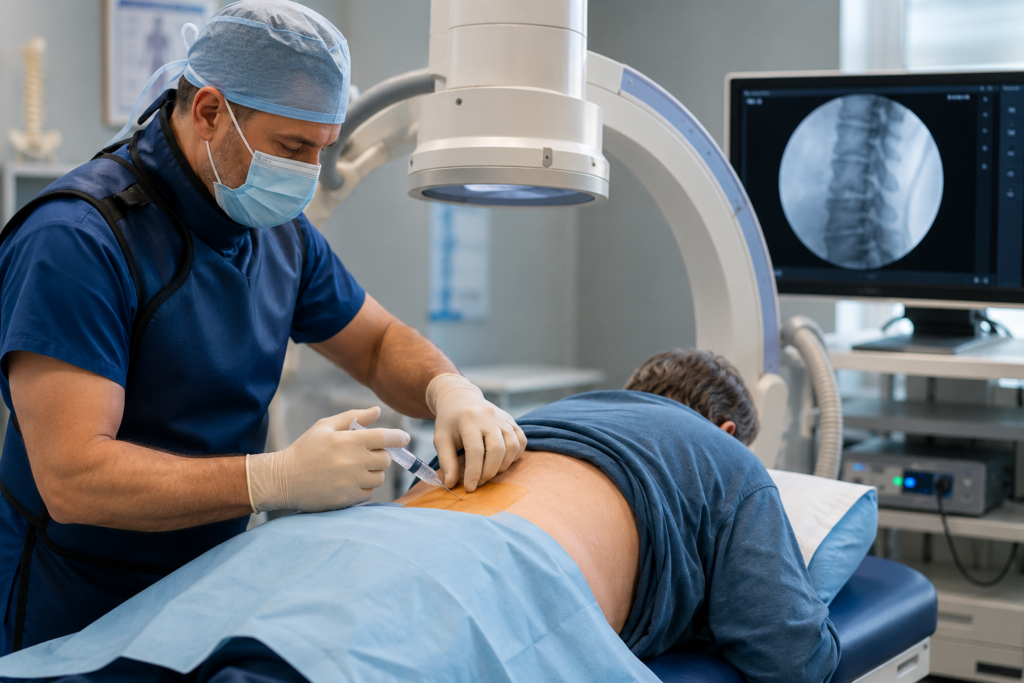
The term sounds clinical, but the idea behind it is fairly simple. A pain physician uses imaging, usually fluoroscopy or ultrasound, to guide a needle or device precisely to the tissue that’s generating pain signals, whether that’s an inflamed nerve root, an irritated joint, or a damaged disc. According to the Cleveland Clinic, this field uses minimally invasive techniques to diagnose and treat chronic pain conditions, which is a meaningful distinction from general pain management, since a lot of the value here comes from precision diagnosis, not just symptom control.
This is different from how pain has traditionally been handled in a lot of primary care settings, where the default path is often a prescription, a referral to physical therapy, and a “let’s see how it goes” approach. Interventional care flips that order. Instead of starting broad and narrowing down over months, the physician uses imaging and diagnostic blocks early on to identify exactly what’s causing the pain, then treats that specific structure directly.
In practice, this means:
- Diagnostic blocks that confirm which nerve is actually responsible for the pain
- Targeted injections that deliver medication exactly where it’s needed, not systemically
- Procedures that can reduce or eliminate the need for daily oral pain medication
- Treatment plans built around imaging findings and physical exam, not guesswork
- A stepwise approach that starts with the least invasive option and escalates only if needed
This is the same framework used at MVM Health’s interventional pain management program in Reading, where every treatment plan starts with figuring out the actual pain generator before deciding on a procedure. It’s a fundamentally different starting point than “let’s try this medication and check back in a month.”
Who Is a Good Candidate for This Kind of Care
Not every ache needs an interventional approach, and a good pain specialist will tell you that upfront rather than pushing a procedure that isn’t necessary. Generally, patients are considered good candidates when:
- Pain has lasted more than 4 to 6 weeks and isn’t improving with rest or over-the-counter medication
- Physical therapy or chiropractic care has provided partial relief but symptoms keep returning
- Imaging, whether MRI, CT, or X-ray, shows a clear structural cause like a herniated disc, spinal stenosis, or joint degeneration
- Pain is interfering with sleep, work, or basic daily movement
- Oral medications aren’t cutting it, or the patient specifically wants to reduce reliance on them
- There’s a clear, localized source of pain rather than widespread, unexplained symptoms
Age isn’t really the deciding factor here. Reading patients in their 30s dealing with a sports injury and patients in their 70s with degenerative spine changes can both be reasonable candidates, depending on what the imaging and exam actually show. What matters more than age is whether there’s an identifiable structure causing the pain and whether more conservative options have already been given a fair shot.
It’s also worth mentioning who might not be an ideal fit right away. Patients with active infections, uncontrolled bleeding disorders, or certain autoimmune conditions may need additional evaluation before a procedure is scheduled. This is exactly why a thorough first visit, including a full medical history review, matters as much as the procedure itself.
Conditions This Approach Is Commonly Used For
Interventional techniques cover a wide range of pain sources, not just back pain, even though back and spine issues make up a large share of cases. Common conditions treated include:
- Lower back pain from disc herniation, degeneration, or facet joint arthritis
- Neck pain and cervical radiculopathy
- Sciatica and nerve root compression
- Spinal stenosis
- Osteoarthritis in the knees, hips, and shoulders
- Chronic nerve pain, including diabetic neuropathy
- Post-surgical pain that hasn’t resolved on its own
- Fibromyalgia-related pain in select cases
- Complex regional pain syndrome
- Headaches and migraines tied to occipital nerve irritation
Each of these conditions tends to respond differently depending on how long it’s been present and what’s actually driving it. A herniated disc pressing on a nerve root, for instance, usually responds well to an epidural steroid injection, while facet joint arthritis is more commonly addressed with radiofrequency ablation. This is part of why an accurate diagnosis matters so much before any treatment decision is made.
For a deeper breakdown of how conditions are matched to specific treatments, MVM Health’s page on chronic pain treatment options walks through this in more detail.
Common Procedures Patients in Reading Ask About
This is usually where people have the most questions, since the terminology can sound intimidating even though the procedures themselves are quick and low-risk when done correctly by an experienced physician.
| Procedure | What It Targets | Typical Visit Length |
| Epidural steroid injections | Inflamed nerve roots in the spine | 15-20 minutes |
| Nerve blocks | Specific peripheral or spinal nerves causing pain | 10-20 minutes |
| Radiofrequency ablation (RFA) | Nerves transmitting chronic joint or spine pain | 30-45 minutes |
| Facet joint injections | Small joints connecting spinal vertebrae | 15 minutes |
| Trigger point injections | Localized muscle knots and tension | 10 minutes |
| Spinal cord stimulation | Chronic, refractory nerve pain signals | Trial period, then implant |
Epidural steroid injections deliver anti-inflammatory medication directly around a compressed or irritated spinal nerve, which is one of the most requested procedures for disc-related back and leg pain. The medication reduces swelling around the nerve root, which in turn reduces the pain signals being sent to the brain. Details on how this specific procedure works are covered on MVM Health’s epidural steroid injections page.
Nerve blocks work by temporarily interrupting pain signals from a specific nerve, which serves two purposes: relieving pain and confirming the diagnosis. If a block resolves the pain, even briefly, the physician knows they’ve found the correct source, which then guides whether a longer-lasting procedure like RFA makes sense.
Radiofrequency ablation, often shortened to RFA, uses heat generated by radio waves to disable the small nerves responsible for transmitting chronic pain signals from joints like the facet joints in the spine. Relief from RFA commonly lasts anywhere from 6 months to over a year, since the nerve tissue takes time to regenerate before pain signals resume. More on how this procedure is performed is available on the radiofrequency ablation page.
Facet joint injections target the small joints that connect each vertebra to the next, which can become a major source of pain as they degenerate with age or injury. Trigger point injections, on the other hand, are aimed at muscle tissue rather than nerves or joints, and are often used for chronic tension patterns in the neck, shoulders, and lower back.
For patients dealing specifically with leg and lower back symptoms tied to nerve compression, the sciatica treatment and back pain treatment pages break down condition-specific approaches in more depth.
Care Tip: Bring a list of every treatment you’ve already tried, including dates and how long relief lasted. This single piece of information often changes which procedure a physician recommends first, since it tells them what’s already been ruled out.

What Actually Happens During These Procedures
A lot of the hesitation patients feel comes from not knowing what the appointment itself will look like. Most interventional procedures follow a similar pattern. The patient lies on a treatment table, the target area is cleaned and numbed with a local anesthetic, and the physician uses imaging guidance to place the needle precisely. The actual injection or ablation takes only a few minutes, and patients are typically monitored for a short period afterward before being cleared to leave.
Recovery time is usually minimal. Most patients can return to light daily activity the same day, though it’s common to avoid strenuous exercise or heavy lifting for 24 to 48 hours depending on the specific procedure. Any soreness at the injection site is generally mild and resolves within a day or two.
Benefits of This Type of Treatment
Patients who go this route often notice a few consistent advantages:
- Faster, more targeted relief compared to relying only on oral medication
- Reduced dependence on long-term pain pills, including opioids
- Minimally invasive procedures with little to no downtime
- A clearer diagnosis, since many procedures double as diagnostic tools
- Improved mobility, sleep, and daily function without surgery
- A treatment path that can often delay or avoid the need for spinal surgery altogether
- The ability to return to work or normal routines much faster than after invasive surgery
In certain patient populations, combining these procedures with physical therapy leads to better long-term outcomes than either approach on its own, though individual results vary based on the underlying condition and how long it’s been present. The goal across all of this is functional improvement, not just a temporary drop in pain scores.
When to See a Pain Specialist in Reading
A lot of people wait far too long before booking this kind of appointment, usually because they assume the pain will just resolve on its own. According to CDC data, an estimated 20.9% of U.S. adults live with chronic pain, and waiting rarely makes that number improve without treatment. It’s worth scheduling a consultation if:
- Pain has lasted longer than a month without meaningful improvement
- You’re relying on over-the-counter medication most days of the week
- Numbness, tingling, or weakness has started showing up alongside the pain
- Sleep or work is being disrupted regularly
- A previous injury never fully healed and keeps flaring up
- Your primary care physician has suggested imaging or a specialist referral
- You’ve been offered surgery as the only option and want to explore alternatives first
Waiting rarely makes a mechanical problem like a herniated disc or joint degeneration better on its own, and in some cases, delaying treatment allows the underlying issue to worsen, which can mean a longer recovery process later on.
Why Reading Patients Choose MVM Health
MVM Health’s Reading office at 3933 Perkiomen Ave treats pain patients using the same interventional framework outlined above, with physicians trained specifically in diagnosing the true source of pain rather than only managing symptoms. A few things patients mention when explaining why they chose this clinic:
- Board-certified pain physicians with fellowship training
- Same-location access to imaging, diagnosis, and treatment, without bouncing between multiple offices
- Transparent, upfront cost conversations before any procedure is scheduled
- A treatment plan built around individual history and imaging, not a one-size template
- Insurance verification handled directly by the clinic’s team
- A full range of procedures under one roof, from diagnostic blocks to advanced options like spinal cord stimulation
For patients in Reading and surrounding Berks County communities, this means fewer appointments spent explaining your history over and over, and more time spent actually getting toward relief.
Ready to Talk to a Pain Specialist in Reading?
If pain has been running your schedule for more than a few weeks, a consultation can clarify what’s actually causing it and which of these procedures makes sense for your case. Schedule an evaluation with MVM Health’s Reading pain specialists to understand the source of your pain and explore treatment options tailored to your diagnosis.