


Burning and tingling nerve pain usually develops when a nerve becomes damaged, inflamed, irritated, or compressed. Instead of carrying normal signals between the body and brain, the affected nerve may send distorted messages that feel hot, prickly, numb, sharp, or electric.
It may begin as a faint buzzing in your toes while getting ready in the morning. After several hours of standing or walking, that mild tingling can turn into a deep burning sensation. By bedtime, even the touch of a sock or bedsheet may feel uncomfortable.
This guide explains how nerve pain develops, what may be affecting the nerve, which warning signs require prompt attention, and how MVM Health evaluates and treats patients in Bethlehem, PA. For people researching nerve pain Bethlehem, identifying the source is the first step toward choosing suitable care.
The Burning, Tingling, and Electric Sensations of Nerve Pain
Nerves work like communication lines connecting the brain, spinal cord, muscles, skin, and internal organs. Sensory nerves carry information about pressure, temperature, touch, and pain toward the brain. Motor nerves carry instructions from the brain to the muscles.
An irritated or damaged nerve may not send accurate information. It can become overly active and produce pain signals even when there is no new injury. It may also amplify normal contact, making clothing, shoes, or bedding feel painful.
This abnormal signaling is why nerve pain may feel like:
- Burning beneath the skin
- Pins and needles
- Electrical shocks
- Numbness mixed with pain
- Increased sensitivity to heat or cold
Compression can interfere with nerve signaling as well. A herniated disc, narrowed spinal canal, swollen tissue, or tight anatomical space may press against a nerve root. That pressure can affect how signals travel and produce symptoms along the full nerve pathway.
Inflammation can make these sensations more noticeable. Many nerve fibers are protected by an insulating layer called myelin. When inflammation affects the nerve or its protective covering, electrical signals may slow down, become distorted, or fire at the wrong time.
The National Institute of Neurological Disorders and Stroke explains that neuropathic pain may involve burning, tingling, shooting, or electric-shock sensations. These symptoms can develop after nerve injury or from conditions affecting the nervous system.
Behind the Symptoms: What Is Actually Damaging the Nerve?
Nerve pain is not a single medical condition. It is a group of symptoms that may occur when a nerve is injured, compressed, inflamed, or affected by another health problem.
Some causes begin in the spine. Others involve the peripheral nerves that travel through the arms, legs, hands, and feet.
| Cause | What It Typically Feels Like/Involves |
| Peripheral neuropathy | Burning, tingling, reduced sensation, or sensitivity that often begins in the feet or hands and may gradually move upward |
| Pinched or compressed nerve root | Shooting or electric pain traveling from the neck or lower back into an arm or leg, sometimes with weakness |
| Diabetic nerve damage | Burning feet, numb toes, reduced temperature sensation, balance problems, or symptoms that become stronger at night |
| Post-surgical nerve irritation | Burning, sharp pain, numbness, or skin sensitivity near an incision, scar, or treated area |
| Post-injury nerve damage | Tingling, weakness, shooting pain, or reduced sensation after a fall, collision, fracture, or soft-tissue injury |
| Chronic spinal nerve compression | Recurring arm or leg symptoms associated with spinal stenosis, disc degeneration, bone spurs, or a herniated disc |
| Entrapment neuropathy | Symptoms affecting a specific nerve pathway, such as finger tingling related to carpal tunnel syndrome |
Peripheral Neuropathy
Peripheral neuropathy affects nerves outside the brain and spinal cord. It commonly begins in the longest nerves first, which is why symptoms often start in the toes or feet before moving toward the ankles and legs.
Diabetes is a common cause, but it is not the only one. Vitamin B12 deficiency, thyroid disorders, kidney disease, autoimmune conditions, certain medications, infections, alcohol-related nerve injury, and inherited conditions may also affect peripheral nerves.
Compressed Spinal Nerves
A nerve root can become irritated where it exits the spine. Herniated discs, spinal stenosis, arthritis, bone spurs, and age-related disc changes are common structural causes.
Lumbar nerve compression may send pain from the lower back or buttock into the thigh, calf, ankle, or foot. Cervical nerve compression can produce pain, tingling, or weakness traveling from the neck into the shoulder, arm, hand, or fingers.
Patients with pain traveling down the leg can learn more about sciatica pain treatment in Bethlehem. Sciatica describes symptoms that follow the sciatic nerve pathway, usually because a lower spinal nerve root has become irritated or compressed.
Nerve Irritation After Surgery or Injury
A nerve may be stretched, bruised, compressed, or damaged during an injury. Scar tissue and inflammation can also affect nearby nerves as the body heals.
Some temporary numbness near a surgical incision may be expected. Persistent burning, increasing sensitivity, electrical pain, or symptoms extending beyond the surgical area may need further evaluation.
Medical Conditions Affecting Nerve Health
Nerves depend on stable blood sugar, healthy circulation, balanced nutrients, and normal metabolic function. Conditions that interfere with these systems may gradually damage nerve tissue.
Possible contributors include:
- Diabetes or prediabetes
- Vitamin B12 deficiency
- Thyroid disease
- Kidney or liver disease
- Autoimmune disorders
- Chemotherapy or other medications
Is It Nerve Pain, or Just Numbness?
Almost everyone has had a foot or hand “fall asleep.” Sitting cross-legged, leaning on an elbow, or sleeping with an arm under the body may temporarily compress a nerve.
Ordinary positional numbness usually has an obvious trigger. It improves after the pressure is removed and typically fades within several minutes.
Persistent nerve-pattern symptoms tend to behave differently:
- Temporary positional numbness: Begins after pressure on a limb and resolves after changing position.
- Recurring tingling: Returns without a clear trigger or repeatedly affects the same area.
- Radiating nerve pain: Travels along a recognizable path, such as from the back into the calf or from the neck into the fingers.
- Sensory loss: Reduces the ability to feel temperature, pressure, or minor injuries.
- Motor involvement: Causes weakness, dropping objects, foot dragging, balance trouble, or difficulty climbing stairs.
Circulation problems may also cause foot or leg discomfort, but they often produce other signs. Unusual coldness, skin-color changes, swelling, slow-healing wounds, or pain connected with walking may point to a blood-flow concern.
Red Flags: When Bethlehem Patients Should Not Wait
Most burning or tingling symptoms are not medical emergencies. Certain warning signs, however, may indicate severe nerve compression, spinal cord involvement, infection, stroke, or another urgent neurological condition.
Seek emergency care for:
- Sudden weakness in an arm or leg
- Rapidly worsening difficulty walking
- New loss of bladder or bowel control
- Numbness around the groin, buttocks, or inner thighs
- Severe symptoms after a fall, collision, or other injury
- Sudden facial drooping, speech trouble, confusion, or poor coordination
Loss of bladder or bowel control combined with numbness around the groin or inner thighs may be associated with cauda equina syndrome. This is a rare but serious form of lower spinal nerve compression that requires emergency assessment.
How MVM Health Treats Nerve Pain in Bethlehem, PA
Nerve pain treatment should begin with a diagnosis, not a procedure. At MVM Health, the evaluation focuses on where symptoms begin, where they travel, what triggers them, and whether strength, reflexes, sensation, balance, or movement have changed.
The physician may also review:
- Diabetes or blood sugar history
- Prior injuries or surgeries
- Current medications
- Previous imaging and test results
- The effect of symptoms on sleep, work, walking, and daily activities
MVM Health’s board-certified physicians evaluate patients at the Bethlehem location and across the wider Pennsylvania and New Jersey service area. Each care plan is based on the suspected nerve pathway, the underlying condition, previous treatment, general health, and personal functional goals.
For patients comparing nerve pain Bethlehem treatment options, one or more of the following approaches may be considered when medically appropriate.
Targeted Nerve Blocks
A nerve block places local anesthetic, sometimes combined with anti-inflammatory medication, near a selected nerve or group of nerves.
The injection may temporarily calm pain signals. It may also help determine whether the targeted nerve is responsible for the symptoms.
Not every burning or tingling condition is suitable for a nerve block. Peripheral neuropathy related to diabetes, for example, requires a different care plan from pain caused by one compressed or injured nerve.
Epidural Steroid Injections
An epidural steroid injection may be considered when inflammation around a spinal nerve root is causing radiating pain. Medication is placed in the epidural space near the affected nerve to reduce inflammation.
This treatment may be used for conditions such as:
- Sciatica
- Lumbar radiculopathy
- Cervical radiculopathy
- Herniated discs
- Spinal stenosis
- Inflamed spinal nerve roots
An epidural injection does not rebuild a damaged disc or permanently widen the spinal canal. Reducing inflammation may, however, help selected patients move more comfortably and participate in rehabilitation.
Radiofrequency Ablation
Radiofrequency ablation uses controlled thermal energy to reduce pain signals carried by selected sensory nerve branches.
It is commonly considered for confirmed pain arising from the facet joints in the neck or lower back. Diagnostic medial branch blocks may be performed first to determine whether those nerves are contributing to the pain.
Radiofrequency ablation is not a general treatment for every form of neuropathy. It does not reverse diabetic nerve damage or remove compression from a spinal nerve root.
Spinal Cord Stimulation
Spinal cord stimulation may be considered for certain forms of persistent neuropathic pain that have not improved enough with more conservative care.
The system sends mild electrical impulses near the spinal cord. These signals modify pain communication before it reaches the brain.
Patients generally complete a temporary trial before a permanent device is considered. The trial allows the patient and physician to assess whether stimulation provides meaningful improvement in pain and daily function.
Medication and Physical Therapy Guidance
Medication may be used to reduce abnormal nerve signaling, manage inflammation, improve sleep, or treat an underlying medical contributor.
The appropriate medication depends on the diagnosis, current prescriptions, kidney and liver health, age, and other health factors. A medication used for diabetic neuropathy may not address mechanical nerve compression in the spine.
Physical therapy may help improve mobility, strength, posture, body mechanics, and tolerance for daily activity. Therapy should be matched to the diagnosis because certain movements may irritate an already compressed nerve.
Care may also involve coordination with primary care, neurology, endocrinology, podiatry, or another specialty when symptoms appear connected to diabetes, nutritional deficiency, autoimmune disease, or another systemic condition.
Left Untreated: What Happens to Nerve Pain Over Time?
How nerve pain changes over time depends on its cause. Some cases improve quickly, while others may gradually worsen.
- Temporary nerve pressure from posture may settle within minutes.
- Mild irritation after an injury may improve over several days or weeks.
- A compressed spinal nerve may come and go, often returning after certain movements or activities.
- Peripheral neuropathy may slowly spread from the toes into the feet or lower legs.
- Reduced sensation can make cuts, pressure injuries, or temperature changes harder to notice.
- Long-term nerve compression may contribute to weakness, muscle loss, poor balance, and reduced mobility.
Not every case becomes permanent. Nerves may recover once pressure, inflammation, or an underlying condition is treated, although healing can take weeks or months.
For patients researching nerve pain in Bethlehem, changes in strength, balance, sensation, sleep, and daily function may be more important than how many days the pain has lasted.
Care Tip: Keep a seven-day symptom log before your appointment. Note where the sensation starts, where it travels, what triggers it, and whether numbness or weakness occurs. This pattern can help identify whether the symptoms may be related to spinal nerve compression, peripheral neuropathy, joint pain, or circulation problems.
Getting Ready for Your First Visit
A small amount of preparation can help the physician understand the pattern of your symptoms more clearly.
Bring or write down:
- When the burning, tingling, or numbness began
- The exact location of the symptoms
- Whether one or both sides are affected
- Where the sensation travels
- Activities or positions that trigger it
- The time of day symptoms are strongest
- Any weakness, falls, balance changes, or reduced grip
- Any changes in bladder or bowel function
- Current medications and supplements
- A history of diabetes, thyroid disease, shingles, surgery, or injury
- Previous MRI, CT, X-ray, EMG, or nerve-conduction results
- Treatments already tried and how the symptoms responded
- Your main goal, such as sleeping better, walking farther, returning to work, or using your hand more comfortably
Wear comfortable clothing that allows the affected area to be examined. Patients with foot symptoms may need to remove their shoes and socks so the physician can assess sensation, skin condition, movement, and circulation.
Confirming the Diagnosis: Tests a Specialist May Use
Diagnosis usually begins with a detailed medical history and physical examination. The physician may test reflexes, muscle strength, sensation, balance, walking pattern, spinal movement, and positions that reproduce the symptoms.
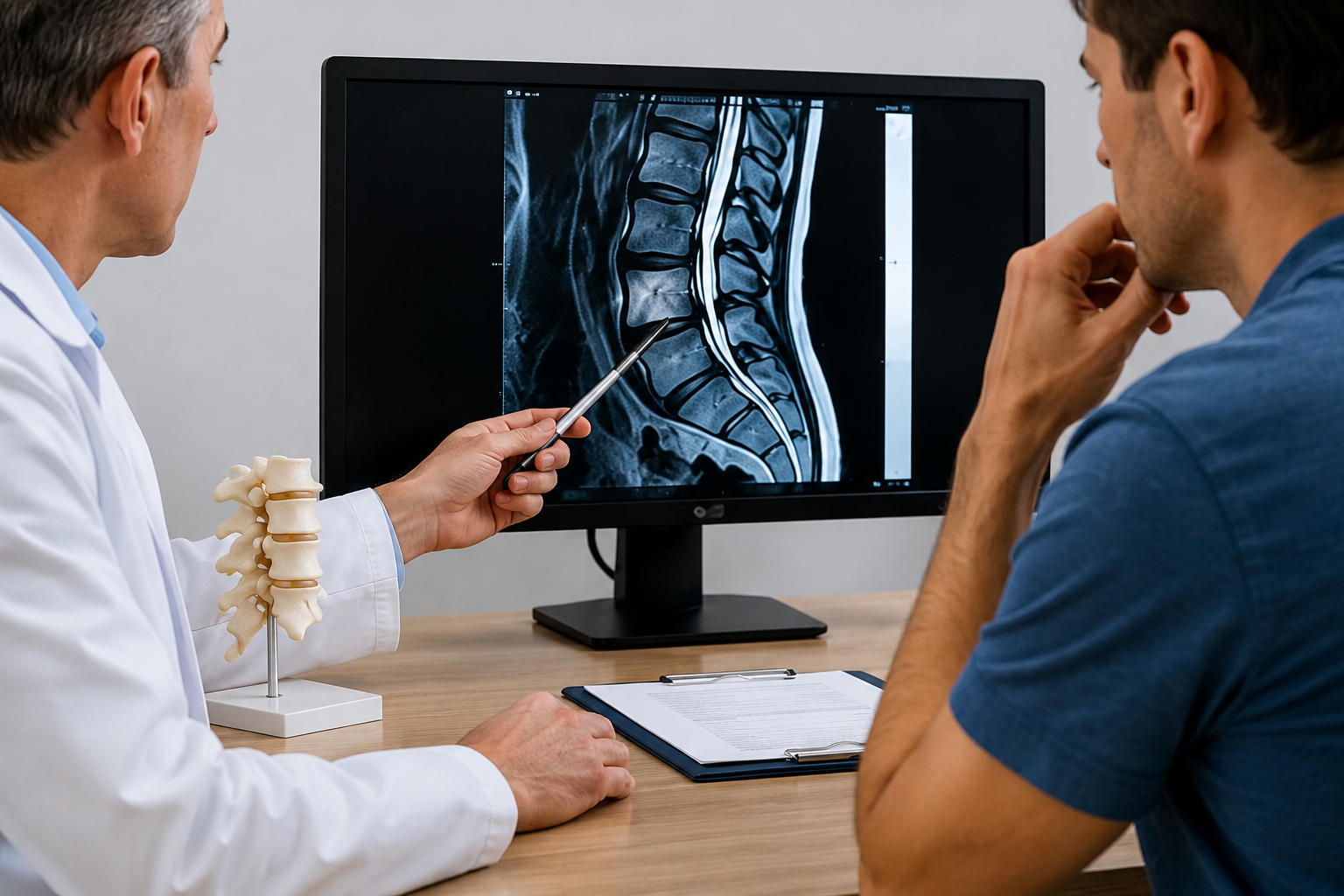
An MRI may be ordered when a herniated disc, spinal stenosis, infection, tumor, or another structural condition is suspected. CT scans and X-rays may provide additional information about the bones, spinal alignment, arthritis, and previous injuries.
Electromyography and nerve-conduction studies measure how electrical signals travel through the nerves and muscles. These tests may help distinguish a compressed spinal nerve root from peripheral nerve damage or another neurological condition.
Blood tests may be used to check for:
- Diabetes or prediabetes
- Vitamin B12 deficiency
- Thyroid dysfunction
- Kidney or liver problems
- Inflammatory or autoimmune conditions
- Infection
- Other metabolic causes
A diagnostic injection may also be considered when the physician needs to determine whether a specific nerve or joint pathway is producing the pain.
Not every patient needs every test. Each study should help answer a specific question raised during the medical history and examination.
A Clear Diagnosis Is the First Step Forward
Burning and tingling are signals from the nervous system, but they do not identify the underlying cause on their own. The source may be a compressed spinal nerve, peripheral neuropathy, an older injury, inflammation, diabetes, or another medical condition.
Repeated symptoms should not be dismissed simply because they come and go. Pain that interrupts sleep, spreads, reduces sensation, or affects strength and mobility deserves a focused assessment.
Take the Next Step Toward Nerve Pain Relief
If burning, tingling, or numbness keeps returning, disrupts your sleep, or affects your strength and mobility, MVM Health can help identify the underlying cause. Request a consultation with our Bethlehem pain team