

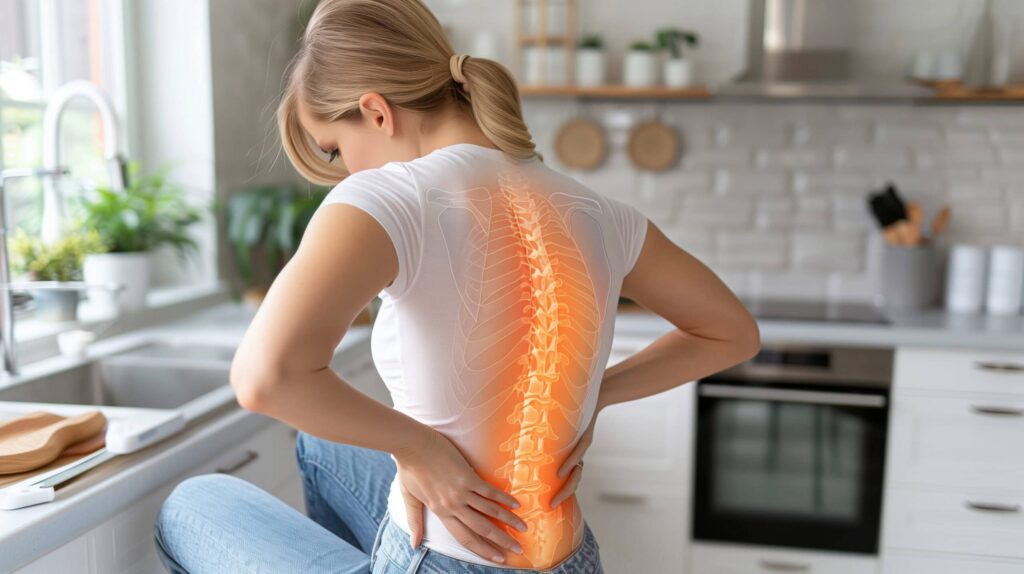
Back pain that travels down the leg is often linked to sciatica, a symptom pattern caused by irritation or compression of nerves in the lower back. Pain may start in the lower back or buttock and travel down one leg, sometimes with tingling, numbness, or weakness. A herniated disc, spinal stenosis, or nerve root irritation may be involved, so diagnosis matters before treatment begins.
It starts in your lower back. By mid-morning, you feel it running into your buttock. By afternoon, it is traveling down the back of your leg, and by the time you sit down at the end of the day, even finding a comfortable position feels like a puzzle you cannot solve.
Back pain that moves down the leg is one of the most common and most misunderstood pain patterns people bring to a specialist. Many assume it is a muscle problem or general wear and tear. In a significant number of cases, it is neither. It is sciatica, and the distinction matters because treating a muscle problem when you actually have nerve compression rarely brings lasting relief.
This guide covers what sciatica actually is, how to tell whether your symptoms fit the pattern, what causes it, and what effective sciatica treatment looks like at MVM Health in New Jersey and Bethlehem, PA.
Why Does Back Pain Spread Down the Leg?
Regular back pain down leg stays in the back. When it starts moving down into the buttock, thigh, or calf, that shift usually means a nerve is involved, not just a muscle or joint.
The lower lumbar spine, particularly the L4, L5, and S1 levels, is where this most commonly begins. These vertebrae carry the most load and are the most vulnerable to disc herniation and nerve root compression. When a nerve root gets compressed at one of these levels, it sends pain signals down the entire length of the nerve rather than staying local.
That is what makes back pain down the leg feel different. It tends to be sharper, more electric, and often follows a clear path down one side of the body. That travelling pattern is usually the first and clearest clue that sciatica may be the cause.
What Is Sciatica?
Sciatica is not a diagnosis on its own. It is a term used to describe a set of symptoms caused by irritation or compression of the sciatic nerve, the longest nerve in the body. It runs from the lower lumbar spine through the buttock, down the back of the thigh, and all the way into the calf and foot.
When something presses on or inflames this nerve, it does not just cause pain at the point of compression. It sends signals along the entire nerve pathway, which is why the pain, tingling, or numbness can be felt anywhere from the lower back down to the toes.
Sciatica Symptoms: What to Look For
The pattern of sciatic nerve pain is fairly distinctive once you know what you are looking for. The following symptoms, particularly when they occur together, are strong indicators that the sciatic nerve is involved.
| Symptom | What It Typically Feels Like |
| Pain down one leg | Shooting or burning pain that travels from the lower back into the buttock and down the leg, usually on one side only |
| Tingling or pins and needles | A persistent tingling sensation running down the thigh, calf, or into the foot |
| Numbness | Areas of reduced or lost sensation along the leg, ankle, or foot on the affected side |
| Weakness in the leg | Difficulty lifting the foot, bending the knee, or bearing weight on the affected side |
| Pain worsened by sitting | Prolonged sitting increases pressure on the nerve root, making symptoms noticeably worse |
| Sharp pain when standing up | A sudden jolt of pain when moving from seated to standing, or when sneezing or coughing |
One of the most telling signs of sciatic nerve pain is that it is almost always one-sided. If your pain travels down both legs equally, the cause may be something different, such as spinal stenosis or a central disc herniation, both of which also require specialist evaluation.
What Causes Back Pain Down the Leg?
Sciatic nerve pain does not develop randomly. There is always a structural reason the nerve is being compressed or irritated. The most common causes seen at our pain clinics in NJ and Bethlehem include:
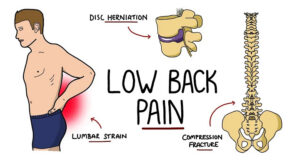
Herniated Lumbar Disc
This is the most frequent cause of sciatica, accounting for the majority of cases. The discs between your lumbar vertebrae act as shock absorbers. When the outer layer of a disc cracks and the soft inner material pushes out, it can press directly against a nerve root. The L4-L5 and L5-S1 levels are the most commonly involved.
Lumbar Spinal Stenosis
Stenosis means narrowing. When the spinal canal in the lower back narrows due to bone spurs, thickened ligaments, or disc degeneration, the nerve roots passing through that space get compressed. Stenosis-related sciatica often causes leg heaviness and cramping with walking that eases when you sit or bend forward.
Degenerative Disc Disease
As discs lose height and hydration over time, the vertebrae above and below them sit closer together. This can cause instability, pinch nerve roots at the exit points, and produce both lower back pain with leg pain and localized stiffness.
Piriformis Syndrome
The piriformis muscle sits deep in the buttock, directly over the sciatic nerve. When it becomes tight or inflamed from prolonged sitting, overuse, or direct injury, it can compress the nerve from the outside rather than from the spine. This is a less common but frequently overlooked cause of sciatic nerve pain.
Spondylolisthesis
This occurs when one vertebra slips forward over the one below it. The resulting misalignment narrows the openings through which nerve roots exit the spine, putting pressure on the sciatic nerve and producing both local back pain and leg symptoms.
Sciatica vs. General Back Pain: How to Tell the Difference
Not every back pain that moves into the leg is sciatica. And not every case of sciatica causes significant back pain. Here is a quick way to think about the difference:
- General back pain tends to stay in the back, does not travel below the knee, and is usually muscular or joint-related
- Sciatica travels down the leg, often below the knee, and may include tingling, numbness, or weakness in the foot
- Both can coexist which is why the leg component is often the more telling clue
If your pain consistently radiates past the knee on one side, that single detail is one of the strongest indicators of nerve involvement. A specialist can confirm this with a physical examination and, when needed, imaging.
When Back Pain Down the Leg Needs Urgent Care
Seek urgent medical care if back pain down the leg comes with sudden leg weakness, loss of bladder or bowel control, numbness in the groin or saddle area, fever, unexplained weight loss, or severe pain after a fall or injury. These symptoms may point to a more serious nerve or spine condition and should not be ignored.
Sciatica Treatment in NJ and Bethlehem, PA
Effective treatment starts with an accurate diagnosis. At MVM Health, every patient with suspected sciatic nerve pain goes through a detailed evaluation before any treatment is recommended, including a clinical history, physical and neurological examination, and review of existing or newly ordered imaging.
Once the source of the compression is confirmed, treatment is matched to that specific finding. The options available at our NJ and Bethlehem pain clinics include:
Epidural Steroid Injections
Anti-inflammatory medication is delivered directly to the affected nerve root level under imaging guidance. Some patients may notice improvement within several days, depending on the cause of pain and how their body responds. Effects can last weeks to months and are often combined with physical therapy for longer-term benefit.
Nerve Blocks
Nerve blocks may help confirm the pain source and may provide temporary relief for some patients when medically appropriate.
Radiofrequency Ablation
Radiofrequency ablation may be considered when facet joint pain is contributing to chronic lower back pain. It is not used to directly remove pressure from the sciatic nerve, so a clear diagnosis is important before this option is recommended.
Spinal Cord Stimulation
Spinal cord stimulation may be considered for chronic or treatment-resistant nerve pain when other options have not provided enough relief. A trial period of 5 to 7 days allows patients to evaluate the benefit before a permanent device is placed.
The MILD Procedure
For patients whose sciatica is driven by lumbar spinal stenosis, the MILD procedure removes small amounts of thickened ligament tissue to widen the spinal canal and relieve nerve root pressure. It is minimally invasive, requires no general anesthesia, and most patients return home the same day.
How Long Does Sciatica Last Without Treatment?
Mild sciatica from a minor disc herniation sometimes improves on its own within 4 to 6 weeks when the disc material reabsorbs naturally. However, this is not the norm for all cases, and waiting is not always the right call.
Sciatica that involves significant nerve compression, persists beyond 6 to 8 weeks, or comes with weakness in the foot or leg rarely resolves fully without targeted intervention. The longer nerve compression continues, the greater the risk of lasting nerve damage that is harder to reverse.
Care Tip : If your sciatica is new, a short period of modified activity combined with anti-inflammatory medication and gentle movement is reasonable for the first 2 to 3 weeks. If symptoms are not clearly improving, or if weakness and numbness are present, a specialist evaluation should not be delayed further.
What to Expect at Your First MVM Health Appointment
Coming prepared makes your first visit significantly more productive. A few things worth doing before you arrive:
- Write down when the leg pain started and whether it has been getting better, worse, or staying the same
- Note what makes it better or worse, such as sitting, walking, lying down, or certain positions
- Bring any existing MRI or X-ray reports
- List all current medications and any treatments you have already tried
- Be ready to describe where exactly the pain travels, how far down the leg it goes, and whether it includes tingling, numbness, or weakness
Your specialist will conduct a physical and neurological examination, review your imaging, and in some cases use diagnostic injections to confirm which nerve level is involved before recommending a treatment path.
How a Specialist Diagnoses Back Pain Down the Leg
A pain specialist may review your symptoms, test reflexes and strength, check where the pain travels, and review imaging such as an MRI or X-ray when needed. The goal is to identify whether symptoms are coming from a herniated disc, spinal stenosis, piriformis syndrome, or another condition before recommending treatment.
Relief Starts with the Right Evaluation
At MVM Health, our board-certified pain physicians across NJ and Bethlehem, PA are ready to identify the source of your pain and build a treatment plan around it. Schedule a consultation today and get a clear answer about what is driving your symptoms and what can actually be done about it.