
Heavy legs, swelling, itching, and skin discoloration are the four most common vein symptoms, and together they often point to chronic venous insufficiency (CVI), a condition where weakened vein valves let blood pool in the legs instead of flowing back to the heart. Mild symptoms can often be managed with compression and lifestyle changes, but skin changes or ulcers mean it’s time to see a vascular specialist rather than continuing to self-manage.
Quick Facts
- Vein symptoms are classified on a 0–6 severity scale (the CEAP system), from no visible signs to active ulceration.
- Heaviness and fatigue are typically the earliest symptoms, often appearing before any vein is visibly enlarged.
- Chronic venous insufficiency is diagnosed at CEAP stage 3 or higher, meaning swelling has developed.
- Not everyone with visible varicose veins develops CVI, but visible veins are still worth mentioning to a provider since they signal underlying blood flow problems.
- Itching related to vein disease is a specific condition called venous stasis dermatitis, distinct from a typical skin rash.
What Vein Symptoms Actually Mean
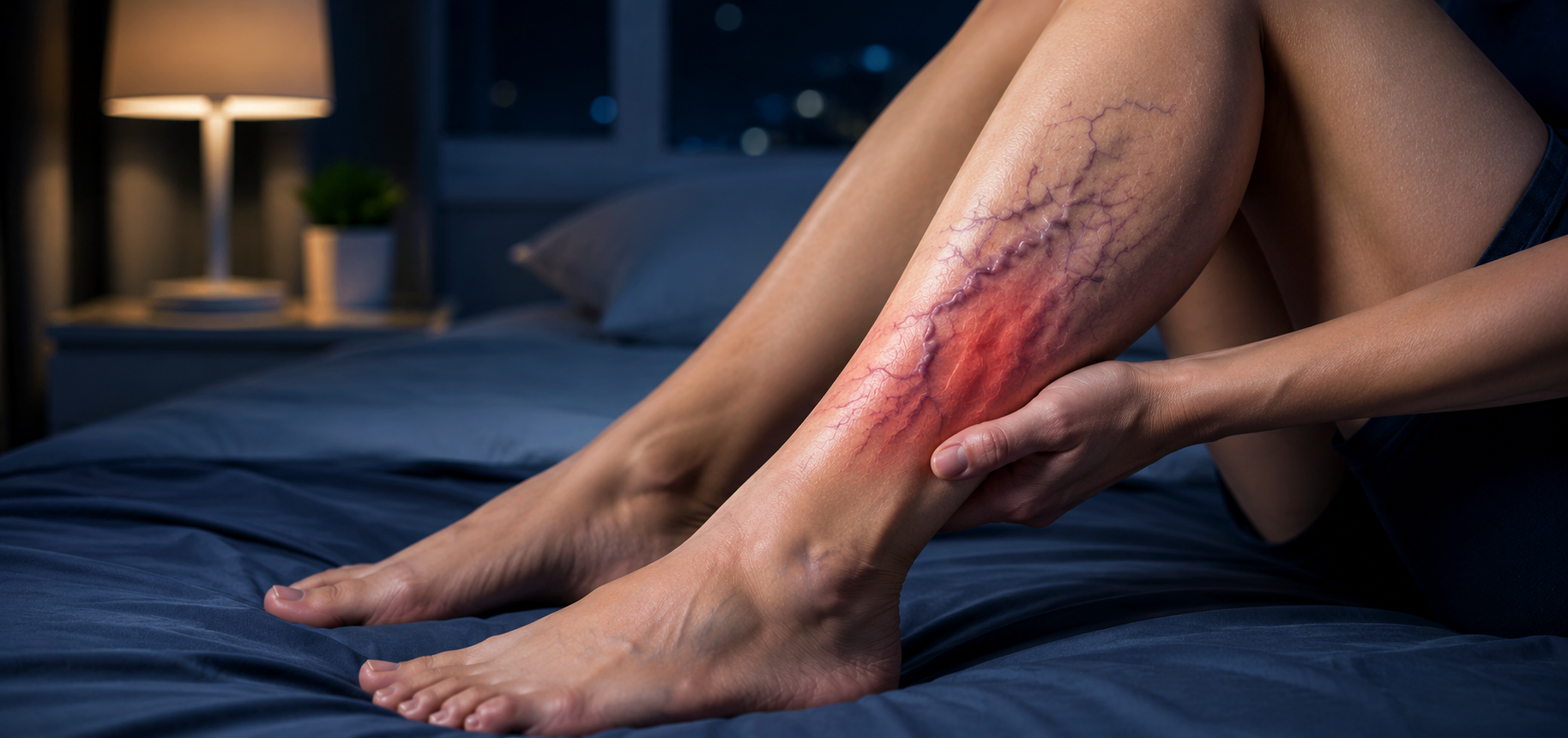
Our leg veins rely on a network of one-way valves to push blood back up toward your heart, working against gravity with every step you take. When those valves weaken or stop closing properly, blood doesn’t move through as efficiently. Some of it pools in the lower leg instead, and that pooling is what produces the symptoms many people notice first: a heavy, tired feeling, visible swelling, itching, and changes to the skin. For some patients, this poor circulation can also contribute to symptoms like burning legs at night, discomfort, or restless sensations that become more noticeable when lying down or resting. Understanding these signs early can help identify whether an underlying vein condition may be contributing to your symptoms.
This process, medically known as venous insufficiency, doesn’t happen overnight. It tends to progress gradually, often over years, which is exactly why the symptoms are so easy to dismiss early on. A little heaviness after a long day doesn’t feel like a medical issue. But left unaddressed, venous insufficiency can advance from a mild nuisance to a condition that affects skin integrity and, in more serious cases, leads to open wounds that are difficult to heal.
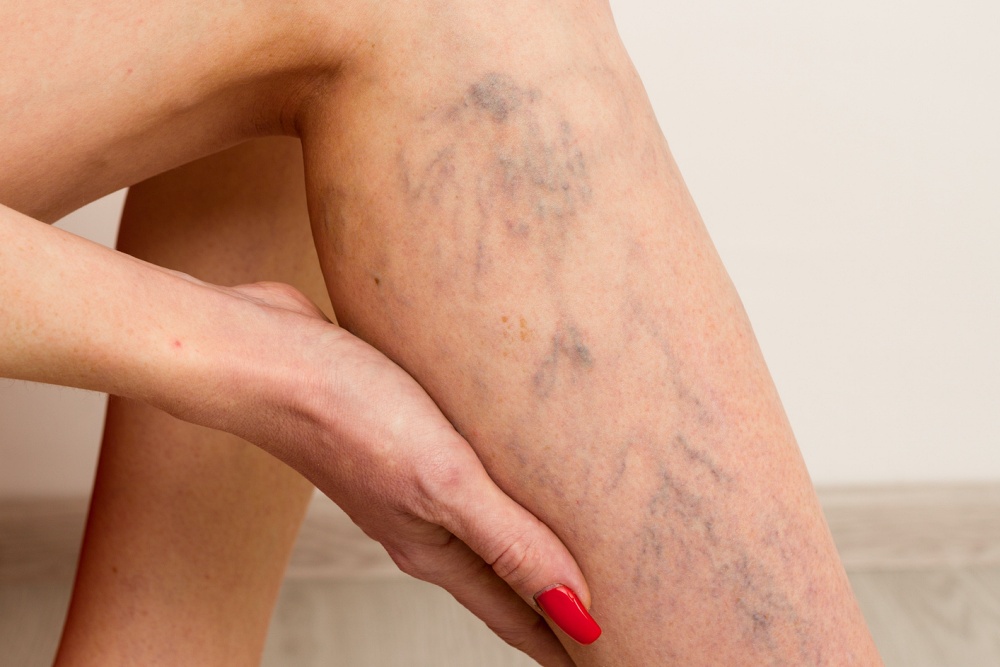
Why Vein Symptoms Matter
Vein symptoms matter for two reasons. First, they affect daily comfort and function right now, heavy or swollen legs can make it harder to stay active, sleep well, or get through a workday on your feet. Second, and more importantly, they are a signal that something deeper may be happening. Because venous disease is progressive, catching it at the heaviness and swelling stage is very different from discovering it after skin changes or ulcers have developed. Early intervention is often simpler, less invasive, and more effective at preventing further progression. If you experience nighttime discomfort or restless sensations, learn more about the connection between restless legs and vein disease
Who Should Pay Attention to Vein Symptoms
Certain groups face a higher risk of developing vein symptoms and should be more attentive to early signs:
- People who stand or sit for long periods at work (retail, healthcare, office jobs, driving)
- Women, particularly during and after pregnancy, due to hormonal changes and increased blood volume
- Adults over 50, since vein valves naturally weaken with age
- People with a family history of varicose veins or venous insufficiency
- People who are overweight, since extra weight increases pressure on leg veins
- Anyone with a prior history of blood clots (deep vein thrombosis), which can damage vein valves directly
If you fall into one or more of these groups and you’re noticing any of the four core symptoms below, it’s worth paying closer attention rather than assuming it’s just fatigue or aging.
The Four Core Vein Symptoms, Explained
1. Heavy Legs
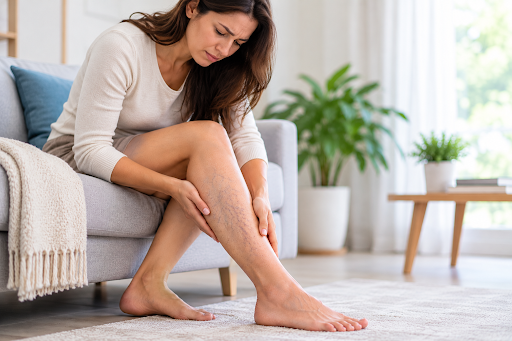
What it feels like: A dull, tired, “full” sensation in the legs, often described as feeling like you’re wearing ankle weights. It’s usually worse by the end of the day, after long periods of standing, or during warm weather, and tends to improve with elevation or movement.
What’s happening: As blood pools in the lower leg veins instead of circulating efficiently, pressure builds inside the vein walls. That pressure is what creates the sensation of heaviness, well before any vein is visibly enlarged. Some patients may also notice related symptoms such as tingling, burning, or unusual sensations in the legs, which can sometimes be linked to circulation concerns. Learn more about tingling legs and poor circulation and how to tell whether your symptoms may be related to a vein issue
Common mistake: Many people attribute heavy legs to simply being on their feet too much or being out of shape, and reach for compression socks or rest without ever mentioning it to a doctor. That’s a reasonable first step, but if heaviness is a near-daily occurrence, it deserves an actual evaluation rather than ongoing self-management.
2. Swelling (Edema)
What it feels like: Visible puffiness around the ankles and lower legs, often most noticeable at the end of the day and improved by morning after a night of elevation. In more advanced cases, the swelling doesn’t fully resolve overnight.
What’s happening: When vein valves fail, fluid and blood back up in the lower leg, and some of that fluid leaks into surrounding tissue, producing visible swelling. Clinically, this marks a meaningful threshold: swelling without skin changes is generally classified as CEAP stage 3, which is the point where venous insufficiency is officially diagnosed, not just suspected.
Common mistake: Assuming leg swelling is always related to diet, salt intake, or general water retention. While those factors can contribute, swelling that’s consistently worse in one leg than the other, or that persists despite dietary changes, points more specifically toward a vein problem and shouldn’t be self-treated indefinitely.
3. Itching (Venous Stasis Dermatitis)
What it feels like: Persistent itching, often around the ankles or lower legs, sometimes with dry, flaky, or scaly patches of skin. It can be mistaken for eczema or simple dry skin, especially in colder months.
What’s happening: Chronic pressure from pooled blood irritates the skin and underlying tissue, producing an inflammatory skin condition called venous stasis dermatitis. This isn’t a coincidental rash showing up on top of vein disease. It’s a direct downstream effect of the same vein pressure causing the other symptoms, and it’s often one of the earliest visible skin signs that venous insufficiency is progressing.
Common mistake: Treating the itching only with moisturizer or over-the-counter anti-itch cream. That can offer temporary relief, but it doesn’t address the vein pressure driving the irritation, so the itching tends to return, sometimes worse, until the underlying venous issue is treated.
4. Skin Changes (Discoloration, Thickening, and Ulcers)
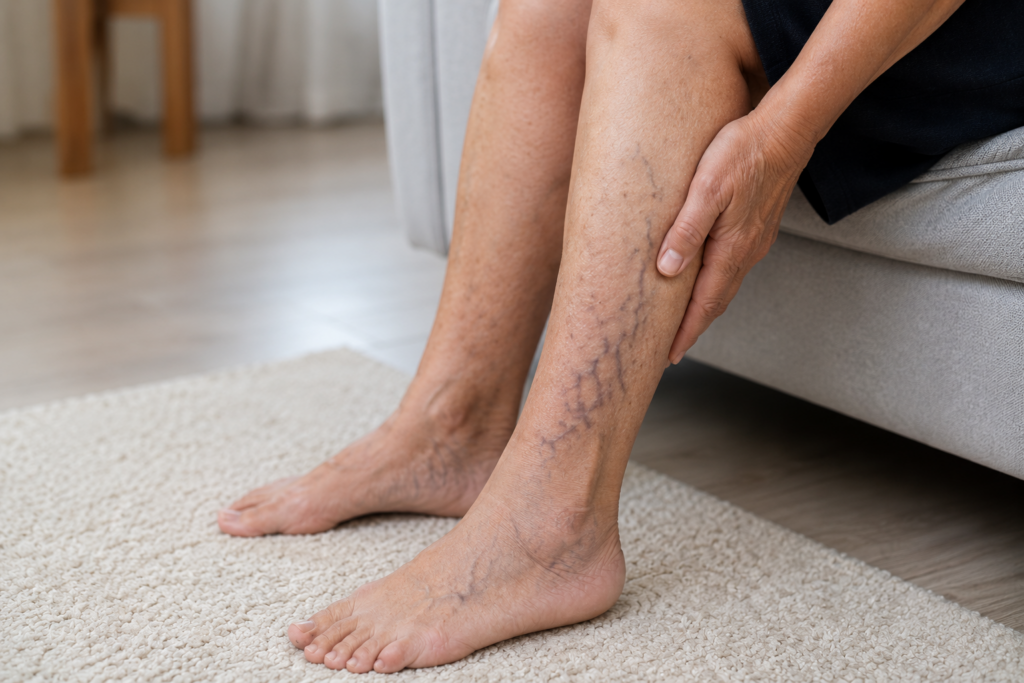
What it feels like or looks like: Darkened or reddish-brown patches of skin, typically near the ankle, sometimes accompanied by skin that feels thicker, tighter, or more leathery than surrounding areas. In advanced cases, this progresses to open sores, or venous ulcers, that are slow to heal.
What’s happening: Over time, sustained pressure in the veins causes small blood vessels near the skin surface to leak or burst, depositing pigment that causes the brownish discoloration. Continued pressure and inflammation can also cause the skin and underlying tissue to thicken and harden, a process called lipodermatosclerosis. If this progresses far enough, the skin can break down entirely, forming a venous ulcer.
Common mistake: Waiting to seek care until an ulcer has already formed. Skin discoloration and thickening are warning signs that appear before an ulcer develops, and treating venous insufficiency at that stage is significantly more straightforward than treating an active wound.
How Vein Symptoms Progress: The CEAP Staging System
Vascular specialists use a staging system called CEAP (Clinical-Etiology-Anatomy-Pathophysiology) to describe how far venous disease has progressed. The “Clinical” portion, which ranges from C0 to C6, is the part most relevant to understanding your own symptoms.
| Stage | What It Looks Like | Typical Symptoms |
| C0 | No visible signs | Legs may still feel achy or heavy despite nothing being visible |
| C1 | Spider veins, small visible vessels | Mild cosmetic concern, occasional achiness |
| C2 | Varicose veins (3mm or wider) | Visible bulging veins, aching, heaviness |
| C3 | Edema (swelling), no skin changes | Ankle and lower leg swelling, worse by end of day |
| C4 | Skin changes: discoloration, thickening | Brownish patches, leathery or tight-feeling skin |
| C5 | Healed venous ulcer | History of a wound that has closed |
| C6 | Active venous ulcer | Open sore, often near the ankle, that has not healed |
A useful way to think about this table: heaviness can start at any stage, even C0, but swelling (C3) is the point where a diagnosis of chronic venous insufficiency is typically made. Skin changes (C4 and beyond) signal that the condition has progressed further and generally shouldn’t be managed with home care alone.
Step-by-Step: What to Do If You Notice Vein Symptoms
- Track the pattern. Note when symptoms happen (end of day, after standing, in heat) and whether they’re in one leg or both. This detail helps a specialist narrow down the cause faster.
- Try conservative measures for 1–2 weeks. Elevate your legs above heart level for 15–20 minutes a few times a day, wear graduated compression stockings, and avoid prolonged static standing or sitting when possible.
- Reassess. If heaviness or mild swelling improves meaningfully with these steps, continue them and monitor. If symptoms persist, worsen, or new symptoms (itching, discoloration) appear, move to step 4.
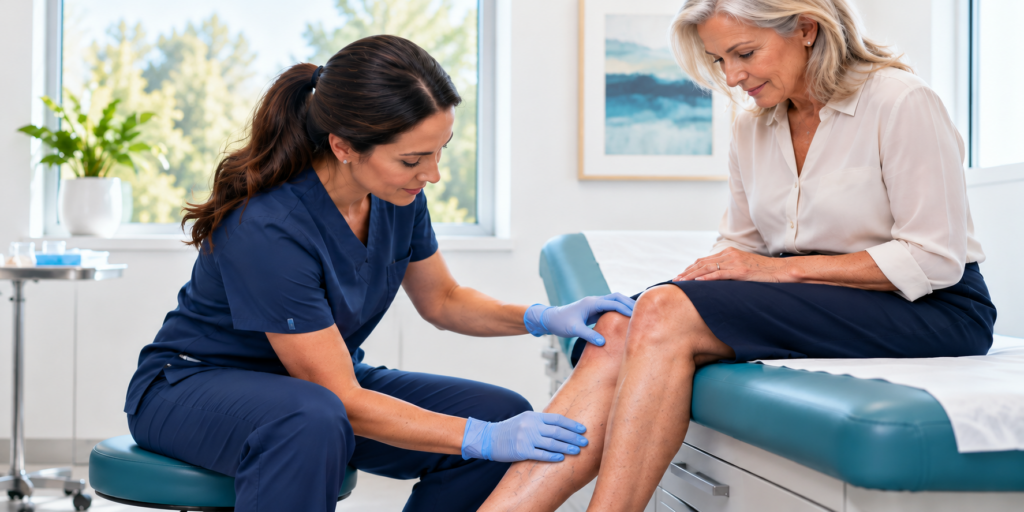
- Schedule a vein evaluation. A vascular specialist can perform a physical exam and, typically, a duplex ultrasound to assess how well blood is flowing through your veins and identify which valves aren’t functioning properly.
- Don’t wait once skin changes appear. If you notice discoloration, thickened skin, or any open sore, schedule an evaluation promptly rather than trying compression or home care first. This is the one point in the progression where waiting has the most downside.
Benefits of Getting Vein Symptoms Evaluated Early
- Simpler treatment options. Early-stage venous insufficiency often responds well to conservative measures or minimally invasive procedures, while advanced disease may need more involved treatment.
- Prevents progression. Addressing valve dysfunction before skin changes occur can prevent the disease from advancing to ulceration.
- Improves daily comfort. Reduced swelling and heaviness translate directly into being able to stand, walk, and sleep more comfortably.
- Rules out other causes. Leg swelling and heaviness aren’t always vein-related; they can also stem from heart, kidney, or lymphatic issues. An evaluation clarifies what you’re actually dealing with instead of guessing.
- Reduces long-term cost and disruption. Treating an active venous ulcer is a longer, more involved process than treating the swelling or skin changes that typically precede it.
Risks and Limitations to Understand
Compression stockings and lifestyle changes help manage symptoms, but they don’t reverse damaged vein valves; they reduce pressure and slow progression rather than correct the underlying problem. Similarly, not every case of heavy or swollen legs is caused by venous insufficiency, so self-diagnosing based on symptoms alone has real limitations. Conditions like lymphedema, peripheral artery disease, and certain heart or kidney conditions can produce overlapping symptoms, which is exactly why a proper evaluation, rather than assumption, matters before starting any treatment plan.
Expert Recommendations
Vascular specialists generally recommend:
Don’t Ignore Persistent Vein Symptoms
Heavy legs, swelling, itching, and skin changes may be signs of an underlying vein condition that can worsen over time. A vein evaluation can help identify the cause and determine the right approach for your symptoms. Schedule a consultation with MVM Health to understand your vein health and available treatment options.
- Wearing graduated compression stockings (typically 15–20 mmHg or 20–30 mmHg, depending on symptom severity) during long periods of standing or sitting
- Staying active, since calf muscle contraction from walking acts as a secondary pump that helps move blood back toward the heart
- Elevating the legs above heart level for short periods multiple times a day, especially if swelling is a primary symptom
- Avoiding prolonged, completely static standing or sitting when possible, and taking short movement breaks
- Seeking a duplex ultrasound evaluation rather than assuming symptom severity alone tells the whole story, since ultrasound can detect valve dysfunction that isn’t yet visible on the skin
Common Mistakes People Make With Vein Symptoms
- Assuming heaviness or mild swelling is just a normal part of standing jobs or aging
- Treating itching or skin dryness with topical creams alone, without addressing the underlying vein pressure
- Waiting for a visibly enlarged vein to appear before seeking evaluation, when heaviness and swelling often come first
- Choosing compression socks off the shelf without guidance on the right compression level for their specific symptoms
- Delaying care once skin discoloration appears, which is one of the clearest signals that the condition has progressed past the early stage
Finding a Vascular Specialist in King of Prussia
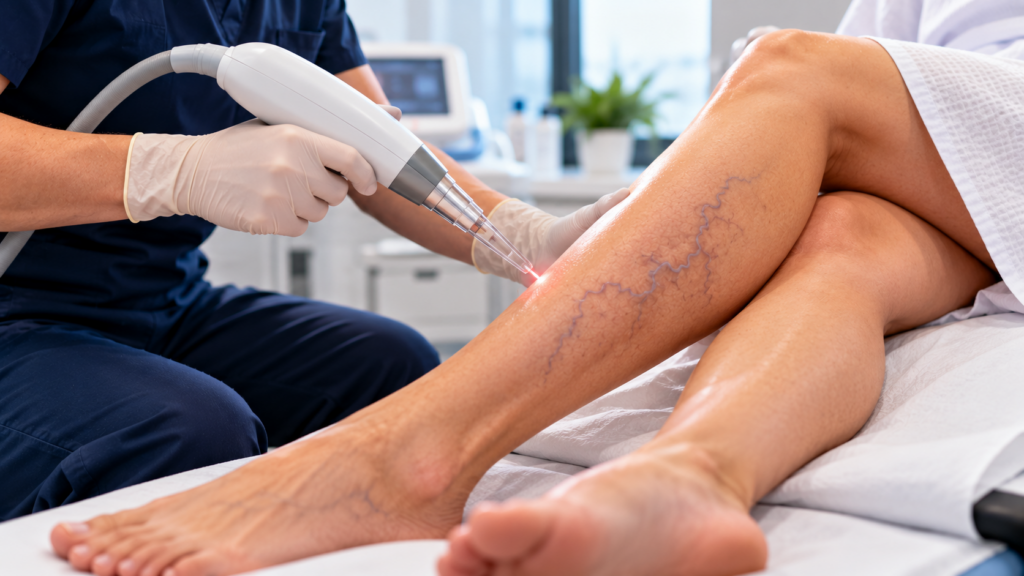
If you’re noticing persistent heaviness, swelling, itching, or skin changes and you’re in the King of Prussia area, the next practical step is a proper vein evaluation rather than continued self-management. A vascular specialist in King of Prussia can perform a duplex ultrasound to see exactly how blood is flowing through your leg veins, identify which valves aren’t functioning properly, and recommend treatment based on your specific stage, whether that’s conservative management, minimally invasive procedures like sclerotherapy or endovenous laser therapy, or wound care if skin changes have already progressed.
Bringing a symptom timeline to your appointment- when symptoms started, what makes them better or worse, and whether they affect one leg or both- helps your specialist evaluate you more efficiently and arrive at an accurate diagnosis faster.
Ready to Get Your Vein Symptoms Evaluated? Heavy, swollen, or itchy legs don’t have to be something you just live with. Our vascular specialists near King of Prussia can identify the cause with a duplex ultrasound and build a treatment plan around your specific symptoms and stage.
Schedule Your Vein Evaluation or call our office today
Key Takeaways
- Heavy legs, swelling, itching, and skin changes are the four core vein symptoms, and they often progress in roughly that order as venous insufficiency advances.
- The CEAP staging system (C0–C6) gives a clinical framework for understanding how far vein disease has progressed, from no visible signs to an active ulcer.
- Swelling (edema) is the point at which chronic venous insufficiency is typically diagnosed; skin changes signal more advanced disease.
- Itching related to vein disease is a distinct condition called venous stasis dermatitis, caused by ongoing pressure and inflammation from poor vein function. Moisturizer may temporarily soothe dryness, but it will not address the underlying vein problem. Learn more about how vein disease can lead to brown skin discoloration around the ankles and other skin changes.
- Conservative measures like compression and elevation help manage symptoms, but they don’t reverse valve damage, so persistent or worsening symptoms warrant an evaluation.
- Skin discoloration, thickening, or any open sore should prompt prompt evaluation rather than continued home care.
Vein Symptom Self-Check: Action Checklist
- [ ] My legs feel heavy or tired by the end of most days
- [ ] I notice swelling around my ankles that’s worse at night than in the morning
- [ ] I have persistent itching on my lower legs without a clear rash cause
- [ ] I’ve noticed brownish or reddish discoloration near my ankles
- [ ] My skin in that area feels tighter, thicker, or different in texture
- [ ] I have a sore near my ankle that hasn’t healed in more than 1–2 weeks
If you checked two or more boxes, especially anything from the last three, it’s a reasonable point to schedule a vein evaluation rather than waiting to see if things improve on their own.
Frequently Asked Questions
What does it mean when your legs feel heavy?
+
Why are my legs swollen at the end of the day but better in the morning?
+
Why do my legs itch even though I don’t have a rash?
+
Is leg swelling always caused by a vein problem?
+
What’s the difference between venous insufficiency and poor circulation in general?
+
How do I know if my vein symptoms need a specialist instead of just compression socks?
+
What happens during a vein evaluation?
+
Can vein symptoms go away on their own?
+
For a deeper look at how vein disease appears on the skin’s surface, see our full guide to types of varicose veins, which breaks down trunk, reticular, spider, perforator, and pelvic varicose veins in detail.