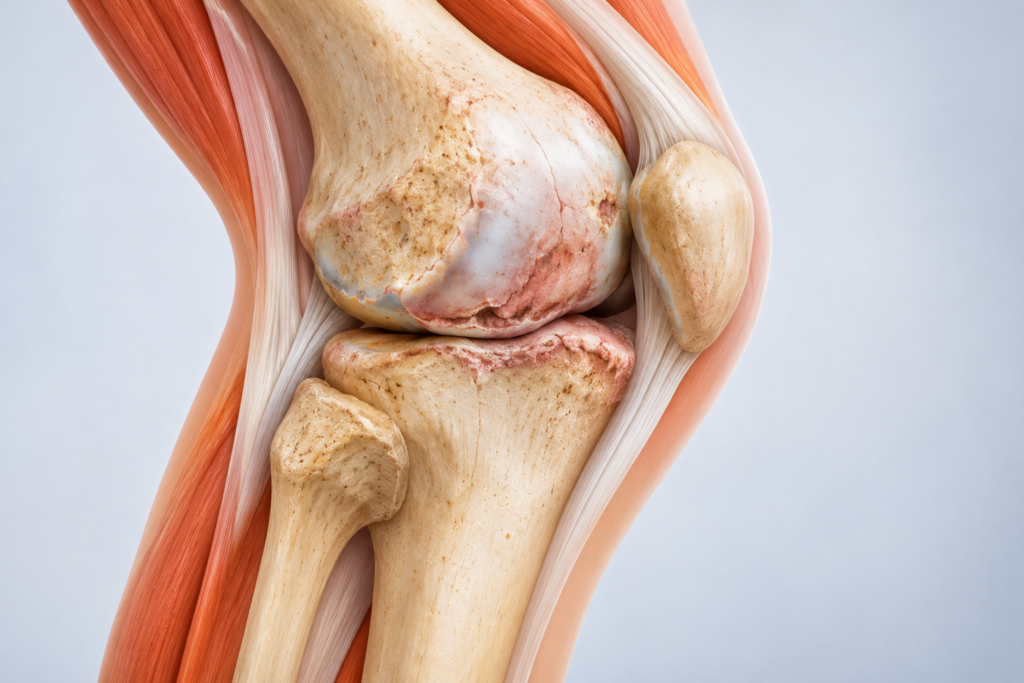

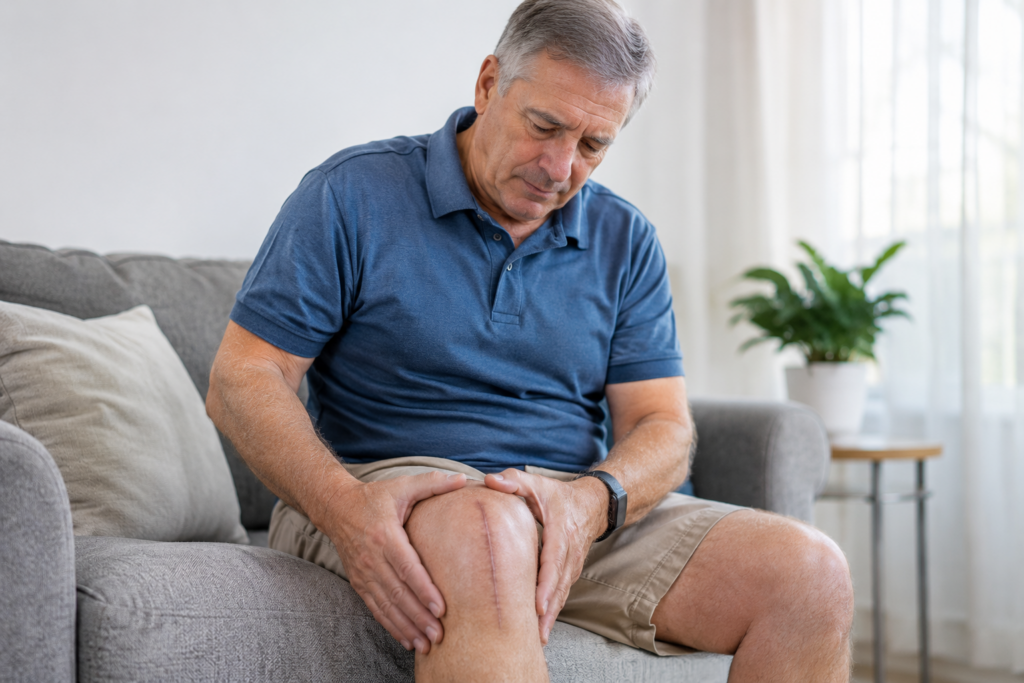
Knee pain after replacement is normal in the first weeks and months as the joint heals, but pain that lingers beyond about three to six months, or returns after a period of improvement, may be persistent pain after knee replacement. It has many possible causes, including stiffness, irritated nerves around the incision, implant problems, infection, and pain coming from the hip or back. Most of them can be identified and treated.
A knee replacement is one of the most successful operations in medicine, and most people get the relief they hoped for. That can make it all the more frustrating if your knee still hurts. You may have worked hard through physical therapy, only to find that stairs, standing up, or sleeping are still painful. Or the knee may have felt great for a year or two before new pain began.
Persistent pain after a knee replacement does not mean you did something wrong, and it does not always mean the surgery failed. This guide explains the symptoms to watch for, what a normal recovery looks like, the most common causes of ongoing pain, when to call your doctor, and the treatments that can help.
Common Symptoms of Knee Pain After Replacement
Knee pain after replacement can feel different from the arthritis pain you had before surgery, and the type of pain is an important clue to its cause.
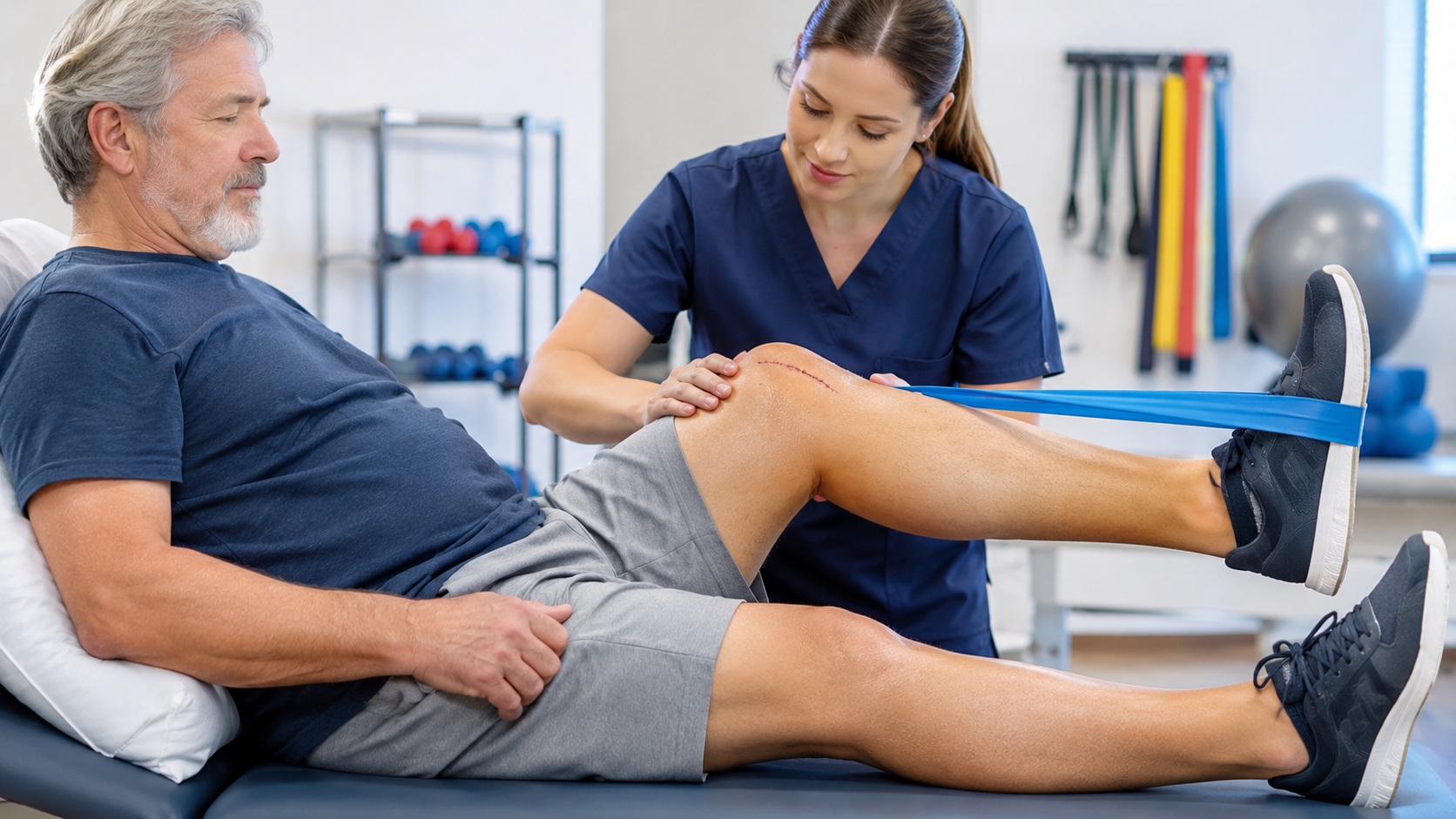
Pain Symptoms
- A deep, aching pain in or around the new joint, often worse with activity.
- Pain at the front of the knee, especially on stairs, kneeling, or rising from a chair.
- Burning, tingling, or electric pain around the incision or the outer side of the knee.
- Pain at night or at rest that does not ease with position changes.
- Pain that started after a period of feeling well.
Movement and Function Symptoms
- Stiffness – trouble bending or fully straightening the knee.
- Instability – a feeling that the knee wobbles, shifts, or gives way, particularly on stairs or uneven ground.
- Clicking or clunking with certain movements.
- Difficulty walking normal distances or a persistent limp.
Other Signs to Note
- Swelling that keeps returning, or a knee that stays warm.
- Numbness on the outer side of the knee near the scar, which is common and often harmless.
- Skin sensitivity, where even light touch from clothing hurts.
- Redness, drainage, or fever, which need prompt attention.
Keeping notes on when your knee pain after replacement started, what it feels like, and what triggers it can help your doctor identify the cause.
Knee Pain After Replacement: What Is Normal During Recovery?
Knee pain after replacement should improve steadily, with the biggest gains in the first three months and continued progress for up to a year. Research shows that pain usually levels off between three and six months after surgery, so pain that is still significant beyond that point is considered persistent. Your surgeon’s guidance always comes first, but this timeline can help you judge your progress.
| Time after surgery | Usually normal | Worth a call to your doctor |
| First 2 weeks | Significant pain, swelling, bruising, and stiffness; needing pain medication | Fever, wound redness or drainage, calf pain or swelling, sudden severe pain |
| 2 to 6 weeks | Pain easing, swelling improving, bending gradually increasing | Pain getting worse, bending not progressing, persistent warmth |
| 6 weeks to 3 months | Aching with therapy and activity, mild swelling at day’s end, warmth | Knee still very stiff, pain limiting therapy, instability |
| 3 to 6 months | Most people are much improved; occasional aching and swelling | Persistent pain affecting walking or sleep |
| 6 to 12 months | Continued improvement; mild stiffness or numbness near the scar | Ongoing pain, or new pain after a period of feeling well |
Some warmth and swelling can last for several months and is not, on its own, a sign of a problem. What matters most is the direction: pain should be gradually improving. If it is not, or if it is getting worse, it is time to get checked.
Persistent Pain After Knee Replacement
Persistent pain after knee replacement is pain that continues to be bothersome at least three to six months after surgery, or that develops later after a good initial recovery. It is more common than many people expect. A review in EFORT Open Reviews estimates that about one in five people have chronic pain after total knee replacement, even when the surgery itself went well.
Why it Happens
Persistent pain usually comes from one of three broad sources:
- A problem with the knee or implant – such as stiffness, loosening, instability, or infection.
- Irritated or sensitized nerves – the small nerves around the knee can be stretched or cut during surgery, and the nervous system can stay “on alert” after years of arthritis pain.
- Pain coming from somewhere else – such as the hip or lower back, felt in the knee.
In some people more than one source contributes, which is why a thorough evaluation matters.
What it Feels like
- Aching or throbbing pain in the knee, worse with activity or at night.
- Burning or shooting pain that suggests nerve involvement.
- Pain with stiffness, swelling, or a feeling of instability.
- Pain that limits walking, stairs, sleep, or daily activities.
The Outlook
Persistent pain after knee replacement can be frustrating, but it is often treatable. Once the cause is found, many people improve with targeted therapy, nerve treatments, injections, or, when there is a clear mechanical problem, revision surgery.
Possible Causes Inside the Knee
Several problems within the replaced knee can cause ongoing pain. Some show up early, others years later.
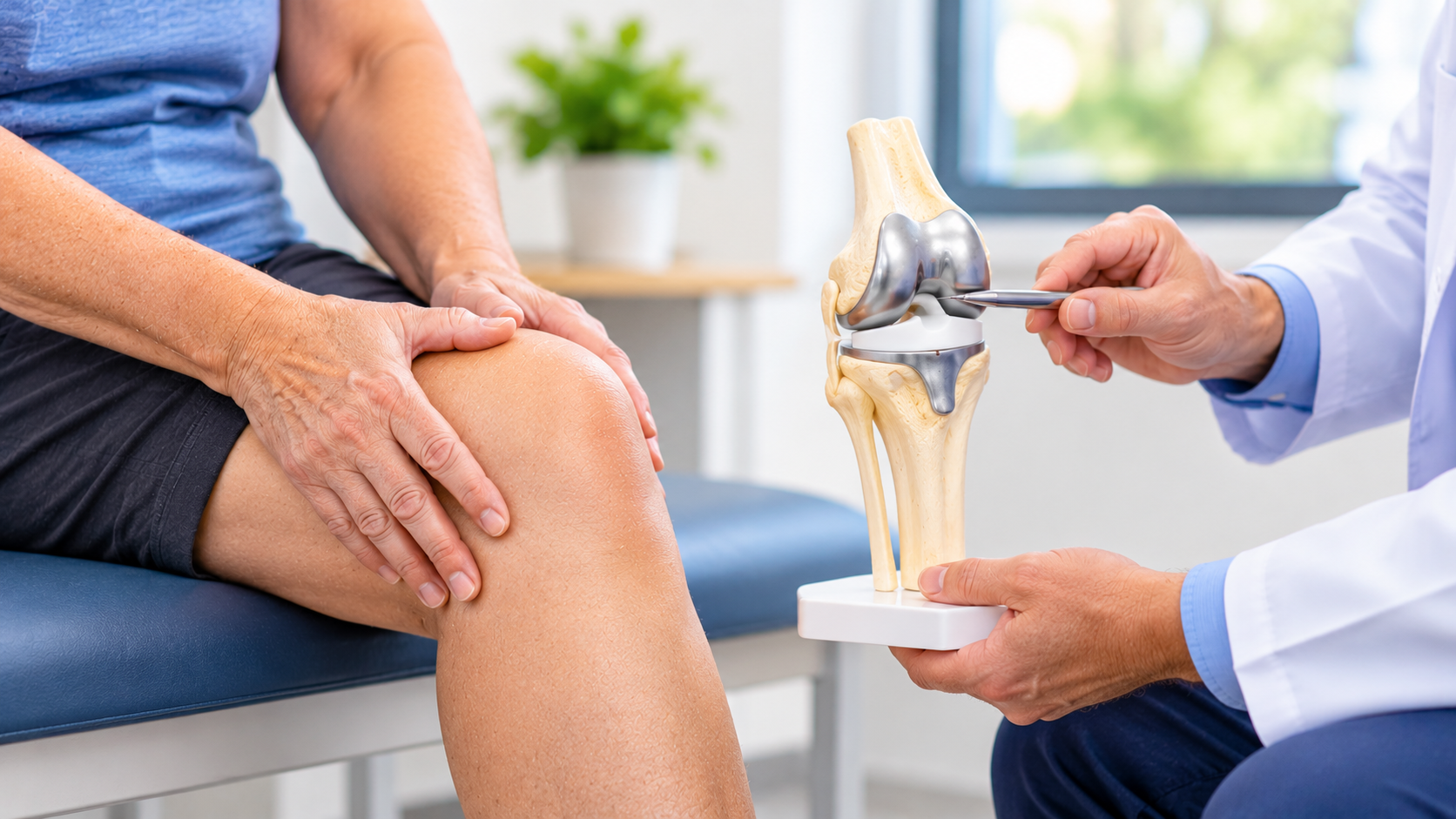
- Stiffness (arthrofibrosis): excessive scar tissue forms inside the joint and limits bending or straightening. The knee feels tight and painful at the end of its range, and stairs and sitting are difficult.
- Infection: a serious but uncommon complication. Early infection causes increasing pain, warmth, redness, wound drainage, or fever. Late, low-grade infection can cause persistent pain and swelling without obvious signs.
- Implant loosening: the bond between the implant and bone can weaken over time, causing pain with weight-bearing, especially when standing up or starting to walk. This usually appears years after surgery.
- Instability: if the ligaments around the new knee are too loose or out of balance, the knee may shift or give way, causing pain, swelling, and a feeling of insecurity.
- Kneecap (patellofemoral) problems: pain at the front of the knee from how the kneecap tracks over the implant, often worse on stairs and when rising from a chair.
- Implant size or position: components that are slightly oversized or rotated can irritate surrounding soft tissue.
- Soft tissue irritation: tendinitis or bursitis around the knee, such as at the tendons below the kneecap or on the inner side of the knee.
- Wear of the plastic liner: over many years, wear can lead to inflammation and loosening.
- Fracture near the implant: usually after a fall.
Nerve Pain and Causes Outside the Knee
Not all pain after knee replacement comes from the joint itself. Nerve-related and referred pain are common and often overlooked.
Nerve-related Pain
- Saphenous and infrapatellar nerve irritation – small skin nerves on the inner and front of the knee are often cut or stretched during surgery. This can cause numbness, burning, or sharp pain around the scar, and sometimes a painful nerve bundle (neuroma).
- Central sensitization – after years of arthritis pain, the nervous system can become more sensitive, amplifying pain signals even when the joint is mechanically fine. People with widespread pain or high pain sensitivity before surgery are more prone to this.
- Complex regional pain syndrome (CRPS) – a rare condition causing severe burning pain, swelling, and skin color or temperature changes out of proportion to the surgery.
Pain referred from elsewhere
- Hip arthritis: the hip can refer to pain in the knee, especially the front of the thigh and inner knee.
- Lower back problems: a pinched nerve from a herniated disc or spinal stenosis can cause pain felt around the knee, often with numbness or tingling.
- Circulation problems: narrowed arteries or leg swelling from vein problems can cause leg aching.
Risk factors for persistent pain
- Severe pain before surgery, or pain in many parts of the body.
- Mild arthritis on X-ray relative to the amount of pain before surgery.
- High pain in the first weeks after surgery.
- Anxiety, depression, or a tendency to focus on pain.
- Previous knee surgery.
- Younger age at the time of replacement.
Matching Your Symptoms to a Likely Cause
The timing and character of the pain often point toward its source. Use this table as a guide, not a diagnosis.
| Cause | Typical timing | Main symptoms | Key clues |
| Stiffness (arthrofibrosis) | Weeks to months, bending not progressing | Tightness and pain at the end of movement | Limited bend or straightening despite therapy |
| Infection | Days to weeks (early) or anytime (late) | Increasing pain, swelling, warmth | Redness, drainage, fever; pain at rest |
| Loosening | Usually years later | Pain on weight-bearing, especially first steps | Pain starting after years of good function |
| Instability | Months after surgery | Giving way, recurrent swelling | Worse on stairs and uneven ground |
| Kneecap problems | Months after surgery | Front-of-knee pain | Worse on stairs and rising from a chair |
| Nerve irritation | From the start or within weeks | Burning, electric pain, numbness near the scar | Skin sensitivity; pain on tapping one spot |
| Referred from hip or back | Any time | Thigh or knee pain, sometimes with tingling | Knee exam normal; hip or back movement reproduces pain |
When to Call Your Doctor
Some symptoms after knee replacement need urgent attention, while others call for a timely follow-up appointment.
Seek urgent care if you have:
- Fever above 101°F (38.3°C), chills, or a wound that is red, hot, draining, or opening.
- Sudden, severe increase in knee pain or swelling.
- Calf pain, swelling, or tenderness, which can signal a blood clot.
- Sudden shortness of breath or chest pain, which can mean a clot has traveled to the lungs. Call emergency services.
- A fall followed by severe pain, deformity, or inability to bear weight.
Contact your surgeon or book an appointment if:
- Pain is getting worse instead of better in the weeks after surgery.
- Your knee is not bending or straightening as much as expected.
- The knee feels unstable or gives way.
- Swelling keeps coming back.
- Pain is still limiting walking, stairs, or sleep three to six months after surgery.
- New pain starts after a period of feeling well.
- Burning or electric pain around the scar is not settling.
How Pain After Knee Replacement Is Evaluated
Finding the cause of persistent pain starts by ruling out infection and implant problems, then looking at nerves and sources outside the knee.
History and physical exam
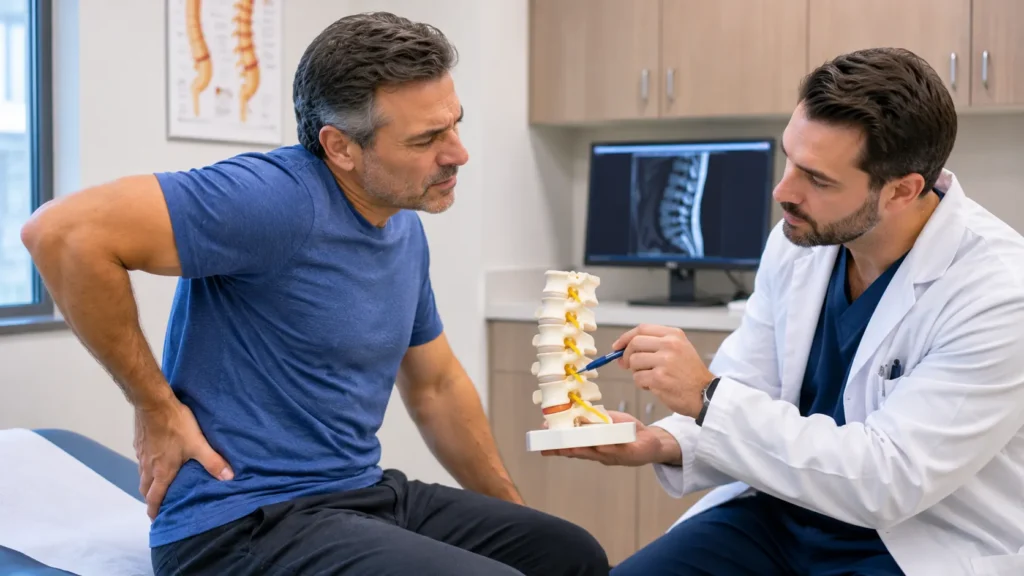
Your doctor will ask when the pain started, whether you ever had a pain-free period, what the pain feels like, and what makes it worse. The exam checks range of motion, ligament stability, kneecap tracking, swelling, warmth, the scar and surrounding skin, and your hip and lower back.
Tests
- Blood tests – inflammatory markers (ESR and CRP) screen for infection.
- Joint aspiration – fluid drawn from the knee is tested for infection. This is the key test if infection is suspected.
- X-rays – check implant position, signs of loosening, wear, and fractures. Comparing them with earlier X-rays is especially useful.
- CT scan – assesses implant rotation and alignment.
- Bone scan – can help detect loosening or infection in selected cases.
- Diagnostic nerve block – numbing a specific nerve around the knee. If the pain eases, that nerve is confirmed as a pain source, which can guide treatments such as radiofrequency ablation.
- Hip and spine evaluation – imaging or exam of the hip and lower back when referred pain is suspected.
A pain specialist can work alongside your surgeon to identify nerve-related pain and plan non-surgical treatment.
Find Relief From Persistent Knee Pain After Replacement
Ongoing knee pain after replacement shouldn’t limit your daily life. At MVM Health, our specialists help identify the underlying cause and provide personalized treatment options to improve comfort and mobility.
Take the next step toward better knee health.
Treatment Options for Persistent Knee Pain After Replacement
Treatment depends on the cause. Mechanical problems such as infection or loosening often need surgical correction, while stiffness, nerve pain, and soft tissue problems usually respond to non-surgical care.
Rehabilitation and Conservative care
- Targeted physical therapy: focused on range of motion, quadriceps and hip strength, balance, and walking pattern. For stiffness, a more intensive stretching program may be needed.
- Medication: anti-inflammatories for soft tissue pain, and nerve pain medications such as gabapentin, pregabalin, or duloxetine for burning or electric pain.
- Topical treatments: lidocaine patches or creams for sensitive skin around the scar.
- Pain psychology: cognitive behavioral therapy and pain education help when the nervous system has become sensitized.
- Healthy weight control: a medical weight loss program can reduce load on the new knee.
Interventional Treatments
- Genicular nerve block: numbs the small nerves that carry pain from the knee, both to confirm the pain source and to provide relief.
- Radiofrequency ablation (RFA): uses controlled heat on the genicular nerves to reduce knee pain for many months. It is a well-established option for persistent pain after knee replacement when no mechanical problem needs fixing.
- Soft tissue injections: for tendinitis or bursitis around the knee. These are a type of joint and soft tissue injection, placed outside the replaced joint.
- Peripheral nerve treatments: targeted treatment for a painful nerve or neuroma near the scar.
- Spinal cord stimulation: for severe, persistent nerve-related pain that has not responded to other treatments.
Surgical Options
- Manipulation under anesthesia – the knee is gently bent while you are asleep to break up scar tissue, usually within the first few months for stiffness.
- Arthroscopic scar release – for stiffness that persists.
- Revision knee replacement – replacing part or all of the implant for infection, loosening, instability, or malposition. Revision is not recommended for unexplained pain without a clear mechanical cause.
Supporting Your Recovery at Home
Daily habits play a big part in how a replaced knee feels. Always follow your surgeon’s and physical therapist’s specific instructions.
- Do your exercises every day: consistent range-of-motion and strengthening work is the single most important thing you can do, especially in the first three months.
- Prioritize straightening the knee: avoid placing a pillow under the knee when resting, as this can lead to a bent-knee contracture.
- Ice and elevate: 15 to 20 minutes of ice with the leg raised above heart level helps control swelling, especially after activity.
- Pace your activity: build walking distance gradually, and avoid doing too much on good days, which can trigger flare-ups.
- Choose low-impact exercise: walking, cycling, swimming, and water exercise are kind to the new joint. Avoid running and jumping unless your surgeon approves.
- Protect your sleep: a pillow between the knees when lying on your side, and timing pain medication before bed, can help.
- Keep the scar area moving: once healed, gentle scar massage can reduce sensitivity and tightness.
- Watch for warning signs: fever, wound changes, calf pain, or sudden swelling need prompt attention.
- Stay positive and connected: recovery takes months, not weeks. Support from family, friends, or a counselor can make a real difference.