










Spider Veins
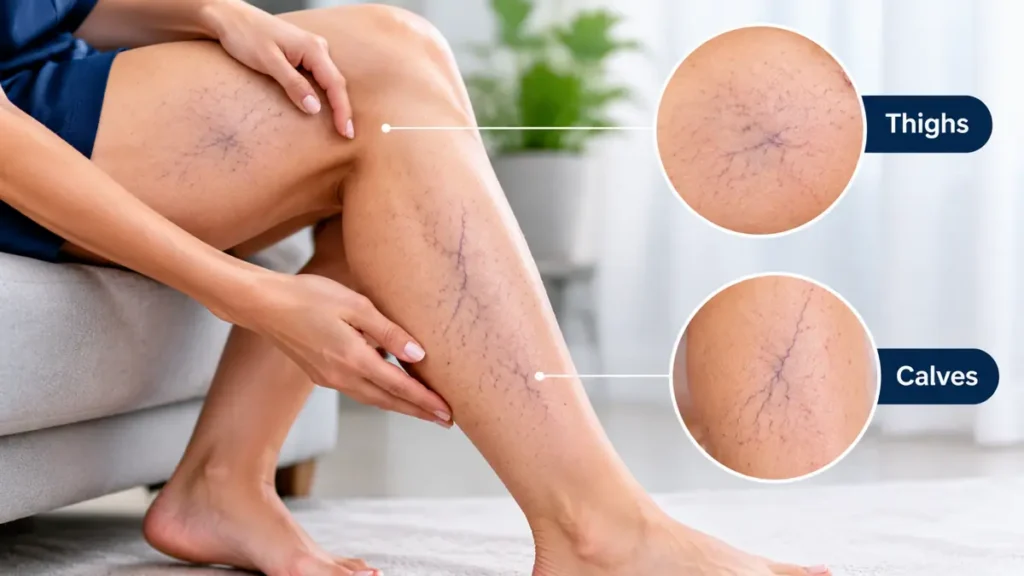
Those thin red, blue or purple lines on your thighs, calves or ankles have a name: spider veins. For many people, they’re mainly a cosmetic concern. For others, they come with itching, burning or tired legs, and sometimes they point to a deeper vein problem. Our vein specialists look at the whole picture, then treat spider veins with simple, in-office options like sclerotherapy.
Book a visit with a vein specialist near you at one of our clinics in Pennsylvania, New Jersey, Ohio and Arizona.
- Board-Certified Physicians
- Care Across Multiple Specialties
Meet Our Expert Team
Board Certified Expert
At MVM Health — Movement. Vitality. Medicine. — we are committed to providing exceptional pain, vein, and wellness services that empower individuals to reclaim their health and well-being. With our team of Harvard-trained experts, we strive to deliver transformative outcomes that restore comfort, confidence, and quality of life. MVM Health’s mission is to help every patient relieve discomfort, restore motion, and renew life.
Vwaire Orhurhu, MD, MPH
Harvard Medical School

Mariam Salisu, MD, MPH
Harvard Medical School

Peter Isaac, DO
Philadelphia College of Osteopathic Medicine

Ali Amin, MD
Baylor College of Medicine

THOMAS KHOURY, MD
Harvard Medical School

ANTHONY TURNER, MD
Yale School of Medicine

KIRAN C. TAMIRISA
Baylor College of Medicine

TARIQ ALFARRA, DO
JOHNS HOPKINS HOSPITAL

Rishi Sheth, MD
University of Miami School of Medicine

Henry Onyeaka, MD, MPH
Harvard Medical School

Felicia Todd, CNP
Moravian College

Carrie Ward, CNP
Franklin University
Kruti Solanki, CNP
Drexel University

Christy Daniels, CNP
Chamberlain University

Heerina Kittel, CNP
Maryville University

Vic Urbano, CNP
Walden University

Jameela Azeem, CNP
Hofstra University
Vwaire Orhurhu, MD, MPH
Harvard Medical School
Mariam Salisu, MD, MPH
Harvard Medical School
Peter Isaac, DO
Philadelphia College of Osteopathic Medicine
Ali Amin, MD
Baylor College of Medicine
THOMAS KHOURY, MD
Harvard Medical School
ANTHONY TURNER, MD
Yale School of Medicine
KIRAN C. TAMIRISA
Baylor College of Medicine
Rishi Seth, MD
University of Miami School of Medicine
Henry Onyeaka, MD, MPH
Harvard Medical School
Felicia Todd, CNP
Moravian College
Vic Urbano, CNP
Walden University
Jameela Azeem, CNP
Hofstra University

We work with a wide variety of insurance providers
and 100+ more
What Spider Veins Are
Spider veins, known medically as telangiectasias, are tiny blood vessels just under the skin that have become widened and visible. They’re usually less than a millimeter across and often spread out in thin lines, tree branches or a web-like pattern, which is how they got their name.
They’re most common on the thighs, calves and ankles, but can also appear on the feet, the belly or the face. They’re usually flat, or only slightly raised, and don’t bulge the way larger veins do.
Why Spider Veins Appear
Spider veins form when pressure builds up in small surface vessels, or when their walls weaken and stretch. Common reasons include:
Family history
Spider veins often run in families.
Hormones
Pregnancy, menopause, birth control and hormone therapy can all relax vein walls.
Extra weight
More body weight adds pressure to leg veins.
Age
Vein walls lose some strength over time.
Spider Veins vs. Varicose Veins
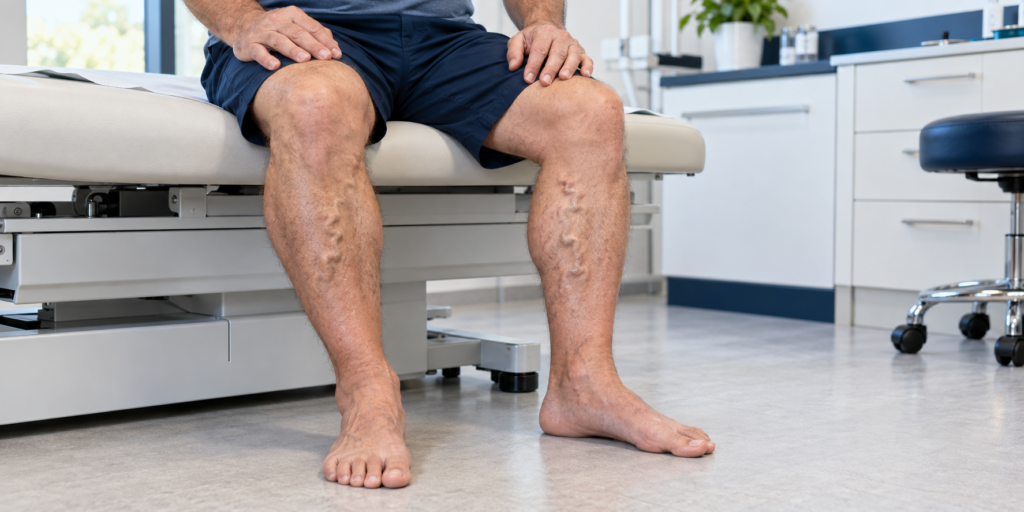
Spider veins and varicose veins are related but not the same. Spider veins are tiny, flat and close to the skin’s surface. Varicose veins are larger, deeper veins that bulge, twist and can be felt under the skin. Varicose veins more often cause aching and swelling, while spider veins are more often a cosmetic concern. You can have one without the other, but many people have both.
Noticing spider veins on your legs? A vein evaluation can help assess your vein health and determine whether treatment, such as sclerotherapy, may be appropriate.
Do you…
- Thin red, blue, or purple veins?
- Small, web-like vein patterns?
- Flat veins near the skin’s surface?
- Visible veins without discomfort?
Are you…
- Bulging, raised, or twisted?
- Causing aching or heaviness?
- Associated with leg swelling?
- More uncomfortable after standing?
A Sign of Something Deeper?
Most spider veins are harmless. But sometimes they’re the visible tip of a deeper problem. When a larger vein beneath the skin has leaking valves, the extra pressure can push into nearby small vessels and create clusters of spider veins. This is called chronic venous insufficiency.
Your spider veins may be linked to a deeper vein problem if you also have:
- Spider veins clustered around the ankle or inner foot
- Leg swelling by the end of the day
- Legs that feel heavy, tired or achy
- Burning, itching or throbbing around the veins
- Spider veins that come back quickly after treatment
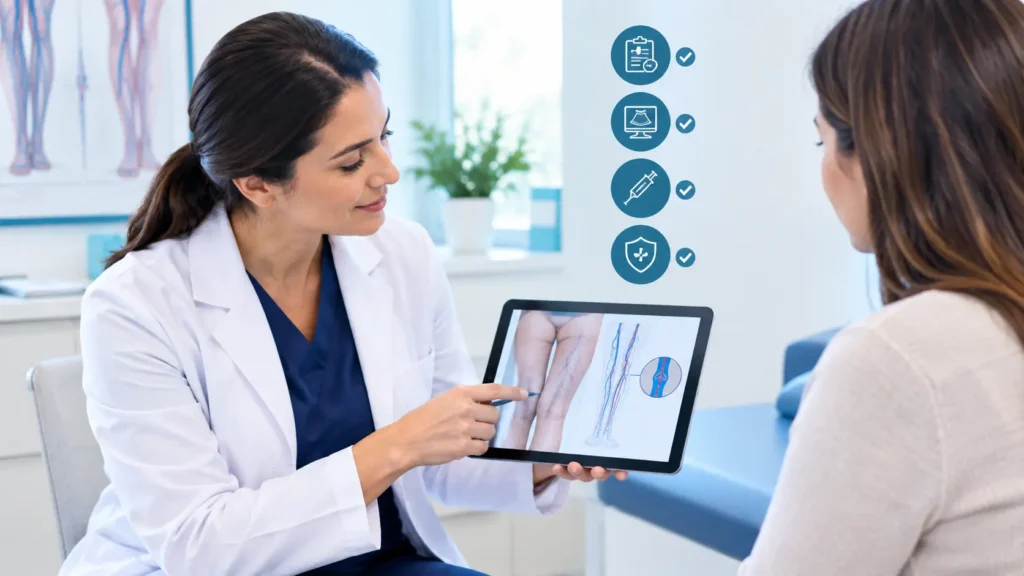
In these cases, a quick ultrasound can check the deeper veins. If a leaking vein is found, treating it first with radiofrequency ablation, laser ablation or VenaSeal® helps spider vein treatment last longer.
How Spider Veins Are Treated
Treatment is quick, done in the office and doesn’t need surgery or general anesthesia. Your provider recommends an option based on the size, color and location of your veins and whether a deeper vein is involved.
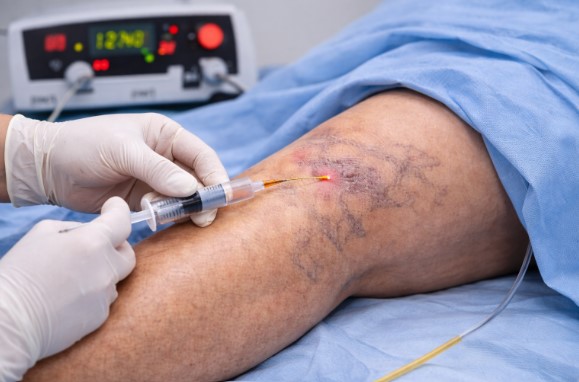
Sclerotherapy uses a very fine needle to inject a medicine into each spider vein. The medicine irritates the vein lining so it closes, and the body slowly absorbs it. Treated veins fade over several weeks, and most people need more than one session for the look they want.
Surface laser
A laser applied to the skin heats very small or fine veins until they close. It’s often used for tiny veins and for veins on the face. It usually takes several sessions and works best on lighter skin with small vessels.
Sclerotherapy or laser?
For spider veins on the legs, sclerotherapy is usually more effective than surface laser and is the standard first choice. Laser can help with very fine veins, people who don’t like needles, or facial veins. Some people benefit from both.
Treating the source
If an ultrasound shows a leaking deeper vein, that vein is usually treated first. Otherwise, new spider veins tend to keep appearing.
WHEN TO SEE A SPIDER VEIN SPECIALIST
Consider a spider vein evaluation if you notice new or increasing clusters of small red, blue, or purple veins on your legs. Although spider veins are often a cosmetic concern, they can sometimes cause itching, burning, or discomfort. A vein specialist can examine the affected areas, assess your symptoms, and discuss appropriate treatment options, including sclerotherapy when suitable.
Concerned About Spider Veins? Schedule a Vein Evaluation
What to Expect From Sclerotherapy
Sclerotherapy is a minimally invasive treatment that involves injecting a specialized solution into spider veins or small varicose veins, causing them to gradually close and fade.
STEP 1 . THE VISIT
Your provider cleans the skin and injects the veins with a tiny needle. Most people feel small pinches and a brief sting.
STEP 2 · RIGHT AFTER
You can walk right away and return to most daily activities the same day. Compression stockings are often worn for a short time.
STEP 3 . HEALING
Bruising, small red marks, itching or tenderness are common and fade over days to weeks.
STEP 4 . POSSIBLE SIDE EFFECTS
Brown discoloration along the treated vein or tiny new red vessels (called matting) can appear and usually fade with time. Rarely, a small skin sore or inflammation can occur.
STEP 5 · AFTERCARE
Avoid hot tubs, saunas, intense workouts and strong sun on the treated area for a short time, and follow your provider’s instructions.
STEP 6. RESULT
Veins fade gradually over several weeks. Treated veins don’t come back, but new ones can form over time.
Cost and Insurance
When it comes to your vascular health, you deserve more than a quick cosmetic solution. You deserve doctors who actually look at what is going on beneath the surface and treat it properly. Here is what makes MVM Health different from other providers offering spider vein treatment near me. At MVM Health, we combine advanced technology, clinical expertise, and genuine patient care because looking and feeling your best should not come at the cost of your overall health.
Where Spider Veins Show Up
Spider veins can appear on different parts of the body, most commonly on the legs and face. Their location, appearance, and associated symptoms can help determine whether further evaluation is needed.
Thighs and Calves
Spider veins commonly develop on the thighs and calves. Family history, hormonal changes, and prolonged standing or sitting may contribute to their appearance.
Ankles and Feet
Spider veins around the ankles and feet may sometimes occur alongside underlying vein circulation problems. If accompanied by swelling, aching, or skin changes, a vein evaluation may be helpful.
Behind the Knees
The area behind the knees is another common location for spider veins. These small, visible veins may develop due to genetics, hormonal changes, or increased pressure in the leg veins.
Belly and Abdomen
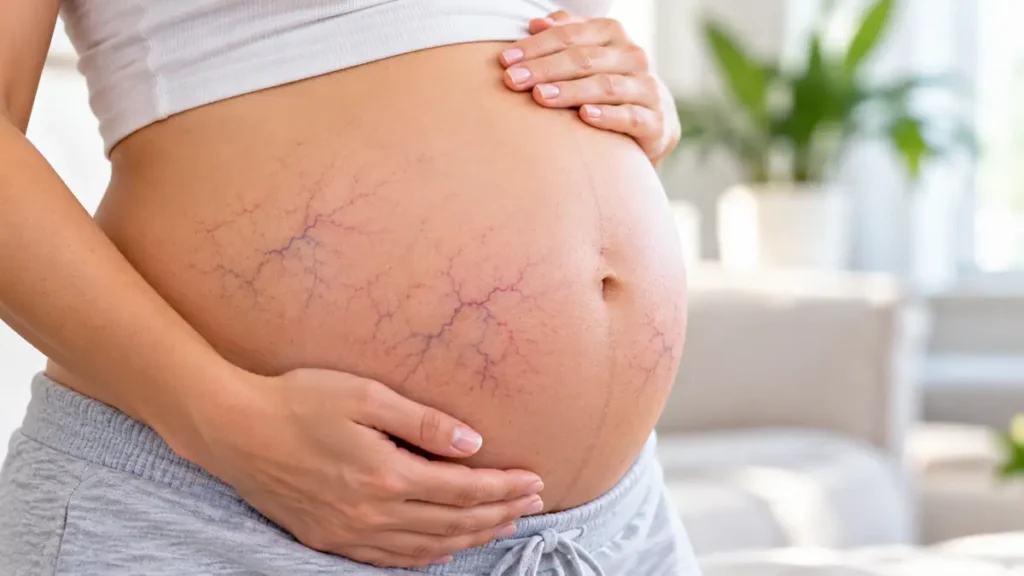
Spider-like veins may appear on the abdomen during pregnancy or with certain medical conditions. New or unexplained visible veins in this area should be discussed with a healthcare provider.
Face and Nose
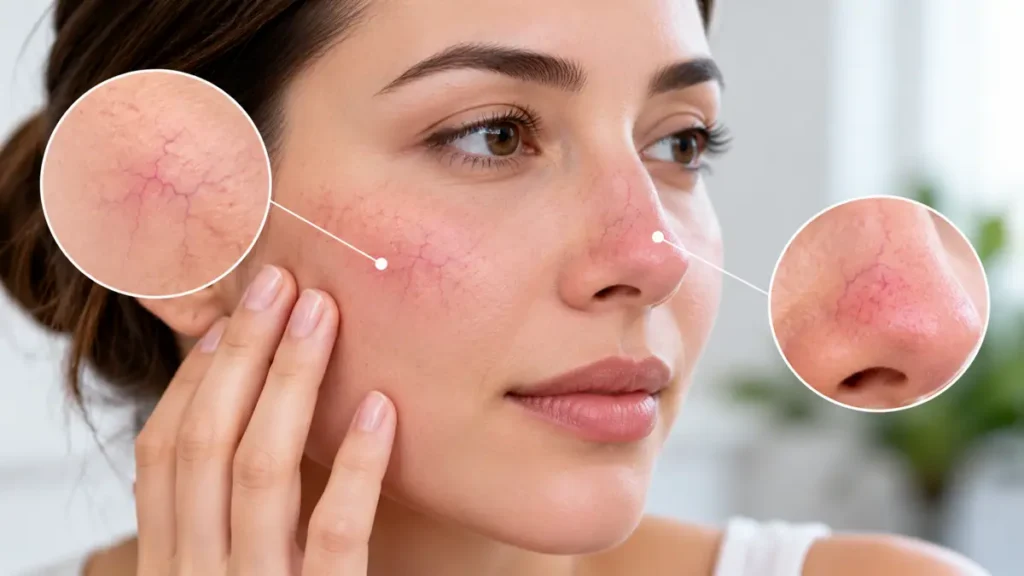
Facial spider veins commonly appear around the nose and cheeks. They may be associated with sun exposure, genetics, or rosacea and are often evaluated and treated by dermatologists.
Chest and Upper Body
Small, visible blood vessels can also develop on the chest and upper body. Hormonal changes, sun exposure, and certain health conditions may contribute to their appearance. New or widespread changes should be medically evaluated.
Graduated compression stockings apply gentle pressure to the legs to support blood circulation and help reduce swelling, aching, and heaviness. While compression therapy does not eliminate existing varicose veins, it may help manage symptoms and is sometimes recommended before or after vein treatment.
Ways to Help Prevent New Spider Veins
You can’t change your genes, but these habits may help slow new spider veins:
Walk and stay active to keep blood moving through your legs.
Break up long periods of sitting or standing.
Wear compression stockings if your provider recommends them, especially during pregnancy or long days on your feet.
Raise your legs at the end of the day.
Use sunscreen on your face and legs.
HAVE QUESTIONS ABOUT SPIDER VEINS?
Get clear answers about spider veins and your treatment options at MVM Health. Book a visit with a vein specialist near you at one of our clinics in Pennsylvania, New Jersey, Ohio and Arizona.
Frequently Asked Questions
Spider veins are tiny, widened blood vessels just under the skin that look like thin red, blue or purple lines or webs. They’re most common on the legs but can also appear on the face, feet and belly.
Usually not. Once a small vessel widens, it tends to stay visible. Some spider veins from pregnancy fade after delivery, but most need treatment, such as sclerotherapy, to go away.
Spider veins are usually harmless. But clusters near the ankle, or spider veins with swelling, heaviness or aching, can be a sign of venous insufficiency in a deeper vein, which is worth having checked.
Sclerotherapy is the most common and effective treatment for leg spider veins. A medicine is injected into each vein so it closes and fades over several weeks. Most people need more than one session
For leg spider veins, sclerotherapy usually works better and is the standard first choice. Surface laser can help with very fine veins or facial veins. Side effects of both can include redness, bruising and temporary skin discoloration.
Facial spider veins are often linked to sun damage, genetics, rosacea, aging or alcohol use. They’re usually treated with surface laser or light-based therapy rather than injections.
Cost depends on how many veins are treated, how many sessions you need and the method used. Many people need two to three sclerotherapy sessions. Our team gives you a clear estimate after your evaluation.
Some spider veins that appear during pregnancy fade within a few months of giving birth. If they’re still there after that, sclerotherapy can usually treat them once you’re no longer pregnant.
Spider vein treatment done for appearance is usually not covered. If spider veins are linked to symptoms and an underlying vein condition, related treatment may be covered. Our team checks your benefits before you schedule.
No. Creams and home remedies may soothe or moisturize the skin, but they can’t close the tiny vessels. Sclerotherapy or laser are the treatments that remove spider veins.
Compression socks can ease leg tiredness and may help slow new spider veins, especially during pregnancy or long days on your feet. They don’t remove spider veins you already have.
Vein specialists treat spider veins on the legs, often with sclerotherapy, and can check for deeper vein problems with ultrasound. Dermatologists often treat facial spider veins. At MVM Health, our vein specialists treat leg spider veins at clinics in Pennsylvania, New Jersey, Ohio and Arizona.
Recent blogs

How to Evaluate a Vein Specialist: Credentials, Ultrasound Diagnosis, Treatment Fit and Follow-Up Care
You can evaluate a vein specialist at five points: before you book, on the first phone call, in the exam room, when you read your

What Is Venous Insufficiency and What Symptoms Can It Cause in Scotch Plains?
Venous insufficiency is a condition in which the veins in your legs have difficulty returning blood toward your heart. When vein valves do not work

Sciatica Care in Philadelphia, PA: Diagnosis and Treatment Choices for Lasting Relief
Sciatica treatment in Philadelphia, PA usually starts with an evaluation to find which nerve root is irritated and why. Many patients improve with conservative care