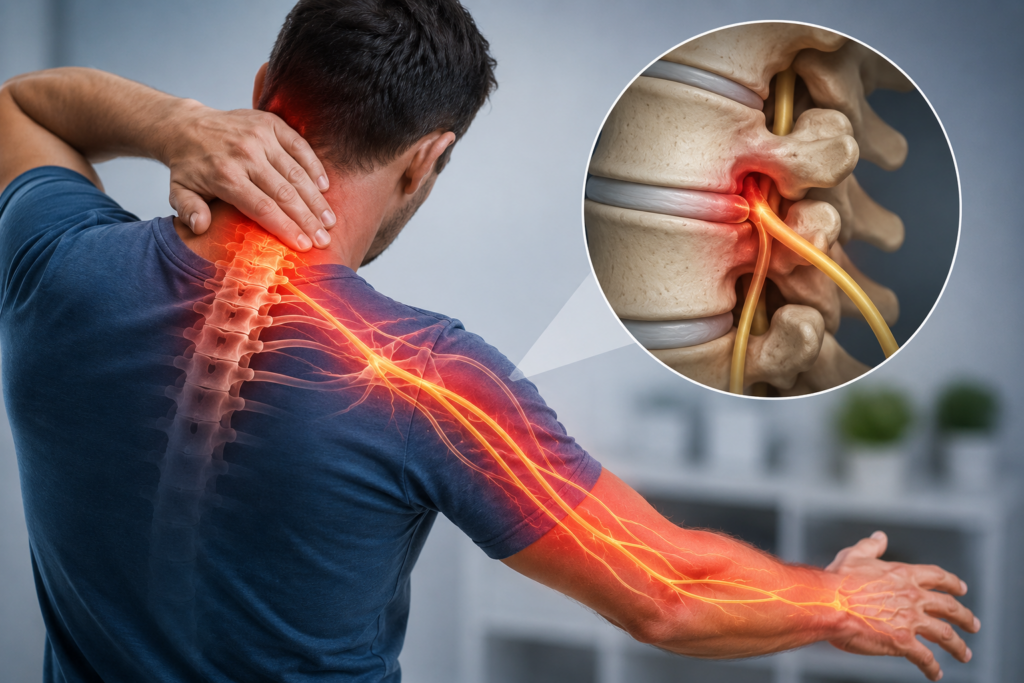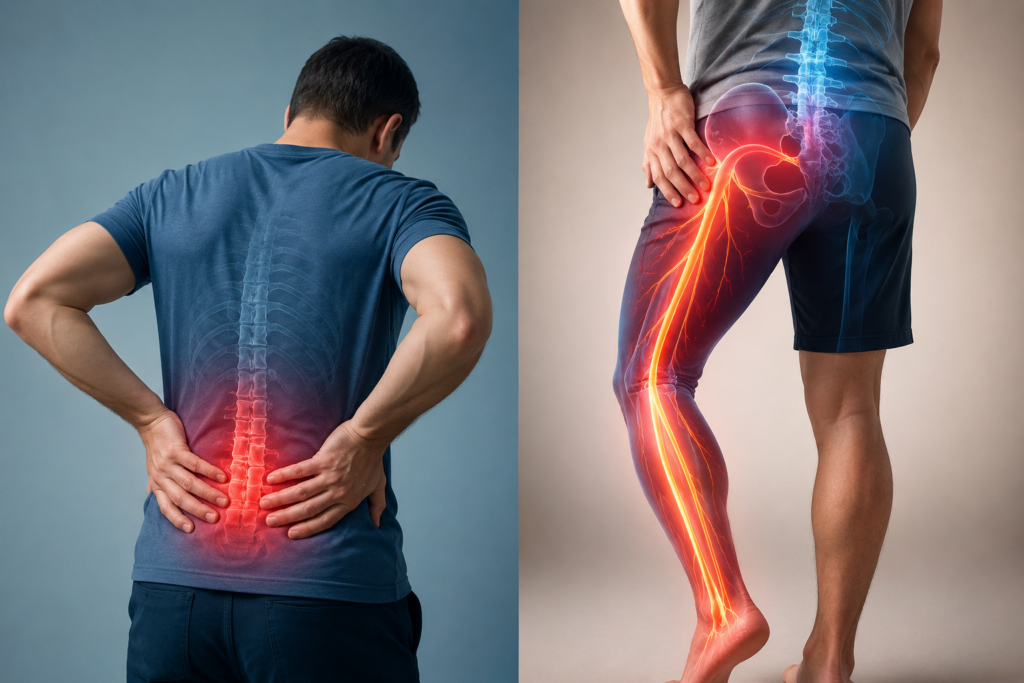

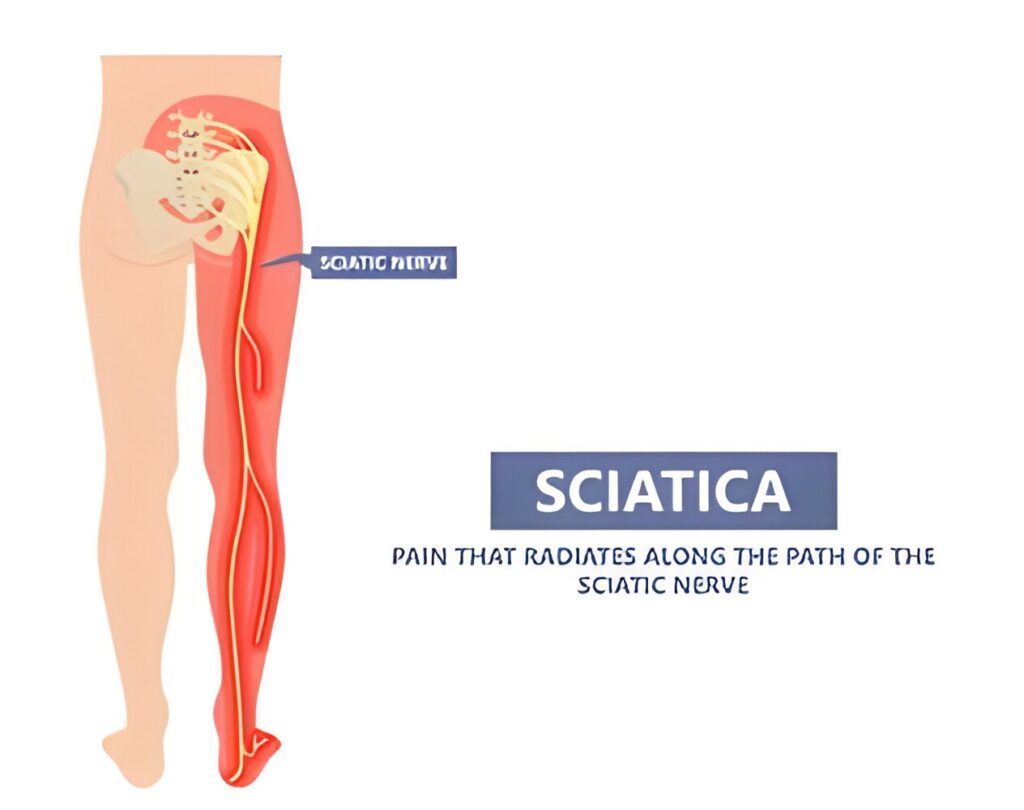
Sciatica, characterized by pain that radiates along the sciatic nerve path from the lower back through the hips and buttocks and down each leg, can be a debilitating condition for those affected.
Often resulting from radiculopathy, where a nerve root in the spine is compressed, causing pain and numbness along the nerve’s pathway, sciatica can significantly impact daily life. However, advancements in medical technology have ushered in a new era of minimally invasive treatments that offer relief without the need for extensive surgery. Here’s a closer look at these innovative options.
Understanding Radiculopathy
Radiculopathy occurs when one or more nerves are affected and unable to work properly, leading to pain, weakness, numbness, or difficulty controlling specific muscles.
In the case of sciatica, it is typically the lumbar or sacral nerve roots that are involved. This condition can arise from various causes, including herniated discs, bone spurs, spinal stenosis, and spondylolisthesis.
Minimally Invasive Treatment Options
The landscape of treatment for sciatica has evolved from traditional open surgeries to minimally invasive techniques that reduce recovery time and the risk of complications. These treatments are usually considered after conservative measures, like physical therapy and medication, have failed to provide adequate relief.
Epidural Steroid Injections
Epidural steroid injections are a common minimally invasive treatment that involves delivering steroids directly into the epidural space around the spinal nerves. This can reduce inflammation and pain, providing relief that can last from weeks to years, depending on the individual’s condition.
Microdiscectomy
Microdiscectomy is a procedure where a surgeon removes portions of a herniated disc to relieve nerve pressure. This surgery is performed through a small incision with the aid of a microscope, allowing for a more targeted approach and quicker recovery compared to traditional surgery.
Spinal Cord Stimulators
For chronic sciatica that doesn’t respond to other treatments, spinal cord stimulators can be an option. This device is implanted under the skin and sends electrical pulses to the spinal cord to control pain. The intensity of the pulses can be adjusted, and the device can be turned on or off, providing a customizable treatment method.
Percutaneous Discectomy
Percutaneous discectomy is a technique designed to reduce herniated disc material that is pressing on a nerve root or the spinal cord. It involves a needle-like instrument inserted through the skin to the disc, where it removes disc material. This procedure is best suited for certain types of disc herniations and may offer a rapid return to normal activities.
Laser Spine Surgery
Laser spine surgery involves using a laser to remove soft tissues over the spine through a small incision. It can be used to treat herniated discs, spinal stenosis, and other conditions causing sciatica. While it offers a less invasive alternative to traditional surgery, it’s important to consult with a specialist to understand its appropriateness for your specific situation.
Conclusion
The advent of minimally invasive treatments for sciatica and radiculopathy represents a significant leap forward in spinal care, offering patients effective relief with fewer risks and a shorter recovery period. If you’re suffering from sciatica, consulting with a spine specialist can help determine the most appropriate treatment based on your unique condition. With the right approach, it’s possible to say goodbye to sciatica pain and reclaim your quality of life.
Radiculopathy: Understanding Symptoms, Causes, and Treatment Options