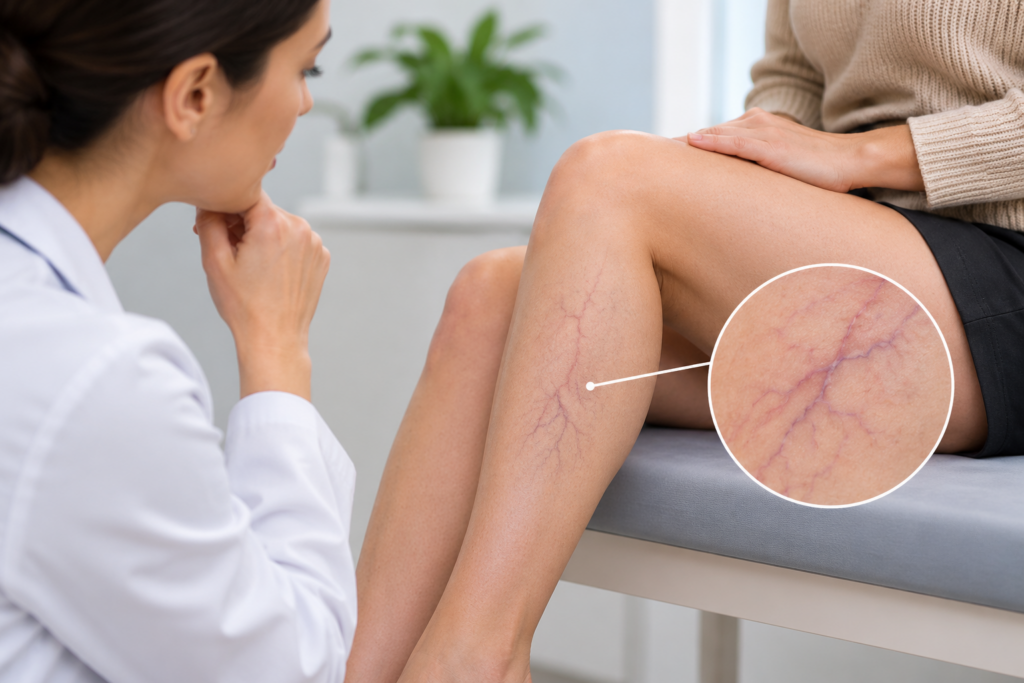


Numbness or tingling in legs is often linked to nerve problems, including peripheral neuropathy and lumbar radiculopathy. Circulation issues, vitamin deficiencies, and certain medications can also contribute to these symptoms. Poor circulation, vitamin deficiencies, and certain medications can cause it too. Knowing which pattern you have is the first step toward the right treatment.
Almost everyone has felt a leg “fall asleep” after sitting cross-legged too long. That brief pins-and-needles feeling fades within minutes once pressure comes off the nerve. Tingling that keeps coming back, spreads, or never fully goes away is different. It is your nervous system signalling that something is interfering with how sensation travels from your legs to your brain.
People describe the sensation in many ways:
- Pins and needles: a prickling, fizzing, or “electric” feeling under the skin.
- Numbness: reduced or absent feeling, as if wearing a thick sock or walking on cotton.
- Burning: a hot, raw sensation, often worse at night.
- Crawling or buzzing: a vibrating or insect-like feeling.
- Shooting pain: sudden jolts that travel down the leg.
The medical term for these abnormal sensations is paresthesia. On its own, paresthesia is a symptom, not a diagnosis. Where it shows up, how it started, and what makes it better or worse point to its cause. This guide explains the main causes, how doctors tell them apart, which warning signs need urgent attention, and what treatment can do.
What Causes Numbness or Tingling in Legs?
Leg tingling happens when a sensory nerve is damaged, compressed, irritated, or starved of blood. Sensation in your legs depends on a long chain. Receptors in the skin send signals along peripheral nerves, through nerve roots that exit the lower spine, and up the spinal cord to the brain. A problem anywhere along that chain can scramble the signal.
Doctors think about the causes in three broad groups:
- The nerves themselves: the long nerves of the legs are damaged by disease, toxins, or deficiency. This is peripheral neuropathy.
- The spine: a nerve root is squeezed or inflamed where it leaves the lumbar spine. This is lumbar radiculopathy, often called sciatica.
- Blood supply: nerves need a steady flow of oxygen. Narrowed arteries or pooling in the veins can trigger tingling, heaviness, and cramping.
Some people have more than one cause at the same time. A person with diabetes, for example, may have both neuropathy and narrowed leg arteries. That overlap is one reason a careful evaluation matters more than guessing from symptoms alone.
Peripheral Neuropathy: The Most Common Cause
Peripheral neuropathy is damage to the nerves outside the brain and spinal cord, and it typically starts as numbness or tingling in both feet. Because the longest nerves are the most vulnerable, symptoms begin in the toes and slowly climb upward. Doctors call this a “stocking” pattern because it covers the area a sock would. In later stages the hands can be affected too, in a “glove” pattern.
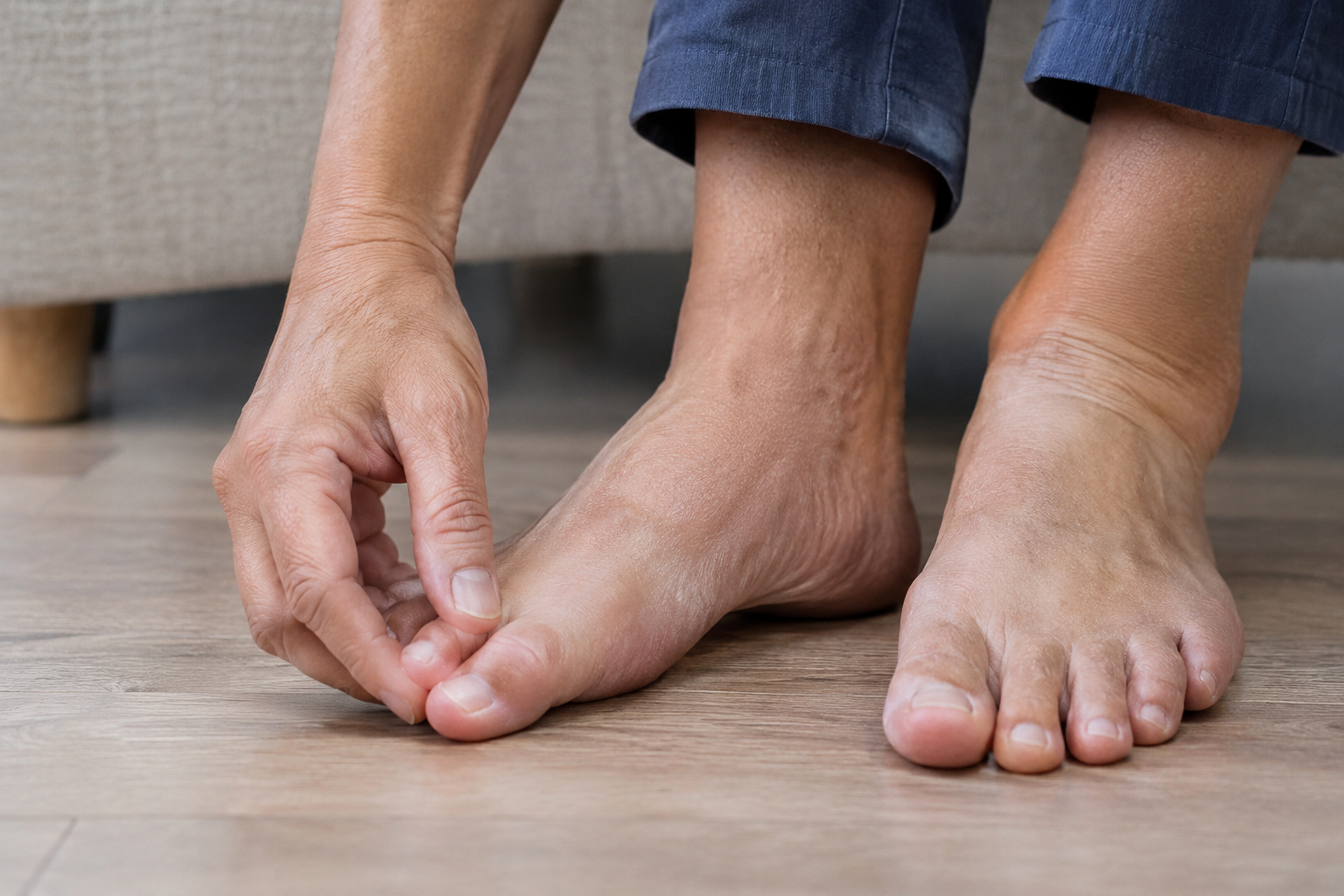
What Neuropathy Feels Like
- Tingling, burning, or prickling that starts in the toes and soles.
- Numbness that makes it hard to feel the floor, temperature, or small cuts.
- Sharp, stabbing, or electric pains, often worse at night.
- Extreme sensitivity, so even bedsheets feel painful.
- Poor balance, especially in the dark, because the feet can’t sense position well.
- Muscle weakness or cramping in more advanced cases.
Common Causes of Neuropathy
- Diabetes: the leading cause worldwide. High blood sugar damages small nerves and the tiny vessels that feed them. Roughly half of people with long-standing diabetes develop some neuropathy.
- Vitamin deficiencies: especially vitamin B12. Long-term use of metformin or acid-reducing drugs, vegetarian diets, and some gut conditions raise the risk.
- Alcohol: heavy, long-term drinking is directly toxic to nerves and often comes with poor nutrition.
- Thyroid and kidney disease: an underactive thyroid and kidney failure both affect nerve health.
- Chemotherapy and other medications: certain cancer drugs, some antibiotics, and some HIV medicines can damage nerves.
- Autoimmune and inflammatory conditions: lupus, rheumatoid arthritis, Sjögren’s syndrome, and Guillain-Barré syndrome.
- Infections: shingles, Lyme disease, hepatitis C, and HIV.
- Inherited conditions: such as Charcot-Marie-Tooth disease.
According to the National Institute of Neurological Disorders and Stroke (NINDS), more than 100 types of peripheral neuropathy have been identified. In some people no cause is found even after testing. This is called idiopathic neuropathy, and it is more common after age 60.
Why Early Attention Matters
Neuropathy is often progressive, but finding the cause early can slow or stop it. Correcting a B12 deficiency or bringing blood sugar under control can halt further damage, and some sensation may return. Numb feet also carry a hidden danger. Unnoticed blisters and cuts can become ulcers or infections, which is why daily foot checks are essential for anyone with neuropathy. Learn more about diagnosis and treatment on our neuropathy page.
Lumbar Radiculopathy: When a Pinched Nerve in the Back Is to Blame
Lumbar radiculopathy is irritation or compression of a nerve root in the lower spine, and it usually causes tingling or numbness down one leg. The nerve roots that leave the lumbar spine (L1 to S1) combine to form the sciatic nerve and other leg nerves. When one root is squeezed, symptoms follow that nerve’s path rather than staying in the feet.
What Radiculopathy Feels Like
- Pain, tingling, or numbness that starts in the lower back or buttock and travels down the leg.
- Symptoms usually on one side only.
- A sharp, shooting, or electric quality, sometimes described as a “lightning bolt.”
- Worse with sitting, bending forward, coughing, or sneezing.
- Weakness in specific muscles, such as trouble lifting the foot (foot drop) or rising onto the toes.
The exact location of the tingling hints at which root is involved. An L5 root often causes tingling on the top of the foot and big toe. An S1 root usually affects the outer foot, sole, and little toe. An L4 root tends to affect the front of the shin and inner ankle.
Common causes of lumbar radiculopathy
- Herniated or bulging disc: the soft center of a spinal disc pushes out and presses on a nerve root. This is the most common cause in adults under 50.
- Spinal stenosis: age-related narrowing of the spinal canal from arthritis and thickened ligaments. It often causes leg tingling and heaviness when walking that eases when sitting or leaning forward.
- Degenerative disc disease: worn, flattened discs reduce the space where nerves exit.
- Spondylolisthesis: one vertebra slips forward over another.
- Bone spurs, cysts, and, rarely, tumors or infection.
The Outlook
Most radiculopathy caused by a disc herniation improves within 6 to 12 weeks with conservative care. Physical therapy, activity changes, and medication are usually tried first. Persistent or worsening symptoms may call for imaging, epidural steroid injections, or, in selected cases, surgery to relieve the pressure. Read our full guide to lumbar radiculopathy for treatment details.
Circulation Problems That Cause Leg Tingling
Blood-flow problems can cause tingling, but they usually come with other clues such as cramping, swelling, color changes, or visible veins. Vein clinics often attribute leg tingling to vein disease. That is sometimes right, but nerve causes are far more common, so circulation should be checked alongside the nerves, not instead of them.
Peripheral Artery Disease (PAD)
PAD is narrowing of the leg arteries from plaque buildup. The classic symptom is cramping or aching in the calf, thigh, or buttock while walking that stops within a few minutes of rest. This is called claudication. Advanced PAD can cause numbness, cold feet, shiny skin, hair loss on the shins, and slow-healing sores. Smokers, people with diabetes, and those over 65 are at highest risk.
Chronic Venous Insufficiency
When the valves inside leg veins weaken, blood pools in the lower legs, a condition called venous insufficiency. This causes heaviness, aching, swelling, itching, varicose veins, and sometimes a tingling or restless feeling, especially after long periods of standing. Symptoms tend to ease when the legs are raised. Venous disease rarely causes true numbness on its own.
Deep Vein Thrombosis (DVT)
A blood clot in a deep leg vein typically causes swelling, warmth, redness, and pain in one calf or thigh. Tingling may occur, but the swelling is the key sign. A DVT is a medical emergency because the clot can travel to the lungs.
Raynaud’s Phenomenon
In Raynaud’s, small vessels in the toes spasm in response to cold or stress. The toes turn white or blue, then red, with numbness and tingling as blood returns.
Other Causes of Numbness and Tingling in the Legs
A range of less common conditions can also cause leg paresthesia, and some of them are serious:
- Meralgia paresthetica: compression of a nerve near the hip causes burning numbness on the outer thigh. Tight belts, weight gain, and pregnancy are common triggers.
- Peroneal nerve compression: pressure at the outside of the knee, often from crossing the legs, causes numbness on the top of the foot and sometimes foot drop.
- Tarsal tunnel syndrome: compression of a nerve on the inner ankle causes tingling and burning in the sole.
- Piriformis syndrome: a tight buttock muscle irritates the sciatic nerve and mimics a disc problem.
- Restless legs syndrome: an urge to move the legs with crawling or creeping sensations, mostly in the evening and at rest.
- Multiple sclerosis (MS): damage to nerve coverings in the brain and spinal cord can cause numbness that comes and goes, often with vision changes or fatigue.
- Stroke or transient ischemic attack (TIA): sudden numbness of one leg, often with the arm and face on the same side.
- Cauda equina syndrome: severe compression of the nerve roots at the base of the spine. This is a surgical emergency.
- Pregnancy: fluid retention and pressure on nerves and vessels.
- Anxiety and hyperventilation: rapid breathing changes blood chemistry and can cause brief, widespread tingling.
- Toxin exposure: heavy metals such as lead, arsenic, and mercury.
Neuropathy, Radiculopathy, or Circulation? How to Tell the Difference
The pattern of your symptoms is the best early clue to the cause. Use this table as a guide, not a diagnosis.
| Feature | Peripheral neuropathy | Lumbar radiculopathy | Circulation problem (PAD / venous) |
| Where it starts | Toes and soles | Lower back or buttock | Calf or whole lower leg |
| Sides affected | Usually both, evenly | Usually one | Either; PAD often worse on one |
| How it spreads | Slowly upward, “stocking” pattern | Down the leg along one nerve path | Stays in the calf, foot, or ankle |
| Typical feeling | Burning, pins and needles, numbness | Shooting, electric pain with tingling | Cramping (PAD) or heavy, aching (veins) |
| Worse with | Night, rest | Sitting, bending, coughing | Walking (PAD); standing (veins) |
| Better with | Little changes it | Lying down, walking, changing position | Rest (PAD); raising the legs (veins) |
| Back pain | No | Often | No |
| Other signs | Poor balance, foot sores go unnoticed | Weak ankle or toes, reflex changes | Cold or discolored skin, swelling, varicose veins |
| Onset | Gradual, over months or years | Often sudden, after lifting or twisting | Gradual |
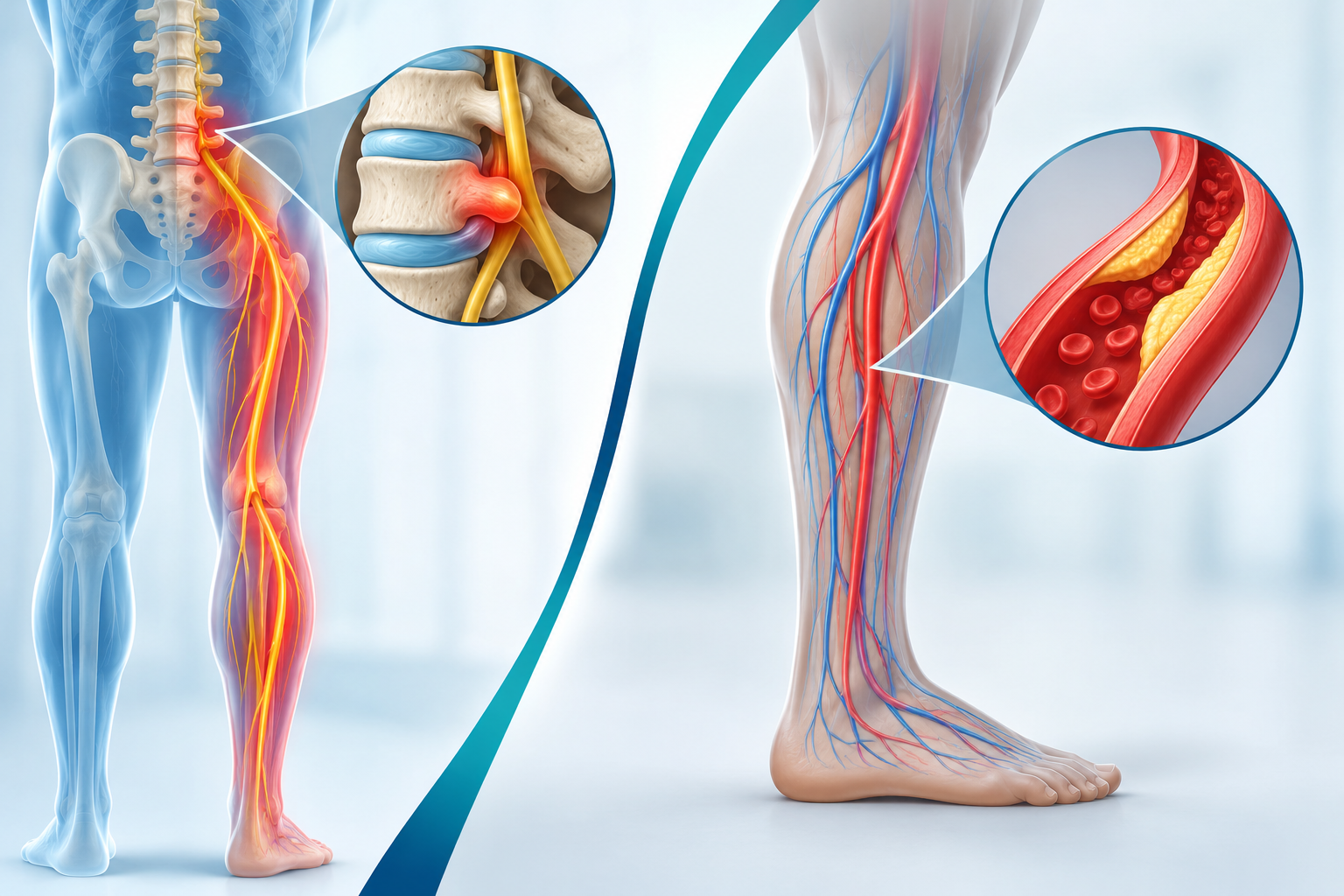
One exception is worth noting. Lumbar spinal stenosis can cause leg symptoms during walking that ease with rest, just like PAD. The difference is that stenosis eases when you sit or lean forward, while PAD eases when you simply stop walking, even standing still.
When to See a Doctor About Leg Numbness
Most leg tingling is not an emergency, but some combinations of symptoms need care the same day.
Call Emergency Services or Go to the ER if You Have:
- Sudden numbness or weakness in one leg, especially with face drooping, arm weakness, slurred speech, confusion, or vision loss. These are signs of stroke.
- Numbness in the groin, inner thighs, or buttocks (“saddle” area), new trouble controlling the bladder or bowels, or weakness in both legs. These are signs of cauda equina syndrome.
- Rapidly spreading weakness that starts in the feet and climbs over hours to days, which can signal Guillain-Barré syndrome.
- A swollen, warm, painful calf, especially with shortness of breath or chest pain, which may mean a blood clot.
- A cold, pale, or blue leg with severe pain, which suggests a sudden arterial blockage.
- Numbness after a fall, car accident, or back injury.
Book A Doctor’s Appointment If:
- Tingling lasts more than a few days or keeps coming back.
- It is spreading or getting worse.
- You have diabetes and any new foot numbness.
- You notice weakness, tripping, or a foot that slaps the floor when you walk.
- Pain or tingling disturbs your sleep.
- You have a foot wound that is slow to heal.
- Leg pain comes on with walking and stops with rest.
Find Relief From Numbness and Tingling in Your Legs
Persistent leg numbness or tingling may be linked to nerve, spine, or circulation problems. A medical evaluation can help identify the cause and guide appropriate treatment.
How Doctors Find the Cause
Diagnosis starts with a detailed history and exam, then targeted tests to confirm what the pattern suggests.
History and Physical Exam
Your doctor will ask where the tingling is, when it started, what makes it better or worse, and whether you have back pain. Expect questions about diabetes, alcohol, medications, diet, and family history. The exam checks sensation to light touch, pinprick, vibration, and temperature. It also tests reflexes, muscle strength, balance, and the pulses in your feet. Leg-raise tests can reproduce nerve-root pain.
Common Tests
- Blood tests: blood sugar and HbA1c, vitamin B12, folate, thyroid function, kidney and liver function, and markers of inflammation.
- Nerve conduction studies (NCS): small electrical pulses measure how fast and how strongly nerves carry signals. This confirms neuropathy and shows its type.
- Electromyography (EMG): a fine needle records muscle activity. It helps pinpoint which nerve root is affected in radiculopathy.
- MRI of the lumbar spine: shows discs, nerve roots, and narrowing of the spinal canal. It is usually reserved for symptoms lasting more than 6 weeks or for warning signs.
- Ankle-brachial index (ABI): compares blood pressure at the ankle and arm to screen for PAD.
- Duplex ultrasound: maps blood flow in arteries and veins and checks for clots or faulty vein valves.
- Skin biopsy: measures small nerve fibers when standard tests are normal but burning symptoms persist.
Because nerve and circulation problems can coexist, a thorough workup often checks both.
Treatment Options for Leg Numbness and Tingling
Treatment works best when it targets the underlying cause, with symptom relief alongside.
Treating Neuropathy
- Fix the root cause: tighter blood sugar control, B12 injections or supplements, stopping alcohol, adjusting a medication, or treating thyroid disease.
- Nerve pain medications: certain anticonvulsants (such as gabapentin and pregabalin) and antidepressants (such as duloxetine and amitriptyline) calm overactive pain signals. Ordinary painkillers rarely help nerve pain.
- Topical treatments: lidocaine patches and capsaicin cream or patches for localized burning.
- Physical therapy: balance and strength training to prevent falls.
- Foot care: proper footwear, daily inspection, and regular podiatry visits.
Treating Lumbar Radiculopathy
- Activity changes: short rest followed by gentle movement. Prolonged bed rest slows recovery.
- Physical therapy: core strengthening, nerve-gliding exercises, posture correction, and stretching.
- Medication: anti-inflammatories, short courses of oral steroids, or nerve pain medications.
- Epidural steroid injections: an image-guided injection that reduces inflammation around the nerve root. It can provide relief for weeks to months.
- Surgery: microdiscectomy or decompression when there is significant weakness, cauda equina syndrome, or pain that fails months of conservative care. Outcomes for well-selected patients are generally good.
Treating Circulation Causes
- PAD: a structured walking program, quitting smoking, blood-pressure, cholesterol and blood-thinning medications, and angioplasty, stenting, or bypass for severe disease.
- Venous insufficiency: compression stockings, leg elevation, and minimally invasive procedures that close faulty veins, such as radiofrequency or laser ablation.
- DVT: blood-thinning medication, started urgently.
Home Care and Prevention Tips
Everyday habits protect your nerves, spine, and circulation, and they support any treatment your doctor recommends.
- Keep blood sugar in range: if you have diabetes or prediabetes, this is the single most effective way to prevent neuropathy from progressing.
- Move every day: walking improves circulation, strengthens the back, and helps control weight and blood sugar.
- Break up long periods of sitting: stand and walk for a few minutes every 30 to 60 minutes, and avoid crossing your legs for long stretches.
- Lift with your legs: bend your knees, keep loads close, and avoid twisting while lifting.
- Eat for your nerves: include B12 sources such as eggs, dairy, fish, or fortified foods, and ask your doctor to check your levels if you take metformin or acid reducers.
- Limit alcohol and stop smoking: both damage nerves and blood vessels.
- Wear supportive, well-fitting shoes: and never walk barefoot if your feet are numb.
- Check your feet daily: look for cuts, blisters, redness, or color changes, using a mirror if needed.
- Raise your legs: elevating the legs above heart level for 15 to 20 minutes eases venous pooling and swelling.
- Test bath water with your hand or elbow: numb feet can’t sense scalding temperatures.