
Introduction
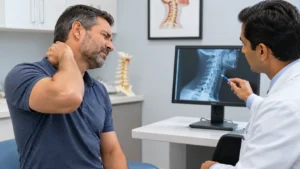
Most neck pain fades within a few days with rest and simple self-care. But when pain lingers for weeks, spreads into your arms, or comes with numbness or weakness, it may point to a problem in the cervical spine that needs a specialist’s attention.
Whether you sleep wrong, spend long hours at a computer, or are still feeling the effects of an old car accident, neck pain can make everyday life harder. Turning to check your blind spot on Cemetery Road, lifting your child, or getting a full night’s sleep can all become a struggle.
In this guide, the team at MVM Health in Hilliard, OH explains what causes neck pain, which warning signs mean it is time to see a spine specialist, and what modern, minimally invasive treatment looks like.
Understanding the Cervical Spine
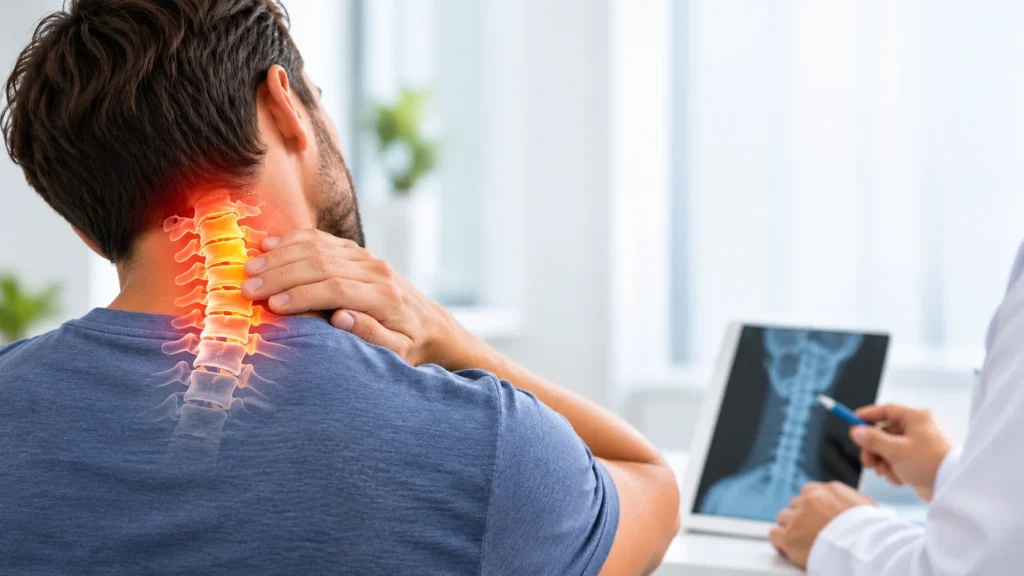
Your cervical spine is the neck portion of your spine, made up of seven vertebrae labeled C1 through C7. It supports the weight of your head, roughly 10 to 12 pounds, while allowing you to nod, tilt, and turn.
Between the vertebrae sit cushioning discs, and small facet joints guide each movement. The spinal cord runs through the center, with nerve roots branching out to your shoulders, arms, and hands. This is why a neck problem can cause symptoms far from the neck itself, such as tingling fingers or a weak grip.
Common Causes of Neck Pain and Cervical Spine Problems
Neck pain can come from muscles, joints, discs, or nerves. The most common causes include:
- Muscle strain and poor posture: Looking down at phones or laptops for hours, often called “tech neck,” strains the muscles and ligaments that hold your head up.
- Cervical herniated disc: When the soft center of a disc pushes out, it can press on a nearby nerve and cause pain that shoots into the arm. Learn more about herniated disc treatment.
- Degenerative disc disease: Discs naturally lose height and hydration with age, which can lead to stiffness and chronic pain.
- Cervical spondylosis (neck arthritis): Wear and tear on the facet joints and bone spurs can cause aching, grinding, and reduced range of motion.
- Cervical spinal stenosis: Narrowing of the spinal canal can squeeze the spinal cord or nerve roots. See our page on spinal stenosis.
- Whiplash and injuries: Car accidents, falls, and sports injuries can damage soft tissue, joints, and discs, sometimes with symptoms that appear days later.
- Pinched nerve (cervical radiculopathy): Irritation of a nerve root can cause burning pain, tingling, or weakness in the shoulder, arm, or hand.
When to See a Spine Specialist for Neck Pain
You should book an appointment with a spine specialist if your neck pain:
- Lasts longer than 2 to 4 weeks despite rest, over-the-counter pain relievers, and gentle stretching.
- Radiates into your shoulder, arm, or hand, which often signals a pinched nerve or disc problem.
- Comes with numbness, tingling, or weakness in your arms or hands, such as dropping objects or trouble gripping.
- Keeps coming back and interrupts work, driving, exercise, or sleep.
- Started after an accident or fall, even if the pain seemed mild at first.
- Causes frequent headaches that start at the base of your skull.
- Limits your range of motion, making it hard to turn or tilt your head.
When to seek emergency care
Call 911 or go to the nearest emergency room if neck pain comes with any of the following: loss of bladder or bowel control, sudden severe weakness, trouble walking or poor balance, fever with a stiff neck, chest pain, or pain after major trauma. These can be signs of a serious condition that needs immediate treatment.
What to Expect at Your Visit with a Spine Specialist in Hilliard
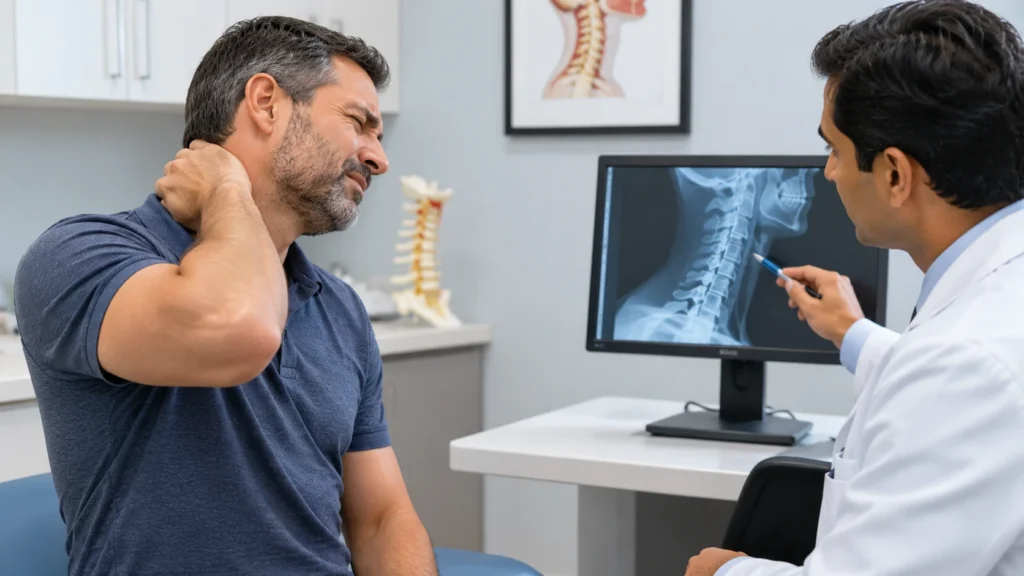
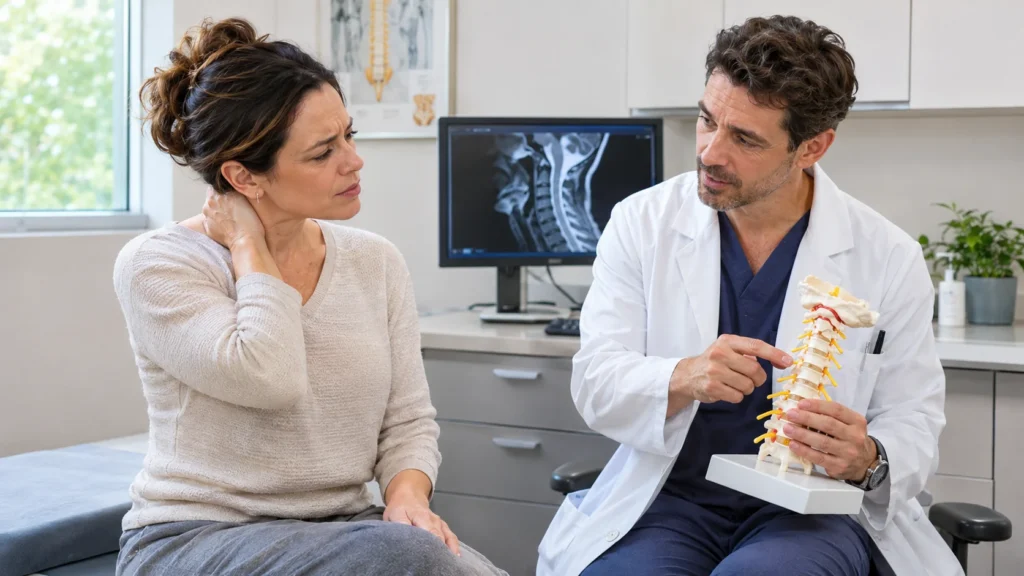
The goal of your first visit is to find the root cause of your pain, not just mask the symptoms. At MVM Health, your evaluation typically includes:
- A detailed conversation about when the pain started, what makes it better or worse, and how it affects your daily life.
- A physical and neurological exam to check your range of motion, reflexes, strength, and sensation in your arms and hands.
- Imaging when needed, such as X-ray or MRI, to look at your discs, joints, and nerves.
- A personalized treatment plan built around your diagnosis, health history, and goals.
Our providers are board-certified and trained at programs including Harvard Medical School, and they coordinate with your primary care doctor and physical therapist when needed. If you can’t come in right away, you can also request a video consultation.
Neck Pain Treatment Options at MVM Health
Most cervical spine problems can be treated without surgery. Depending on your diagnosis, your plan may include one or more of these minimally invasive options:
| Treatment | How it helps | Often used for |
|---|---|---|
| Physical therapy and posture correction | Strengthens supporting muscles and improves movement | Muscle strain, tech neck, mild arthritis |
| Cervical epidural steroid injection | Delivers anti-inflammatory medicine near irritated nerve roots | Herniated disc, pinched nerve, stenosis |
| Facet joint injections and medial branch blocks | Calm inflamed facet joints and confirm the pain source | Neck arthritis, whiplash |
| Radiofrequency ablation (RFA) | Uses heat to quiet the nerves sending pain signals, offering longer-lasting relief | Chronic facet joint pain |
| PRP and regenerative medicine | Uses your body’s own healing factors to support tissue repair | Soft tissue and joint injuries |
| Spinal cord stimulation | Interrupts pain signals with a small implanted device | Chronic nerve pain that hasn’t responded to other care |
Most of these procedures are done in the office, take less than an hour, and let you return home the same day. If surgery is ever the right choice, your specialist will explain why and help you get a referral.
Simple Tips to Protect Your Neck
Small daily habits can lower your risk of neck pain coming back:
- Raise your screens so the top of your monitor sits at eye level, and hold your phone higher instead of looking down.
- Take movement breaks every 30 to 60 minutes when working at a desk.
- Sleep with neck support using a pillow that keeps your head in line with your spine; avoid sleeping on your stomach.
- Strengthen your upper back and core to take strain off your neck.
- Lift with your legs, keep loads close to your body, and avoid carrying heavy bags on one shoulder.
- Stay active with low-impact exercise like walking at Hilliard’s local parks and trails, swimming, or yoga.
Experiencing Persistent Neck Pain or Cervical Spine Discomfort?
Get personalized care from the spine and pain specialists at MVM Health in Hilliard, OH. Explore minimally invasive treatment options designed to support pain relief, improve mobility, and help you return to your daily activities.
Get Relief from Neck Pain in Hilliard, OH
Neck pain that lingers, spreads, or limits your life is your body’s signal to get help. The sooner a specialist finds the cause, the more treatment options you have and the faster you can get back to normal.
At MVM Health, our board-certified spine and pain specialists offer personalized, minimally invasive care at our Hilliard, OH location, serving patients from Hilliard, Dublin, Upper Arlington, and greater Columbus. Explore our neck pain treatment options to learn more.
Ready to feel better? Schedule your appointment online or call 888-628-4785 today.
Frequently Asked Questions
What kind of doctor should I see for neck pain?
Can a pinched nerve in the neck heal on its own?
Do I need a referral to see a spine specialist in Hilliard, OH?
Is neck pain treatment painful?
How long does it take to feel better?