
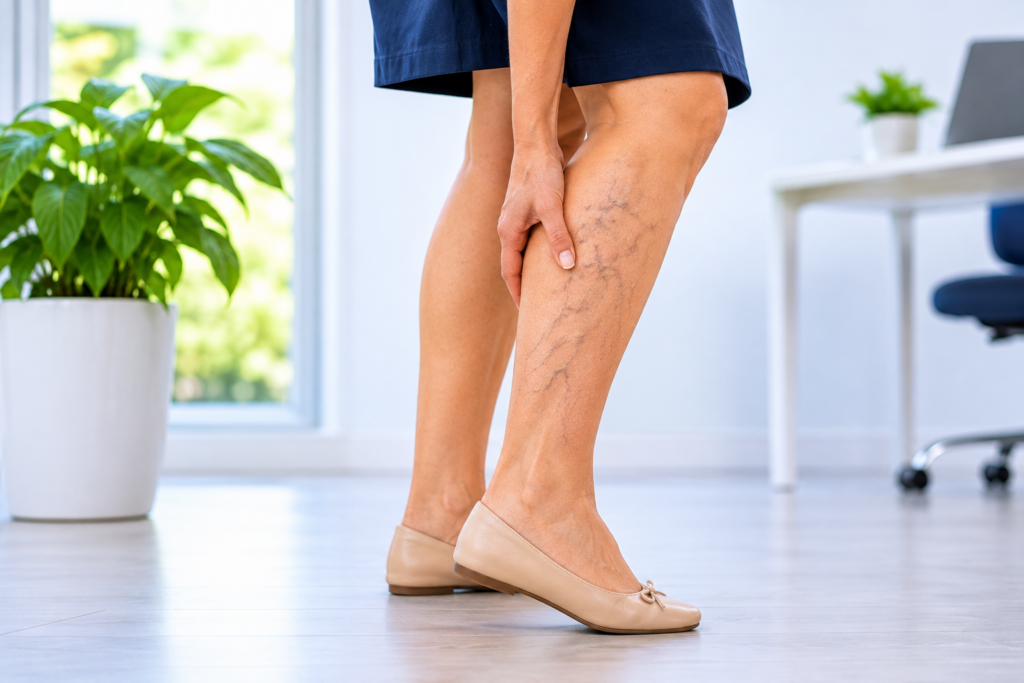
Yes. Standing for long periods can make vein symptoms such as leg heaviness, aching and ankle swelling more noticeable, especially by the end of the day. Standing does not cause vein disease on its own, but it adds pressure to leg veins that may already be struggling to move blood back toward the heart.
For people with standing vein symptoms in Stanhope, NJ, the pattern of when symptoms appear can offer useful clues. Legs that feel fine in the morning but heavy after a long shift may point to a circulation problem worth discussing with a vein specialist in Stanhope.
Understanding how standing affects your veins can help you notice changes early and decide when an evaluation makes sense.
How Does Standing Affect Blood Flow in Your Legs?
Your leg veins work against gravity. To move blood upward, they rely on one-way valves and the squeezing action of your calf muscles, often called the calf muscle pump. When you walk, your calf muscles contract and push blood toward the heart. When you stand still for long periods, that pump works less, and more blood stays in the lower legs. In healthy veins, the valves keep blood moving in the right direction. If the valves are weak or damaged, blood can flow backward and pool, raising pressure inside the veins.
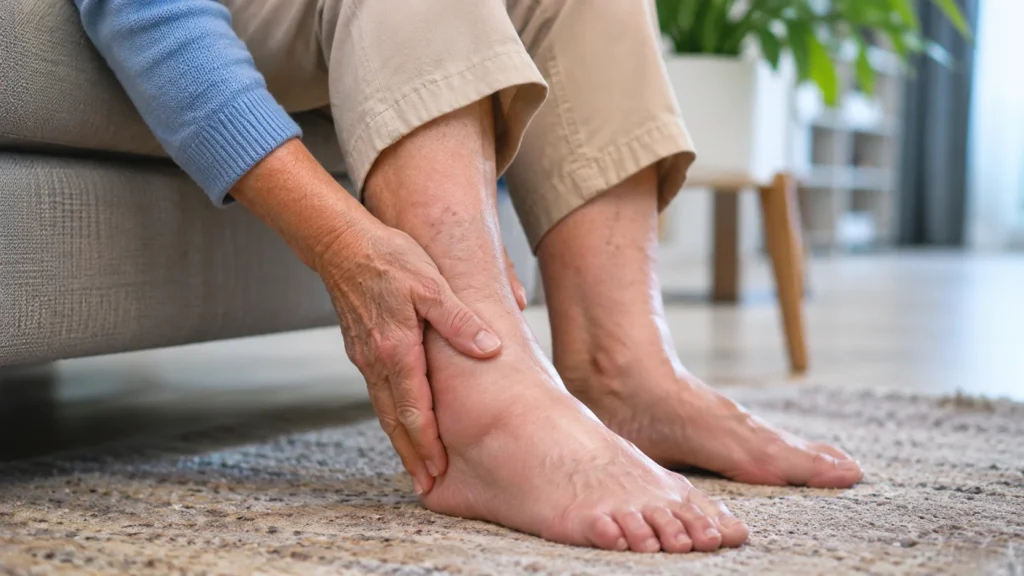
That extra pressure is what many people feel as heaviness, aching or swelling after hours on their feet.
Can Standing All Day Cause Varicose Veins?
Prolonged standing is considered a risk factor for varicose veins, not a single direct cause. Family history, age, pregnancy, hormones, body weight and previous blood clots also play a role.
A large study of Danish workers published in the Scandinavian Journal of Work, Environment & Health found that people who worked mostly standing had a higher rate of hospital treatment for varicose veins than other workers.
A review shared by the CDC also linked prolonged standing at work with leg pain, discomfort and fatigue.
This does not mean everyone who stands at work will develop vein disease. It means long hours on your feet can add to other risk factors and make existing symptoms easier to notice.
Which Vein Symptoms Can Get Worse After Standing?
Symptoms that build through the day and ease with rest or leg elevation are common with vein problems. A specialist may look at patterns like these:
| Symptom after standing | What it may suggest |
| Heavy, tired legs by evening | Increased pressure in the leg veins |
| Ankle swelling that improves overnight | Fluid buildup linked to venous pressure or other causes |
| Aching or throbbing over visible veins | Possible varicose veins or venous reflux |
| Itching or skin darkening near the ankles | Longer-standing venous changes that need evaluation |
| Night cramps or restless legs after a long shift | Possible venous, muscular or other causes |
These patterns help guide the evaluation. They do not confirm a diagnosis on their own.
Who in Stanhope May Notice These Symptoms More?
Anyone can develop vein symptoms, but some daily routines make them more likely to stand out.
Retail and service work: Long shifts at stores and restaurants along the Route 206 corridor often mean hours of standing with few breaks.
Healthcare, teaching and childcare: Nurses, aides, teachers and caregivers often spend most of the day on their feet.
Warehouse and trade jobs: Work near the I-80 corridor that involves standing at a station or on hard floors can add strain.
Pregnancy: Hormone changes and increased blood volume put extra pressure on leg veins.
Warm weather: Summer days around Lake Musconetcong and Lake Hopatcong can make swelling and heaviness more noticeable, since heat widens veins.
Do Your Legs Feel Heavier by the End of Your Shift?
If heaviness, aching or swelling returns after every long day on your feet, a vein evaluation can help find out why.
MVM Health offers vein evaluations in Stanhope, NJ, with recommendations based on your symptoms and health history.
When Is Leg Heaviness After Standing More Than Tired Legs?
Ordinary tired legs usually feel better after a night’s rest. Vein-related symptoms tend to return in the same pattern day after day.
Consider an evaluation if leg heaviness or swelling keeps coming back, does not fully go away overnight, or starts to limit your work or activities.
Visible bulging veins, skin color changes around the ankles, or swelling that leaves a dent when pressed are also worth checking. These can be signs of chronic venous insufficiency, where veins have trouble returning blood to the heart.
For a closer look at what happens during a visit, read MVM Health’s related blog, Leg Swelling, Aching, or Heaviness: What Does a Vein Specialist Check?
What Can Help Reduce Vein Discomfort During Long Shifts?
Small changes during the workday can help your calf muscles do their job. Follow your provider’s advice, since it matches your health needs.
- Shift your weight and rise onto your toes every 20 to 30 minutes
- Take short walking breaks when you can
- Wear supportive, comfortable shoes and use anti-fatigue mats where possible
- Raise your legs above heart level for 15 to 20 minutes after work
- Ask your provider whether compression stockings are appropriate for you
- Stay active outside work and maintain a healthy weight
The CDC review notes that measures such as sit-stand options, floor mats and supportive hosiery may help reduce discomfort from prolonged standing.
These habits can ease symptoms, but they do not repair damaged vein valves.
How Does a Vein Specialist Evaluate Standing-Related Symptoms?
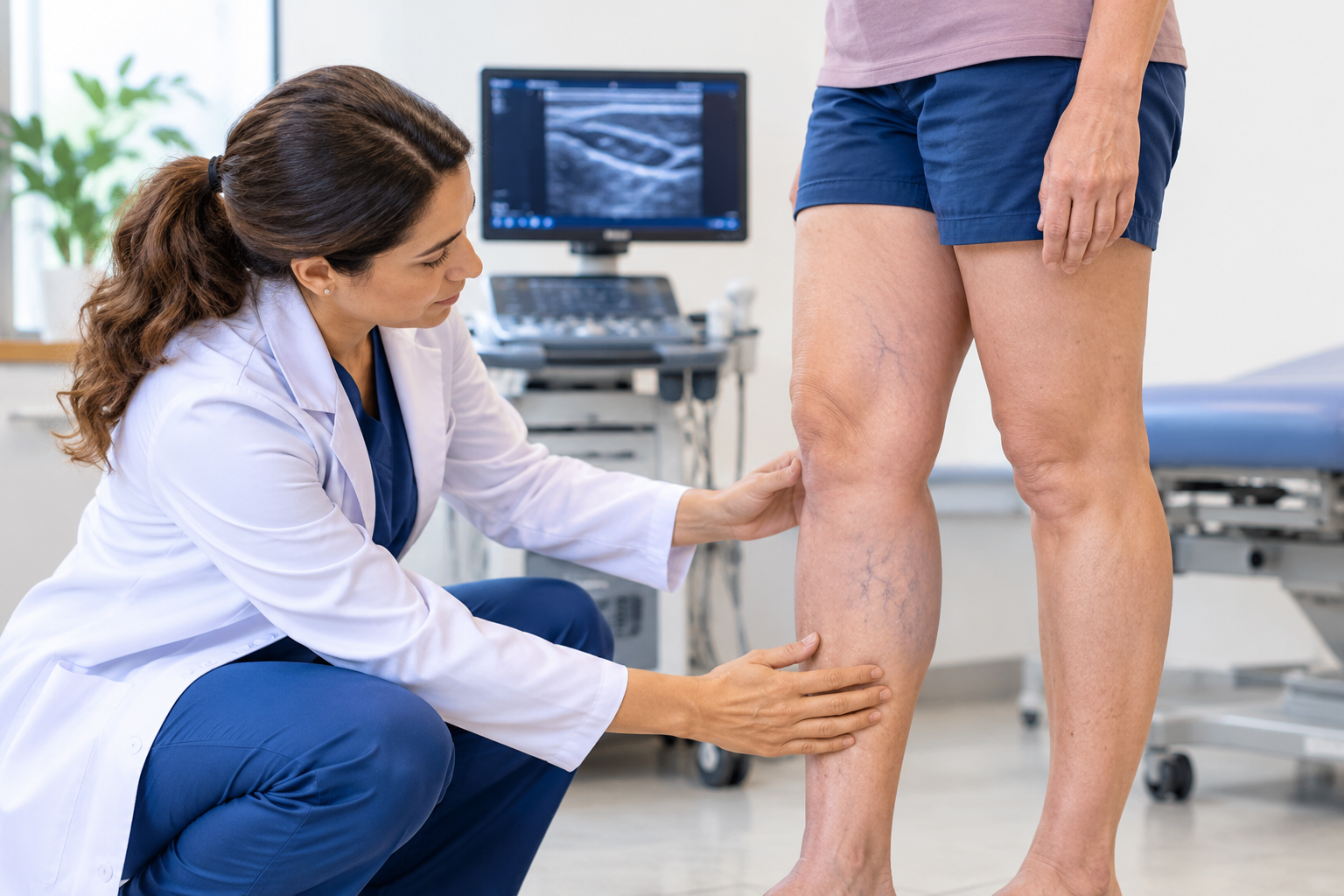
An evaluation usually starts with questions about your work, daily routine, when symptoms appear and your family history.
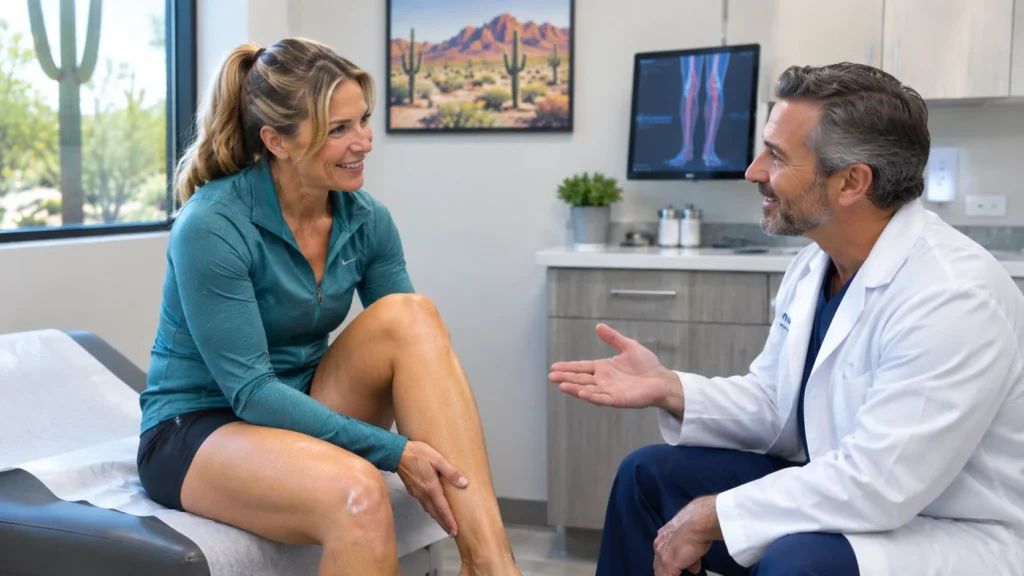
Your provider then examines your legs for visible veins, swelling and skin changes. If findings suggest a circulation problem, a venous duplex ultrasound may be recommended to check blood flow and look for reflux.
Not everyone needs an ultrasound or a procedure. When significant venous disease is confirmed, your provider can discuss conservative care and, when appropriate, minimally invasive vein treatments.
When Should Leg Symptoms Get Urgent Medical Attention?
Some leg symptoms should not wait for a routine appointment. Sudden swelling in one leg, especially with pain, warmth or redness, may signal a blood clot and needs prompt evaluation.
Seek emergency care if leg symptoms come with sudden shortness of breath, chest pain, fainting or coughing up blood.
A leg that suddenly turns cold, pale or severely painful also needs emergency attention.
Vein Care at MVM Health in Stanhope
MVM Health provides vein evaluation and treatment at 16 US 206, Suite C, Stanhope, NJ 07874, just off I-80 Exit 25. The clinic serves patients from Stanhope and nearby communities, including Netcong, Byram Township, Hopatcong, Mount Olive and Roxbury.
During your visit, a provider can review your symptoms, work routine and health history to decide whether further testing is needed.
Visit the MVM Health Stanhope vein clinic page for clinic details. Patients closer to Essex County can also visit MVM Health’s Bloomfield location.
Standing and Your Veins: When to Get Checked
Long hours on your feet do not automatically mean you have vein disease, but they can bring hidden circulation problems to the surface. If you notice standing vein symptoms in Stanhope, NJ, such as heaviness, aching or swelling that returns after every shift, an evaluation can help identify the cause.
At MVM Health, care starts with understanding your symptoms and routine, so recommendations fit your needs.