
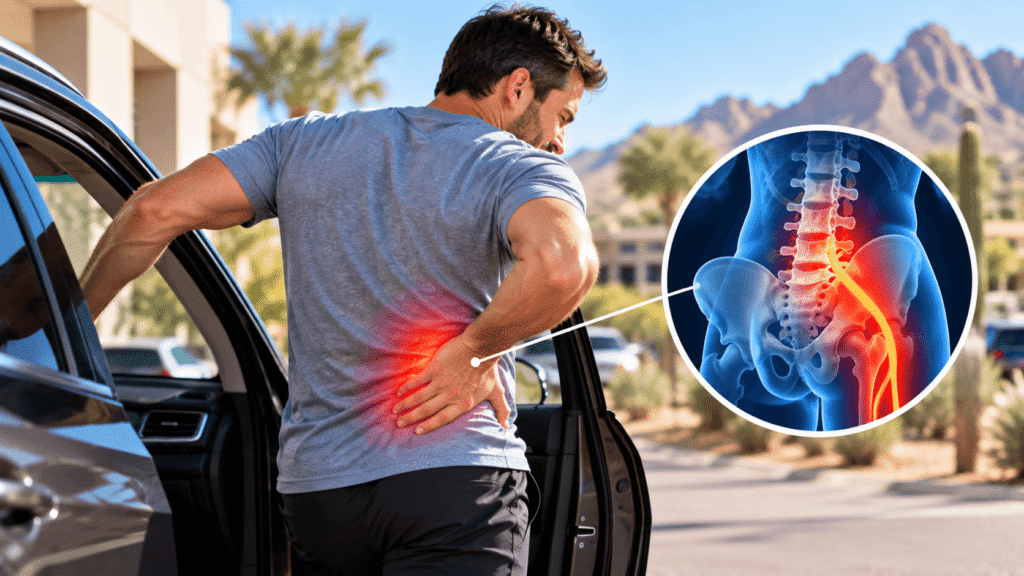
A long drive can leave you feeling tired, but what happens when your lower back starts aching, your legs feel stiff, or pain travels from your hip toward your foot?
Whether you’re commuting around Powell, driving into Columbus, or heading out on a weekend road trip, spending extended periods behind the wheel can affect how your back and legs feel.
For some people, discomfort fades after getting out of the car and moving around. For others, back or leg pain after a long drive becomes a recurring problem that makes traveling uncomfortable.
Understanding when symptoms begin, where the pain travels, and what makes it better or worse can help you recognize patterns worth discussing with a healthcare professional.
This guide explores what Powell patients should notice before their next trip and when recurring driving-related pain may need a closer evaluation.
Why Does Your Back or Leg Hurt After a Long Drive?
Driving keeps your body in a relatively fixed seated position for extended periods. Your lower back supports much of your upper-body weight, while your hips and knees remain bent.
Unlike walking, driving provides limited opportunities to change position or activate different muscle groups.
Several factors may contribute to discomfort:
- Prolonged sitting: Remaining seated can increase stiffness and discomfort in the lower back and hips.
- Limited movement: Reduced activity may contribute to muscle tightness during longer trips.
- Poor seat support: An uncomfortable seat position can place additional strain on the lumbar spine.
- Vehicle vibration: Repeated vibration and road movement may aggravate existing back discomfort.
- Underlying spinal conditions: Sciatica, herniated discs, or spinal stenosis may contribute to certain patterns of back or leg pain.
However, pain after driving does not automatically mean you have a spinal condition. Muscle fatigue, joint problems, and other medical concerns can produce similar symptoms.
Before the Drive: 4 Things Powell Patients Should Notice
Your symptoms before getting into the car can provide useful information about what happens during the trip.
1. Do You Already Have Lower Back Stiffness?
If your back feels tight before driving, prolonged sitting may make that discomfort more noticeable.
Pay attention to whether stiffness begins in the morning, after exercise, or following several hours of inactivity.
What to notice: Is the discomfort present before you sit down, or does it begin only after driving?
2. Does Pain Travel Into Your Buttock or Leg?
Pain that extends from the lower back into the buttock, thigh, calf, or foot may involve irritation of a spinal nerve.
This pattern is sometimes associated with sciatica, although not every episode of radiating leg pain has the same cause.
What to notice: Where does the pain start, and how far does it travel?
3. Are Your Hips or Legs Already Uncomfortable?
Hip stiffness, joint discomfort, or muscle tightness can become more noticeable when your legs remain bent for a long period.
Discomfort around the hip or thigh does not always originate from the spine.
What to notice: Does changing your leg position help, or does the pain remain in the same location?
4. Have Your Symptoms Been Getting Worse?
If driving has become increasingly uncomfortable over several weeks, it may be useful to document the changes.
A recurring pattern can help your provider understand whether the discomfort is associated with posture, activity, or an underlying condition.
What to notice: Are you able to drive for shorter periods than you could previously?
During the Drive: 5 Pain Patterns Worth Tracking
Not all driving-related discomfort feels the same. The timing and location of symptoms can provide useful clues.
1. Lower Back Pain That Builds Gradually
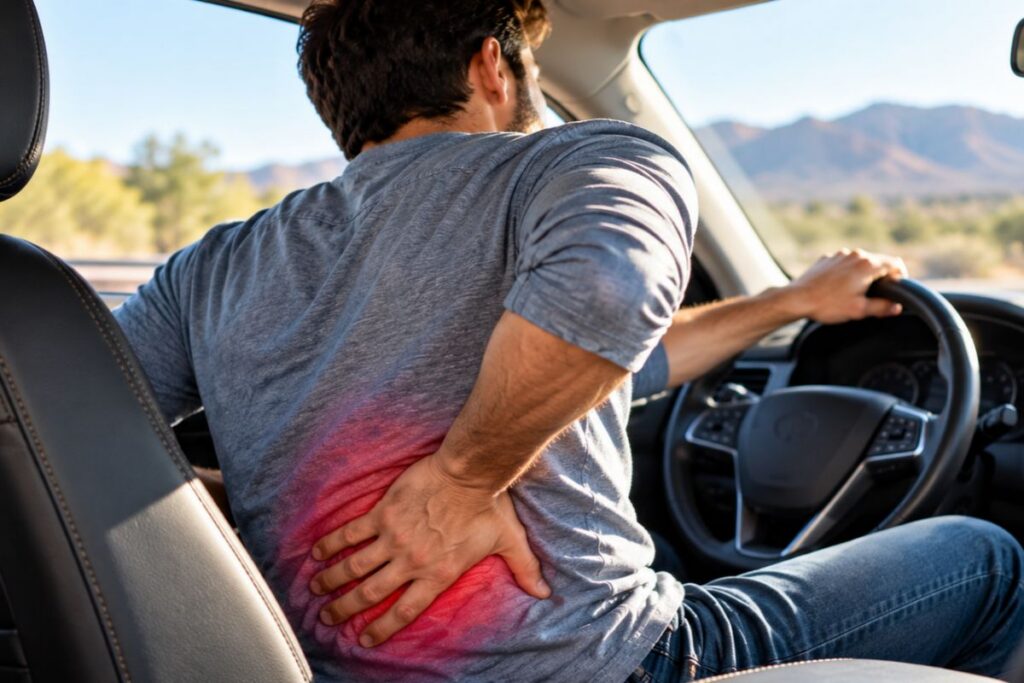
A dull ache that becomes more noticeable after sitting for an extended period may be associated with muscle fatigue, posture, or spinal discomfort.
Notice whether adjusting your seat or taking a walking break changes the pain.
2. Sharp Pain That Travels Down One Leg
Shooting or electric-like pain extending into the leg may suggest irritation of a spinal nerve root.
This can occur with certain spinal conditions, including a herniated disc.
Persistent radiating pain deserves evaluation, particularly when accompanied by numbness or weakness.
3. Tingling or Numbness After Sitting
Some people experience pins-and-needles sensations in the thigh, calf, or foot during longer drives.
Temporary pressure on a nerve may contribute, but recurring numbness can also have other causes.
Record which areas are affected and whether symptoms improve after changing position.
4. Pain That Increases When You Get Out of the Car
After sitting for a long time, your back and hip muscles may feel stiff when you first stand.
Some people notice discomfort during the first few steps before movement becomes easier.
If pain is severe, persistent, or worsening, avoid assuming that stiffness alone is responsible.
5. Leg Pain That Continues After the Trip
Discomfort that persists long after driving may require additional attention.
Notice whether symptoms improve with gentle walking, continue during rest, or interfere with sleep and normal activities.

After the Drive: What Does Your Pain Pattern Tell You?
Instead of focusing only on how much pain you feel, consider how your symptoms change after leaving the vehicle.
| Symptom pattern | What to observe |
|---|---|
| Back stiffness that improves with walking | How quickly movement reduces discomfort |
| Pain traveling into one leg | Whether it reaches the thigh, calf, or foot |
| Tingling after prolonged sitting | Whether sensation returns after changing position |
| Pain when standing upright | Whether it improves after several steps |
| Discomfort lasting into the next day | Duration, intensity, and impact on activities |
These patterns do not diagnose a condition, but they can provide useful information during a medical evaluation.
Could Driving Be Making an Existing Spinal Condition Worse?
Long periods of sitting may aggravate symptoms in people with certain back or nerve-related conditions.
Sciatica
Sciatica involves pain that travels along the path of the sciatic nerve, often from the lower back into one leg.
Prolonged sitting can make symptoms more noticeable for some people, particularly when spinal nerve irritation is involved.
Herniated Disc
A herniated disc occurs when material inside a spinal disc pushes through its outer layer.
If the disc irritates a nearby nerve root, symptoms may include radiating pain, tingling, numbness, or weakness.
Spinal Stenosis
Spinal stenosis involves narrowing around spinal nerves.
Symptoms vary depending on the location and severity. Some people with lumbar spinal stenosis actually feel better when sitting and worse when standing or walking, so driving-related discomfort alone is not enough to identify this condition.
Muscle and Joint Problems
Not every case of pain after driving involves nerve compression.
Muscle tension, hip conditions, and mechanical lower back pain can also contribute to discomfort during prolonged sitting.
A professional evaluation can help distinguish among possible causes.
6 Ways to Make Your Next Long Drive More Comfortable
If your symptoms are mild and you have no concerning warning signs, simple adjustments may help reduce discomfort.
1. Adjust Your Seat Before Leaving
Position your seat so you can comfortably reach the steering wheel and pedals without excessive stretching.
Avoid sitting so far forward that your knees or hips feel cramped.
2. Support Your Lower Back
A seat with appropriate lumbar support may help maintain a comfortable spinal position.
A small lumbar cushion may be useful for some drivers, provided it does not increase discomfort.
3. Take Regular Movement Breaks
During longer trips, stop periodically when it is safe to do so.
Walking for a few minutes can help reduce stiffness associated with remaining in one position.
4. Avoid Keeping Items in Your Back Pocket
A bulky wallet or other object in your back pocket may create uneven pressure while sitting.
Remove uncomfortable items before beginning a long drive.
5. Move Gently After Reaching Your Destination
When you arrive, stand up gradually and take a short walk if comfortable.
Avoid sudden twisting or aggressive stretching if your back is already painful.
6. Pay Attention to Recurring Symptoms
If the same discomfort appears during every long trip, record when it begins and how long it lasts.
Repeated symptoms may indicate that seat adjustments alone are not enough.
These habits may improve comfort, but they do not replace medical evaluation when symptoms persist or worsen.
Back or Leg Pain Making Long Drives Difficult? Talk With Our Powell Pain Team
A long drive shouldn’t leave you worrying about how uncomfortable the next trip might be. At MVM Health in Powell, Ohio, our pain specialists evaluate spinal and nerve-related conditions and discuss treatment options based on individual needs.
When Should Powell Patients See a Pain Specialist?
Consider scheduling a professional evaluation if you experience:
- Back or leg pain after most long drives
- Pain that travels below the knee
- Recurring tingling or numbness
- Symptoms that interfere with work, sleep, or daily activities
- Discomfort that continues despite movement breaks and posture adjustments
- Pain that becomes progressively worse
- Persistent or worsening weakness in the leg or foot
Seek emergency medical care for new loss of bladder or bowel control, numbness around the groin, or rapidly progressing leg weakness.
If one leg becomes suddenly swollen, warm, red, or painful after prolonged travel, seek prompt medical assessment because a blood clot is another possible cause. Chest pain or sudden shortness of breath requires emergency care.
What Happens During a Back Pain Evaluation at MVM Health in Powell?
At MVM Health, our pain specialists begin by understanding your symptoms and how they affect your daily activities.
Your provider may ask:
- How long can you drive before discomfort begins?
- Does pain remain in your lower back or travel into your leg?
- Do symptoms improve after walking?
- Have you experienced numbness, tingling, or weakness?
- Have previous treatments or activity changes helped?
A physical examination may include assessing spinal movement, muscle strength, sensation, reflexes, and areas of tenderness.
Depending on your findings, your provider may recommend conservative care, physical therapy, medication guidance, diagnostic testing, or other appropriate treatment options.
You can explore available services through our Pain Treatment in Powell, OH page.
Frequently Asked Questions
Why does my lower back hurt after driving for a long time?
Prolonged sitting, limited movement, uncomfortable seat positioning, and existing spinal or muscular conditions may contribute to lower back pain after driving. Recurring symptoms may warrant medical evaluation.
Can long drives trigger sciatica?
Long periods of sitting may aggravate sciatica symptoms in some people. Sciatica typically involves pain traveling from the lower back into the buttock or leg due to irritation of a spinal nerve root.
Why does my leg go numb when I drive?
Leg numbness during driving may occur because of temporary pressure on nerves or an underlying neurological or spinal condition. Repeated or persistent numbness should be assessed by a healthcare professional.
Is it better to sit or walk when my back hurts after driving?
Gentle walking may help some people with stiffness after prolonged sitting. However, the best activity depends on the cause of pain, and movements that worsen symptoms should be avoided.
How often should I stop during a long drive?
Taking periodic breaks to stand, walk, and change position may help reduce stiffness. The appropriate frequency depends on your comfort, health needs, and driving conditions.
Can a herniated disc cause leg pain while driving?
Yes. A herniated disc can irritate a spinal nerve root and cause pain that travels into the leg. However, leg pain while driving can have other causes, so an evaluation may be needed.
When should I see a pain specialist in Powell, OH?
Consider an evaluation if back or leg pain repeatedly occurs during driving, continues after trips, worsens over time, or is accompanied by numbness, tingling, or weakness.