
Chronic venous insufficiency Bethlehem, PA is a condition where damaged valves in the leg veins let blood pool instead of flowing back to the heart. The earliest signs usually show up on the skin and around the ankles: swelling that worsens by evening, brownish discoloration near the ankle bone, itchy or scaly patches, and skin that feels tight or hard. A duplex ultrasound during a vein evaluation in Bethlehem confirms whether vein reflux is the cause, and most patients are treated with minimally invasive outpatient procedures.
Those changes are not cosmetic. Each one marks a stage in how far the vein problem has progressed- and some of them are reversible only if they’re caught early. Here’s how to read what your legs may already be telling you.
Chronic Venous Insufficiency Explained: How Vein Valves Fail
CVI happens when one-way valves inside the leg veins weaken and stop closing fully. Blood that should move upward slips back down- a process called venous reflux- and pressure builds in the lower leg.
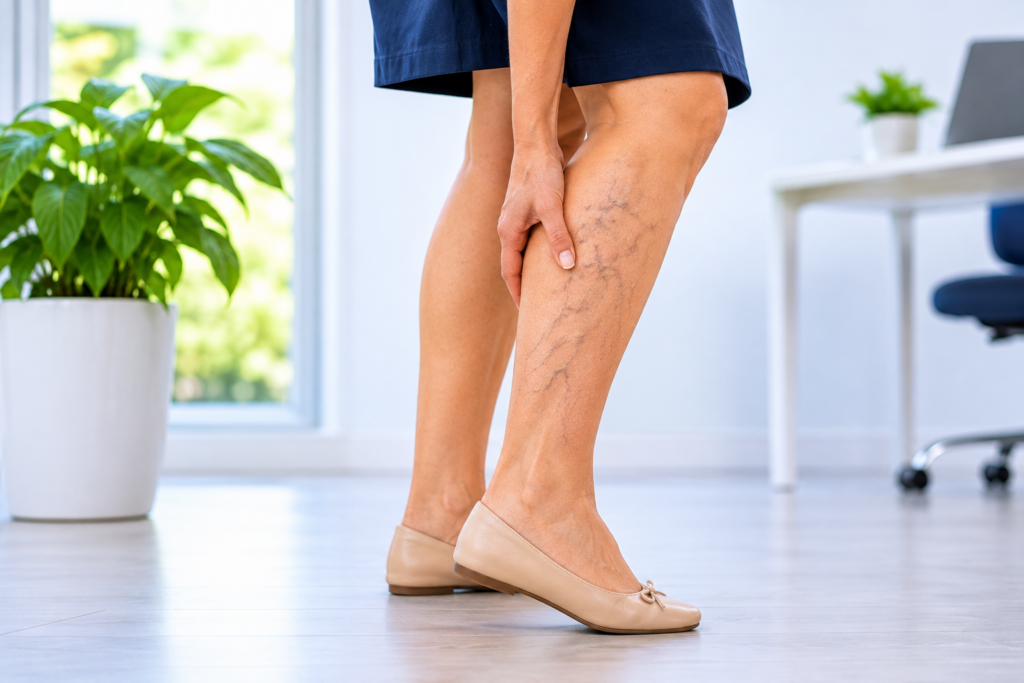
That constant pressure pushes fluid and red blood cells out of the veins and into surrounding tissue. Over months and years, this is what changes the color, texture and thickness of the skin. Varicose veins are often the most visible sign, but plenty of patients have CVI without large bulging veins at all.
It’s also more common than most people assume: the Cleveland Clinic estimates CVI affects about 1 in 20 adults, with risk rising after age 50.
For a full breakdown of the stages, see our pillar guide, Venous Insufficiency: Symptoms, Stages & Treatment.
Skin Changes Linked to Chronic Venous Insufficiency
Skin changes are the clearest clue that CVI has moved past an early stage. Doctors grade them using the CEAP scale, which runs from C0 (no visible signs) to C6 (an active ulcer). Most of the changes below fall in stages C4 through C6.
| Skin change | What it looks or feels like | What it signals |
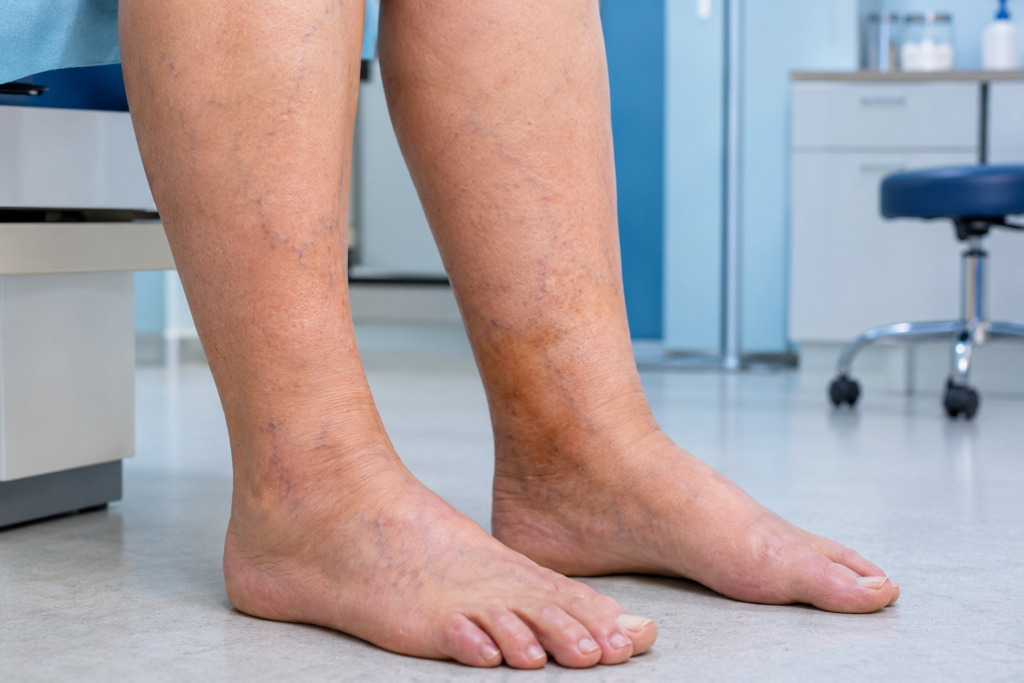
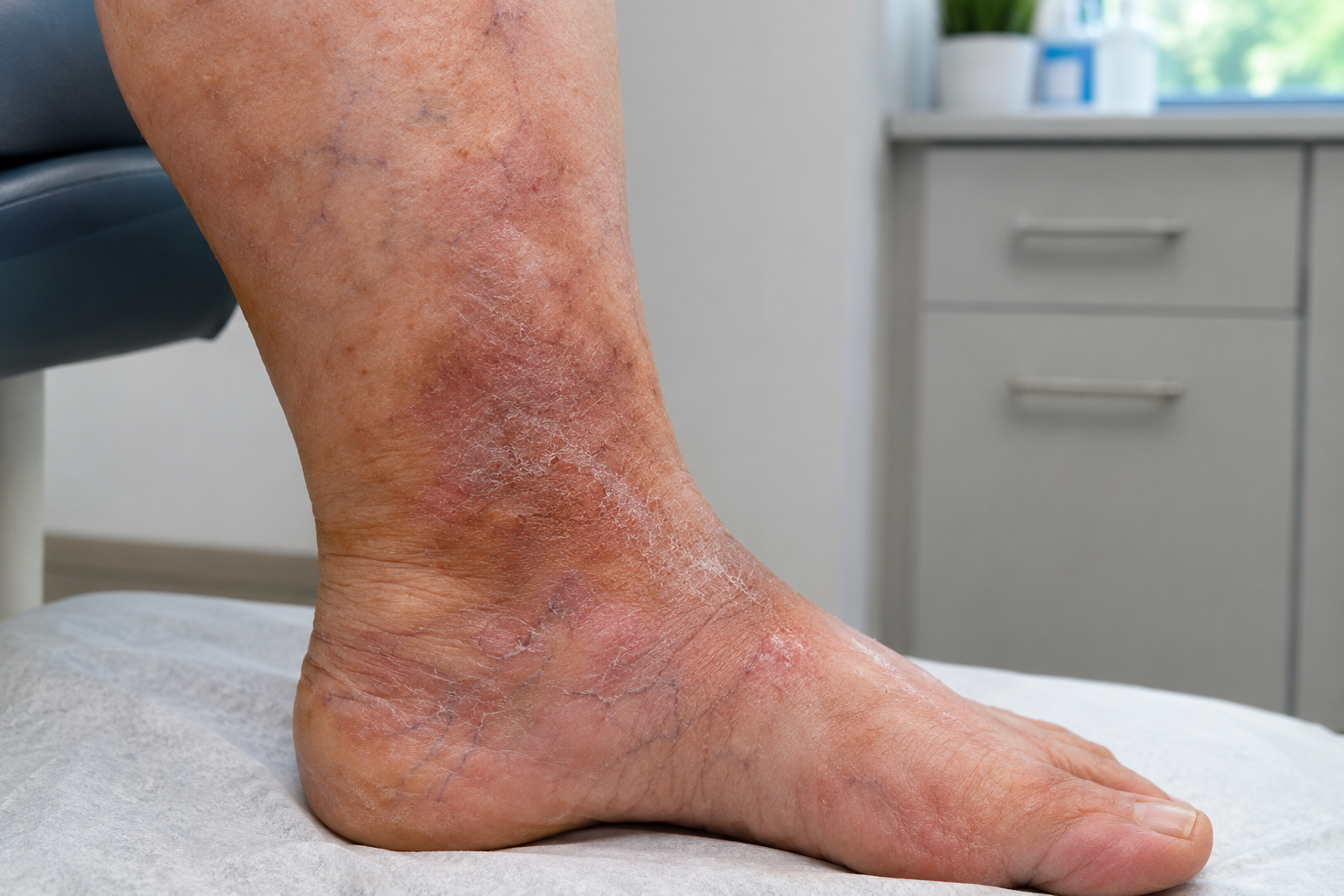
| Hyperpigmentation | Rust-brown or bronze staining around the inner ankle | Iron from leaked red blood cells deposited in the skin |
| Stasis dermatitis (venous eczema) | Red, itchy, flaky or weeping patches on the lower leg | Inflammation from long-term vein pressure; often mistaken for dry skin or allergy |
| Lipodermatosclerosis | Skin that feels hard, tight and shiny; the lower leg can narrow like an upside-down bottle | Scarring of the fat layer under the skin- an advanced warning sign |
| Atrophie blanche | Small white, star-shaped scars with tiny red dots | Poor blood flow to the skin; ulcer risk is higher |
| Ankle flare (corona phlebectatica) | A fan of fine blue or purple veins along the inside of the foot | Often one of the first visible markers of CVI |
| Venous ulcer | An open wound near the ankle that heals slowly or keeps returning | Stage C6- needs prompt vein and wound care |
One detail patients often miss: these changes tend to start on the inner ankle, just above the bone. If discoloration or itching keeps returning in that exact spot, creams alone rarely fix it, because the source is the vein underneath.
Leg Swelling Patterns That Point to Vein Disease
Vein-related leg swelling has a recognizable pattern. It usually:
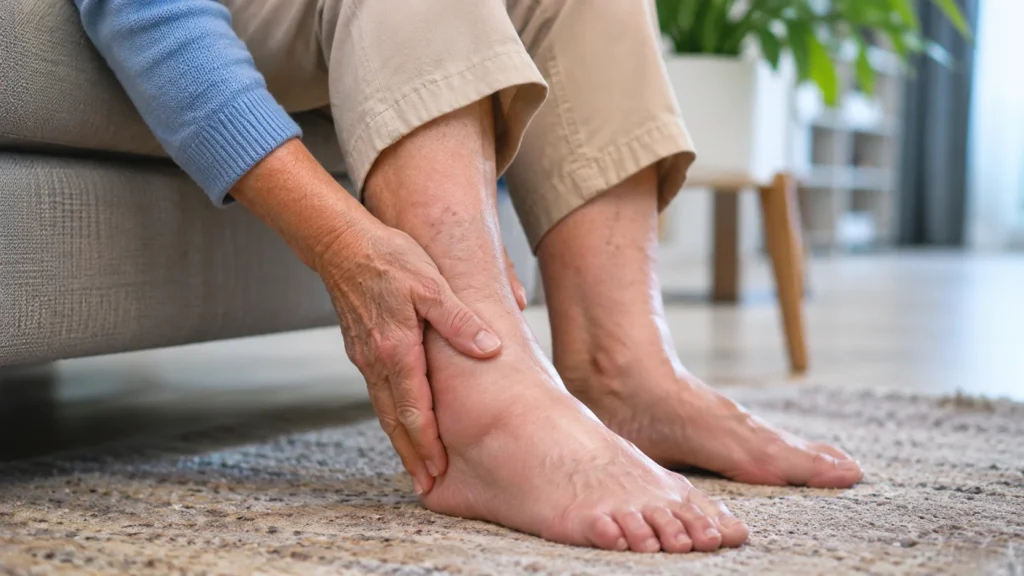
- Is mild in the morning and builds through the day, especially after long periods of standing or sitting
- Leaves sock-line marks or a dent when you press on the ankle (pitting edema)
- Eases after you elevate your legs above heart level for 20–30 minutes
- Comes with heaviness, aching, cramping at night or restless legs
- Affects one leg more than the other
Swelling in both legs alongside shortness of breath can point to heart, kidney or liver causes, which is why a proper evaluation matters. Sudden swelling in one leg with pain, warmth or redness needs same-day medical care to rule out a blood clot (DVT)- don’t wait for a scheduled appointment.
Chronic Venous Insufficiency Risk Factors in Bethlehem, PA
CVI is driven by genetics, age and daily habits more than geography- but the Lehigh Valley’s workforce makes some risk factors very common here. Long shifts on concrete floors in the region’s warehouse and distribution centers, 12-hour hospital rotations, teaching, retail and restaurant work all keep leg veins under steady pressure. So do long desk days and the commute along Route 22 and I-78.
Other factors that raise your odds:
- A parent or sibling with varicose veins or CVI
- Multiple pregnancies
- Age over 50
- Excess weight or a sedentary routine
- A past blood clot or leg injury
Patients often notice symptoms first in summer, when heat dilates veins and ankles swell after an evening at SteelStacks or a walk along the Monocacy Creek trail. That seasonal flare is a useful signal, not something to wait out.
Get Relief From Chronic Venous Insufficiency at MVM Health Bethlehem
Swelling and skin changes are signs that chronic venous insufficiency has been building pressure in your veins for a while. A single ultrasound visit shows exactly which veins are involved and which treatment will relieve it.
Vein Evaluation in Bethlehem: What to Expect
For chronic venous insufficiency Bethlehem, PA patients, the first visit is simple and non-invasive. A vein evaluation at MVM Health Bethlehem’s vein care clinic is a non-invasive visit that usually takes under an hour.
- Symptom and history review– when swelling starts, what eases it, family history, past clots or pregnancies.
- Leg exam– your provider checks skin color, texture, firmness and visible veins, then assigns a CEAP stage.
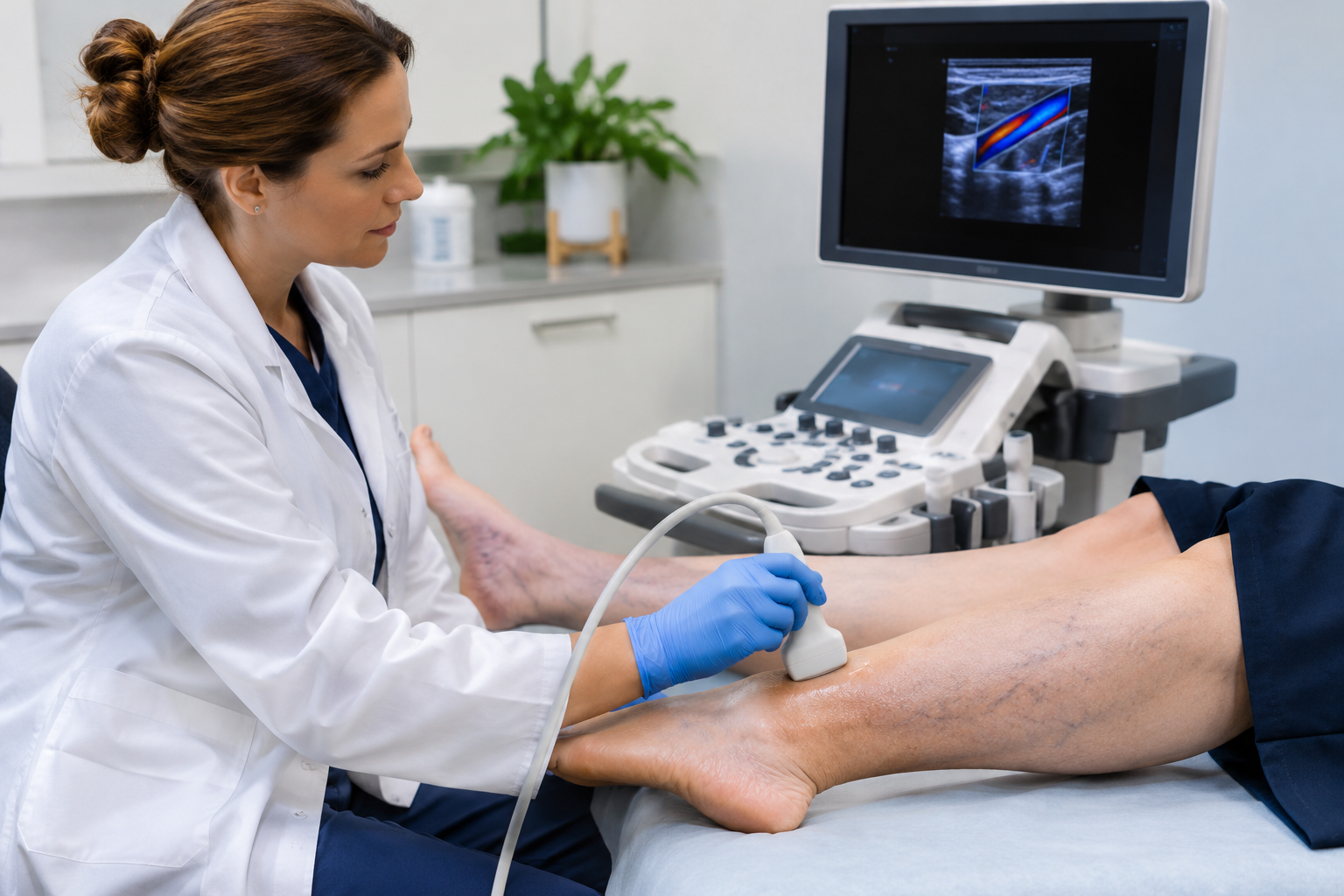
- Duplex ultrasound– a handheld probe maps blood flow and measures how long blood flows backward through each valve. Reflux lasting longer than about half a second in a superficial vein generally confirms venous insufficiency.
- Treatment plan– results are explained the same day, including which veins are involved and which options fit your stage.
The ultrasound findings also matter for insurance, since most plans require documented reflux before covering vein procedures.
Chronic Venous Insufficiency Treatment Options
Treatment closes or removes the faulty vein so blood reroutes through healthy ones. Most procedures are done in the office under local anesthesia, and patients typically walk out and return to normal activity within a day or two.
| Treatment | How it works | Best suited for |
| Compression stockings, elevation, walking | Support vein walls and reduce pooling | Early stages; often required before procedures |
| Radiofrequency ablation (RFA) | Heat from a thin catheter seals the diseased vein | Reflux in the great or small saphenous vein |
| Endovenous laser ablation (EVLA) | Laser energy closes the vein from inside | Similar to RFA; choice depends on vein anatomy |
| VenaSeal (medical adhesive) | A small amount of adhesive closes the vein, no heat | Patients who want to avoid multiple numbing injections |
| Ultrasound-guided sclerotherapy | An injected solution collapses smaller or deeper veins | Branch veins and leftover reflux after ablation |
| Ambulatory phlebectomy | Tiny incisions remove bulging surface veins | Large varicose veins close to the skin |
What surprises many patients is how much the skin can recover once pressure drops. Itching and swelling often improve within weeks; brown staining fades more slowly and may not disappear completely, which is the strongest argument for treating before it deepens.
Signs It’s Time to Book a Vein Evaluation
Schedule a visit if any of these apply for more than a few weeks:
- Ankle swelling that returns every evening
- Brown or reddish skin near the ankle, or patches that itch and don’t respond to lotion
- Lower-leg skin that feels hard or tight
- Heavy, aching legs that improve when you put your feet up
- A sore near the ankle that hasn’t healed in two weeks
Many Bethlehem patients assume aching legs are a joint or nerve problem and put off getting them checked. When the ache comes with swelling and skin changes, the veins are the more likely source, and seeing a vein specialist in Bethlehem is the fastest way to get an answer.