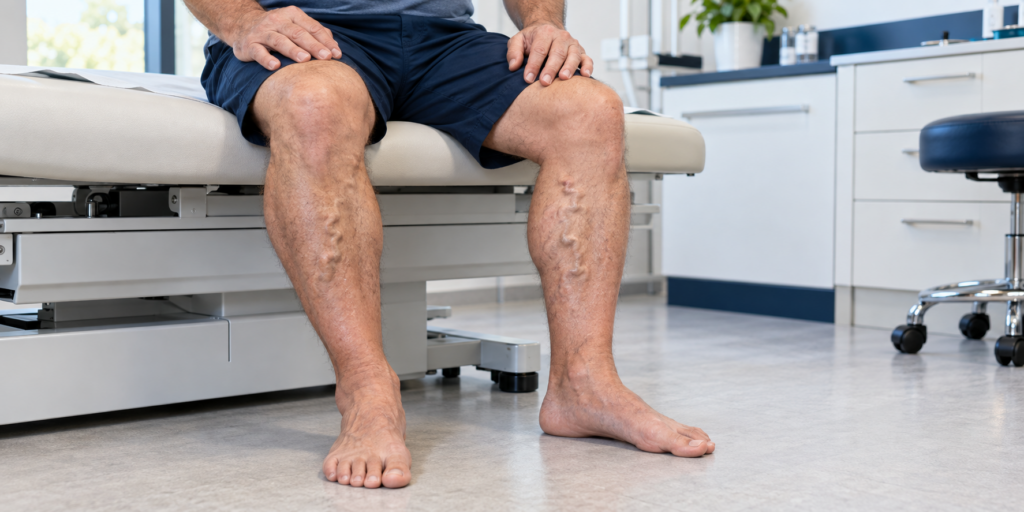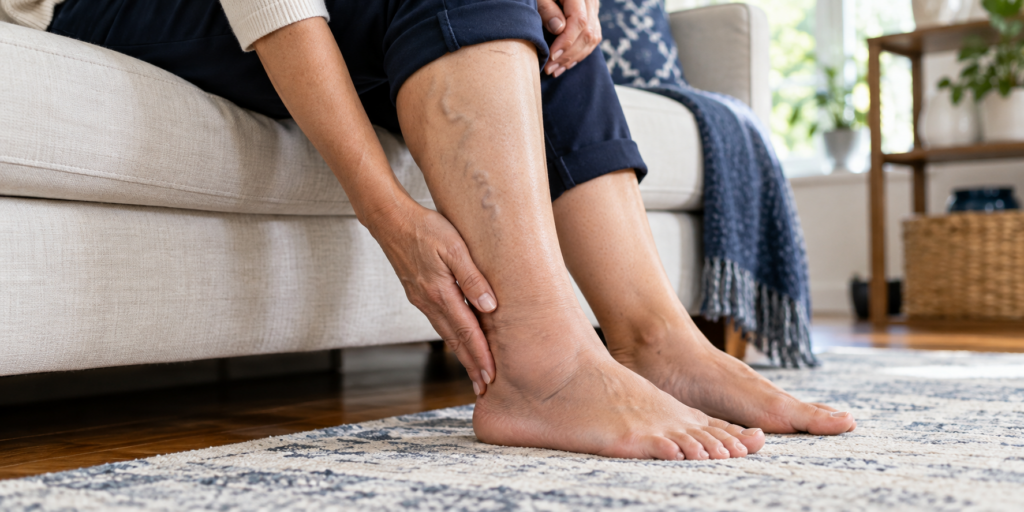

Most people notice their varicose veins long before they take action. Maybe they appeared after pregnancy, or maybe they have slowly spread along your calf over the years. At first, they may seem like a cosmetic issue, but varicose veins often change over time.
For some people, they cause mild aching. For others, they can lead to swollen ankles, heavy legs, skin changes, or daily discomfort. The good news is that varicose vein treatment in Reading, PA is now much easier than many patients expect. Most treatments are done in-office, with little downtime.
This article explains what varicose veins are, when to see a specialist, what the evaluation includes, and what modern treatment looks like today.
What’s Actually Happening Inside the Vein
Varicose veins aren’t just a surface-level issue. They’re a sign that something inside the vein isn’t working the way it should.
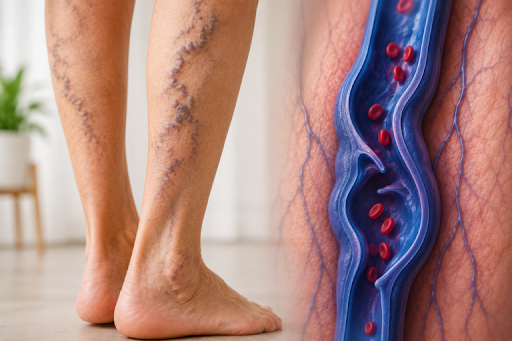
Healthy leg veins have small valves that open and close to push blood upward toward the heart. Gravity is constantly working against this process, especially when you’re standing. When those valves weaken or stop closing properly, blood starts to fall back and pool inside the vein. That pooled blood stretches the vein wall, which is why varicose veins look twisted and bulging rather than flat.
This process is called venous insufficiency, and it’s more common than most people realize. Around one in four adults has some degree of varicose veins. It runs in families. It’s more common in people who spend long hours on their feet. Pregnancy speeds it along. So does age.
The veins themselves don’t heal once the valves fail. That’s why the condition tends to progress rather than improve.
Varicose Veins and Spider Veins Are Not the Same Thing
A lot of patients come in thinking they have spider veins when they actually have varicose veins, or vice versa. Both are worth addressing, but they’re different conditions.
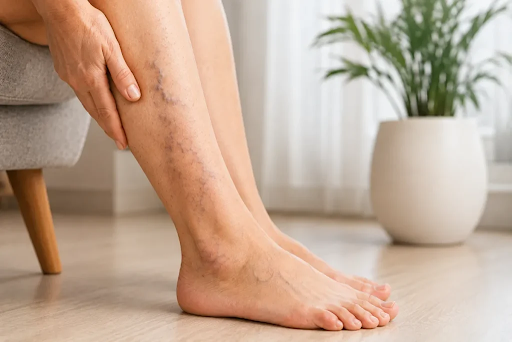
Spider veins sit right at the skin’s surface. They’re small, usually red or purple, and fan out in thin web-like patterns. They look dramatic but are typically shallow. They can cause mild burning or aching, but they’re mostly a cosmetic concern for most people.
Varicose veins are deeper, larger, and often raised above the skin. They’re the ones that look ropey or cord-like. They’re also the ones more likely to cause physical symptoms like swelling, heaviness, and pain.
If you’re looking for spider vein treatment in Reading, PA, that’s usually handled with sclerotherapy, which we’ll get to. Varicose veins may need a different approach depending on their size and what’s driving them. A good vein specialist will assess both in the same visit and give you a clear recommendation for each.
Symptoms That Are Worth Taking Seriously
Here’s where a lot of people get tripped up. They assume that if the veins don’t look that bad, they don’t need treatment. Or they figure that some leg aching is just part of getting older or standing at work all day.
Sometimes that’s true. But sometimes the symptoms are your body signaling that something genuinely needs attention.
These are the ones worth paying attention to:
- Your legs feel heavy or tired after a few hours of standing, even if you’re not doing anything strenuous
- Swelling in your ankles or feet that builds through the day and goes down overnight
- Aching, throbbing, or a burning sensation in the lower leg, especially in the evening
- Itching directly on or around a vein, which is often dismissed as dry skin
- Restless legs at night that uncomfortable urge to move your legs is sometimes related to venous pressure
- Skin changes near the ankle, including darkening, a leathery texture, or small broken vessels close to the surface
- Visible bulging veins that feel tender when pressed
You don’t need every item on this list to make an appointment worth your time. Even one or two persistent symptoms is enough reason to get checked.
When Should You Actually Pick Up the Phone?
Knowing you have symptoms is one thing. Knowing when those symptoms cross the line into “I should really do something about this” is another.
Here’s a practical way to think about it.
Ready to Get Your Legs Checked?
If your legs have been bothering you and you’ve been putting off doing something about it, an evaluation is a low-stakes way to get a real answer. No commitment, no pressure, just a clear picture of what’s going on and what your options are. MVM Health has same-week appointments available for varicose vein evaluations in Reading, PA. Call the office or book online to get started.
When symptoms affect your daily life
If you’re changing your plans because of your legs avoiding standing for long periods, skipping activities you used to enjoy, or propping your feet up constantly just to get through the evening, that’s the clearest possible signal. Vein symptoms that change how you live your day are not something to just manage around.
When you notice the veins getting worse
Varicose veins that were minor two years ago and are now larger, more prominent, or starting to ache are telling you something. The condition is progressing. Getting ahead of it while the veins are still smaller and the damage is less extensive means simpler, faster treatment.
When your skin near the ankle starts to change
This one is important. Skin that darkens, hardens, or develops a texture change near the inner ankle is a sign of chronic venous insufficiency, meaning the elevated blood pressure in the vein has been affecting the surrounding tissue for a while. This stage is harder to reverse. The veins can still be treated, but the skin changes may take longer to improve, and some don’t fully resolve.
If you notice this, don’t wait.
When you have a history of blood clots
A past deep vein thrombosis (DVT) means your venous system has already been through significant stress. That history puts you at higher risk for ongoing venous problems and makes regular monitoring a smart habit, not just an option.
When you’re postpartum, and the veins don’t go away
Pregnancy-related varicose veins sometimes improve on their own in the months after delivery. But if yours are still present and symptomatic six months or more after giving birth, they’re unlikely to resolve without help.
When you’re on your feet all day for work
Nurses, teachers, retail workers, hairstylists, and anyone who spends most of their shift standing is putting real strain on their leg veins every single workday. If you’ve started noticing leg fatigue, swelling, or aching that your coworkers don’t seem to share, your veins may be the reason.
What a Vein Evaluation Actually Looks Like
One thing that stops people from calling a vein clinic is not knowing what to expect. The good news is that a vein evaluation is usually simple, painless, and focused on understanding what is causing your symptoms.
Your first visit to a vein clinic in Reading, PA usually includes:
- A conversation about your symptoms
The specialist will ask how long you’ve had symptoms, whether vein problems run in your family, what makes your legs feel better or worse, and if you’ve tried compression stockings or other care. - A physical exam
The doctor will look at your legs while you are standing, because veins are usually more visible when pressure builds in the legs. - A venous ultrasound
This is the most important part of the visit. A duplex ultrasound uses sound waves to create a real-time map of your leg veins and check how blood is flowing.
The ultrasound can show problems that are not visible from the outside, including valve failure or reflux, which happens when blood flows backward instead of moving toward the heart.
The test is completely painless. A technician moves a handheld probe along your leg, and the scan usually takes about 20 to 30 minutes. There are no needles, no dye, and no special preparation.
By the end of the visit, you should have a clear understanding of which veins are affected, how serious the issue is, and what treatment options may be right for you.
Varicose Vein Treatment Options in Reading, PA
Treatment has changed a lot. What used to require a hospital stay and general anesthesia is now done in a clinic room in under an hour. Recovery is measured in days, not weeks.
Here are the main approaches used today.
Radiofrequency Ablation
This is the most common treatment for larger varicose veins caused by valve failure in the saphenous vein. A thin catheter goes into the vein through a small entry point. Radiofrequency energy heats the vein wall from the inside, causing it to close permanently. Blood simply reroutes through nearby healthy veins.
Most patients drive themselves home afterward. The leg may feel sore for a few days, like a mild bruise. Normal activity typically resumes within 24 to 48 hours.
Endovenous Laser Ablation
Laser ablation works on the same principle as radiofrequency ablation close the vein from the inside using heat. The difference is the energy source. Some patients and some vein anatomies respond better to one over the other, and your specialist will make that call based on your ultrasound results.
Sclerotherapy
Sclerotherapy is the go-to for spider veins and smaller varicose veins. A solution is injected directly into the vein with a very fine needle. The vein gradually fades over a few weeks as the body reabsorbs it. Sessions take about 30 minutes. Most people need two to four sessions for full clearance, spaced a few weeks apart.
Foam sclerotherapy is a variation used for slightly larger veins, where the solution is mixed with air to create a foam that makes better contact with the vein wall.
Microphlebectomy
Some surface varicose veins are too large for sclerotherapy but don’t require ablation. Microphlebectomy removes them through a series of very small punctures along the vein. It sounds more involved than it is. The incisions are tiny, typically don’t need stitches, and leave minimal scarring.
Compression Therapy
Compression stockings aren’t a treatment in the sense that they fix the underlying problem, but they do a good job managing symptoms. They’re also often the first thing insurance requires before approving a procedure. Starting compression early is practical both for symptom relief and for moving the insurance process along faster.
Does Insurance Cover Varicose Vein Treatment?
For many patients, yes, and this is often the part of the conversation that surprises people.
Insurance coverage typically applies when the condition is medically necessary. That means documented symptoms like pain, swelling, or skin changes, combined with evidence of valve failure on ultrasound. It usually also requires a trial of compression stockings first, typically for four to six weeks.
Pure cosmetic treatments, like removing spider veins that aren’t causing any symptoms, are generally not covered.
At MVM Health, the team walks through insurance verification before any procedure happens. Most major insurance plans are accepted, including Medicare. If coverage is a concern, it’s worth asking directly rather than assuming treatment isn’t affordable.
Why Earlier Is Usually Better
There’s no dramatic urgency to this for most people. Varicose veins that are mild today aren’t going to turn into a crisis by next week. But they also don’t improve with time, and the window for simpler treatment does get smaller as the condition progresses.
Early-stage varicose veins respond well to straightforward procedures with quick recovery. More advanced stages, with significant skin changes or venous ulcers, require more involved care and longer healing. The underlying cause is the same in both cases. The difference is how far it’s gone.
Getting evaluated is just information. It doesn’t mean committing to anything. Most people leave their first appointment with a clearer understanding of what they’re dealing with and a genuine sense of relief that it’s more manageable than they feared.
About MVM Health in Reading, PA
MVM Health offers varicose vein treatment in Reading, PA, and serves patients across the Main Line and surrounding Philadelphia suburbs. The vein specialists here are board-certified and trained at institutions including Johns Hopkins and the University of Miami, bringing that level of expertise to an outpatient clinic setting that’s easy to get to and accessible for most schedules.
Patients regularly come from Berwyn, Paoli, Malvern, Devon, Villanova, and Radnor for vein evaluations and treatment. Same-week appointments are available for new patients.
Frequently Asked Questions
How long does varicose vein treatment take?
Most procedures run between 30 and 60 minutes. Radiofrequency ablation and laser treatments are usually done in a single session. Sclerotherapy for spider veins is quicker per session but may need to be repeated two to four times for full results.
Will my varicose veins come back after treatment?
The veins that are treated are gone for good. New ones can develop over time, particularly if you have a genetic predisposition or spend a lot of time on your feet. Follow-up visits help catch any new development early.
Is it painful? Most patients are surprised by how little they feel. Ablation procedures use local anesthetic, and the most common description is mild pressure or warmth. Sclerotherapy involves very fine needles and is generally well tolerated. Post-procedure soreness is usually comparable to a bruise.
How quickly can I get back to normal?
Most people return to everyday activity the same day or the following day. More intense exercise is usually held off for one to two weeks.
Do I need a referral?
No referral is required. You can call and schedule directly. The team will coordinate with your primary care doctor if needed and handle the insurance process from their end.
What makes a vein specialist different from my regular doctor?
A vein specialist has specific training in diagnosing and treating venous disease, including the use of diagnostic ultrasound and minimally invasive procedures. General practitioners can identify varicose veins but typically don’t perform or manage the treatments themselves.
Ready to Get Your Legs Checked?
If your legs have been bothering you and you’ve been putting off doing something about it, an evaluation is a low-stakes way to get a real answer. No commitment, no pressure, just a clear picture of what’s going on and what your options are.
MVM Health has same-week appointments available for varicose vein evaluations in Reading, PA. Call the office or book online to get started.