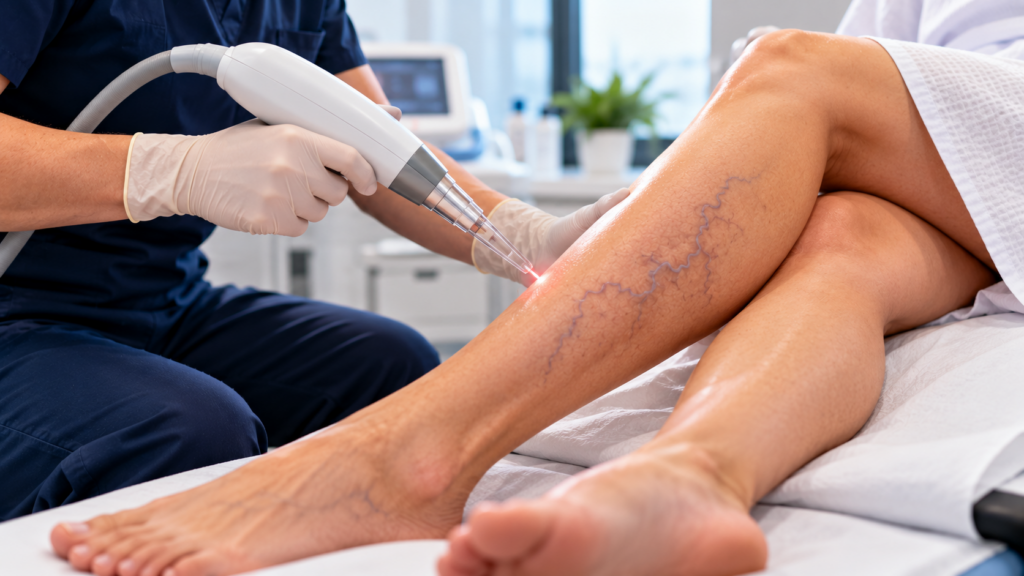

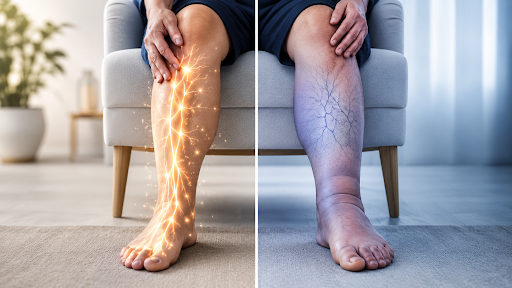
Tingling legs vs poor circulation are related but not identical. Tingling is a nerve symptom that can be caused by poor circulation, but it can also come from nerve damage (peripheral neuropathy), nerve compression (like sciatica), chronic venous insufficiency, or restless leg syndrome, conditions where blood flow may be completely normal. The pattern of your symptoms, whether tingling happens during activity or at rest, in one leg or both, with or without visible vein changes, is usually the clearest clue to the actual cause.
At MVM Health, tingling legs is one of the more frustrating symptoms patients bring in, mainly because so many different conditions can produce it. Getting the cause right matters more than most people realize: a patient with vein disease who’s treated for nerve pain won’t improve, and a patient with poor arterial circulation who’s told to just wear compression stockings could be putting their limb at real risk.
Key Takeaways
- Tingling is a nerve sensation. Poor circulation is a blood flow problem. They overlap often but aren’t the same thing.
- Peripheral artery disease (PAD) causes tingling and cramping during activity that improves with rest; peripheral neuropathy causes tingling that’s often worse at rest and at night.
- Chronic venous insufficiency, a different kind of circulation problem, can also cause tingling through nerve irritation from pooled blood and swelling.
- Restless legs syndrome overlaps with vein disease more than most people expect, and treating an underlying vein problem sometimes improves RLS symptoms.
- Because these conditions require different treatments, an accurate diagnosis, not guesswork, determines whether you actually get relief.
Is Tingling in My Legs the Same Thing as Poor Circulation?
Not necessarily. Tingling is a sensory symptom generated by your nerves, while poor circulation refers specifically to reduced blood flow. Poor circulation can cause tingling by starving nerves of oxygen, but tingling can also happen when blood flow is completely normal and the nerves themselves are irritated, compressed, or damaged by something else entirely.
This distinction is exactly why self-diagnosing from symptoms alone is so unreliable. Several very different conditions can all produce the same “pins and needles” sensation in your legs.

What Causes Tingling Legs? The Main Categories
Tingling legs generally fall into one of four broad categories, each with a different underlying mechanism.
1. Poor Arterial Circulation (Peripheral Artery Disease)
Peripheral artery disease (PAD) happens when narrowed or blocked arteries, usually from atherosclerosis, reduce blood flow to your legs. Reduced oxygen delivery to the nerves and muscles produces tingling, along with cramping and pain that’s classically triggered by walking and relieved by rest.
2. Poor Venous Circulation (Chronic Venous Insufficiency)
This is a different kind of circulation problem, one of blood not returning efficiently rather than not arriving in the first place. When leg vein valves weaken, blood pools in the lower leg instead of flowing back to the heart. That pooling raises pressure in the surrounding tissue, which can irritate nearby nerves and produce tingling, along with the more classic vein symptoms of swelling, aching, and heaviness. You can read more about this mechanism in our full guide to venous insufficiency.
3. Nerve Damage (Peripheral Neuropathy)
Peripheral neuropathy occurs when the nerves themselves are damaged, most commonly from diabetes, but also from vitamin deficiencies, certain medications, autoimmune conditions, or alcohol use. Blood flow can be entirely normal here. The nerves are simply misfiring, producing tingling, burning, or numbness independent of circulation.
4. Nerve Compression or Neurological Conditions
Conditions like sciatica (compression of the sciatic nerve, often from a herniated disc) or restless legs syndrome (a neurological disorder involving an urge to move the legs) can also cause tingling. Restless legs syndrome specifically has a documented overlap with venous disease, which we cover in detail in our guide to restless leg syndrome.
How to Tell the Difference: A Symptom Comparison
Because timing and triggers differ significantly between these conditions, they’re often the fastest way to narrow down the likely cause before ever seeing a specialist.
| Feature | PAD (Arterial) | Venous Insufficiency | Peripheral Neuropathy | Restless Legs Syndrome |
| When it happens | During walking/activity | Worse by evening, after standing | Often worse at rest and at night | Evening/night, at rest |
| Relieved by | Resting | Elevating legs, movement | Varies, often not relieved by rest | Movement |
| Skin appearance | Cool, pale, shiny, hair loss | Swelling, varicose veins, brown discoloration | Usually normal | Usually normal |
| Associated pain type | Cramping, tightness | Aching, heaviness | Burning, electric-like | Crawling, urge to move |
| Pulses | Often weak or absent | Normal | Normal | Normal |
| Progression | Can worsen quickly | Gradual, progressive | Often slow, gradual | Variable |
Does Poor Circulation From Vein Disease Cause Tingling Legs?
Yes. Chronic venous insufficiency can cause tingling through a mechanism that’s a bit different from arterial poor circulation. Persistent blood pooling and elevated pressure in the lower leg create ongoing inflammation and swelling that can irritate nearby nerves, sometimes described by patients as tingling, burning, or a “pins and needles” feeling, especially by evening.

This is separate from the cramping-during-activity pattern typical of PAD. Venous-related tingling tends to build gradually throughout the day and improve when you elevate your legs or lie down, following the same daily pattern as other venous insufficiency symptoms like swelling and heaviness.
Can Restless Legs Syndrome and Venous Insufficiency Cause the Same Tingling?
Yes, and the overlap between these two conditions is more significant than most people expect. Restless legs syndrome is classified as a neurological condition, but research has found chronic venous insufficiency present in a substantial share of RLS patients, more than in the general population. The proposed explanation: pooled blood and elevated venous pressure may irritate nerve endings in a way that triggers the same urge-to-move, tingling, crawling sensation that defines RLS.
This matters practically. If you’ve been diagnosed with restless legs syndrome and treatment hasn’t fully resolved your symptoms, it’s worth asking whether an underlying vein problem is a contributing factor. Our restless leg syndrome page covers this connection and the diagnostic process in more depth.
When Is Tingling in the Legs a Medical Emergency?
Most causes of tingling legs are not emergencies, but certain patterns require prompt medical attention rather than a routine appointment. Seek care immediately if you experience:
- Sudden, severe leg pain or a complete loss of sensation in the limb
- A wound or ulcer on the leg or foot that isn’t healing
- Skin that has turned black, blue, or developed a gangrenous appearance
- Sudden swelling in one leg with warmth or redness (a possible sign of DVT)
- Chest pain or shortness of breath occurring alongside leg symptoms
These signs can indicate advanced arterial blockage, a blood clot, or another urgent vascular event, and shouldn’t wait for a scheduled evaluation.
How Are These Conditions Diagnosed?
Because tingling legs can stem from arterial, venous, or neurological causes, an accurate diagnosis typically involves a combination of the following:
- Physical exam, including checking pulses, skin temperature, and color in both legs
- Duplex ultrasound, used to evaluate venous insufficiency and check how blood is flowing through the leg veins
- Ankle-brachial index (ABI), a simple test comparing blood pressure in the ankle and arm to screen for PAD
- Nerve conduction studies, used when peripheral neuropathy or nerve compression is suspected
- Bloodwork, to check for diabetes, vitamin deficiencies, or other contributors to nerve damage
Because vein disease, arterial disease, and neuropathy can all coexist, particularly in patients with diabetes, a thorough evaluation sometimes needs to rule in or out more than one condition rather than assuming a single cause.
What We See in Practice
The pattern we see most often is a patient who’s already tried addressing “poor circulation” broadly, compression socks, more walking, better hydration, without real improvement, because the actual cause was never confirmed. Vein-related tingling responds to vein treatment. Neuropathy doesn’t. Wearing compression stockings for arterial disease can occasionally make things worse rather than better. The specific diagnosis genuinely changes the treatment path, which is why we push for an ultrasound rather than a general recommendation whenever a patient describes this symptom.
Concerned About Tingling Legs? Get an Accurate Diagnosis
Tingling legs can have several causes, including vein problems, poor circulation, or nerve conditions. At MVM Health, our specialists can evaluate your symptoms and help identify the underlying cause.
Why Getting the Right Diagnosis Matters
Treating the wrong condition doesn’t just fail to help, it can delay real treatment for months or years while symptoms progress. A patient with venous insufficiency who’s managed only with neuropathy medication won’t see improvement, because the medication doesn’t address the underlying vein pressure. Someone with undiagnosed PAD who’s told their tingling is “just poor circulation” and given only general advice may be missing a narrowing artery that needs a completely different intervention.
This is the core reason self-diagnosis from symptoms alone falls short, and why a proper vascular evaluation is worth pursuing rather than guessing based on general advice.
Get an Accurate Diagnosis for Your Leg Symptoms
Tingling legs can come from your arteries, your veins, your nerves, or a combination of more than one. The only reliable way to know which applies to you is a proper evaluation, not trial and error with compression socks or general circulation advice. At MVM Health, our vein specialists can determine whether venous insufficiency, restless legs syndrome, or another condition is behind your symptoms and build a treatment plan around the actual cause. Schedule a consultation to find out what’s really going on.