

If your legs feel heavier by the end of the day, or you’ve noticed veins that look more twisted or visible than they used to, you may be wondering whether it’s just a normal part of getting older or something worth having checked out. For many patients in Stanhope, NJ, that question comes up long before they ever picture themselves at a vein specialist’s office.
The truth is, vein problems rarely announce themselves all at once. They tend to show up gradually, as a string of small, easy-to-dismiss symptoms. Knowing what to watch for and understanding what a vein diagnosis actually involves can help you get ahead of a condition that only gets harder to treat the longer it’s ignored.
Here’s what our team at MVM Health’s Stanhope, NJ location wants local patients to know about when a vein evaluation makes sense, and what to expect from the process.
Why Vein Health Is Easy to Overlook
Veins do quiet, essential work: carrying blood back to the heart against gravity, using one-way valves to keep it moving in the right direction. When those valves weaken or fail a condition called venous insufficiency blood can pool in the lower legs. Over time, that pooling is what causes the visible and physical symptoms most patients associate with “bad veins.”
Get the Right Vein Diagnosis Before Choosing Treatment
Not sure whether you have spider veins or varicose veins? MVM Health can evaluate your visible veins, symptoms, and circulation to determine which treatment options may be appropriate. Schedule a vein evaluation and take the next step toward healthier, more comfortable legs.
Because early symptoms are often mild a little swelling, a little fatigue many people wait months or years before asking about a vein evaluation. Unfortunately, venous insufficiency is a progressive condition, meaning it typically worsens without treatment rather than resolving on its own.
5 Signs It’s Time for a Vein Evaluation
If any of the following sound familiar, it’s worth scheduling a diagnostic vein consultation rather than waiting to see if things improve on their own.
- Visible varicose or spider veins Bulging, rope-like veins or clusters of fine red and blue veins are often the first visible clue of underlying venous insufficiency. Even when they aren’t painful, they’re a sign that blood flow in the legs isn’t working the way it should.
- Legs that feel heavy, achy, or tired A dull heaviness or ache that builds throughout the day especially after standing or sitting for long stretches is one of the most common early complaints we hear from patients dealing with leg heaviness and poor circulation.
- Swelling in the ankles or lower legs Mild swelling that shows up by evening and improves overnight is a classic pattern for venous leg swelling. It happens because fluid is backing up along with the blood that isn’t circulating efficiently.
- Restless, cramping, or throbbing legs at night If you find yourself needing to move your legs to get comfortable, or you’re waking up with cramps, this could point to restless leg syndrome or nighttime leg cramps tied to circulation issues rather than a musculoskeletal cause.
- Skin changes near the ankles Discoloration, dryness, itching, or a leathery texture on the lower legs can signal more advanced venous disease. These changes happen when chronically pooled blood begins affecting the skin and surrounding tissue, and they’re a stronger signal that an evaluation shouldn’t wait.
If you’re checking off two or more of these signs, it’s a reasonable time to have your veins professionally assessed rather than continuing to manage symptoms on your own.
What a Vein Diagnosis Actually Involves
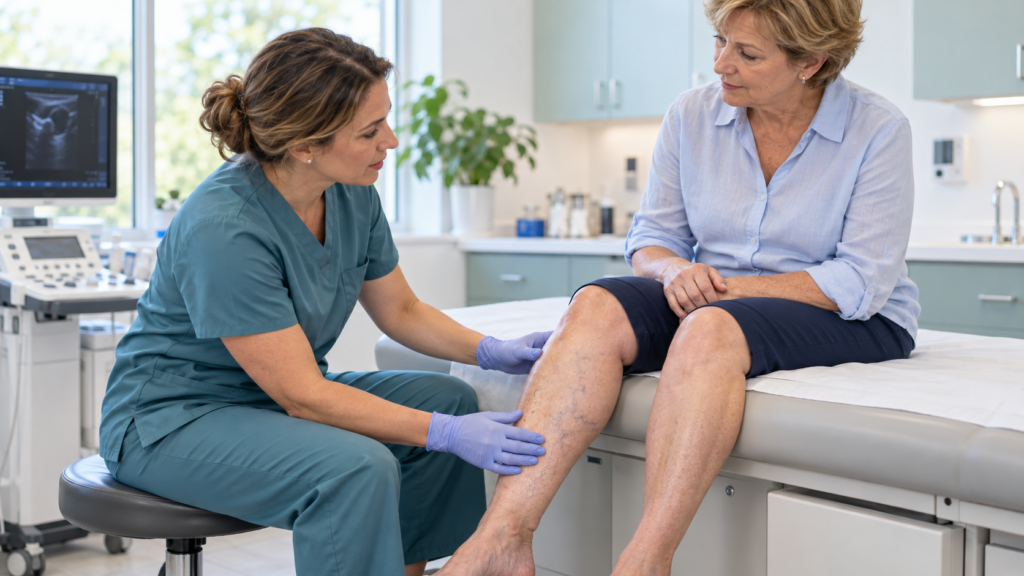
A proper vein diagnosis is more than a visual exam. At MVM Health, evaluations typically include:

- A review of your symptoms and medical history, including how long you’ve noticed changes and what makes them better or worse
- A physical exam of the legs, checking for visible veins, swelling, and skin changes
- Duplex ultrasound imaging, a painless, non-invasive scan that shows how blood is flowing through your veins and pinpoints which valves or vessels aren’t functioning properly
This imaging step is what separates a real diagnosis from guesswork. It allows your provider to confirm whether venous insufficiency is present, how severe it is, and which treatment approach is likely to work best for your specific case.
What Happens After Diagnosis
If your evaluation confirms venous insufficiency, the good news is that most modern treatments are minimally invasive, outpatient, and require little downtime. Depending on your diagnosis, your provider may recommend conservative measures like compression stockings, or a procedure such as radiofrequency ablation, VenaSeal, or sclerotherapy.

If you want to understand how these options compare before your appointment, our pillar guide breaks it down in detail: Vein Treatments: Comparing RFA, VenaSeal, Sclerotherapy & More.
Does Insurance Cover Vein Treatment?
One of the most common questions we hear from Stanhope patients is whether vein care is covered by insurance. In many cases, when symptoms like pain, swelling, or skin changes are documented, vein diagnosis and treatment are considered medically necessary rather than cosmetic which means insurance-covered vein treatment is often possible. MVM Health accepts most major insurance plans, and our team can help verify your specific coverage before you commit to a treatment plan. Learn more on our insurance and payment page.
Getting Vein Care Near Stanhope, NJ
MVM Health’s Stanhope location gives local patients access to board-certified specialists and the same advanced diagnostic and treatment options offered across our New Jersey and Pennsylvania locations. If you’re located closer to one of our other nearby offices, you can also learn more about vein evaluations in Scotch Plains, NJ or Marlboro, NJ.
To learn more about the specialists who perform vein evaluations at MVM Health, visit our Our Providers page.
FAQs About Vein Diagnosis in Stanhope, NJ
How do I know if I need a vein evaluation or if my symptoms are normal aging?
Occasional tired legs after a long day can be normal, but recurring heaviness, visible veins, swelling, or nighttime cramping are not something you have to live with. If symptoms are consistent or getting worse over weeks or months, it’s worth having a professional evaluation rather than assuming it’s just age.
Is a vein diagnosis painful?
No. A standard vein evaluation involves a physical exam and a duplex ultrasound, which is non-invasive and painless. There are no needles or incisions involved in the diagnostic process itself.
How long does a vein evaluation take?
Most initial evaluations, including the ultrasound, can be completed in under an hour. Your provider will walk you through the findings and next steps during the same visit whenever possible.
Will insurance cover my vein diagnosis and treatment?
Often, yes. When symptoms like pain, swelling, or skin changes are present, vein care is generally classified as medically necessary rather than cosmetic, which typically makes it eligible for insurance-covered vein treatment. Our team can help verify your specific benefits before your visit.
What happens if I skip the evaluation and my veins are just “spider veins”?
Spider veins can sometimes be purely cosmetic, but they can also be an early marker of underlying venous insufficiency. An evaluation is the only reliable way to tell the difference and to catch a progressive condition before it advances to more noticeable symptoms or skin changes.
Do I need a referral to see a vein specialist in Stanhope, NJ?
Most patients can schedule directly with MVM Health without a referral. If your insurance plan requires one, our team can help confirm what’s needed before your appointment.
Don’t Wait for Symptoms to Get Worse
Vein disease is progressive, but it’s also highly treatable especially when caught early. If you recognize any of the five signs above, a simple, non-invasive vein evaluation can give you clear answers and a personalized path forward.