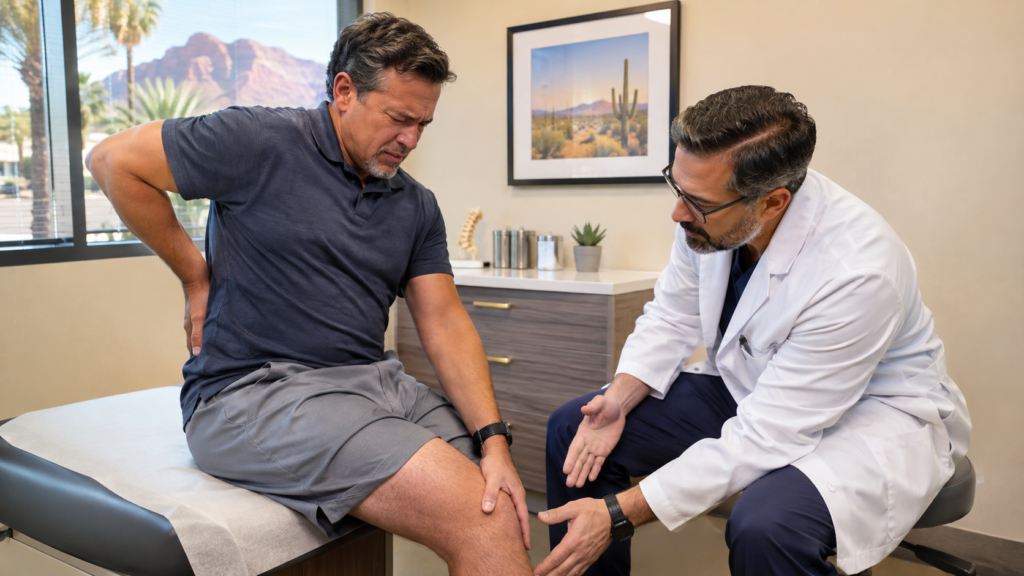


The right back pain treatment depends on which of three sources is causing the pain: a strained muscle or joint (mechanical), a damaged spinal disc, or an irritated nerve. Each one produces a different pattern of symptoms and responds to different care. At MVM Health’s Lancaster, PA office, a pain evaluation pinpoints the source first, so treatment targets the cause instead of only masking the ache.
Here is what surprises many patients: where your back hurts is often not where the problem starts. Pain shooting down one leg can begin with a disc in the lower spine, and a dull ache across the low back can come from small joints rather than muscles.
This guide to back pain treatment Lancaster, PA patients ask about explains how to tell the three causes apart, what a pain evaluation involves, and which signs mean you should not wait.
How Can You Tell Mechanical, Disc and Nerve-Related Back Pain Apart?
The clearest clue is where the pain travels and what makes it worse. Mechanical pain stays in the back, disc pain often worsens when you bend or sit, and nerve pain shoots into the buttock or leg with tingling or numbness.

| Cause | What is happening | How it usually feels | Common triggers |
| Mechanical | Strained muscles or ligaments, or irritated facet and sacroiliac joints | Dull, achy pain in the low back; stiff in the morning, eases once you move | Lifting, twisting, long hours in one position |
| Disc-related | A spinal disc wears down, bulges or herniates | Deep central ache that flares with sitting, bending or coughing | Forward bending, prolonged sitting, sudden heavy lifts |
| Nerve-related | A disc, bone spur or narrowed canal presses on a spinal nerve | Burning or electric pain down the leg, with tingling, numbness or weakness | Standing or walking (stenosis), sitting or bending (disc) |
The causes often overlap. A herniated disc can be both the disc problem and the reason a nerve is pinched, which is why sciatica and disc pain so often show up together.
The National Institute of Arthritis and Musculoskeletal and Skin Diseases notes that back pain lasting longer than 12 weeks is considered chronic, and that several causes can be present at the same time.
Find the Real Source of Your Back Pain.
Pain that keeps coming back is a sign the cause has not been named yet. In one visit at MVM Health Lancaster, PA, you learn whether your pain is mechanical, disc-related or nerve-related, and you leave with a first step that targets the cause, not a prescription that only dulls it.
What Everyday Lancaster Routines Put the Most Strain on the Back?
Repeated lifting, twisting and long hours in one position are the habits most likely to turn a minor strain into a recurring problem. Many of them are built into daily life across Lancaster County.
- Farm and barn work: hauling feed, bales and equipment combines heavy loads with twisting, a classic setup for mechanical and disc pain.
- Warehouse, distribution and manufacturing shifts: repeated bending and lifting through long shifts loads the lower discs again and again.
- Long drives and desk days: commuting on Route 30 or sitting at a desk for hours keeps the discs under steady pressure, which can aggravate disc-related pain.
- Seasonal yard and snow work: sudden heavy effort after a quiet stretch is a common trigger for an acute flare.
None of these mean pain is unavoidable. They do explain why the same back can feel fine one week and seize up the next, and why the cause matters more than the moment it started.
What Happens During a Pain Evaluation in Lancaster?
For patients exploring back pain treatment Lancaster, PA, a thorough evaluation helps identify the likely source of discomfort through a medical history, physical examination and imaging when appropriate.

- History. Your provider asks when the pain started, where it travels, what eases or worsens it, and how it affects work and sleep.
- Physical exam. Range of motion, tender spots, and how bending forward compared with backward changes the pain all point toward mechanical or disc sources.
- Nerve checks. Reflexes, strength, sensation and a straight-leg raise show whether a spinal nerve is irritated.
- Imaging when it adds value. An X-ray or MRI is usually reserved for pain that lasts beyond several weeks, nerve symptoms, injury, or warning signs. Many scans show disc wear that causes no pain at all, so findings are matched to your symptoms.
- A plan tied to the cause. You leave knowing the most likely source and the first step of treatment.
That last point is what separates an evaluation from a quick prescription: the plan follows the cause.
Back Pain Treatment Lancaster, PA: Which Options Match Each Cause?
Most back pain improves without surgery, and treatment usually starts with the least invasive option that fits the cause. Procedures come in when pain lasts, limits daily life, or does not respond to first-line care.
- Mechanical pain: activity changes, physical therapy and core strengthening come first. When small spinal joints are the source, radiofrequency ablation can quiet the nerves that carry joint pain for months at a time.
- Disc-related pain: targeted exercise, posture and sitting changes, and anti-inflammatory care are the starting point. Persistent flares may call for injection-based treatment.
- Nerve-related pain: an epidural steroid injection can calm an inflamed nerve root so therapy becomes possible. Surgery is reserved for severe or worsening nerve compression.
The order matters. Treating a nerve problem as a muscle strain, or the reverse, is one of the most common reasons back pain drags on for months.
For a full look at symptoms, diagnosis and every treatment path, read Back Pain: Symptoms, Causes, Diagnosis & Treatment.
When Should you Schedule a Pain Evaluation in Lancaster?
Schedule a pain evaluation if back pain has not improved after a few weeks, keeps returning, or travels into your leg. Earlier answers usually mean simpler treatment.
Book sooner if you notice:
- Numbness, tingling or weakness in a leg or foot
- Pain that wakes you at night or does not ease with rest
- Back pain after a fall or injury
- Pain with fever or weight loss you cannot explain
Go to an emergency room instead if back pain comes with new loss of bladder or bowel control, numbness in the groin or inner thighs, or leg weakness that is getting worse. These can signal severe nerve compression that needs same-day care.
If you have been searching for “back pain treatment near me,” a pain evaluation at MVM Health Lancaster, PA gives you a clear starting point in one visit.