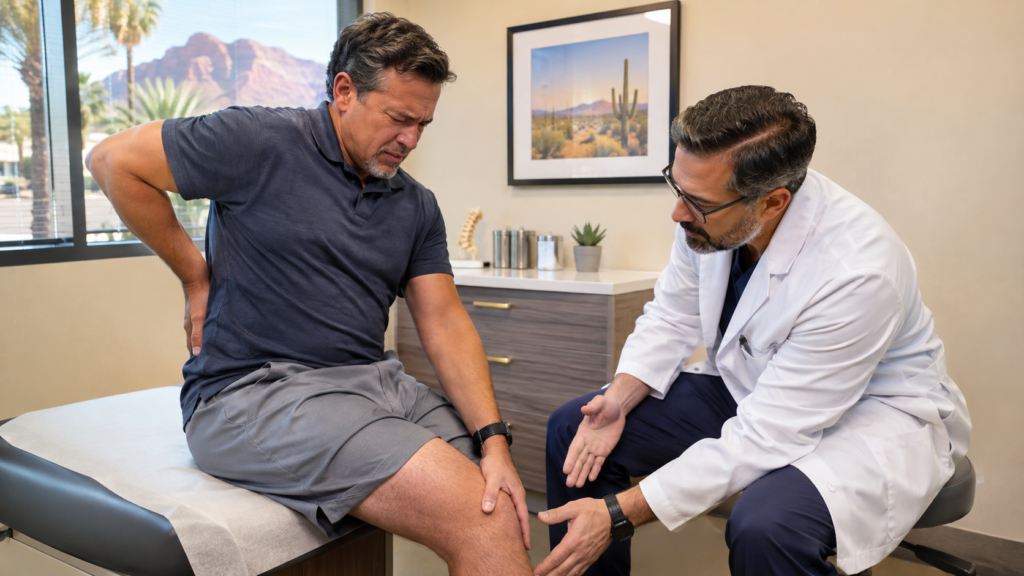


Stiff knees on cold Pocono mornings, an aching hip after a hike or a shoulder that hurts when you reach overhead can all make everyday life harder. Joint pain is one of the most common reasons adults seek pain care, and arthritis is often the cause. For patients in East Stroudsburg, PA, MVM Health offers evaluation-based joint pain treatment in East Stroudsburg, close to home, so you can find out what’s behind your pain and which treatment options fit.
This guide explains common causes of joint pain, when to get it checked, what happens at an evaluation and the treatments your specialist may discuss.
What Causes Joint Pain?
Joint pain can come from the joint itself or from the tissues around it. The most common causes include:
- Osteoarthritis: The most common type of arthritis. Over time, the cartilage that cushions the ends of bones wears down, leading to pain, stiffness and sometimes swelling. It often affects knees, hips, hands and the spine.
- Inflammatory arthritis: Conditions such as rheumatoid arthritis and psoriatic arthritis happen when the immune system attacks the joints. They often affect several joints on both sides of the body.
- Injury and overuse: Sprains, old sports injuries and repetitive motions at work can damage joints and lead to arthritis later.
- Bursitis and tendinitis: Inflammation of the small fluid sacs or tendons around a joint, often in the shoulder, hip or knee.
- Gout: Crystals build up in a joint, causing sudden, intense pain, often in the big toe.
Risk goes up with age, extra body weight, past joint injuries and a family history of arthritis.
Why this matters in East Stroudsburg: Life in the Poconos is active. Hiking, skiing, gardening and outdoor work all put steady demand on knees, hips and shoulders. Many people also notice more joint stiffness during cold, damp winters. Weather doesn’t damage joints, but it can make arthritis symptoms feel worse.
Signs Your Joint Pain Needs an Evaluation
Occasional soreness after a busy day usually eases with rest. It’s worth booking a pain evaluation if you notice:
- Joint pain that lasts more than a few weeks or keeps coming back
- Stiffness in the morning that takes a while to loosen up
- Swelling, warmth or a grinding feeling in the joint
- Pain that limits walking, climbing stairs, sleep or work
- Pain in several joints, especially on both sides of the body
- Relief from over-the-counter medicine that no longer lasts
Get care right away if a joint becomes suddenly hot, red and swollen, especially with fever, or if an injury leaves a joint deformed or unable to bear weight. These can be signs of infection or a fracture.
For more on timing, read when to see a pain doctor for joint pain in East Stroudsburg.
What to Expect at a Joint Pain Evaluation in East Stroudsburg
Evaluation-based care means your treatment plan is built on a clear understanding of what’s causing your pain, not just where it hurts. A first visit at our East Stroudsburg pain clinic typically follows four steps.
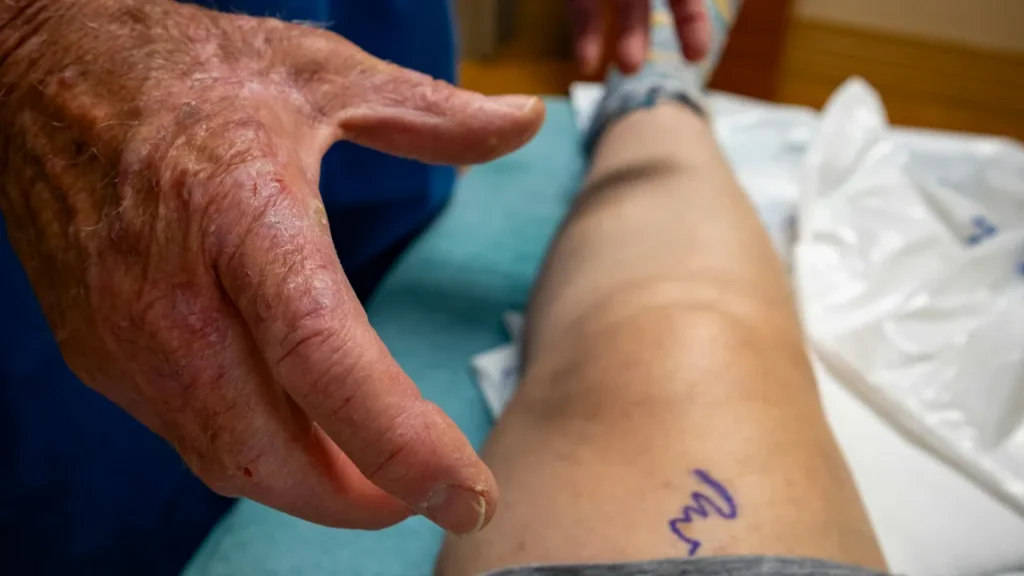
Step 1: Your history. Your specialist asks which joints hurt, when the pain started, what makes it better or worse and how it affects daily life. You’ll also review past injuries, other health conditions, medicines and treatments you’ve already tried.
Step 2: A hands-on exam. Your provider checks the joint’s range of motion, strength, stability and tenderness, and looks for swelling or warmth. Watching how you walk or move often gives useful clues.
Step 3: Imaging, if needed. X-rays can show cartilage loss, bone spurs and joint alignment. Your provider may also use ultrasound or recommend an MRI to look at soft tissues. Bring any earlier imaging, since it can save time and repeat tests.
Step 4: Your plan. Your specialist explains the likely cause and walks you through your options, from conservative care to minimally invasive procedures. If your symptoms suggest inflammatory arthritis or a joint that may need surgery, we coordinate with a rheumatologist or orthopedic surgeon.
Joint Pain Treatment in East Stroudsburg: Your Options
Treatment depends on the joint involved, the cause of your pain and how much it affects your life. Many patients start with conservative care and add other options if needed. Your specialist will explain the benefits, risks and expected results of each.
Conservative care
Physical therapy, a home exercise plan, activity changes, weight management and medicine review are often the first steps. Strengthening the muscles around a joint can take pressure off it and improve movement.
Joint injections
A steroid injection guided by imaging can calm inflammation inside a painful joint, such as the knee, hip or shoulder. Relief can last weeks to months, and injections can sometimes be repeated. For sacroiliac joint pain in the lower back, a sacroiliac joint injection may be recommended.
Nerve blocks and radiofrequency ablation
For long-lasting knee arthritis pain, a nerve block can numb the small nerves that carry pain signals from the joint. If it helps, radiofrequency ablation uses heat to quiet those nerves for longer-lasting relief.
Regenerative options
Some patients ask about platelet-rich plasma (PRP) injections. Research is still developing, results vary and insurance usually doesn’t cover them, so your provider will help you decide whether they’re worth considering.
Surgical referral
If a joint is badly worn and other treatments haven’t helped, your specialist can refer you to an orthopedic surgeon to discuss joint replacement.
You can compare all options on our pain treatments page.
Is Joint Pain Holding You Back?
Find out what’s causing your pain and which treatments may help. Our East Stroudsburg specialists offer evaluation-based care close to home.
Living Well With Arthritis in the Poconos
Alongside treatment, a few everyday habits can ease joint pain:

- Keep moving. Walking, swimming and cycling keep joints flexible without heavy impact. Local trails and indoor pools are good year-round options.
- Warm up in cold weather. Dress in layers and do a few gentle stretches before shoveling snow or heading outdoors.
- Use heat and ice wisely. Heat can loosen stiff joints in the morning, while ice can calm swelling after activity.
- Protect your joints at work and home. Use proper lifting form, take breaks from repetitive tasks and wear supportive shoes.
- Manage your weight. Every extra pound adds load to your knees and hips with each step.
Cost and Insurance
Many insurance plans, including Medicare, cover joint pain evaluations and medically necessary treatments such as physical therapy and joint injections. Some procedures may need prior authorization. Our team checks your benefits before your visit, and you can review accepted plans on our insurance and payment page.
Joint Pain FAQs for East Stroudsburg Patients
What kind of doctor treats joint pain?
+
What’s the difference between joint pain and arthritis?
+
Can arthritis be cured?
+
Do I need an X-ray or MRI for joint pain?
+
How long do joint injections last?
+
Does cold weather make arthritis worse?
+
Is joint pain treatment covered by insurance?
+
How do I find joint pain treatment near me in East Stroudsburg?
+
Sources