

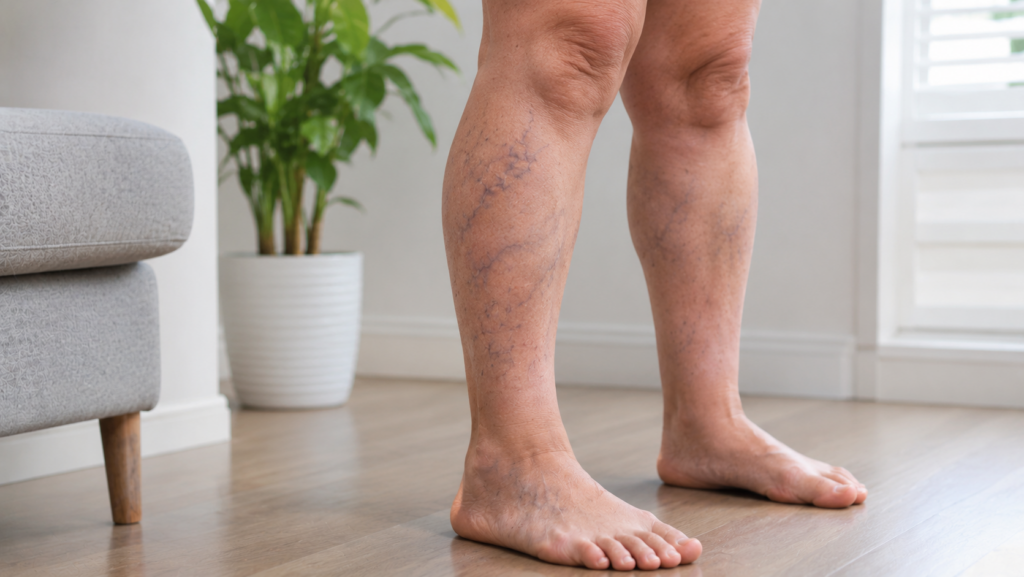
Chronic venous insufficiency Philadelphia, PA patients experience can cause leg swelling, heaviness, aching, and skin changes when damaged vein valves allow blood to flow backward and pool in the lower legs. At MVM Health in Philadelphia, a venous duplex ultrasound helps identify affected veins and guide personalized treatment recommendations.
Here is the part most people miss: the vein causing your heaviness or swelling is often not the one you can see. A bulging vein near the knee may be fed by a faulty valve high in the thigh, and treating the visible vein alone rarely ends the symptoms.
This guide to chronic venous insufficiency Philadelphia patients ask about walks through what CVI feels like, what happens during a vein evaluation, what your results actually mean, and the vein treatment paths those results open up.
Which Symptoms Point to Chronic Venous Insufficiency?
For patients exploring chronic venous insufficiency Philadelphia care, symptoms often become more noticeable throughout the day and improve when the legs are elevated. This pattern can suggest that poor venous circulation is contributing to discomfort, although other conditions may cause similar symptoms. It is also common: the Society for Vascular Surgery estimates CVI may affect up to 40% of people in the U.S.
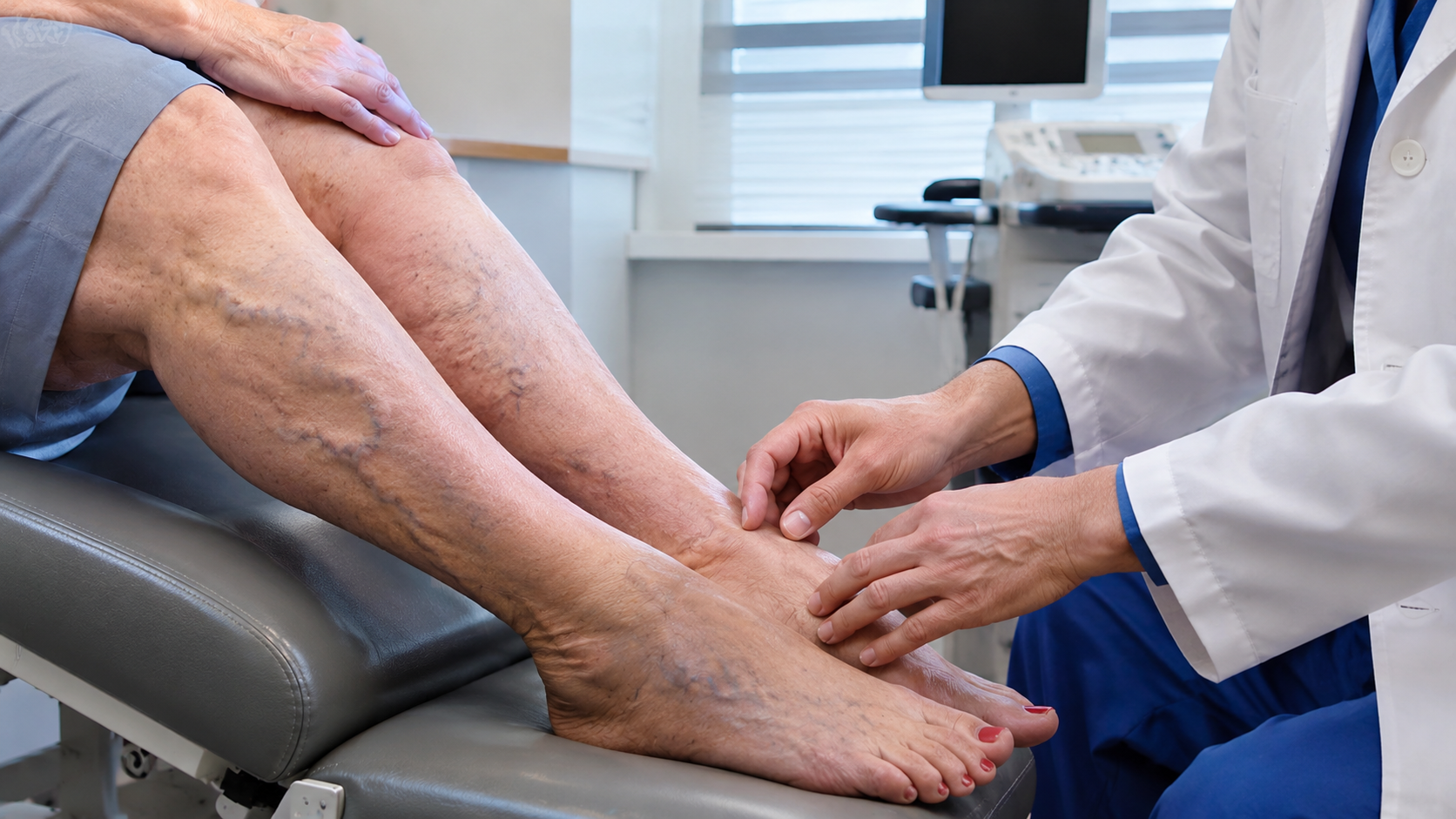
- Heaviness or aching in the calves after long periods of standing or sitting
- Ankle swelling that leaves sock marks and fades overnight
- Night cramps or restless legs that wake you up
- Itching or burning along a vein
- Varicose veins – ropey, twisted veins under the skin
- Skin changes near the ankle: brown staining, thickening, or a dry, eczema-like rash
- A slow-healing sore on the inner ankle (venous ulcer)
Daily routines in Philadelphia can make these symptoms easier to notice. Twelve-hour shifts on hospital floors, standing on SEPTA platforms and trains, climbing rowhouse stairs, and humid summer afternoons all add pressure to veins that are already struggling.
Skin changes and open sores signal a more advanced stage. They deserve an evaluation sooner rather than later, because damaged skin heals slowly once venous pressure stays high.
Chronic Venous Insufficiency Philadelphia, PA: Vein Evaluation
A vein evaluation takes about 30 to 60 minutes, needs no needles or prep, and you walk out the same way you walked in. The centerpiece is a venous duplex ultrasound, which combines a picture of the vein with a reading of blood flow inside it.
- Health history and symptom review. Your provider asks when symptoms appear, how long you stand each day, past blood clots, pregnancies, and family history of vein disease.
- Leg exam. The provider checks for swelling, visible veins, and skin changes around the ankle.
- Standing or reverse-tilt ultrasound. Reflux is tested with you upright, because gravity is what exposes a leaking valve. Lying flat can hide the problem.
- Squeeze-and-release test. The technologist presses on your calf or asks you to bear down, then watches whether blood falls backward when the pressure lets go.
- Timing the backflow. Each vein gets a reflux time. In superficial veins, backflow lasting longer than about half a second is generally considered abnormal.
- Mapping. The findings are drawn as a vein map showing which segments leak, where they connect, and whether the deep veins are open and clot-free.
That last step matters most. The map answers the question your symptoms can’t: where the pressure actually starts.
Find The Source of Your Leg Discomfort
Your legs have been sending signals; a vein evaluation translates them into a clear plan. One ultrasound visit shows whether CVI is the cause, which vein is responsible, and what it would take to fix it.
What Do Ultrasound Results Reveal About Your Leg Discomfort?
Your results show three things: which vein is leaking, how badly, and whether the deep system is healthy enough to carry blood once a faulty vein is closed. Together, they explain why your legs feel the way they do.
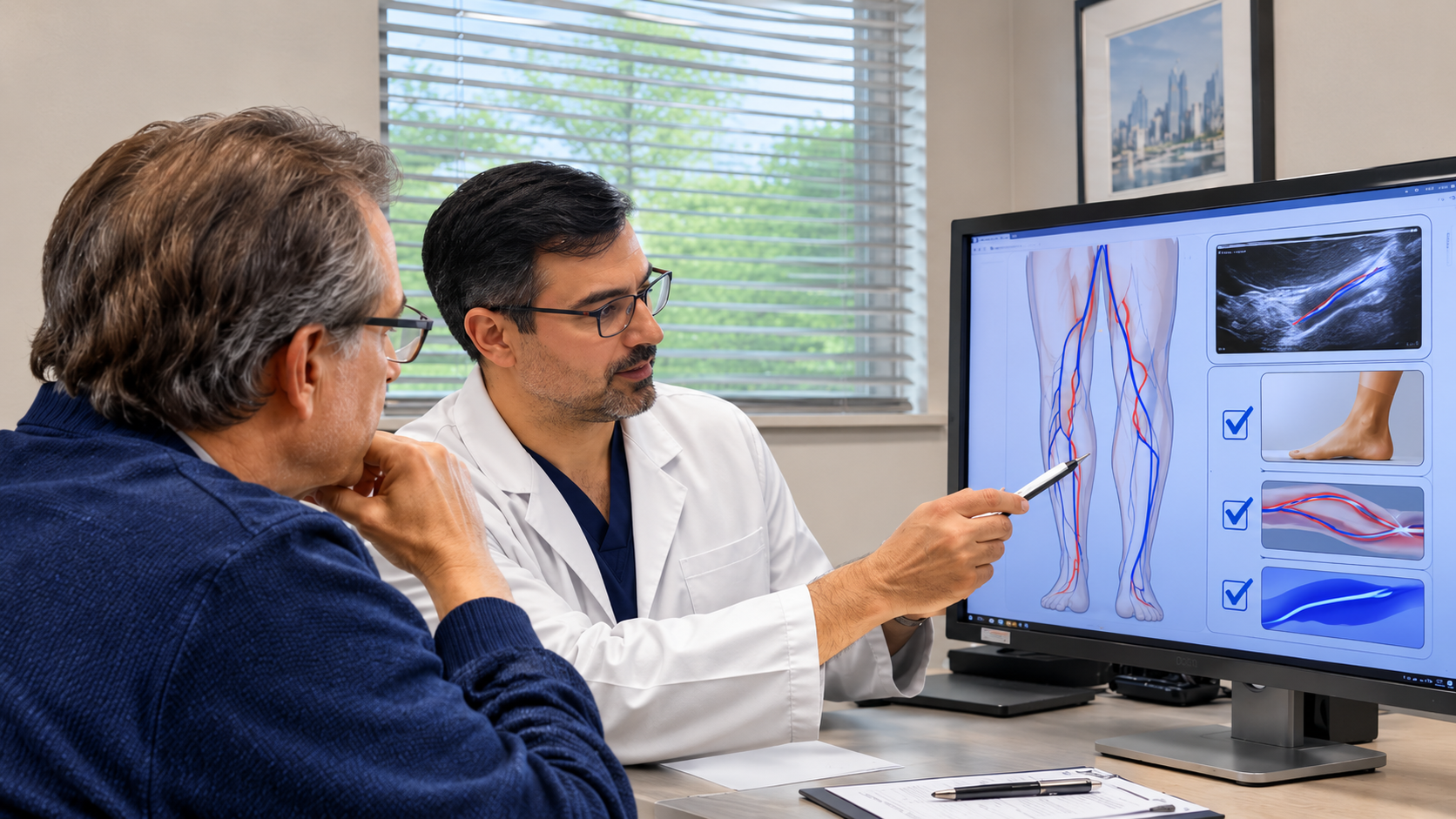
- Reflux in the great or small saphenous vein: the main superficial vein is leaking. This is the most common source of heaviness, swelling and varicose veins.
- Leaking perforator veins: connector veins near the ankle push pressure outward, often linked to skin staining or ulcers.
- Deep vein reflux or old scarring: a sign of past clots or weakened deep valves. Treatment usually leans on compression and careful planning.
- No reflux found: symptoms likely come from another cause, such as nerves, joints, arteries or medication side effects.
Providers also grade CVI using the CEAP scale, which runs from C0 (no visible signs) to C6 (an active ulcer). Your stage helps set how urgent treatment is.
For a deeper look at every stage of this condition, read Venous Insufficiency: Symptoms, Stages & Treatment.
A normal result is useful too. It rules out and points the next conversation in a different direction, instead of leaving you guessing.
What Treatment Options Follow a CVI Diagnosis?
Patients considering chronic venous insufficiency Philadelphia treatment may have several options, including compression therapy and minimally invasive vein procedures. Many procedures are performed in an outpatient setting, with recovery depending on the treatment selected. The most appropriate approach depends on ultrasound findings, symptoms, and individual medical needs.
| Treatment | How it works | Typically used for |
| Compression stockings | Graduated pressure helps veins push blood upward | Mild symptoms; often required first by insurance |
| Radiofrequency or laser ablation | Heat seals the leaking vein from the inside through a small catheter | Saphenous vein reflux |
| Medical adhesive closure | A medical-grade glue closes the vein without heat | Saphenous reflux in patients who prefer fewer injections or no stockings afterward |
| Sclerotherapy or foam sclerotherapy | An injected solution scars the vein shut | Smaller branches and spider veins |
| Ambulatory phlebectomy | Bulging veins are removed through tiny nicks | Large surface varicose veins |
Once a leaking vein is closed, blood reroutes into healthy veins that still work. Many patients notice lighter, less swollen legs within weeks.
Insurance coverage usually depends on documented reflux on ultrasound and, with many plans, a trial of compression first. Your evaluation produces the records those plans ask for.
When Should you Schedule a Vein Evaluation in Philadelphia?
Schedule a vein evaluation if leg heaviness, swelling or visible veins have lasted more than a few weeks, or if they shape how you plan your day. CVI tends to progress slowly, and earlier testing usually means simpler options.
Book sooner if you notice:
- Darkening or hardening skin around the ankle
- A sore on the lower leg that hasn’t healed in two weeks
- A varicose vein that bleeds, even briefly
- Swelling that no longer fades overnight
Go to an emergency room instead if one leg suddenly becomes swollen, warm and painful, or if leg symptoms come with chest pain or shortness of breath. These can signal a blood clot that needs same-day care.
If you’ve been searching for “chronic venous insufficiency near me,” a focused vein evaluation at MVM Health Philadelphia, PA gives you a clear answer in a single visit.