











Knee Osteoarthritis

Knee osteoarthritis is the “wear and tear” type of arthritis. It can turn a morning walk, a flight of stairs or getting up from a chair into a painful chore. Stiffness, swelling and a grinding feeling often build slowly over years. At MVM Health, our pain specialists help you manage knee arthritis without surgery, so you can stay active longer and make knee replacement a choice, not a necessity.

Book a visit with a pain specialist near you at one of our clinics in Pennsylvania, New Jersey, Ohio and Arizona.

Knee Osteoarthritis
Knee Osteoarthritis Knee Osteoarthritis Knee Osteoarthritis Knee Osteoarthritis Knee Osteoarthritis Knee Osteoarthritis Knee Osteoarthritis Knee Osteoarthritis Knee Osteoarthritis Knee Osteoarthritis Knee Osteoarthritis Knee Osteoarthritis Knee Osteoarthritis Knee Osteoarthritis Knee Osteoarthritis Knee Osteoarthritis Knee Osteoarthritis Knee Osteoarthritis Knee Osteoarthritis Knee Osteoarthritis Knee Osteoarthritis Knee Osteoarthritis Knee Osteoarthritis Knee Osteoarthritis

Meet Our Expert Team

Board Certified Expert

At MVM Health — Movement. Vitality. Medicine. — we are committed to providing exceptional pain, vein, and wellness services that empower individuals to reclaim their health and well-being. With our team of Harvard-trained experts, we strive to deliver transformative outcomes that restore comfort, confidence, and quality of life. MVM Health’s mission is to help every patient relieve discomfort, restore motion, and renew life.

Knee Osteoarthritis

Vwaire Orhurhu, MD, MPH
Harvard Medical School

Knee Osteoarthritis

Mariam Salisu, MD, MPH
Harvard Medical School

Knee Osteoarthritis

Peter Isaac, DO
Philadelphia College of Osteopathic Medicine

Knee Osteoarthritis

Ali Amin, MD
Baylor College of Medicine

Knee Osteoarthritis

THOMAS KHOURY, MD
Harvard Medical School

Knee Osteoarthritis

ANTHONY TURNER, MD
Yale School of Medicine

Knee Osteoarthritis

KIRAN C. TAMIRISA
Baylor College of Medicine

Knee Osteoarthritis

TARIQ ALFARRA, DO
JOHNS HOPKINS HOSPITAL

Knee Osteoarthritis

Rishi Sheth, MD
University of Miami School of Medicine

Knee Osteoarthritis

Henry Onyeaka, MD, MPH
Harvard Medical School

Knee Osteoarthritis

Felicia Todd, CNP
Moravian College

Knee Osteoarthritis

Carrie Ward, CNP
Franklin University

Knee Osteoarthritis

Kruti Solanki, CNP
Drexel University

Knee Osteoarthritis

Christy Daniels, CNP
Chamberlain University

Knee Osteoarthritis

Heerina Kittel, CNP
Maryville University

Knee Osteoarthritis

Vic Urbano, CNP
Walden University

Knee Osteoarthritis

Jameela Azeem, CNP
Hofstra University

Knee Osteoarthritis

Vwaire Orhurhu, MD, MPH
Harvard Medical School

Knee Osteoarthritis

Mariam Salisu, MD, MPH
Harvard Medical School

Knee Osteoarthritis

Peter Isaac, DO
Philadelphia College of Osteopathic Medicine

Knee Osteoarthritis

Ali Amin, MD
Baylor College of Medicine

Knee Osteoarthritis

THOMAS KHOURY, MD
Harvard Medical School

Knee Osteoarthritis

ANTHONY TURNER, MD
Yale School of Medicine

Knee Osteoarthritis

KIRAN C. TAMIRISA
Baylor College of Medicine

Knee Osteoarthritis

Rishi Seth, MD
University of Miami School of Medicine

Knee Osteoarthritis

Henry Onyeaka, MD, MPH
Harvard Medical School

Knee Osteoarthritis

Felicia Todd, CNP
Moravian College

Knee Osteoarthritis

Vic Urbano, CNP
Walden University

Knee Osteoarthritis

Jameela Azeem, CNP
Hofstra University

We work with a wide variety of insurance providers

Knee Osteoarthritis Knee Osteoarthritis Knee Osteoarthritis Knee Osteoarthritis Knee Osteoarthritis Knee Osteoarthritis Knee Osteoarthritis

and 100+ more

Insurance coverage for pain treatment depends on your specific plan, medical necessity, and prior authorization. Our team will review your benefits with you in advance. Questions? Contact us to confirm if your insurance is accepted.

Understanding Knee Osteoarthritis

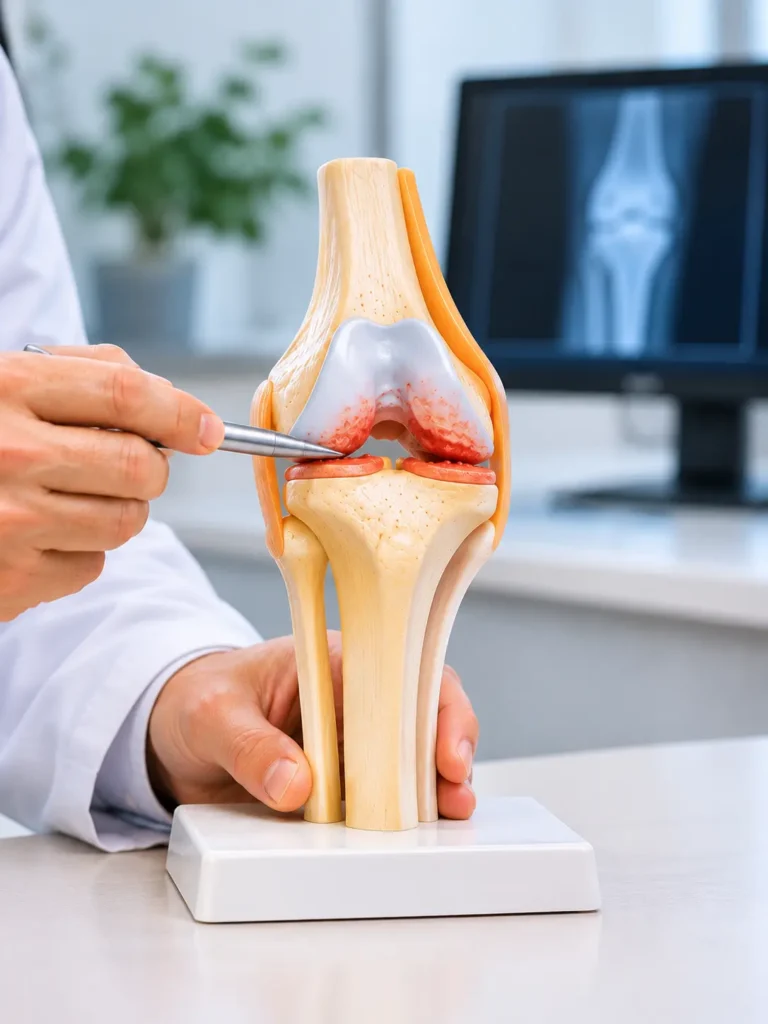
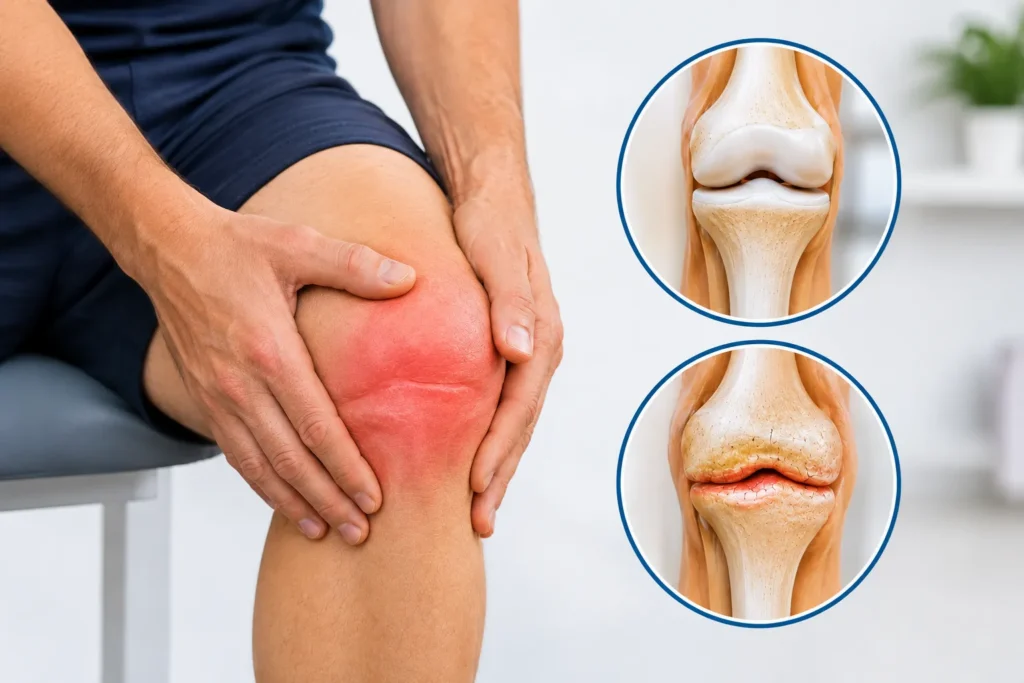
A healthy knee glides smoothly because the ends of the bones are covered with slippery cartilage. In knee osteoarthritis (OA), this cartilage slowly wears thin and rough. The space inside the joint narrows, bone spurs can form, and the joint lining can become inflamed. It is the most common type of arthritis in the knee. The American Academy of Orthopaedic Surgeons has a clear patient guide to knee osteoarthritis.

Why does it hurts. Cartilage itself has no nerves. Pain comes from the bone, the inflamed joint lining and the tissues around the knee, and it travels to the brain through small genicular nerves. That is why treatments that calm inflammation or quiet these nerves can bring relief even when cartilage can’t be restored.

A slow, changing condition. Knee OA usually develops over years and tends to come in flares, with good days and bad days. With the right care, many people control their pain and keep moving for a long time.

Knee Osteoarthritis

The 4 Stages of Knee Osteoarthritis

Doctors often describe knee OA in four stages based on symptoms and X-ray changes. Knowing your stage helps guide treatment.

Stage 1: Early

Very small cartilage changes and tiny bone spurs. Most people have little or no pain, and X-rays may look almost normal. Exercise, weight management and protecting the joint are the main focus.

Stage 2: Mild

Bone spurs are visible on X-ray, but the joint space is still fairly normal. Stiffness after rest and aching after activity begins. Physical therapy, bracing and over-the-counter relief often help.

Stage 3: Moderate

Cartilage loss is clear and the joint space narrows. Pain with walking, kneeling and stairs is common, with flares of swelling. Knee injections and PRP are often added at this stage.

Stage 4: Severe

Most cartilage is gone, the joint space is very narrow and large spurs may form. Pain can be constant. Genicular nerve blocks and genicular RFA can ease pain for people who aren’t ready for, or can’t have, knee replacement.

Common Causes of Knee Osteoarthritis

Aging cartilage

As we get older, cartilage holds less water and repairs itself more slowly, so everyday wear adds up over time.

Extra body weight

Each step puts several times your body weight through your knees. Extra weight speeds up cartilage wear and also adds inflammation in the body.

Past knee injuries

A torn meniscus, ligament injury or fracture can change how the joint moves and lead to arthritis years later, known as post-traumatic arthritis.

Repeated stress on the knee

Jobs and activities with frequent kneeling, squatting, climbing or heavy lifting put extra load on the joint.

Joint alignment

Bow legs or knock knees shift weight onto one side of the knee, so that side wears faster and often leads to knee pain.

Weak supporting muscles

Weak thigh and hip muscles absorb less shock, leaving the cartilage to take more of the load.

Genetics

Osteoarthritis tends to run in families, and some people inherit cartilage that wears more easily.

Other joint conditions

Gout, inflammatory arthritis and past joint infections can damage cartilage and raise the risk of OA. 

Risk Factors

Knee osteoarthritis can affect anyone, but your chances are higher if you:

Symptoms of Knee Osteoarthritis

When Knee Osteoarthritis Needs Urgent Care

Knee osteoarthritis usually changes slowly and is rarely an emergency. Get urgent medical care if your knee pain comes with:

  • Redness, heat and severe swelling, especially with a fever
  • Sudden inability to put any weight on the leg
  • A knee that locks in place and won’t straighten
  • Rapid swelling after a fall, twist or other injury
  • Calf pain, swelling or warmth, which can signal a blood clot
  • Numbness, tingling or color change in the lower leg or foot

These signs may point to an infection, a fracture, a torn meniscus, a blood clot or another problem that needs attention right away. Call 911 if you have chest pain or sudden shortness of breath.

Book a Knee Osteoarthritis Evaluation

Posted on Google Knee Osteoarthritis
Knee Osteoarthritis
Brenda Giles
Knee OsteoarthritisKnee OsteoarthritisKnee OsteoarthritisKnee OsteoarthritisKnee OsteoarthritisTrustindex verifies that the original source of the review is Google.
Everybody was very pleasant and not long waiting at all
Posted on Google Knee Osteoarthritis
Knee Osteoarthritis
Lala Kenjo
Knee OsteoarthritisKnee OsteoarthritisKnee OsteoarthritisKnee OsteoarthritisKnee OsteoarthritisTrustindex verifies that the original source of the review is Google.
I'm going to say Dr. O is a miracle worker. I have two herniated discs in my neck and the pain was so severe, I had to roll out of bed some days. I went to see Dr. O and was scheduled for an injection in my neck. The first injection helped a little bit, but I was still in severe pain most days. Speaking to other people, it normally takes two injections so I went from my second injection with Dr. O. Oh, and by the way, he squeezed me in the very next day for the procedure. I have not felt this good in a very long time. I can actually sit in a chair without my neck throbbing from pain and I've even started taking better care of my vegetable garden in my yard. Like I said this man is a miracle worker. Love, love, love him and I highly recommend him. Oh, and all of his staff are extremely friendly, patient, and very empathetic to their patients.
Posted on Google Knee Osteoarthritis
Knee Osteoarthritis
Maryann Iko
Knee OsteoarthritisKnee OsteoarthritisKnee OsteoarthritisKnee OsteoarthritisKnee OsteoarthritisTrustindex verifies that the original source of the review is Google.
Everyone is friendly and feeling good about them helping me
Posted on Google Knee Osteoarthritis
Knee Osteoarthritis
MARCE CASTAÑO
Knee OsteoarthritisKnee OsteoarthritisKnee OsteoarthritisKnee OsteoarthritisKnee OsteoarthritisTrustindex verifies that the original source of the review is Google.
“My experience today was excellent. From the moment I arrived, the staff was welcoming and attentive. The way everything was explained to me made the process clear and easy to understand. I felt very comfortable and, most importantly, safe throughout my visit. I truly appreciate the professionalism and care I received.”
Posted on Google Knee Osteoarthritis
Knee Osteoarthritis
Barbara Quarantello
Knee OsteoarthritisKnee OsteoarthritisKnee OsteoarthritisKnee OsteoarthritisKnee OsteoarthritisTrustindex verifies that the original source of the review is Google.
I have been a patient of Dr. Orhurhu for over a year and the care he has given me has been exceptional. I had a compound fracture of my L2 vertebrae in May 2024 and he performed a Kyphoplasty in his office with wonderful results. I still have issues with my back due to scoliosis and bulgeing discs that impinge on my spine. Dr.O suggested ablation therpy on my low back along with 4 epidural injections with 2 more to come this week. But I have great faith in Dr. Orhurhu that I will be improving under his excellent care and guidance.
Posted on Google Knee Osteoarthritis
Knee Osteoarthritis
Seleimy Suárez Rodríguez
Knee OsteoarthritisKnee OsteoarthritisKnee OsteoarthritisKnee OsteoarthritisKnee OsteoarthritisTrustindex verifies that the original source of the review is Google.
Me gustó bastante y mucho la atención de el Señor Andy, excelente coordinador. Excelentes servicios en todo!!! Quede muy encantada.

How We Diagnose Knee Osteoarthritis

A clear diagnosis tells us how far the arthritis has progressed and which treatments are likely to help most.

  1. Your history and a hands-on exam. Your physician asks when the pain started, what makes it worse and how it affects your routine. They then look for swelling, tender spots, cracking or grinding, and check how far the knee bends and how you move when walking.
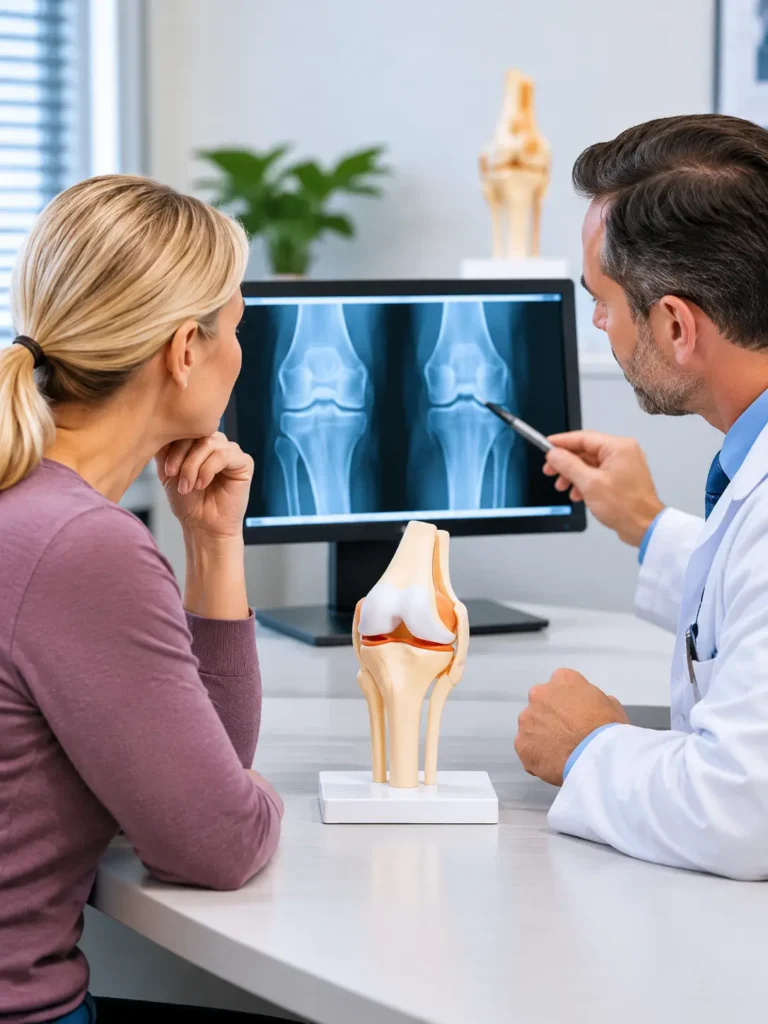
  2. Standing X-rays. Images taken while you stand show how much the space inside the joint has narrowed and whether bone spurs have formed. This helps place your arthritis in one of the four stages.
  3. Extra testing if something doesn’t add up. When symptoms don’t match the X-rays, an MRI, ultrasound, lab work or a small fluid sample from the knee can check for a meniscus tear, gout, infection or rheumatoid arthritis.
  4. A test nerve block for ongoing pain. If pain continues after other treatments, your physician may briefly numb the genicular nerves around the knee. Good short-term relief suggests these nerves carry much of your pain and that genicular RFA may help longer term.
Knee Osteoarthritis

Knee Osteoarthritis Treatment Options

There is no cure for knee osteoarthritis, but there are many ways to ease pain, protect the joint and stay active. We start with the simplest options and add targeted treatments as needed. Many people put off or avoid knee replacement.

Knee Osteoarthritis

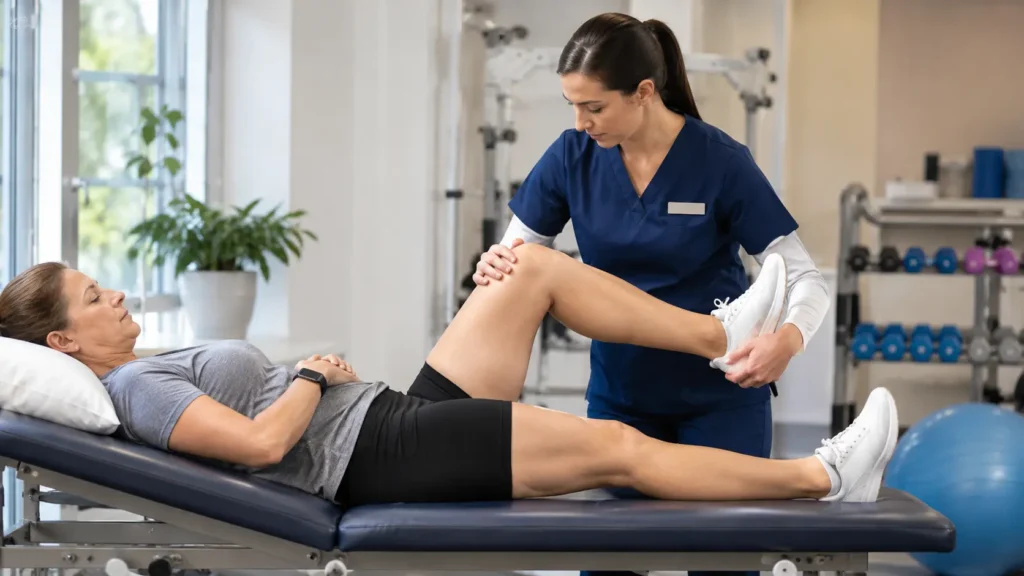
Exercise and physical therapy

Strengthening the thigh and hip muscles, low-impact exercise and stretching take load off the joint. They are the foundation of care at every stage.

Knee Osteoarthritis

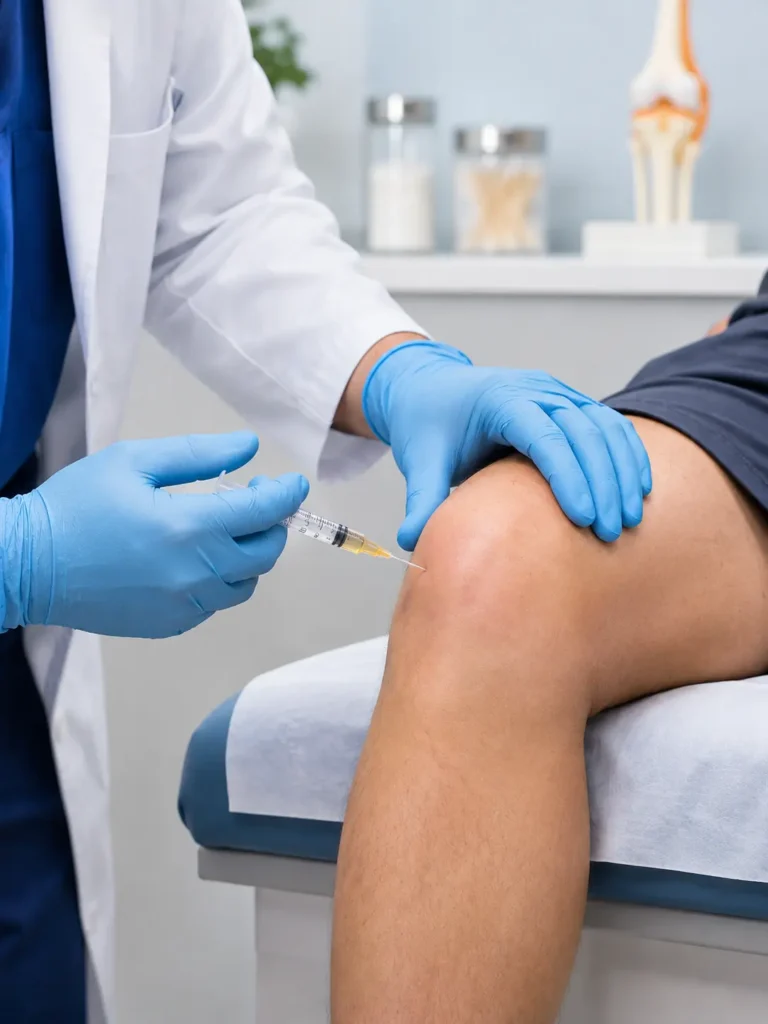
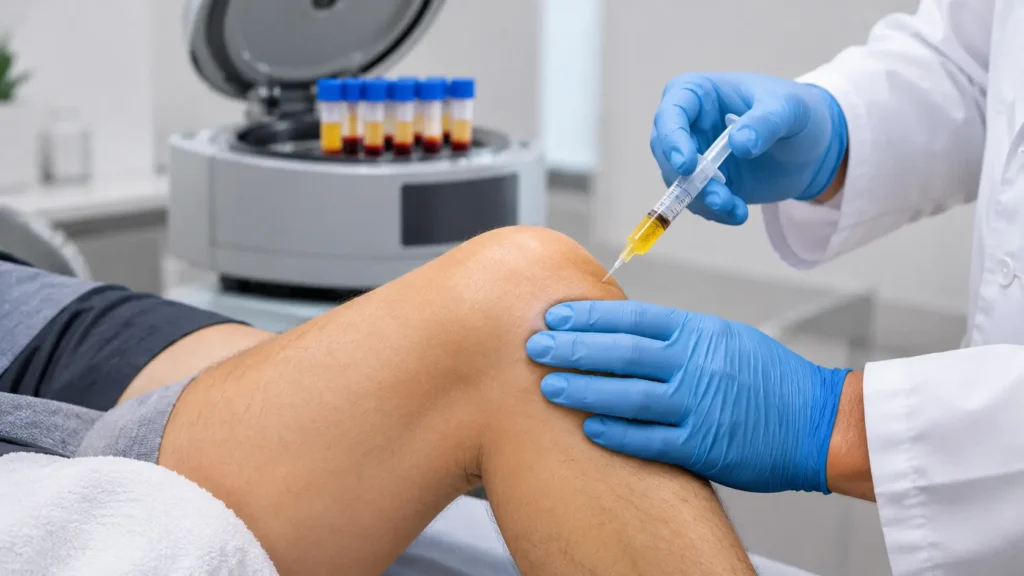
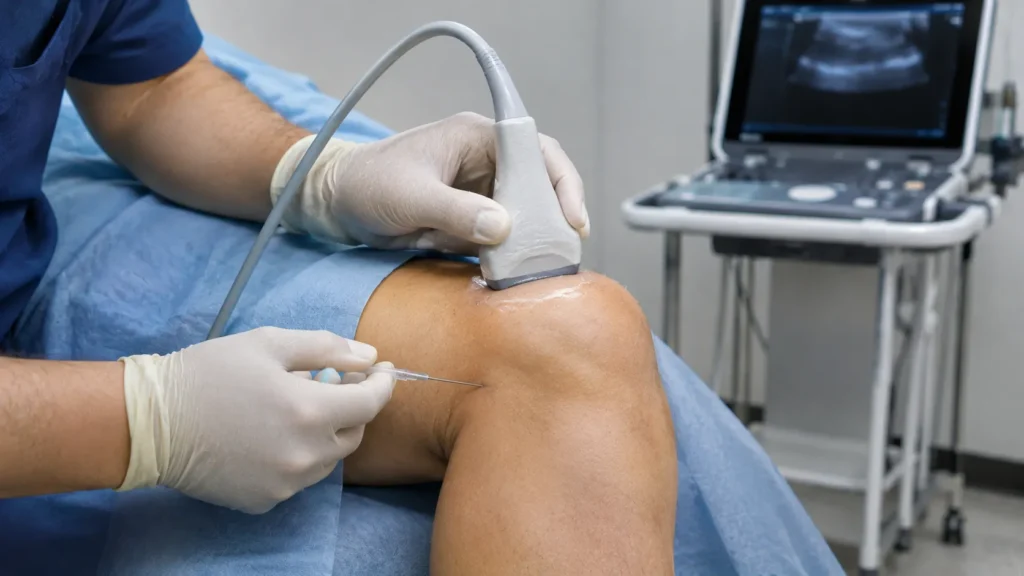
A steroid injection calms a painful flare and can ease pain for weeks to months. Hyaluronic acid (gel) injections add lubrication and may help some people with mild to moderate OA.

Knee Osteoarthritis

Platelet-rich plasma uses healing factors from your own blood. Some studies show it may ease knee OA pain and improve function, especially in earlier stages. Your provider will tell you whether it’s a good fit.

Knee Osteoarthritis

Numbing medicine is placed near the genicular nerves, the small nerves that carry pain signals from the knee. If your pain clearly eases for a few hours, it confirms these nerves are the right target for longer-lasting genicular RFA.

Knee Osteoarthritis

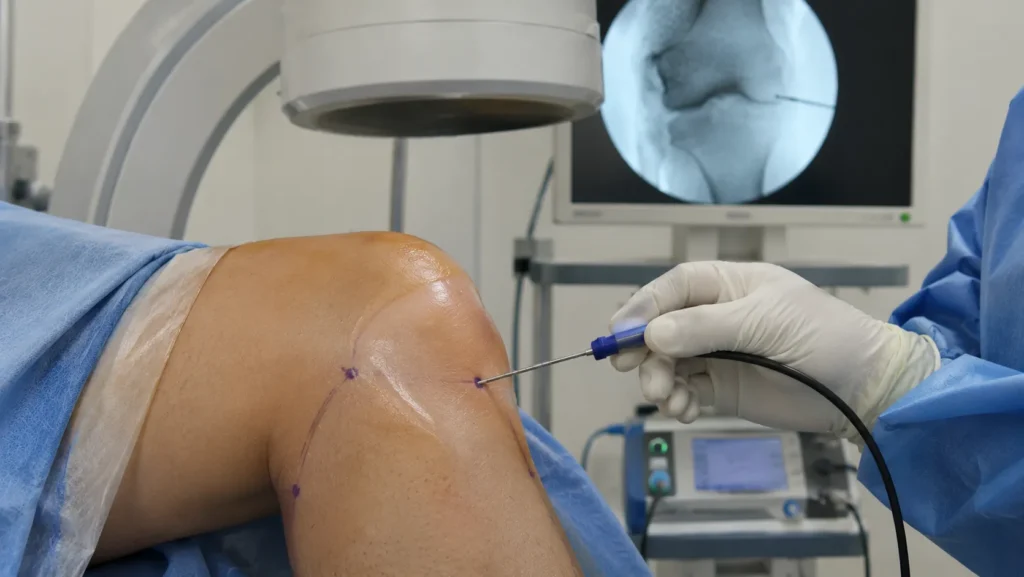
After a successful nerve block, gentle heat is used to quiet the same nerves so they stop sending pain signals. Relief often lasts six months to a year or more and can be repeated, making it a good option when knee replacement isn’t right yet.

Knee Osteoarthritis

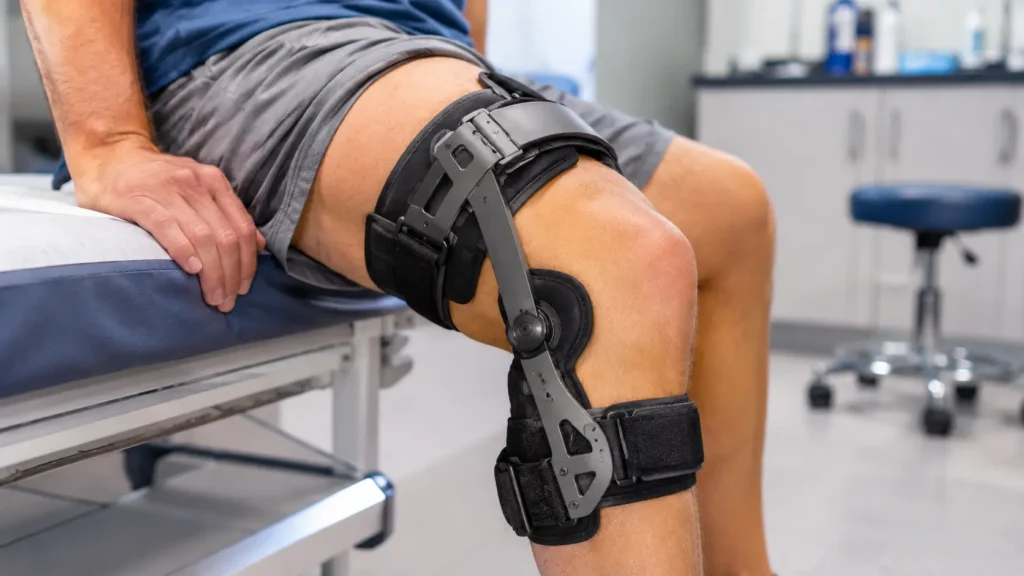
An unloader brace shifts pressure away from the most worn side of the knee, usually the inside, to ease pain when walking and standing. It works best when arthritis mainly affects one side of the joint and pairs well with other treatments.

Your provider recommends treatment based on the source of your pain, your health and your goals. Results vary from person to person.

Bone on Bone Knee Osteoarthritis: What Does It Mean for You?

Hearing that your knee is “bone on bone” can feel scary, but it doesn’t always mean surgery is the next step. It means most of the cartilage has worn away and the joint space is very narrow, which is stage 4 knee osteoarthritis. Pain at this stage often comes from inflamed tissue and the small nerves around the knee, not just the bones rubbing together. That’s why many people still find relief by calming these nerves with treatments like radiofrequency ablation, even with advanced arthritis.

Knee Osteoarthritis

Find a Knee Osteoarthritis Specialist Near You

Knee pain making it hard to walk, climb stairs or get out of a chair? Connect with an MVM Health pain specialist at one of our clinics in Pennsylvania, New Jersey, Ohio, or Arizona.

Pennsylvania

New Jersey

Arizona

Daily Habits That Protect Arthritic Knees

Small daily choices can ease knee arthritis pain and slow its impact on your life.

Knee Osteoarthritis

If pain keeps you from your normal activities, it’s time to see a specialist.

Keep moving, gently. Walking, cycling, swimming and water exercise keep the joint flexible without heavy impact. Short, regular sessions beat long, rare ones.

Build leg strength. Straight-leg raises, mini squats and step-ups strengthen the muscles that support your knee. Stop any move that causes sharp pain.

Lose a little weight. Even modest weight loss reduces the load on your knees with every step. A provider-guided medical weight loss program can help.

Use heat and ice wisely. Heat loosens a stiff knee before activity. Ice calms swelling after a long day or a flare.

Make your home knee-friendly. Use a raised toilet seat, sturdy handrails and a higher chair. Keep items you use often within easy reach.

Use pain relievers carefully. Over-the-counter pills and topical anti-inflammatory gels may help. Follow the label and ask a pharmacist if you take other medicines or have stomach, kidney or heart problems.

Frequently Asked Questions

Can knee osteoarthritis be reversed?

No. Worn cartilage can’t grow back, but treatment can ease pain, reduce stiffness and help you stay active. Many people manage knee OA well for years without surgery.

What does knee osteoarthritis pain feel like?

Most people describe a deep, dull ache that gets worse with activity and better with rest. It often comes with morning stiffness, swelling and a grinding feeling when the knee bends.

What is the best treatment for knee osteoarthritis?

Exercise and weight management help at every stage. When pain persists, options include knee injections, PRP, and a genicular nerve block followed by genicular RFA. The best plan depends on your stage and goals.

Is walking good for knee osteoarthritis?

Yes. Regular walking on flat ground keeps the joint moving and the muscles strong. Start with short walks, wear supportive shoes and slow down if swelling or sharp pain increases.

What should I avoid with knee osteoarthritis?

Limit deep squats, kneeling, running on hard surfaces and jumping, which put heavy load on the joint. Avoid long periods of sitting without moving, which make stiffness worse.

What does "bone on bone" knee mean?

It means most of the cartilage is gone and the bones rub together, which is stage 4 OA. It doesn’t always mean you need surgery right away; genicular RFA and other treatments can still ease pain.

Do gel injections work for knee arthritis?

Hyaluronic acid (gel) injections help some people with mild to moderate knee OA, with relief that can last several months. Results vary, so your provider will tell you whether they suit your knee.

Does PRP work for knee osteoarthritis?

Research suggests PRP may ease pain and improve function for some people with knee OA, especially in earlier stages. It is not covered by many insurance plans, so ask about cost first.

What is the difference between a genicular nerve block and genicular RFA?

A genicular nerve block numbs the knee’s pain nerves for a short time and acts as a test. If it works, genicular RFA uses heat to quiet the same nerves for many months.

How long does genicular RFA last for knee arthritis?

Relief often lasts many months and can last a year or longer. The nerves slowly regrow, so RFA can be repeated if pain returns.

Can I avoid knee replacement surgery?

Many people delay or avoid knee replacement with exercise, weight loss, injections and nerve-targeted treatments. If you’ve been told you need surgery, a second opinion can help you weigh your options.

How do I find a knee arthritis specialist near me?

MVM Health has pain clinics in Pennsylvania, New Jersey, Ohio and Arizona. Request an appointment online or call your nearest clinic, and our team will check your insurance and confirm a time for your evaluation.

Recent blogs

Contact Us
Book Appointment Call 888-628-4785