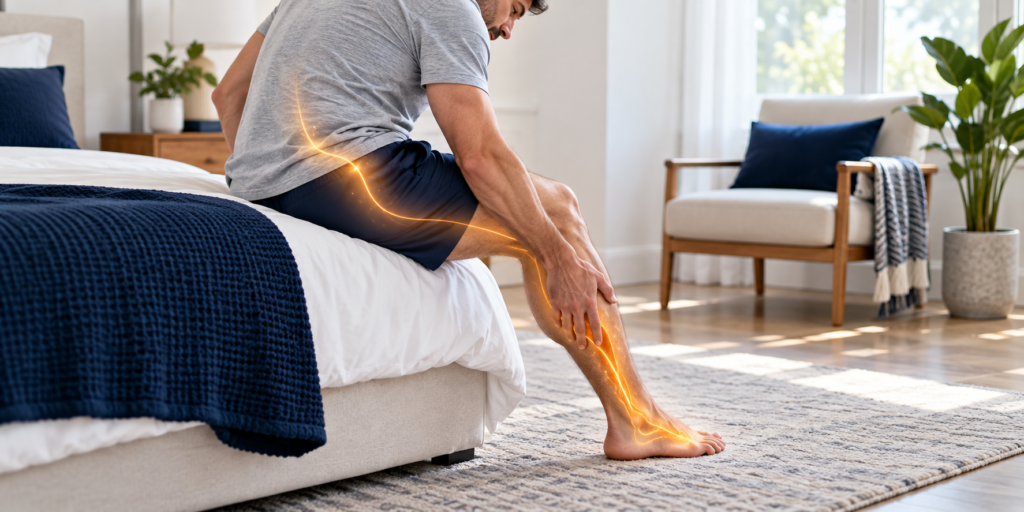

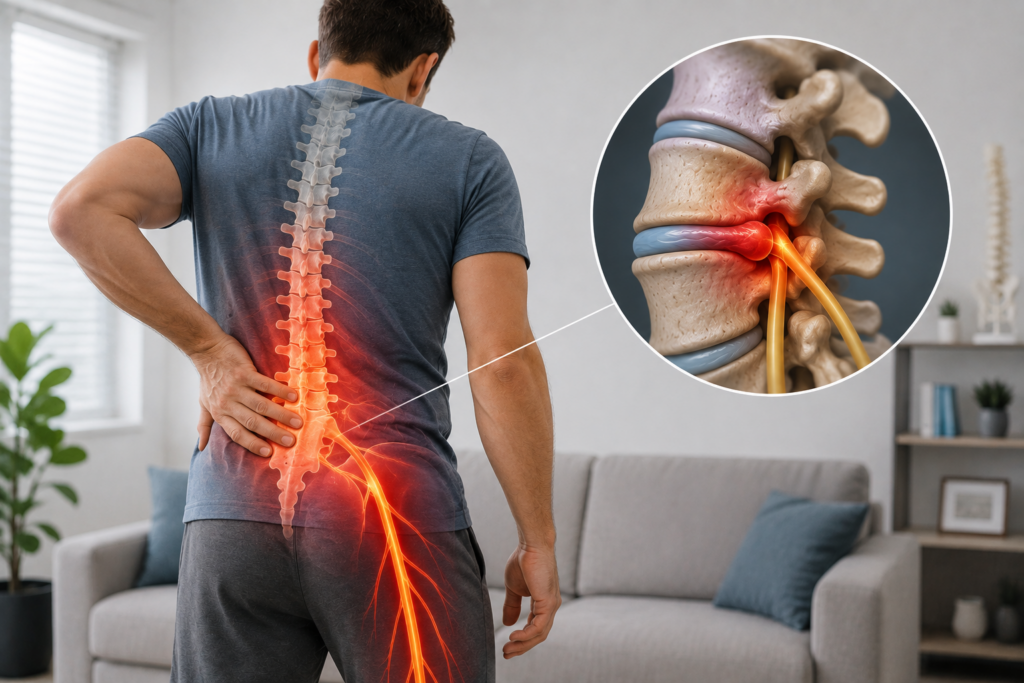
Lumbar radiculopathy is one of the most overlooked reasons behind back pain that shoots into the leg, and it happens when a nerve root in the lower spine gets compressed or irritated, sending pain, numbness, or weakness along the entire path of that nerve. If your back pain reaches past your hip into your thigh, calf, or foot, there’s a good chance a nerve root is involved rather than a muscle. This article breaks down what causes lumbar radiculopathy, how it differs from ordinary back strain, and when it’s time to get it properly evaluated at a clinic MVM Health in Reading, PA.
Most people assume back pain stays in the back. When it starts traveling down the leg with a burning or electric quality, that’s your nervous system sending a very specific signal, and ignoring it usually makes the underlying problem harder to treat later.
What Is Lumbar Radiculopathy?
Lumbar radiculopathy is a pain syndrome caused by compression or irritation of one or more nerve roots in the lower back. According to research published through the National Institutes of Health, most cases result from a herniated disc pressing on a nerve root or from spondylosis, which is age-related degeneration of the spine. The same research notes that the most frequent symptom patients report is paresthesia, along with back pain that radiates into the foot and a positive response during a straight leg raise test performed by a physician.
In simple terms, the nerve roots exiting your lumbar spine control sensation and movement in your hips, thighs, and legs. When one of these roots gets pinched, the pain doesn’t stay confined to your lower back. It follows the nerve’s entire pathway, which is why someone with lumbar radiculopathy might feel more discomfort in their calf than in their spine.
Why the L4-L5 and L5-S1 Levels Matter Most
Two specific areas of the lumbar spine handle most of the lower back’s movement, and they’re also where nerve compression happens most often. Roughly 90 percent of compressive lumbosacral radiculopathies occur at the L4-L5 or L5-S1 levels, and L5 radiculopathy is the single most common type overall. These levels absorb a disproportionate amount of daily mechanical stress, from bending and twisting to prolonged sitting, which explains why they wear down faster than other parts of the spine.
Common Causes of Lumbar Radiculopathy
Several structural issues in the lower spine can compress or irritate a lumbar nerve root:
- Herniated or bulging disc: The soft inner material of a disc pushes outward and presses directly against a nearby nerve root
- Spinal stenosis: Narrowing of the spinal canal, often from age-related changes, reduces space around the nerve roots
- Spondylolisthesis: One vertebra slips forward over another, altering alignment and placing pressure on nearby nerves
- Foraminal narrowing: The small opening where a nerve root exits the spine gradually tightens due to arthritis or disc height loss
- Facet joint hypertrophy: Enlarged spinal joints from wear and tear can crowd the space nerve roots need to pass through
- Repetitive strain or heavy lifting: Occupations or activities involving frequent bending, twisting, or lifting add ongoing stress to the lumbar spine
Who Is More Likely to Develop It
Lumbar radiculopathy is common, and estimates suggest between roughly 10 and 25 percent of the population will experience it at some point. Certain factors increase the likelihood:
- Occupational strain: Jobs requiring repeated lifting, bending, or prolonged sitting place extra load on the lumbar spine
- Age-related degeneration: Disc height loss and joint changes become more common after age 40
- Previous back injury: A history of disc herniation or spinal trauma raises the risk of recurrence
- Sedentary lifestyle combined with weak core muscles: Reduced support around the spine shifts more load onto the discs and joints
- Obesity: Additional body weight increases compressive forces on the lumbar discs over time
Symptoms That Point to a Pinched Nerve in the Lower Back
Lumbar radiculopathy produces a distinct symptom pattern that differs from general low back pain:
- Pain that radiates from the lower back through the buttock and down one leg, often following a clear line
- A burning, electric, or shooting sensation rather than a dull ache
- Numbness or tingling in the thigh, calf, or foot
- Weakness when lifting the foot, walking on the heels, or standing on the toes
- Pain that worsens with sitting, bending forward, or coughing and sneezing
- Reduced or absent reflexes in the affected leg during a physical exam
Muscle strength is often preserved in milder cases because most leg muscles receive nerve supply from more than one nerve root, so weakness typically signals a more significant degree of compression rather than a mild irritation.
Lumbar Radiculopathy vs. Common Back Pain: A Quick Comparison
| Feature | Lumbar Radiculopathy | Mechanical Low Back Pain | Sciatica | Piriformis Syndrome |
| Pain location | Radiates from low back into leg/foot | Stays localized to lower back | Radiates down back of leg to foot | Buttock pain radiating to back of thigh |
| Pain quality | Sharp, electric, burning | Dull, aching, tight | Sharp, burning, shooting | Deep ache, worse with sitting |
| Numbness/tingling | Common, follows dermatomal pattern | Rare | Common along sciatic path | Occasional, less defined pattern |
| Worsens with | Sitting, bending forward, coughing | Movement in general, improves with rest | Prolonged sitting, leg movement | Sitting on hard surfaces, stairs |
| Underlying cause | Nerve root compression (disc, stenosis, spondylosis) | Muscle strain or ligament sprain | Sciatic nerve irritation (often from radiculopathy) | Muscle compressing sciatic nerve near hip |
| Reflex changes | Often present in affected leg | Not present | May be present | Not present |
It’s worth noting that sciatica is often a symptom of lumbar radiculopathy rather than a separate condition. When a lumbar nerve root feeding into the sciatic nerve becomes compressed, the resulting leg pain is commonly labeled sciatica, even though the actual source sits higher up in the spine.
When Should You See a Specialist in Reading, PA?
Not every backache needs immediate medical attention, but certain warning signs call for a prompt evaluation. Consider scheduling an appointment if you notice:
- Back pain radiating into the leg that lasts more than two weeks
- Numbness, tingling, or weakness that persists or spreads
- Difficulty walking on your heels or toes
- Pain that disrupts sleep or worsens when sitting for long periods
- Symptoms that began after a fall, lifting injury, or sudden twisting motion
Seek care immediately if you experience loss of bladder or bowel control, or numbness in the groin or inner thighs, since these can indicate a rare but serious condition called cauda equina syndrome, which requires emergency treatment.
Early evaluation typically means a simpler treatment path. Delaying evaluation may allow symptoms to continue or worsen, especially when significant nerve irritation or weakness is present.
How MVM Health Diagnoses Lumbar Radiculopathy
An accurate diagnosis starts with distinguishing true nerve root compression from general muscular back pain. At MVM Health in Reading, PA the process typically includes:
- Detailed symptom history: Understanding where the pain starts, how far it travels, and what activities worsen or ease it
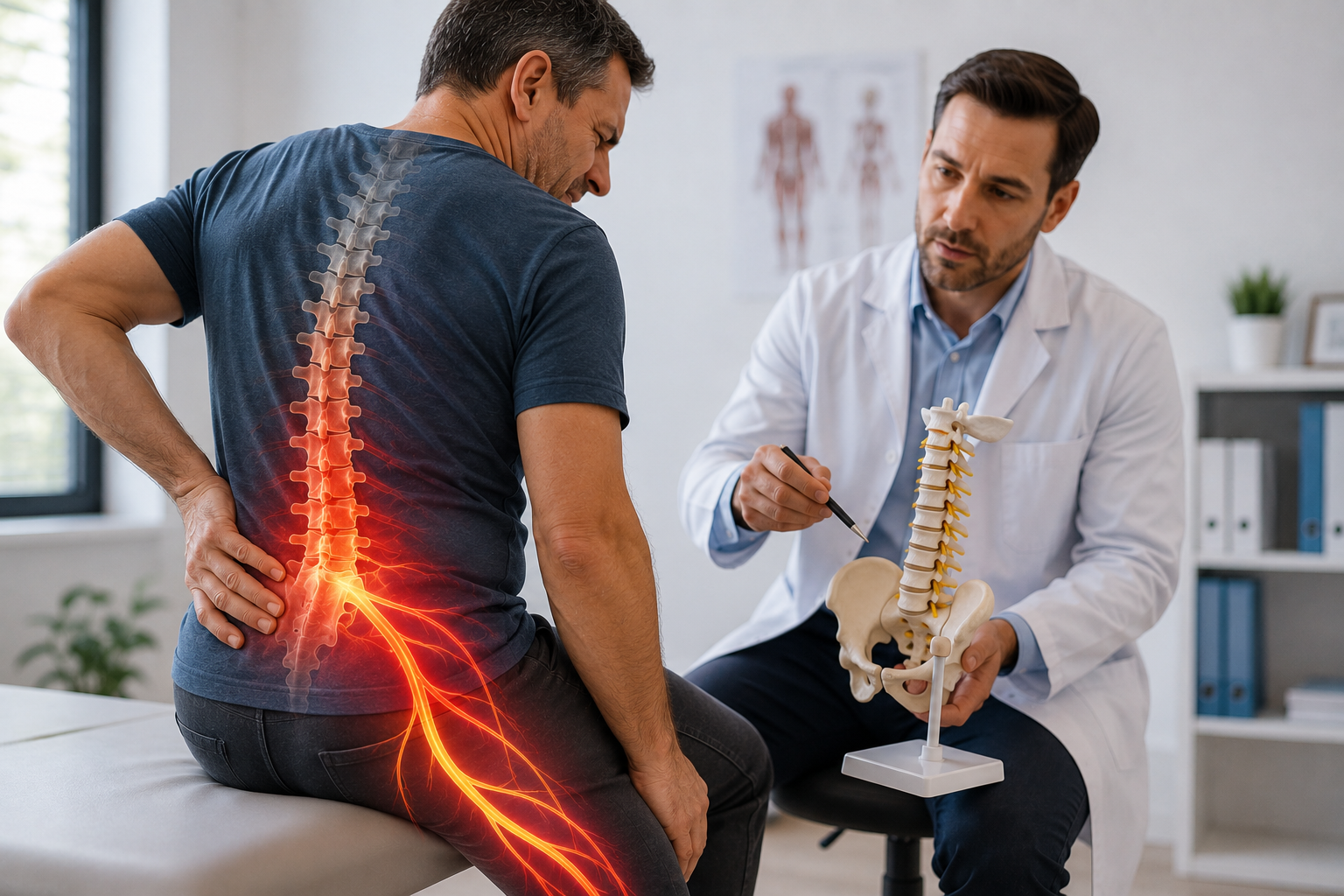
- Physical examination: Testing reflexes, muscle strength, and sensation along the leg, along with a straight leg raise test
- Neurological screening: Checking for patterns consistent with specific nerve root involvement
- Imaging when indicated: X-rays to assess alignment, or MRI when disc herniation, stenosis, or significant nerve compression is suspected
Imaging findings are always interpreted alongside the physical exam, since many adults show age-related disc and joint changes on a scan without ever experiencing pain. You can learn more about how our team evaluates back and leg pain through our chronic pain conditions page, which covers sciatica, herniated discs, and related spinal sources of pain.
What to Expect During Your First Visit
A first visit for suspected lumbar radiculopathy generally follows a clear structure:
- A conversation about your pain history, prior treatments, and how symptoms affect daily activities
- A hands-on physical exam checking reflexes, strength, and leg sensation
- A review of any existing imaging, with additional studies ordered only if needed
- A discussion of treatment options once the source of the pain has been identified
MVM Health’s Reading, PA location works with most major insurance plans and offers full cost transparency before any treatment begins, so patients know what to expect financially before committing to a plan.
Treatment Options for Lumbar Radiculopathy
Once nerve root compression is confirmed, treatment focuses on relieving pressure on the nerve and reducing inflammation. Common approaches include:
- Physical therapy: Exercises that improve core support, spinal alignment, and flexibility to reduce pressure on the affected nerve
- Anti-inflammatory medication: Reducing swelling around the irritated nerve root
- Lumbar epidural steroid injections: Delivering medication directly to the affected nerve for targeted relief
- Activity modification: Adjusting lifting technique, sitting posture, and daily movement patterns that aggravate the nerve
- Minimally invasive interventional procedures: Image-guided techniques that target the exact nerve root involved in more persistent cases
Most cases of lumbosacral radiculopathy are self-limited and improve with conservative, non-surgical treatment. Surgery is typically reserved for cases involving significant weakness, progressive neurological symptoms, or pain that hasn’t responded to several weeks of conservative care. MVM Health’s sciatica treatment page outlines how nerve-related leg pain is addressed with a layered, non-surgical-first approach.
Recovery Timeline and What Influences It
Recovery varies depending on the severity and underlying cause of nerve compression:
- Mild irritation from posture or minor disc bulging often improves within four to eight weeks with conservative treatment
- Herniated disc-related compression may take eight to twelve weeks to settle with physical therapy and activity changes
- Cases involving significant stenosis or long-standing degeneration may require a longer, staged treatment approach
- Consistency with prescribed exercises and posture changes may support recovery and improve function.
Patients who have dealt with related nerve compression elsewhere in the spine may find our guide on lower back pain useful, since it covers a similar diagnostic approach to identifying nerve versus joint-related sources of pain.
Everyday Habits That Reduce Pressure on Lumbar Nerves
While not every case can be prevented, certain daily habits reduce the ongoing load placed on the lumbar spine:
- Using proper lifting technique, bending at the knees rather than the waist
- Taking short movement breaks during long periods of sitting
- Strengthening core and hip muscles to better support the spine
- Maintaining a healthy body weight to reduce compressive load on the discs
- Avoiding prolonged sitting on soft, unsupportive furniture
Finding the Right Care for Back and Leg Pain in Reading
Back pain that travels into the leg, especially with numbness or weakness, may need proper evaluation. MVM Health’s Reading, PA team can identify whether lumbar radiculopathy, muscle strain, or another condition is causing your symptoms.
Get a personalized evaluation and a treatment plan based on the actual cause of your pain.