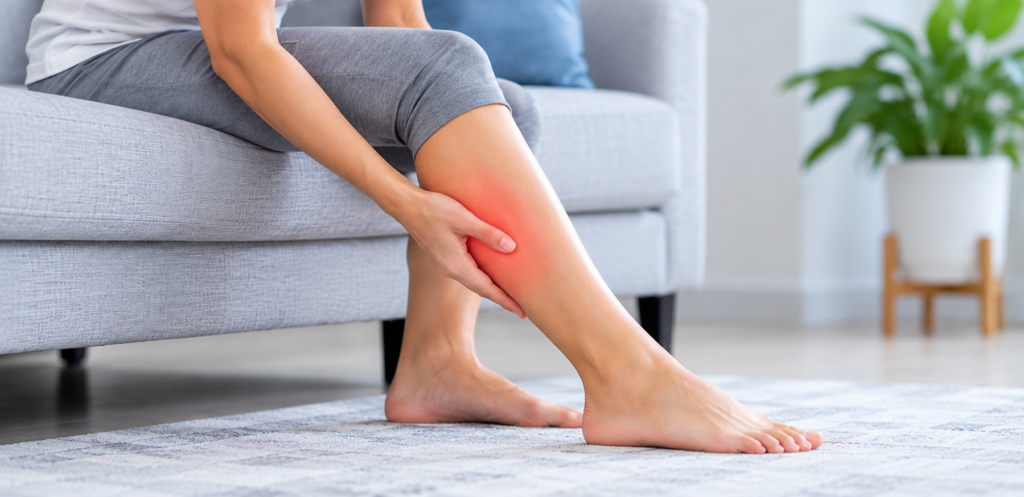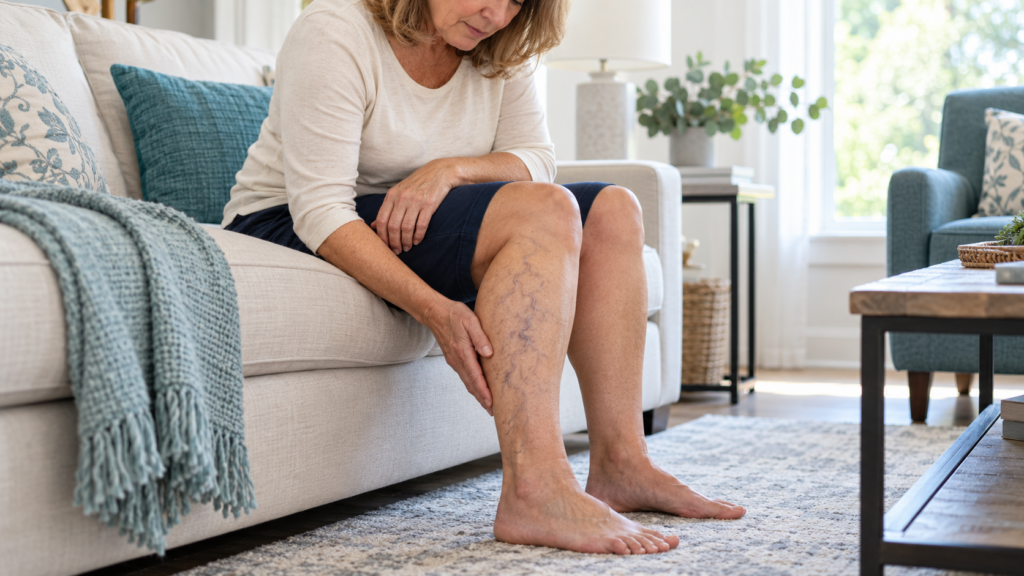


Itchy, dry, or irritated skin around varicose veins is usually caused by venous stasis dermatitis (also called venous eczema) – a reaction that develops when increased pressure in damaged leg veins forces fluid into the surrounding tissue. It is not simply “dry skin,” and moisturizer alone rarely fixes it. The itching typically won’t go away for good until the underlying vein problem is treated. If you’re scratching at the skin near your varicose veins more than you’d like to admit, this guide explains exactly why it’s happening and what actually helps.
The Real Reason Your Skin Itches Near Varicose Veins
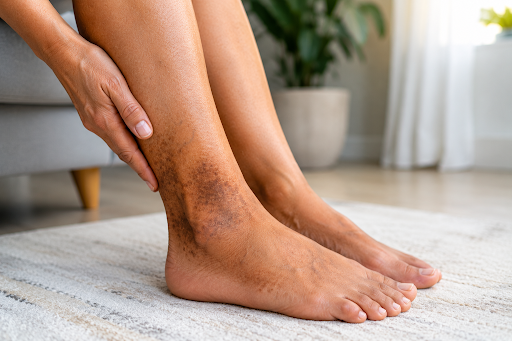
Most people assume itchy skin near a varicose vein is a coincidence, dry winter air, a new lotion, sensitive skin. But when it keeps returning to the same spot near the ankle, the real cause is usually the vein, not the skin. Healthy veins use valves to push blood back toward the heart; when those valves weaken (venous insufficiency), blood pools in the lower leg, raising pressure until fluid and blood cells leak into the surrounding skin. That leakage triggers inflammation, redness, dryness, and itching, and over time, the same process causes the brownish discoloration many people notice near the ankle.
In short: the itch isn’t coming from outside your skin. It’s coming from the pressure building up underneath it.
Venous Eczema (Stasis Dermatitis): The Medical Explanation
The clinical term for this reaction is venous eczema, or stasis dermatitis. It’s one of the most common – and most commonly misdiagnosed – skin symptoms of chronic venous insufficiency (CVI).
Because it looks and feels like ordinary eczema, it’s often treated with steroid creams or heavier moisturizers that offer short-term relief but never address the root cause: poor circulation. That’s why the itching tends to return again and again, sometimes getting worse each time.
Typical signs of venous eczema include:
- Persistent itching, especially in the evening or after standing for long periods
- Dry, flaky, or scaly patches of skin near varicose veins
- Redness or a rash-like appearance around the lower leg and ankle
- Skin that feels tight, warm, or mildly swollen
- Gradual thickening or darkening of the skin over months or years
- Symptoms that worsen with prolonged sitting or standing and improve when legs are elevated
If several of these sound familiar, the itching is very likely tied to how your veins are functioning – not a skincare issue.
Other Reasons the Skin Around Varicose Veins Can Feel Irritated
While venous eczema is the most common explanation, a few related issues can also contribute to itchy or irritated skin near varicose veins:
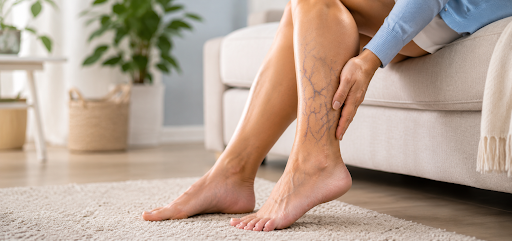
Chronic dryness from poor circulation. Reduced blood flow can affect how well the skin retains moisture, making it more prone to flaking and cracking even without full-blown dermatitis.
Contact irritation. Compression stockings, certain fabrics, or topical products used to manage vein symptoms can sometimes irritate already-sensitive skin, compounding the itch.
Superficial thrombophlebitis. In some cases, itching combined with warmth, tenderness, and a firm, cord-like feeling along the vein can signal inflammation of a surface vein. This is different from stasis dermatitis and is worth having a specialist evaluate directly.
Skin breakdown risk. Persistent scratching of already-fragile, vein-compromised skin can lead to open sores or venous ulcers in more advanced cases, one of the main reasons this symptom shouldn’t be ignored or self-treated indefinitely.
Why Moisturizer Alone Usually Isn’t Enough
It’s a natural first instinct: itchy, dry skin means it needs moisture. And while a good fragrance-free moisturizer can ease surface dryness temporarily, it doesn’t lower the pressure inside the vein that’s causing the problem in the first place.
Think of it this way: moisturizer treats the symptom on the surface, while the actual cause is happening underneath, inside the vein. That’s why so many people find their itching keeps coming back within weeks, no matter how consistent they are with lotion.
Real, lasting relief comes from addressing the venous insufficiency driving the inflammation.
Tired of Itchy Skin Around Varicose Veins?
Recurring itching, dryness, or irritation may be caused by an underlying vein condition—not just dry skin. MVM Health can identify the cause and recommend the right treatment for lasting relief.
What Actually Helps: From Self-Care to Professional Treatment
At-home steps that can ease symptoms
- Elevate your legs above heart level for 15–20 minutes several times a day to reduce venous pressure
- Wear properly fitted compression stockings, which help push blood back up the leg and reduce fluid buildup
- Avoid scratching, which can break the skin and increase the risk of infection or ulceration
- Use fragrance-free, gentle moisturizers to manage surface dryness without adding irritation
- Stay active with regular walking, which supports healthy circulation in the calf muscles
These steps can meaningfully reduce discomfort, but they manage symptoms rather than resolve the underlying vein disease.
When it’s time to consider varicose vein treatment
If itching, dryness, or skin discoloration keeps returning despite consistent self-care, it’s a signal that the vein disease behind it has progressed to the point where varicose vein treatment is worth discussing with a specialist. Modern varicose vein treatment options are minimally invasive, performed in-office, and directly address the faulty vein causing the pressure buildup – which is the only way to stop the itch-inflammation cycle at its source rather than continuing to manage it symptom by symptom.
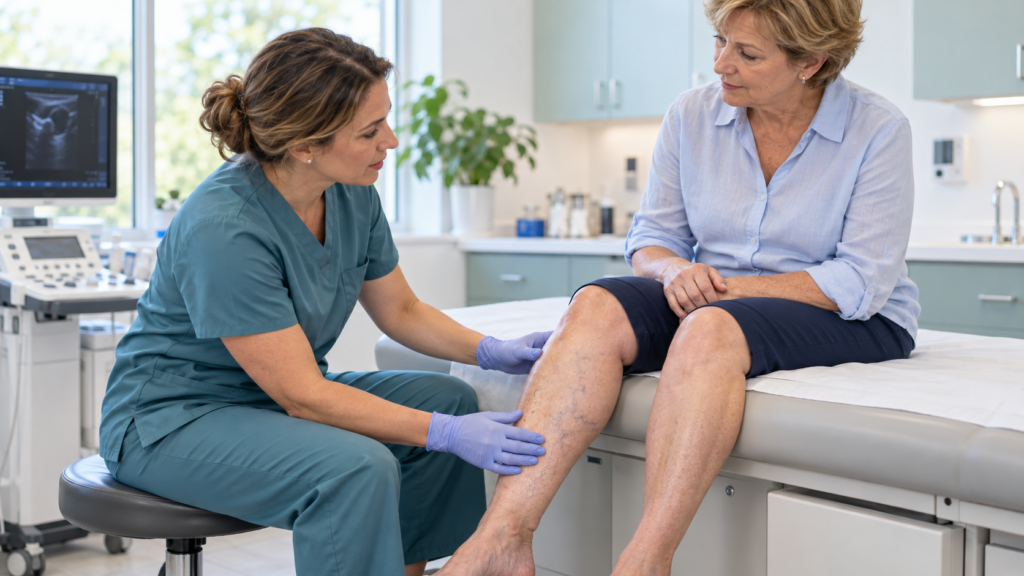
A qualified varicose vein doctor near me is often the first step people take once they realize skincare alone isn’t solving the problem. At your evaluation, a specialist will typically use ultrasound imaging to identify exactly which vein is malfunctioning and recommend the most appropriate option – whether that’s sclerotherapy, laser, radiofrequency ablation, or another minimally invasive varicose vein removal near me procedure suited to your specific veins.
Preventing Flare-Ups While You Decide on Treatment
Even if you’re not ready to schedule varicose vein treatment right away, there are steps that can reduce how often the itching and dryness flare up while you weigh your options.
Rotate your position throughout the day. Standing or sitting in the same position for hours increases venous pressure. If your job keeps you on your feet or at a desk most of the day, try to shift position, flex your ankles, or take short walking breaks every hour.
Watch for triggers you can control. Hot showers, harsh soaps, and long periods in tight non-breathable footwear can all make already-irritated skin feel worse. Lukewarm water and breathable fabrics tend to be gentler on skin affected by venous eczema.
Keep a simple symptom log. Noting when the itching worsens – after standing all day, during warmer weather, after a long flight – can help your provider connect the pattern to venous pressure changes and rule out unrelated causes.
Don’t wait for the skin to break down. The most important preventive step is recognizing that recurring itching and dryness near a varicose vein is a signal, not just a nuisance. Addressing it earlier, before the skin thickens or ulcerates, generally means a simpler, less invasive path to relief.