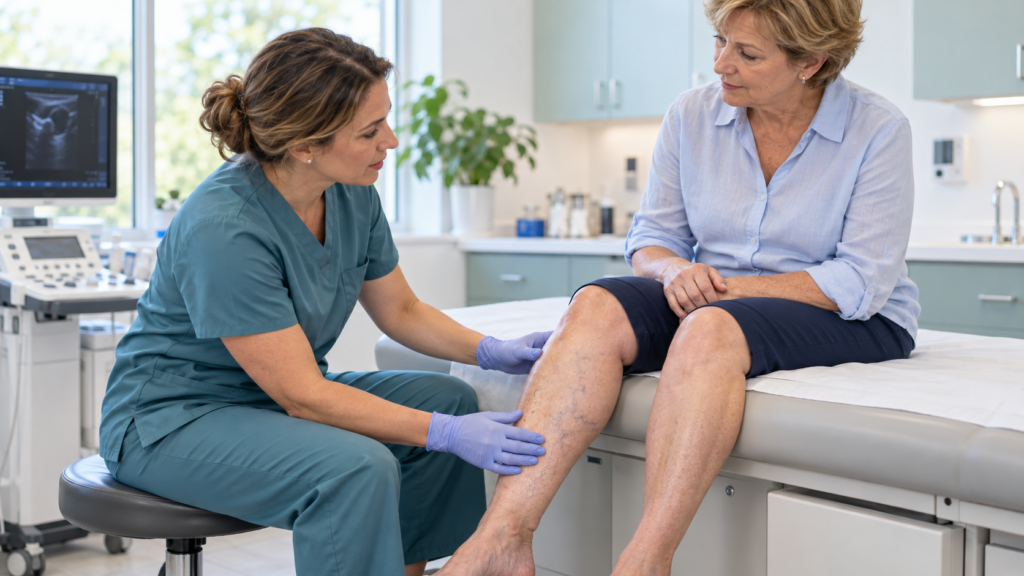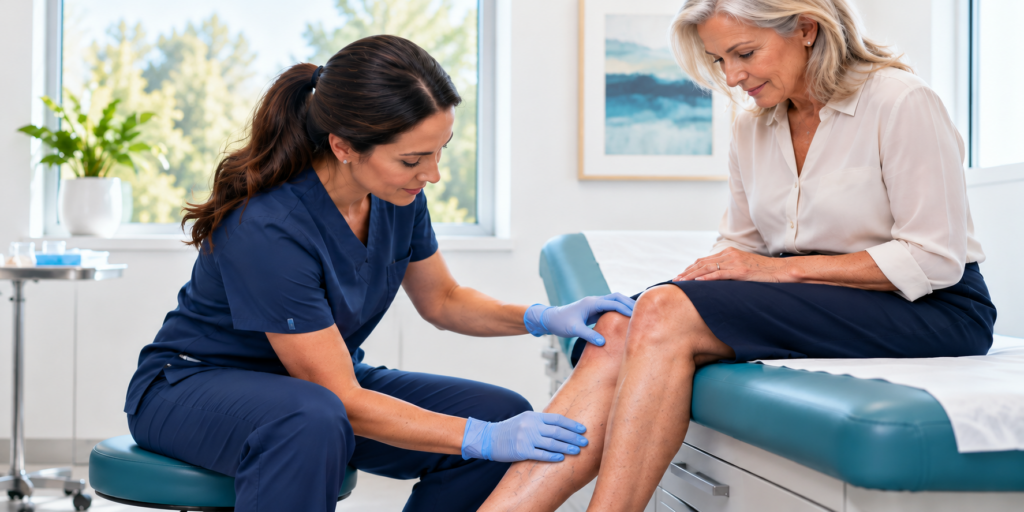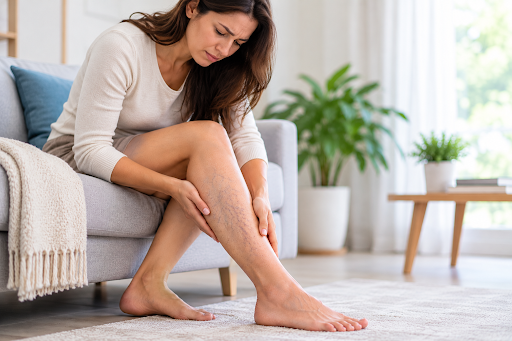

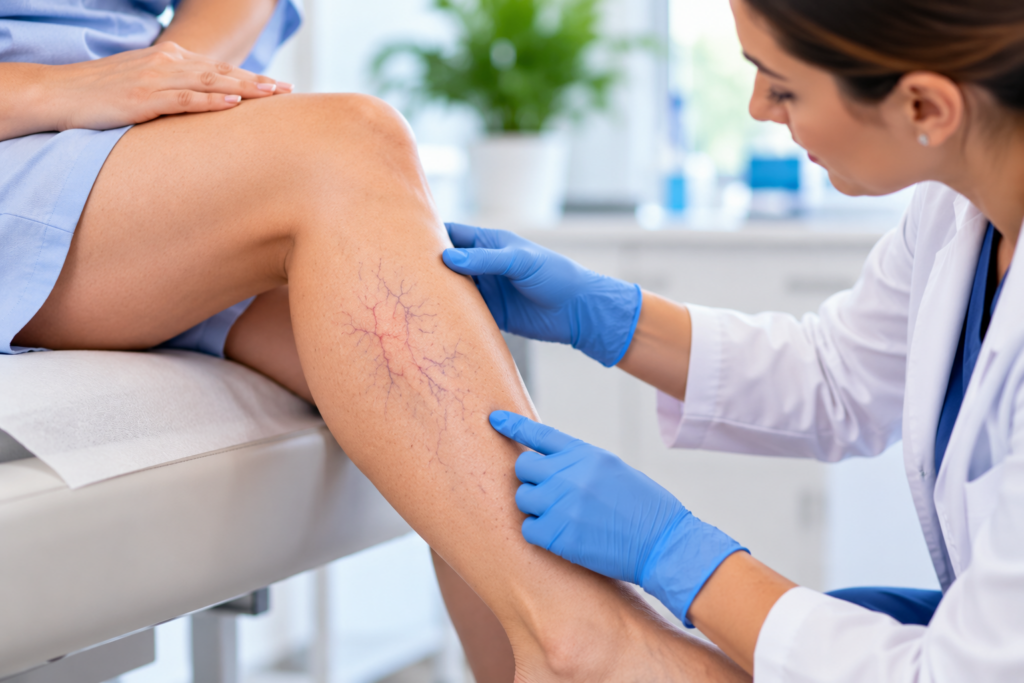
Spider veins are small red, blue, or purple blood vessels that appear close to the skin, often forming thin web-like or branching patterns. They commonly develop on the legs and, for many people, are primarily a visible concern rather than a source of physical discomfort.
If you notice spider veins in Scotch Plains along with aching, burning, itching, heaviness, cramping, or tired legs, however, those symptoms are worth discussing with a healthcare provider. The visible vessels themselves may not be causing the discomfort, and an evaluation can help determine whether another vein condition is contributing.
What Do Spider Veins Look Like?
Spider veins are generally smaller and flatter than varicose veins. They develop close to the skin’s surface and may appear individually or in clusters.
They often look like fine red, blue, or purple lines that branch outward in patterns resembling a spider web or tree branches. Some clusters may be small and faint, while others can cover a larger area and become more noticeable.
On the legs, these visible leg veins commonly appear around the thighs, calves, ankles, or behind the knees. Unlike varicose veins, spider veins generally do not become large, raised, or rope-like.
Their appearance alone does not necessarily mean that a circulation problem is present.
Do Spider Veins Actually Cause Symptoms?
For most people, spider veins themselves do not cause symptoms. You may notice them visually without experiencing pain or changes in how your legs feel.
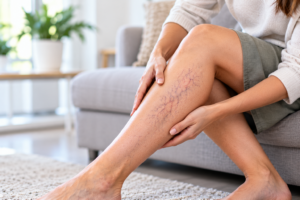
The important distinction is what happens when visible spider veins occur alongside other symptoms. Some people may experience burning, itching, aching, cramping, tiredness, or heaviness in their legs. These symptoms should not automatically be attributed to the spider veins themselves.
According to the Cleveland Clinic, spider veins usually do not cause symptoms on their own. However, they may occur alongside varicose veins or other blood-flow problems, which can be associated with burning, cramping, itching, pain, or tired legs.
This distinction matters because addressing the appearance of a surface vein does not necessarily address another vein condition that could be contributing to discomfort.
Why Do Spider Veins Develop?
Spider veins form when small blood vessels close to the skin become damaged or enlarged. There is not always one identifiable reason why they develop.
Family history can play a role, and spider veins may become more common with age. Pregnancy and hormonal changes can also influence their development. Spending long periods sitting or standing may contribute as well.
Other factors may include excess body weight, previous injury or trauma to the area, and sun exposure, particularly when spider veins develop on the face.
For additional information about the condition, visit MVM Health’s Spider Veins resource.
Concerned About Spider Veins or Changes in Your Legs?
Visible spider veins are often harmless, but persistent aching, burning, heaviness, cramping, or other leg discomfort deserves a closer look. A Scotch Plains vein specialist can evaluate your symptoms and determine whether another vein condition may be contributing.
When Should Spider Veins Be Evaluated?
If spider veins only affect the appearance of your legs and you have no other symptoms, an evaluation may primarily involve discussing the visible veins and your concerns.
An evaluation becomes more important when spider veins appear alongside persistent discomfort or other changes. Recurring aching, burning, heaviness, swelling, cramping, tenderness, or skin changes can be reasons to discuss your symptoms with a healthcare provider.
Symptoms that repeatedly become worse after prolonged standing may also be worth mentioning.
An evaluation does not automatically mean treatment will be necessary. Its purpose is to understand your symptoms and determine whether the visible vessels are an isolated surface concern or whether another vein condition may need to be considered.
Spider Veins vs. Varicose Veins: What’s the Difference?
Spider veins and varicose veins are both visible vein conditions, but they differ in their appearance, size, and the symptoms that may occur with them.
| Feature | Spider Veins | Varicose Veins |
| Appearance | Fine, web-like or branching lines | Enlarged, twisted or rope-like veins |
| Color | Red, blue or purple | Usually blue or purple |
| Size | Small and close to the skin | Larger and more prominent |
| Raised or Flat | Usually flat | May bulge above the skin |
| Symptoms | Usually do not cause symptoms on their own | May occur with aching, heaviness, swelling or itching |
| Common Areas | Thighs, calves, ankles and behind the knees | Most commonly develop in the legs |
A person can have both spider veins and varicose veins at the same time. If visible veins are accompanied by persistent aching, swelling, heaviness, or other leg discomfort, an evaluation can help determine whether an underlying vein problem may also be present.
Warning Signs: When Should You Seek Care?
Most spider veins do not require urgent medical attention. However, certain symptoms should not simply be attributed to visible surface veins.
Seek prompt medical care if you develop:
- Sudden or significant swelling in one leg
- New or worsening leg pain
- Redness, warmth, or significant tenderness
- A persistent open sore or wound
- Significant changes in skin color
- Unexplained bleeding from a vein
Sudden shortness of breath, chest pain, fainting, or coughing up blood requires immediate medical attention. These symptoms should not be treated as routine spider vein symptoms.
Vein Care in Scotch Plains and Nearby Communities
MVM Health provides vein evaluation and treatment services at its Scotch Plains, NJ location, located at 1949 Westfield Ave, Scotch Plains, NJ 07076.
The location also provides convenient access for patients from nearby areas including Westfield, Fanwood, Cranford, Plainfield, Clark, and surrounding communities.
If your spider veins occur alongside persistent leg discomfort, swelling, heaviness, or other changes, an evaluation can help clarify whether the visible vessels are primarily a surface concern or whether another vein condition may be contributing.