
If you’ve been putting off booking a vein consultation in Powell, OH because you’re not sure what actually happens once you walk in the door, you’re not alone. Most patients who search “vein doctor near me” have the same short list of questions: Will it hurt? Do I need a referral? Will insurance cover it? Am I even a candidate for treatment, or is this just cosmetic?
This guide walks through a first vein appointment at MVM Health in Powell, OH, step by step, so you know exactly what to expect before you schedule.
Step 1: Booking Your Vein Consultation
Scheduling starts with a short intake, either online or by phone, where you’ll describe your symptoms things like visible varicose veins, spider veins, leg swelling, aching, heaviness, or skin changes around the ankles. This isn’t a diagnosis; it’s just enough information for the front desk to get you in front of the right provider.
If you have insurance, it’s worth having your card and referral information (if your plan requires one) ready at this stage. Not every plan requires a referral for a vein evaluation, but some do, so confirming ahead of time can save you a callback later.
Step 2: The Initial Evaluation
Your first visit is an evaluation, not a treatment session. A provider will ask about:
- When your symptoms started and how they’ve changed
- Whether you have a family history of vein disease
- Occupations or habits that involve long periods of standing or sitting
- Any prior treatments, including compression stockings or previous procedures elsewhere
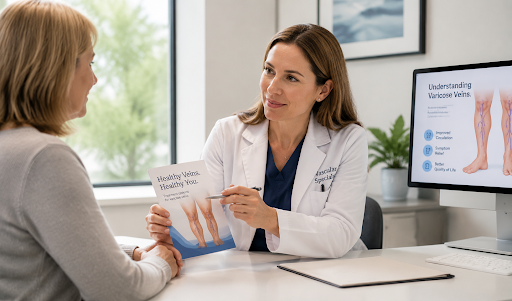
This conversation matters more than people expect. Vein disease has a range of causes, and two patients with similar-looking varicose veins can have very different underlying issues which is why a real evaluation, not a quick glance, comes first.
Step 3: The Physical Exam
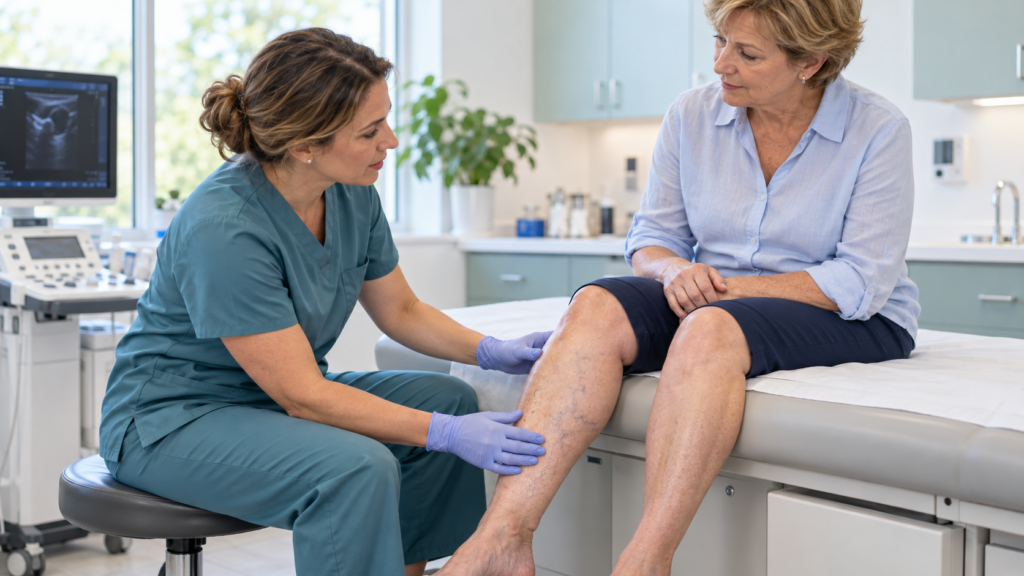
Next comes a physical exam of your legs, typically while standing, since gravity affects how veins appear and function. Your provider will look for visible varicose veins, spider veins, swelling, skin discoloration, and areas of tenderness.
Step 4: Diagnostic Ultrasound (If Recommended)
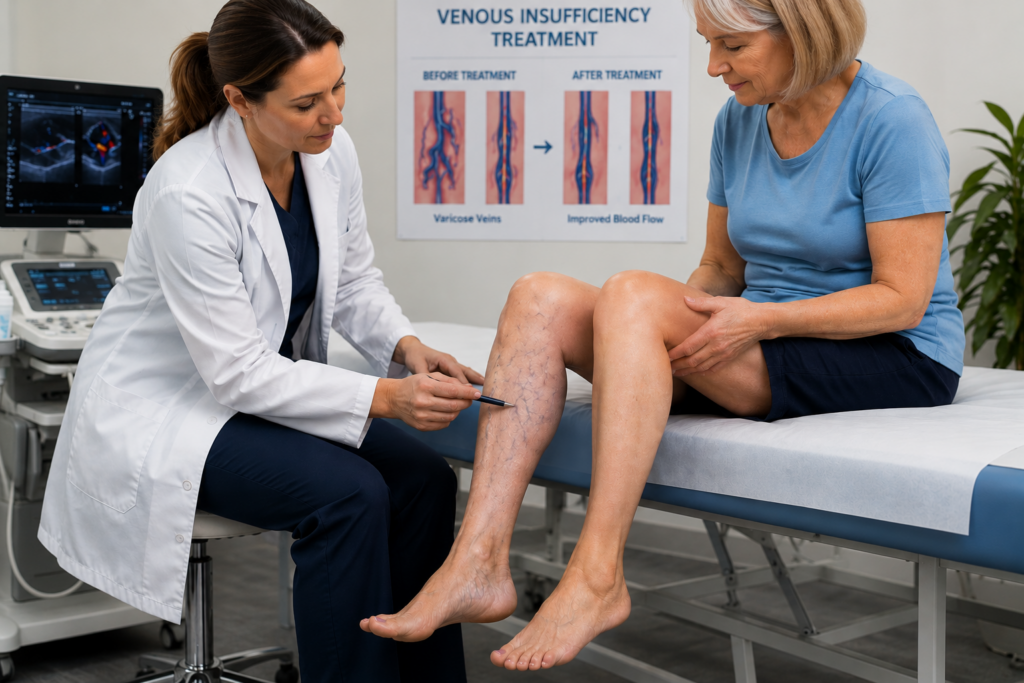
For many patients, the next step is a duplex ultrasound a painless, non-invasive scan that shows how blood is flowing through your veins and whether any valves aren’t closing properly (a common cause of venous insufficiency). Not every patient needs imaging at the first visit; your provider will explain whether it’s appropriate for your specific symptoms before moving forward. If you’re unsure whether ultrasound is available on-site, it’s a fair question to ask when you schedule.
Step 5: Discussing What the Evaluation Found
Once your provider has your history, exam findings, and (if applicable) ultrasound results, they’ll walk you through what those findings actually mean. This is the point where many patients get the answer they’ve been waiting for: whether this is a cosmetic concern, a medical one, or both and it’s often the deciding factor for whether insurance is likely to apply.
Step 6: Reviewing Treatment Options
If treatment is appropriate, your provider will explain the realistic range of options based on your specific case which may include conservative measures like compression therapy, or minimally invasive procedures. No two treatment plans look identical, since they depend on which veins are involved, how advanced the condition is, and your personal goals.
If you want a deeper technical comparison of the options themselves radiofrequency ablation, VenaSeal, and sclerotherapy each work differently and suit different situations our guide, Vein Treatments: Comparing RFA, VenaSeal, Sclerotherapy & More, breaks down how each one works, recovery expectations, and who tends to be a candidate for each.
Step 7: Insurance and Cost Conversation
Before anything is scheduled, our team can help verify your insurance benefits and explain what’s typically covered versus what may be out-of-pocket, particularly for treatments that lean cosmetic. Coverage varies by plan and by diagnosis, so this conversation happens after your evaluation, not before since coverage often depends on documented medical necessity.
Step 8: Scheduling Next Steps
If you and your provider agree on a treatment plan, the next step is simply scheduling it. If your evaluation doesn’t point to a medical need for treatment, that’s a legitimate outcome too not every visible vein requires intervention, and your provider will tell you honestly if watching and waiting is the more appropriate path.
Get the Right Vein Diagnosis Before Choosing Treatment
Not sure whether you have spider veins or varicose veins? MVM Health can evaluate your visible veins, symptoms, and circulation to determine which treatment options may be appropriate. Schedule a vein evaluation and take the next step toward healthier, more comfortable legs.
Ready to Schedule Your Vein Consultation in Powell, OH?
If leg swelling, visible veins, or aching legs have been on your mind, the first step is simply getting evaluated not committing to treatment. You can schedule your vein consultation in Powell, OH online, or learn more about our Powell location and vein treatment services in Powell before you book.
Frequently Asked Questions
How long does a first vein consultation in Powell usually take?
+
Do I need a referral to see a vein specialist in Powell, OH?
+
Will I have an ultrasound during my first vein appointment?
+
How will I know whether my varicose veins are medical or cosmetic?
+
Does a vein consultation mean I have to get treatment?
+