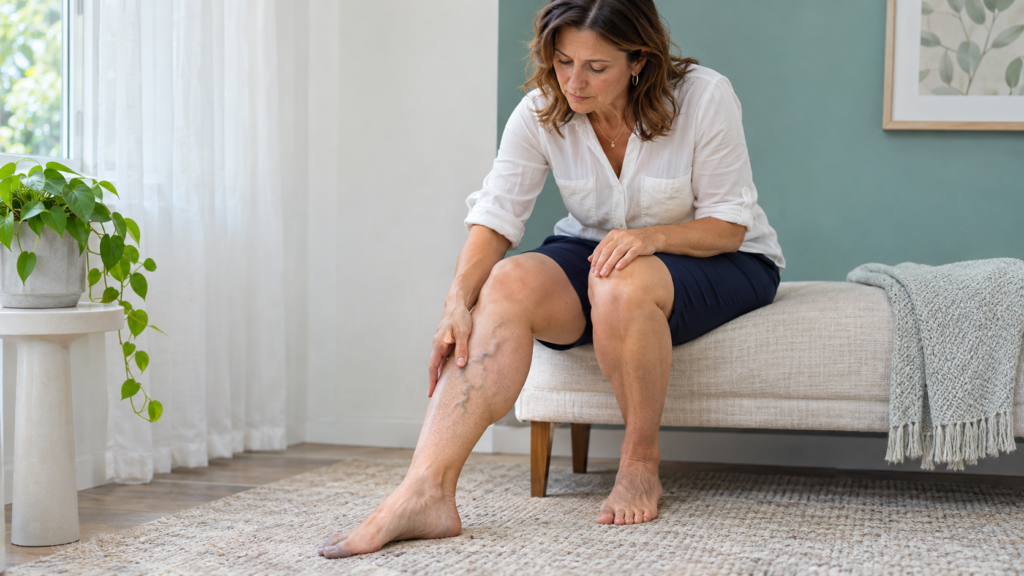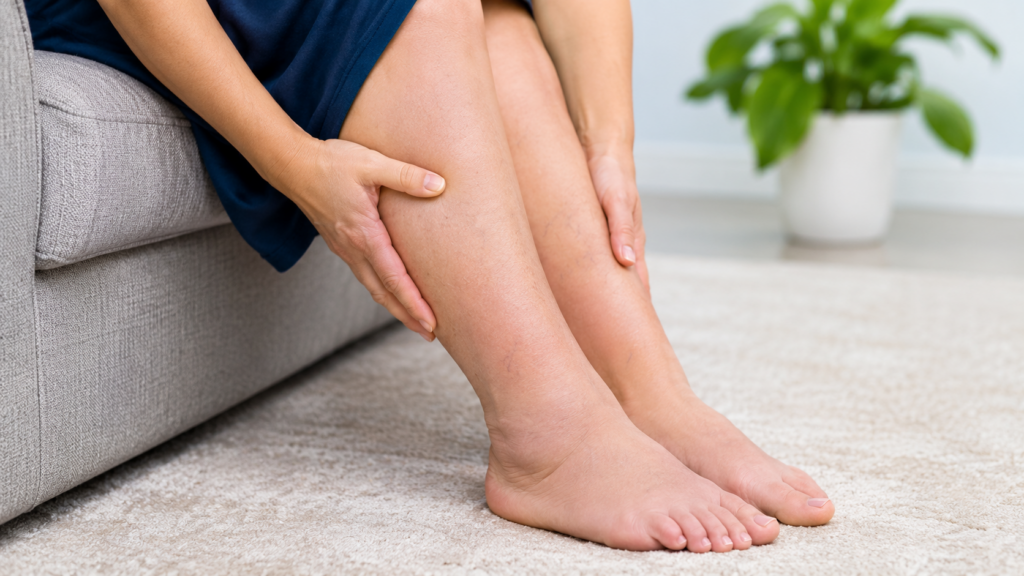

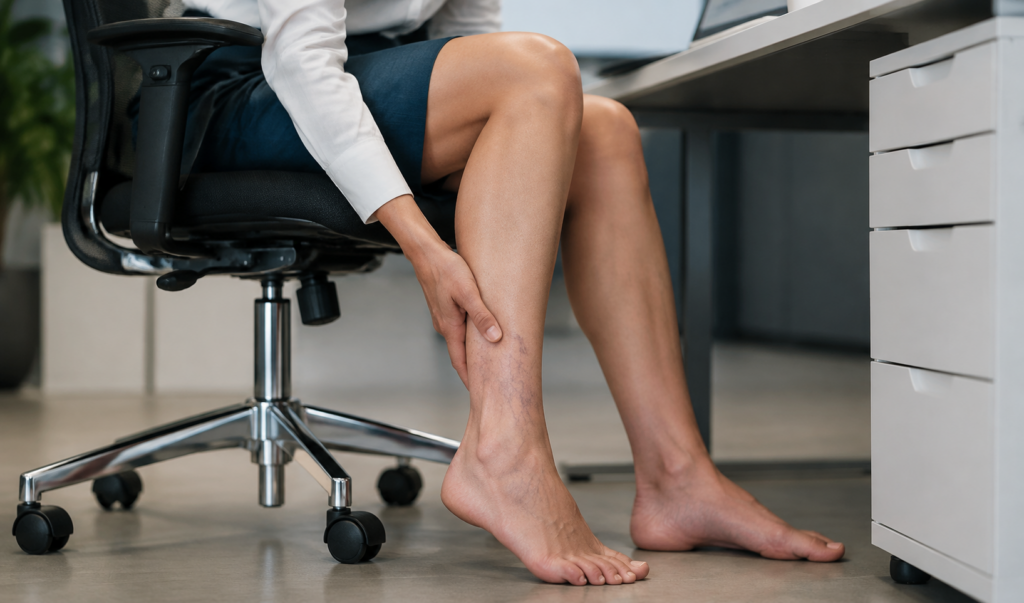
Most people don’t wake up one morning with a vein problem. It builds quietly. Your ankles look a little puffy by evening. Your legs feel heavier on the drive home from work. You notice a dull ache after standing at the counter or walking the aisles for a few hours, and you tell yourself it’s age, shoes, or a long week.
Sometimes it is. But when those signs keep showing up, they can point to something that has a name: chronic venous insufficiency, often shortened to CVI. If you’re in the Poconos and searching for information about chronic venous insufficiency in East Stroudsburg, PA, this guide explains what CVI is, what your symptoms may be telling you, what tends to cause it, and when a vein evaluation in East Stroudsburg is a sensible next step rather than something to keep putting off.
What Is Chronic Venous Insufficiency?
Your leg veins have a hard job. They carry blood back up toward the heart, and they have to do it against gravity. To make that possible, many of your veins contain tiny one-way valves. Each time the surrounding muscles squeeze, blood moves upward, and the valves close behind it so blood doesn’t slip back down.
Chronic venous insufficiency describes a long-standing problem with that process. When the valves become weak or damaged, or when the vein walls lose their ability to hold their shape, some blood can leak backward and collect in the lower leg. This pooling raises the pressure inside the veins, and over time that added pressure can produce the symptoms people notice: swelling, heaviness, aching, and changes to the skin.
A few points are worth keeping in mind:
- CVI is a functional problem, meaning it describes how the veins are working, not just how they look. Varicose veins are one visible sign of venous insufficiency, but you can have CVI without prominent varicose veins, and you can have varicose veins with relatively few symptoms.
- The word “chronic” means the condition tends to be ongoing rather than a one-time event. Symptoms can come and go, but the underlying valve issue doesn’t typically correct itself.
- CVI exists on a spectrum. Some people have mild symptoms for years with little change. Others notice gradual progression. Where you fall can only be determined by an evaluation, not by a symptom list.
What Your Symptoms May Be Telling You
Because CVI develops slowly, the earliest signs are easy to dismiss. Here is what patients commonly describe, and what each symptom may reflect.
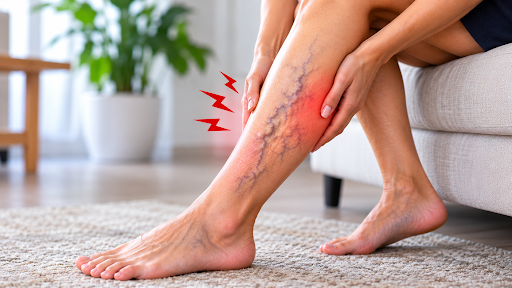
Swelling in the ankles and lower legs. Swelling that builds over the course of the day and improves after a night with your legs elevated is one of the more characteristic patterns. It often reflects fluid being pushed out of veins under higher-than-normal pressure. That said, swelling has many possible causes, including heart, kidney, and medication-related issues, which is exactly why it shouldn’t be assumed to be a vein problem without an exam.
Heaviness, tiredness, or aching. Many people describe their legs as feeling “full,” “weighted,” or tired well beyond what their activity level would explain. This is often worse after prolonged standing or sitting and may ease with walking or elevation.
Cramping, especially at night. Nighttime leg cramps are common and have many possible causes. In some patients they accompany venous symptoms, but they’re not specific to veins, so they’re one piece of the picture rather than a diagnosis on their own.
Restless or uncomfortable legs. An urge to move your legs, particularly in the evening, can occur alongside venous symptoms in some people. Restless legs have separate possible causes too, so this is another symptom where an evaluation sorts out what’s actually going on.
Itching or irritated skin. Pooled blood and increased pressure can irritate the skin of the lower leg, sometimes causing persistent itching, dryness, or a rash-like appearance.
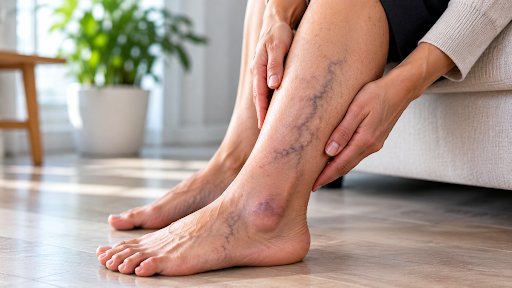
Skin color and texture changes. Over time, some patients notice a brownish or reddish discoloration around the ankles, or skin that feels tight, thickened, or leathery. These changes are generally associated with longer-standing or more advanced venous disease and are a good reason not to keep waiting.
Open sores near the ankle. In more advanced cases, venous ulcers can form, typically on the inner part of the lower leg near the ankle. These are slow to heal and need prompt medical attention.
Visible veins. Varicose veins and spider veins may or may not be present. Their absence doesn’t rule out CVI, and their presence doesn’t confirm it.
The key takeaway: none of these symptoms alone proves chronic venous insufficiency. Together, and over time, they form a pattern that a clinician can evaluate.
Understanding the Stages of Venous Disease
Clinicians often describe venous disease along a spectrum, moving from no visible signs through to advanced skin changes. A commonly used framework is the CEAP classification, which groups findings from mild to more advanced.
In plain terms, that spectrum looks something like this:
- Symptoms without visible signs. Legs feel heavy or achy, but nothing obvious shows on the surface.
- Spider veins or small visible veins. Fine, web-like veins appear near the skin’s surface.
- Varicose veins. Larger, bulging, twisted veins become visible.
- Swelling (edema). Fluid collects in the lower leg and ankle.
- Skin changes. Discoloration, dryness, thickening, or eczema-like irritation develop.
- Healed or active ulcers. Open sores form or have previously healed.
Not everyone moves through all of these, and many people stay at an earlier stage indefinitely. Understanding where you may sit on this spectrum is one of the main purposes of an evaluation, because it helps you and your provider talk concretely about what, if anything, makes sense to do next. Our broader guide to venous insufficiency: symptoms, stages and treatment walks through this in more depth.
What Causes Chronic Venous Insufficiency?
There isn’t one single cause. Several factors can contribute to valve and vein wall problems, and they often overlap.
Genetics and family history. If your parents or siblings have vein problems, you may be more likely to develop them too. Having a family history doesn’t guarantee you’ll be affected.
Age. Vein walls and valves can lose elasticity over the years, which makes venous problems more common with advancing age.
Prolonged standing or sitting. Jobs and routines that keep you in one position for hours reduce the muscle pumping that normally helps move blood upward. Retail, healthcare, teaching, hospitality, and long desk or driving schedules are common examples.
Pregnancy. Hormonal changes and increased blood volume, along with pressure from the growing uterus on pelvic veins, can contribute to venous changes. Some of these improve after delivery, and some persist.
Excess weight. Additional body weight places more pressure on the veins of the legs and pelvis.
A history of blood clots. A previous deep vein thrombosis (DVT) can damage vein valves and lead to a form of venous insufficiency sometimes called post-thrombotic syndrome.
Leg injury or surgery. Trauma or prior surgery involving the leg can sometimes affect vein function later on.
Sex. Venous conditions are reported more often in women, which researchers have linked in part to hormonal factors.
Because several of these can apply at once, two people with similar lifestyles can have very different vein health. That’s one more reason a personalized evaluation matters more than general information, including this article.
Is Chronic Venous Insufficiency Serious?
For many people, CVI is a long-term condition that causes discomfort and affects daily comfort rather than something immediately dangerous. At the same time, it isn’t something to ignore. When left unevaluated over a long period, venous insufficiency can be associated with skin changes and, in more advanced cases, ulcers that are difficult to heal.
This doesn’t mean every case will progress. Plenty of people live with mild, stable symptoms. But because it’s impossible to tell from the outside which situation you’re in, an evaluation gives you real information instead of a guess.
Signs That Need Prompt Attention
Some symptoms are different from the gradual pattern described above and should be treated as urgent:
- Sudden swelling in one leg, especially with pain, warmth, or redness. This can be a sign of a blood clot (DVT) and needs same-day medical attention.
- Chest pain, shortness of breath, or coughing up blood, particularly alongside leg symptoms. Call 911 or go to the nearest emergency room.
- An open sore on the leg that is spreading, draining, or showing signs of infection, such as increasing redness, warmth, or fever.
Don’t wait for a routine appointment if any of these apply.
When Does a Vein Evaluation Make Sense?
You don’t need a diagnosis to ask for an evaluation. Scheduling a vein evaluation in East Stroudsburg is a reasonable step if you notice:
- Leg swelling that returns day after day
- Heaviness, aching, or fatigue that affects your routine or your work
- Skin discoloration, tightness, or persistent itching around the ankles
- Varicose veins that are new, growing, or uncomfortable
- Symptoms that keep recurring or slowly worsening
- A family history of vein problems combined with symptoms of your own
- Uncertainty about whether your symptoms are vein-related at all
If you’ve been wondering whether this is “normal,” the evaluation is how you find out.
What Happens During a Vein Evaluation
Knowing what to expect can take some of the uncertainty out of making the call. While details vary by provider and patient, a typical evaluation generally includes:
- A conversation about your symptoms. When they started, what makes them better or worse, and how they affect your day.
- A review of your medical history. Prior blood clots, pregnancies, surgeries, medications, and any family history of vein conditions.
- A physical examination. Your provider looks at both legs, checking for swelling, visible veins, and skin changes.
- Imaging, when appropriate. A duplex ultrasound is commonly used to look at blood flow and valve function in the leg veins. Whether imaging is recommended, and where it’s performed, depends on your situation; confirm availability directly with the clinic when you schedule.
- A discussion of findings and next steps. Depending on what the evaluation shows, next steps may include monitoring, conservative measures, or further conversation about treatment options. Nothing is assumed in advance.
An evaluation doesn’t commit you to treatment. Many patients leave with a clearer understanding of their condition and a plan to monitor it.
A Note on Management and Treatment
How CVI is managed depends on your findings, symptoms, and goals. Conservative approaches, such as leg elevation, regular movement, and compression garments, are often discussed first when appropriate, and more targeted options may be considered for certain patients after evaluation. This article intentionally doesn’t recommend a specific approach, because the right one varies from person to person. If you’d like a general overview of what’s out there, see our vein treatments page.
Concerned About Your Leg Symptoms?
If visible or bulging veins are accompanied by aching, heaviness, swelling, or leg discomfort, consider getting your symptoms evaluated. Our vein specialists in Stanhope, NJ can assess your concerns and discuss appropriate next steps.
Frequently Asked Questions
Is chronic venous insufficiency the same as varicose veins?
Not exactly. Varicose veins are a visible sign that can occur with venous insufficiency, but CVI describes the underlying valve and blood-flow problem. You can have one without obvious signs of the other. See our guide to varicose veins in East Stroudsburg for more.
Can chronic venous insufficiency go away on its own?
CVI is generally a long-term condition, and the underlying valve problem doesn’t typically resolve without intervention. Symptoms can fluctuate, and an evaluation can help set realistic expectations for your case.
What does CVI feel like?
Most commonly, legs that feel heavy, achy, or swollen, especially later in the day. Some people also notice cramping, itching, or skin changes near the ankles.
How is chronic venous insufficiency diagnosed?
Typically through a review of your symptoms and history, a physical exam, and, when appropriate, a duplex ultrasound to assess blood flow in the veins.
Does everyone with CVI need treatment?
No. Some patients are monitored or managed conservatively, while others discuss additional options after evaluation. It depends on your individual findings.
Ready to Find Out What Your Legs Are Telling You?
If swelling, heaviness, or skin changes have become part of your routine, an evaluation is the most reliable way to understand what’s behind them. MVM Health’s East Stroudsburg location offers evaluation-first vein care for patients throughout East Stroudsburg and the surrounding communities.
Book a consultation at MVM Health East Stroudsburg, PA → Schedule an appointment or call (610) 936-8214 to speak with our team.