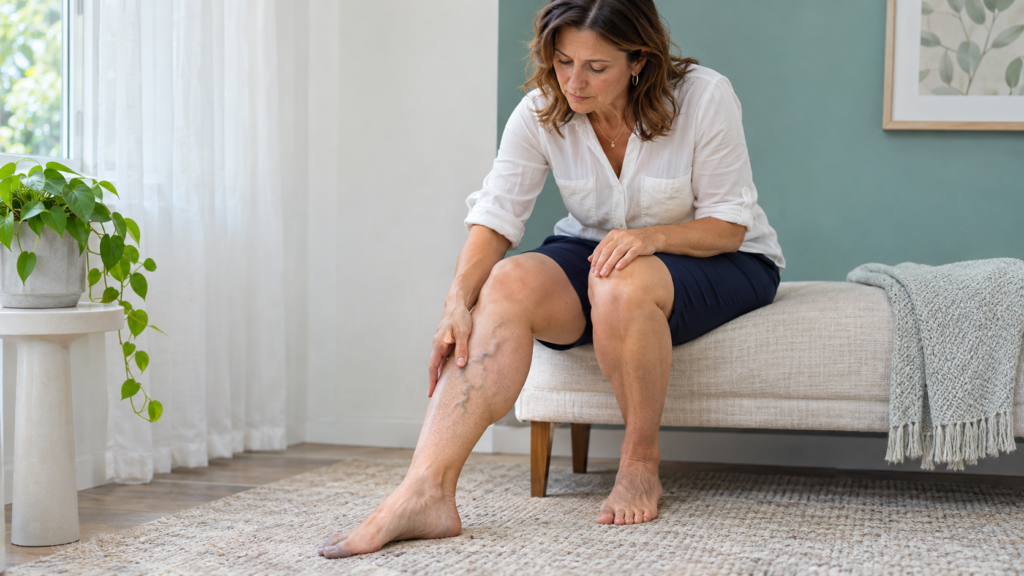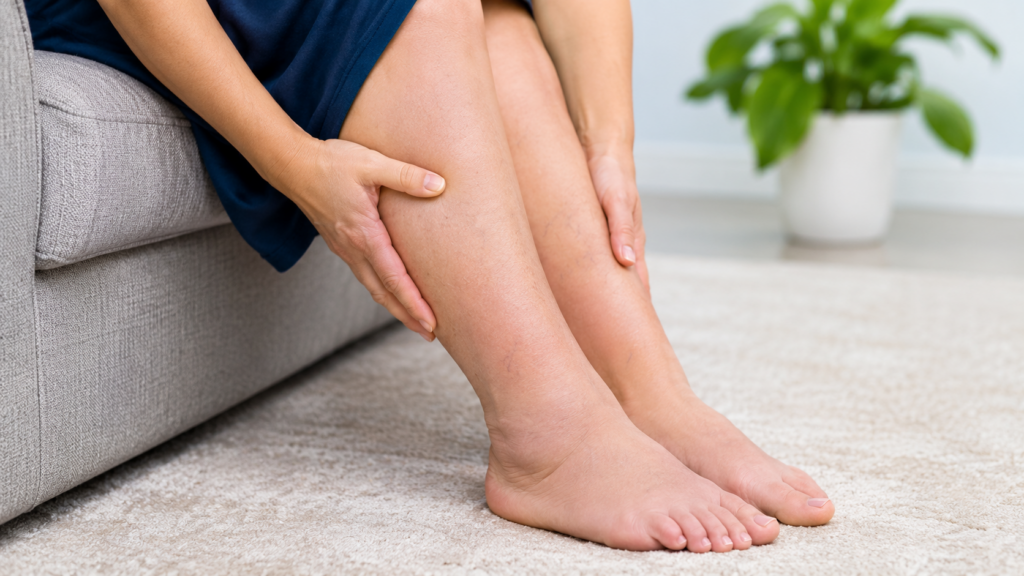

After a full day of working, standing, sitting, or running errands, your legs may feel more tired than they did in the morning. Occasional fatigue can happen after a demanding day, but a recurring heavy or weighted feeling deserves a closer look especially when it appears with swelling, aching, or visible veins.
For people experiencing heavy legs in Stanhope NJ, several factors may be involved. Muscle fatigue, long periods of inactivity, swelling, and vein-related circulation problems can all contribute. The pattern of your symptoms when they start, what makes them worse, and what else you notice can provide useful clues about what may be happening.
Why Can Leg Heaviness Build as the Day Goes On?
Your legs work throughout the day, and both activity and long periods in one position can influence how they feel by evening.
After prolonged standing, your leg veins must continue moving blood upward against gravity. Sitting for long stretches also reduces the movement of the calf muscles that normally helps support blood flow from the legs.
That does not mean every case of tired legs is caused by poor circulation. Physical exertion, muscle fatigue, prolonged inactivity, and other medical conditions can produce a similar heavy feeling.
A useful detail is whether the sensation is occasional or keeps following the same pattern day after day.
When Could Your Veins Be Contributing?
Veins contain valves that help blood move back toward the heart. If these valves become weakened or do not function effectively, blood can move backward and collect in the lower legs. This is known as venous reflux and may contribute to chronic venous insufficiency.
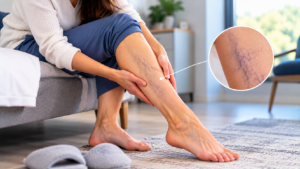
The Cleveland Clinic Journal of Medicine notes that chronic venous disease can be associated with symptoms including leg heaviness, pain, swelling, itching, and skin changes. It also explains that impaired venous return can occur when vein valves allow backward blood flow or when an obstruction affects circulation.
Read more from the Cleveland Clinic Journal of Medicine.
This does not mean that heaviness automatically indicates vein disease. However, a pattern that repeatedly becomes worse later in the day, particularly when accompanied by other vein symptoms can be useful information to discuss with a healthcare provider.
What Other Signs Should You Notice Alongside Heavy Legs?
Instead of focusing only on the feeling of heaviness, pay attention to whether other changes occur at the same time.
These may include:
- Aching, throbbing, or cramping in the legs
- Swelling around the ankles or lower legs
- Visible or bulging varicose veins
- Itching or skin irritation
- Skin discoloration around the lower legs or ankles
- Symptoms that repeatedly become worse after prolonged sitting or standing
Noticing one of these symptoms does not establish a diagnosis. What matters is the overall pattern and whether symptoms are persistent, worsening, or interfering with normal activities.
Do Your Legs Feel Heavy by the End of the Day?
Recurring heaviness, swelling, aching, or visible veins may be worth discussing rather than simply treating them as everyday fatigue. A focused vein evaluation can help determine whether circulation or another factor may be contributing.
Heavy Legs Aren’t Always a Vein Problem
Leg heaviness is a symptom, not a diagnosis. That distinction is important because several conditions can make the legs feel tired, weighted, or difficult to move.
Muscle overuse after strenuous activity may cause temporary fatigue. Long periods of inactivity can leave the heavy legs feeling stiff or sluggish. Joint, nerve, lymphatic, arterial, and other medical conditions may also produce symptoms that patients describe as heaviness.
This is why persistent symptoms should not be self-diagnosed as a vein problem based on how they feel alone.
If heaviness repeatedly returns, understanding whether it affects one or both legs, when it appears, and what other symptoms occur can help guide a more appropriate evaluation.
What Can You Track Before a Vein Evaluation?
A short symptom record can make your appointment more useful. Note what time of day your legs begin to feel heavy and whether your routine involves extended sitting or standing.
Also pay attention to whether walking, resting, or changing position affects the sensation. Record any swelling, aching, itching, cramping, visible veins, or skin changes that appear with the heaviness.
If symptoms vary from day to day, consider what was different about your activity level. These details give your provider more context than simply saying your legs feel tired.
What Happens During a Vein Evaluation in Stanhope?
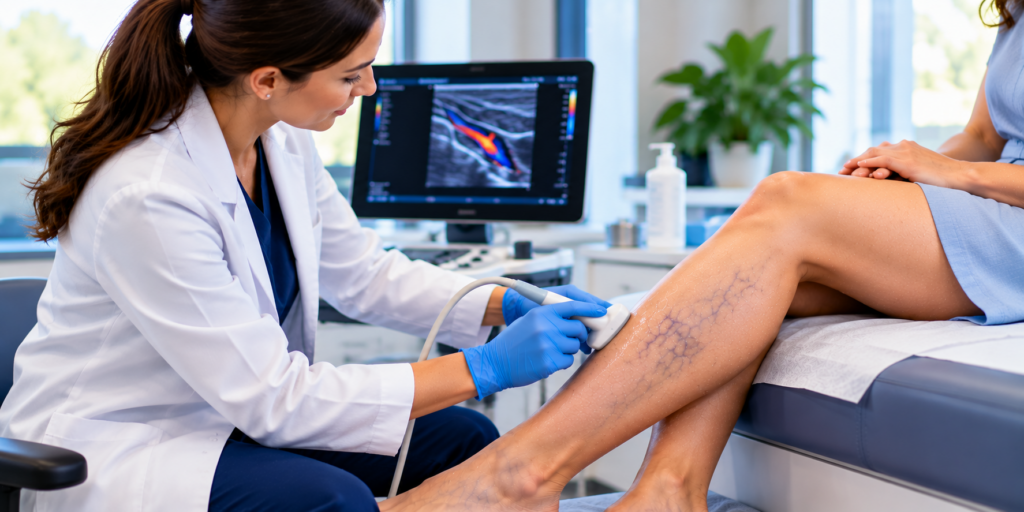
At MVM Health, the first visit focuses on understanding your symptoms, medical history, previous treatment, and individual concerns. Your provider then evaluates your condition before discussing appropriate next steps.

Depending on your symptoms and clinical findings, additional diagnostic testing may be considered. The purpose is to identify what may be contributing to your symptoms rather than assuming that every case of leg heaviness has the same cause.
MVM Health’s Stanhope vein treatment page provides additional information about local vein evaluation and available care.
When Does Leg Heaviness Need Prompt Medical Attention?
A recurring heavy feeling can usually be discussed during a scheduled evaluation, but some symptoms require faster medical attention.
Seek prompt care if one leg suddenly becomes significantly swollen, painful, red, or warm, particularly when the change is new or unexplained. Sudden chest pain, shortness of breath, fainting, or coughing up blood requires immediate emergency medical care.
New true muscle weakness, rather than simply a tired or weighted sensation, may also need assessment because heaviness and weakness are not the same symptom.
Local Vein Care in Stanhope
MVM Health provides vein care at 16 US 206 Suite C, Stanhope, NJ 07874. The current location page identifies nearby communities including Netcong, Hopatcong, Mount Olive, Byram Township, Roxbury, and surrounding areas.
Patients experiencing persistent leg heaviness, swelling, aching, visible veins, or other circulation concerns can discuss their symptoms with the Stanhope vein team. You can also review the MVM Health Stanhope location for current clinic information.
Pay Attention to the Pattern, Not Just the Long Day
A busy day can leave anyone’s legs tired. The more useful question is whether the heaviness disappears with ordinary rest or keeps returning in a recognizable pattern.
Notice when it starts, whether swelling or visible veins appear with it, and whether it is changing over time. Those details can help separate temporary fatigue from symptoms that deserve a closer look. If heavy legs in Stanhope NJ have become a regular part of your evenings, bringing that pattern to a healthcare provider can be a practical next step toward understanding why.