
Maybe you spotted them after a summer hiking near the Delaware Water Gap, or after years of long shifts on your feet: thin red, blue or purple lines across your thighs, calves or ankles. Spider veins are very common and usually harmless. Still, many people searching for help with spider veins in East Stroudsburg, PA want clear answers. Why do they appear? Do they point to a deeper vein problem? And what can actually be done about them?
This guide covers those questions and explains how a spider vein visit works at MVM Health’s East Stroudsburg vein clinic, from your first evaluation to treatment and recovery.
What Are Spider Veins?
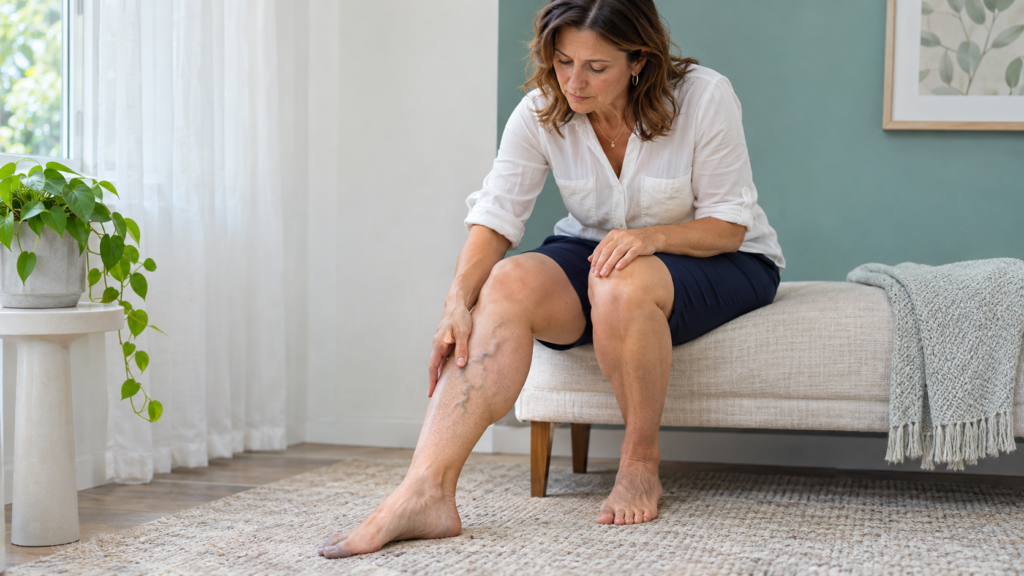
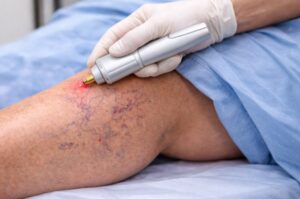
Spider veins (telangiectasias) are small, widened blood vessels that sit just under the skin. They’re usually less than 1 mm wide and look like fine lines, tiny branches or a web pattern. They’re most common on the thighs, calves and ankles, and can also appear on the face.
Spider veins are different from varicose veins. Varicose veins are larger, raised and often twisted or rope-like, and they’re more likely to cause aching or swelling. Spider veins are flat and fine. Some people also have slightly larger blue “feeder” veins, called reticular veins. For a full overview of the condition, see our main guide to spider veins: symptoms, causes, diagnosis and treatment.
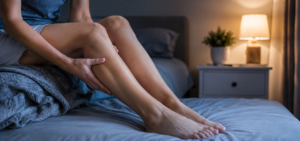
Most spider veins cause no physical symptoms. Some people do notice mild burning, itching or a dull ache around them, especially at the end of a long day.
What Causes Spider Veins?
Tiny one-way valves and your calf muscles help veins move blood back to the heart. When small veins near the skin are under extra pressure, or when their walls weaken, they can widen and become visible. The most common risk factors include:
- Family history: spider veins often run in families.
- Hormones: pregnancy, puberty, menopause, birth control pills and hormone therapy can all affect vein walls.
- Age: veins lose some of their elasticity over time.
- Long hours standing or sitting: nursing, teaching, hospitality and retail jobs, or a long daily drive on I-80, reduce the calf-muscle pumping that keeps blood moving.
- Extra body weight: this adds pressure to the veins in your legs.
- Sun exposure and minor injury: these mainly play a role in spider veins on the face or in a single small area.
Are Spider Veins a Sign of a Bigger Vein Problem?
Usually not. For most people, spider veins are a cosmetic concern. But sometimes they’re a surface sign of increased pressure from a larger leaking vein underneath, a condition known as venous insufficiency. Then, treating only the visible veins tends to give short-lived results.
It’s worth asking for a fuller check if your spider veins come with any of these:
- Heavy, tired or aching legs, especially by evening
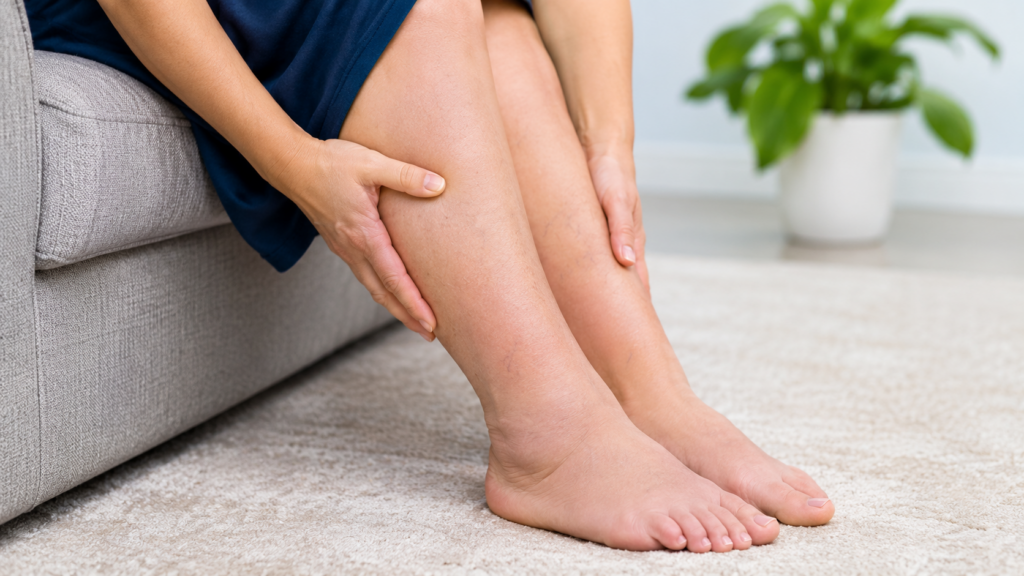
- Ankle or lower-leg swelling
- Bulging varicose veins nearby
- Skin darkening, dryness or itching near the ankles
- Spider veins that keep returning after treatment
If those symptoms sound familiar, our article on varicose veins in East Stroudsburg, PA explains the next step up and when a specialist visit makes sense.
When to get urgent care: spider veins don’t cause emergencies, but sudden swelling, warmth and pain in one leg can be a sign of a blood clot. Seek medical care right away if that happens.
How Spider Veins Are Evaluated at MVM Health in East Stroudsburg
Every treatment plan starts with a vein evaluation in East Stroudsburg with one of our vein specialists. Here’s what a typical visit includes:
- Health history: your provider asks about symptoms, family history, pregnancies, medicines and any past blood clots.
- Leg exam: your provider looks at the size, color and pattern of your veins, often while you stand, when veins are easiest to see.
- Ultrasound, if needed: if you have symptoms such as swelling or heaviness, a painless duplex ultrasound checks whether deeper veins are leaking.
- Your plan: you’ll hear which treatment fits, roughly how many sessions you may need and what your insurance is likely to cover.
Spider Vein Treatment Options
Spider vein treatment is done in the office, with no incisions and little downtime. Depending on what your evaluation shows, your options may include:
- Sclerotherapy: the first-line treatment for spider veins on the legs. A very fine needle delivers a medicine into each small vein, which irritates the vein lining so it closes and is gradually absorbed by the body. Sessions usually last under an hour.
- Foam sclerotherapy: the same type of medicine mixed into a foam, often used for the slightly larger blue reticular veins that feed spider vein clusters.
- Treating a leaking vein first: if ultrasound finds reflux in a deeper vein, closing that vein with a minimally invasive procedure first can help spider vein treatment last longer.
Many people need two or three sessions spaced several weeks apart for the best result, and some small clusters clear in a single visit. To see how the main procedures compare, read vein treatment options in East Stroudsburg, PA: what to expect from evaluation to recovery.
Book Your Spider Vein Evaluation in East Stroudsburg
Not sure whether your spider veins are only cosmetic or a sign of something more? A short evaluation at our East Stroudsburg clinic can give you answers. Our vein specialists will walk you through your options, expected sessions and costs before you start.
What Recovery Looks Like
Most people walk out of a sclerotherapy session and go back to their normal day. You’ll usually wear compression stockings for a short period afterward and avoid hard workouts, hot tubs, saunas and strong sun on the treated areas for a while. Walking is encouraged.
Mild bruising or redness usually fades within one to two weeks; light brown staining along a treated vein can take a few months to fade. Treated spider veins fade over a few weeks, and slightly larger veins can take longer. Planning around a wedding or summer? Start two to three months ahead.
Does Insurance Cover Spider Vein Treatment?
Treatment for spider veins alone is usually considered cosmetic, so most insurance plans don’t cover it. If your evaluation finds symptomatic vein disease, such as venous insufficiency, treatment for that underlying problem may be covered when it’s medically necessary.
Simple Habits That May Help Prevent New Spider Veins
You can’t change your genes or your age, but you can take some strain off your leg veins:
- Take short walking breaks during long shifts, desk days or road trips.
- Raise your legs above heart level for a few minutes after work.
- Ask your provider whether compression socks make sense for you.
- Keep a healthy weight and use sunscreen on exposed skin.
Live or work closer to Montgomery County? Read our guide to spider veins in King of Prussia, PA.
Visiting Our East Stroudsburg Vein Clinic
MVM Health’s East Stroudsburg office is at 296 E Brown St, Suite D, East Stroudsburg, PA 18301, serving patients across Monroe County and the Poconos. If spider veins are bothering you, or you’re unsure whether they point to something more, an evaluation is a simple first step.