
Venous insufficiency is a condition in which the veins in your legs have difficulty returning blood toward your heart. When vein valves do not work properly, blood can flow backward and collect in the lower legs, leading to symptoms such as swelling, aching, heaviness, and skin changes.
For people concerned about venous insufficiency in Scotch Plains, understanding these symptoms can help determine when a professional vein evaluation may be appropriate. Some changes develop gradually and may initially seem like ordinary leg fatigue, while others become more noticeable during daily activities.
Understanding How Venous Insufficiency Develops
Your leg veins contain small, one-way valves that help blood travel upward toward the heart. When you walk, your calf muscles contract and support this process.
If the valves become weakened or damaged, they may not close completely. Blood can then flow backward, a process called venous reflux. Over time, this can increase pressure inside the veins and contribute to chronic venous insufficiency (CVI).
Factors associated with venous disease include aging, family history, previous blood clots, pregnancy, excess body weight, and prolonged sitting or standing.
Having these risk factors does not necessarily mean you have the condition. A clinical evaluation is needed to understand whether impaired vein function is contributing to your symptoms.
Which Symptoms May Point to Venous Insufficiency?
Venous insufficiency symptoms can vary from mild discomfort to more noticeable changes affecting the legs and ankles.
Common symptoms include:
- Leg swelling: Puffiness around the ankles or lower legs, sometimes becoming more noticeable later in the day.
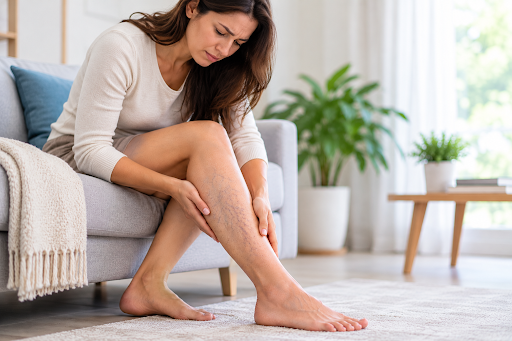
- Leg aching: A dull, uncomfortable sensation that may increase after prolonged standing.
- Heaviness: Legs may feel unusually tired or weighted.
- Itching or irritation: Skin around the lower legs may become itchy, dry, or uncomfortable.
- Visible varicose veins: Enlarged or twisted veins may occur alongside venous reflux.
- Skin changes: Persistent venous disease can contribute to discoloration, thickening, or wounds near the ankles.
According to the Cleveland Clinic’s overview of chronic venous insufficiency, symptoms may become more noticeable as the condition progresses. However, not everyone experiences the same changes.
Why Symptoms May Change Throughout the Day
Some people notice that their legs feel relatively comfortable in the morning but become heavy, swollen, or achy after several hours of activity.
Standing for long periods can increase pressure in the lower-leg veins. Sitting without regular movement may also reduce the calf-muscle activity that helps blood return toward the heart.
Symptoms sometimes improve when a person walks, changes position, or elevates their legs. However, temporary improvement does not necessarily mean the underlying vein problem has resolved.
How Is Venous Insufficiency Different From Visible Vein Problems?
Venous insufficiency, varicose veins, and spider veins are related but are not interchangeable diagnoses.
| Condition | Main distinction |
| Venous insufficiency | Difficulty returning blood through the leg veins, often involving reflux or obstruction |
| Varicose veins | Enlarged, twisted veins that may be associated with reflux and discomfort |
| Spider veins | Small, visible surface vessels that are often primarily cosmetic |
Someone may have varicose veins without meeting the clinical criteria for chronic venous insufficiency. Similarly, spider veins alone do not establish a diagnosis of deeper vein disease. For additional context, explore MVM Health’s guide to varicose and spider veins in Scotch Plains.
Concerned About Ongoing Leg Swelling or Aching?
If your legs regularly feel swollen, heavy, or uncomfortable, an evaluation may help identify whether venous insufficiency or another condition is contributing. MVM Health provides individualized assessments for patients experiencing vein-related symptoms in Scotch Plains and nearby communities.
When Skin Changes Deserve Closer Attention
One important feature of more advanced venous disease is the effect it can have on the skin.
Persistent pressure in the lower-leg veins may contribute to inflammation, reddish-brown discoloration, thickening, and changes in skin texture. In more advanced cases, wounds known as venous ulcers may develop, commonly near the ankles.
These changes should not be dismissed as ordinary dry skin or irritation, particularly when accompanied by persistent swelling.
How a Vein Specialist Evaluates Your Symptoms
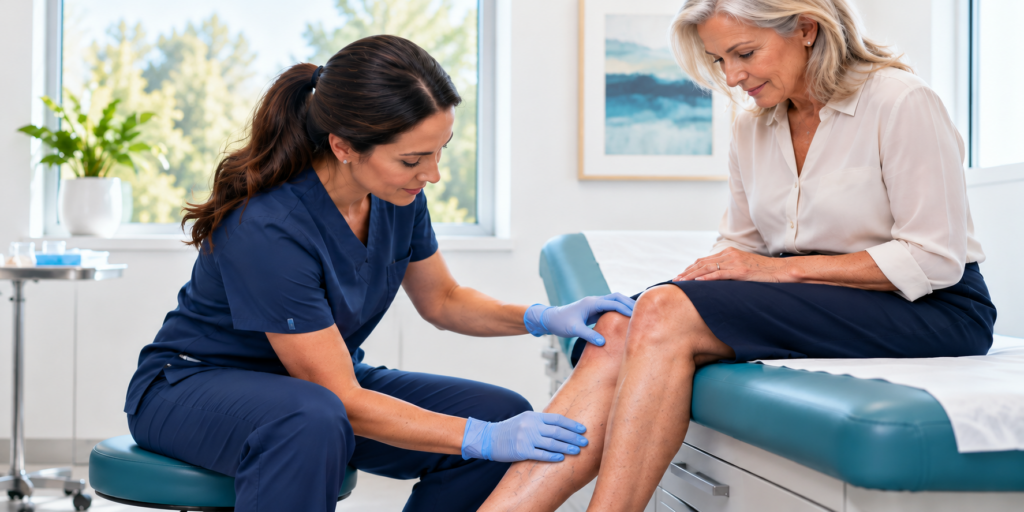
A vein specialist in Scotch Plains may begin by reviewing your medical history, symptoms, family history, previous blood clots, and changes in daily activity.
A physical examination can help identify swelling, visible veins, skin changes, or other findings that may suggest a circulation problem.
When clinically indicated, a venous duplex ultrasound may be recommended to assess blood flow and determine whether reflux or an obstruction is present.
The results can help distinguish venous insufficiency from other possible causes of leg discomfort.
What Happens After Venous Insufficiency Is Diagnosed?
Management depends on the severity of symptoms, ultrasound findings, overall health, and individual treatment goals.
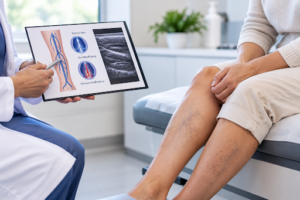
A provider may recommend movement, appropriate leg elevation, or medical compression stockings. Compression should be selected with professional guidance, particularly when arterial circulation problems are possible.
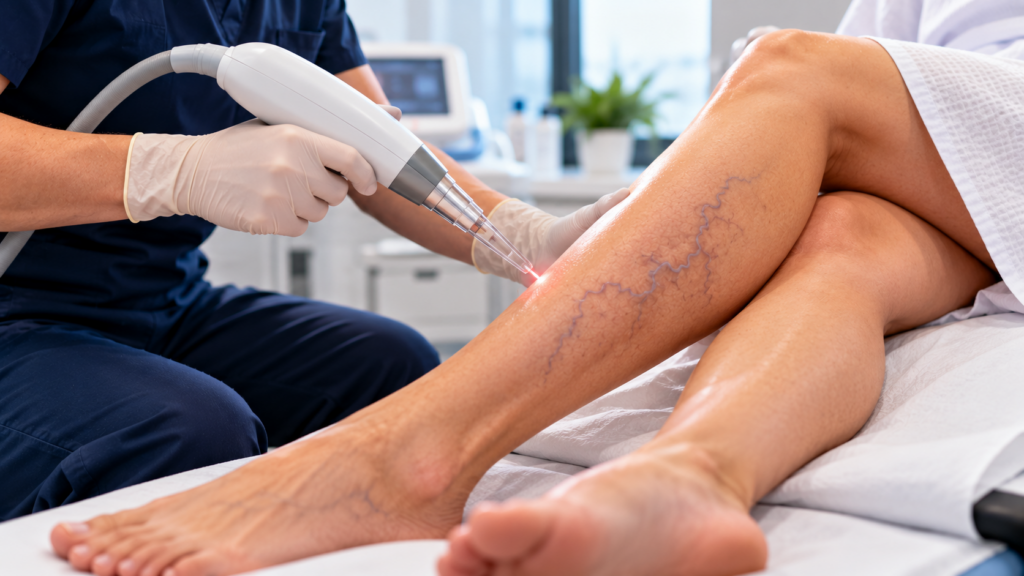
For some patients with confirmed symptomatic venous reflux, minimally invasive procedures may be considered.
Treatment decisions should follow a clinical assessment rather than being based only on visible veins or occasional leg discomfort.
When Should You Seek Medical Attention?
Gradual leg aching or recurring swelling may be appropriate for a scheduled evaluation, but certain symptoms require faster assessment.
Sudden swelling in one leg, especially with pain, redness, warmth, or tenderness, requires prompt medical attention because a blood clot is one possible cause.
Chest pain, sudden shortness of breath, fainting, or coughing up blood requires emergency care.
New wounds, worsening skin changes, or persistent swelling should also be assessed rather than ignored.
Understanding Your Vein Symptoms Is the First Step
Venous insufficiency involves more than visible veins. Changes in blood flow can contribute to leg swelling, aching, heaviness, and, in some cases, skin problems that affect everyday comfort.
If you are experiencing possible venous insufficiency in Scotch Plains, paying attention to persistent or changing symptoms can help you decide when to seek medical advice.
A professional evaluation at MVM Health can clarify whether vein function is contributing to your discomfort and help determine suitable next steps.