
Long day, long drive, too many hours on your feet. Your shoes felt tight by evening and fine again by morning. So you moved on.
That’s fair; occasional swelling with an obvious cause usually isn’t serious. But when it keeps coming back without a clear reason, when your ankles are puffy by noon, and you’re propping your feet up every night just to feel normal, that pattern is worth paying attention to.
One of the most overlooked causes of chronic leg swelling is vein disease. It’s common, it builds slowly, and most people don’t connect it to their veins until it’s been going on for years.
Why Leg Swelling Happens: The Vein Connection
Leg veins rely on small one-way valves to push blood upward toward the heart. When you walk, your calf muscles squeeze the veins, and the valves hold the blood in place.
When those valves weaken, blood falls back and pools in the lower leg. That pooled blood raises pressure inside the vein wall and forces fluid into the surrounding tissue. That fluid is what shows up as swelling around your ankles by the end of the day.
This is called chronic venous insufficiency. It builds gradually, often over years, which is why so many people don’t realize their veins are behind it.
Not All Leg Swelling Is the Same
Before going further, it’s worth being honest: leg swelling has several possible causes, and vein disease is one of them. A proper evaluation is always the right starting point. For many patients seeking spider vein treatment Bethlehem PA, identifying the underlying cause of swelling is essential before deciding on the most appropriate treatment plan.
Other common causes include heart failure, kidney disease, liver problems, lymphedema, certain medications, and prolonged inactivity. Some of these are more serious and require immediate attention.
Call your doctor or go to the ER if your leg is swelling:
- Came on suddenly in one leg, especially with pain or redness (possible blood clot)
- Is accompanied by chest pain or shortness of breath
- Followed a recent injury, surgery, or period of bed rest
- Is paired with significant new fatigue, shortness of breath, or changes in urination
If the swelling is gradual, recurring, worse by evening, and better after elevating your legs overnight, vein disease is a strong possibility, and a vein evaluation is the appropriate next step.
Signs That Vein Disease Is Behind Your Swelling
Vein-related swelling has a recognizable pattern once you know what to look for.
Here’s a practical way to think about it.
Concerned About Leg Swelling? Get Checked Today
If leg swelling, heaviness, aching, or visible veins are becoming a regular problem, it may be time for a professional evaluation. MVM Health’s vein specialists can identify the cause of your symptoms and recommend the right treatment plan. Schedule your vein evaluation today and get answers about your leg health.
It builds through the day. Venous swelling is usually minimal in the morning and gradually worsens as the day goes on. Standing and sitting still make it worse. Walking actually helps by activating the calf muscle pump.
It improves overnight. When you lie down, the pressure in the leg veins drops and the pooled fluid drains back. Most people with venous insufficiency wake up with normal-looking ankles and watch the swelling return as the day progresses.
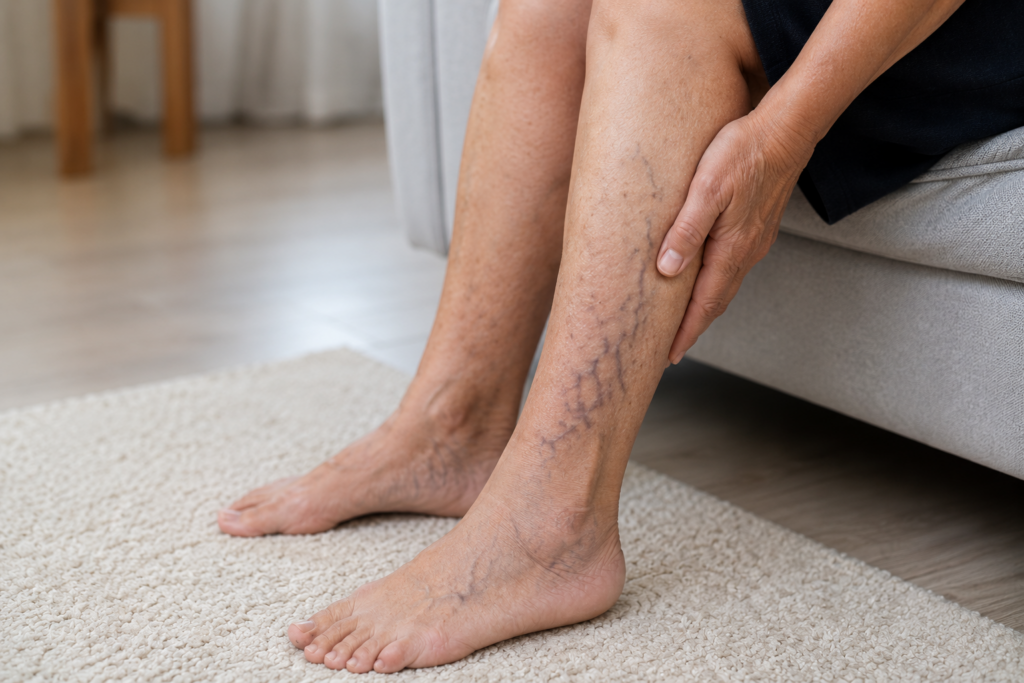
It’s accompanied by other vein symptoms. Leg heaviness, aching, throbbing, or a tired feeling in the calves often comes alongside venous swelling. Some people also notice itching directly over a vein, visible spider or varicose veins, or a restless feeling in the legs at night.
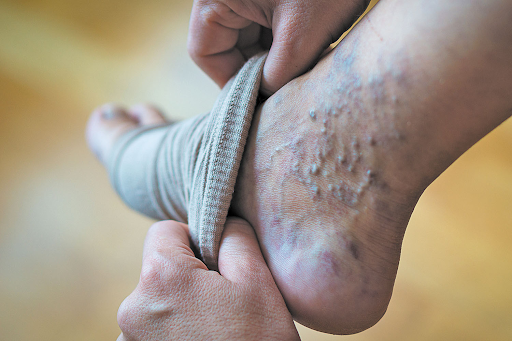
The skin near your ankle is changing. This is one of the more telling signs. Skin that’s darkening, developing a brownish or reddish discoloration, or becoming thicker or leathery near the inner ankle is reacting to chronic venous pressure. This is called lipodermatosclerosis, and it means the condition has been present for a while.
You have visible varicose veins. Not everyone with venous insufficiency has visible varicose veins, but when swelling and visible varicose veins appear together, the connection is usually clear.
When Should You See a Vein Specialist?
There’s no dramatic threshold you need to cross before making an appointment. But these situations are clear indicators that a vein evaluation makes sense.
The swelling is happening regularly
One swollen ankle after a 12-hour shift is one thing. Swollen ankles three or four evenings a week, regardless of how active you were, is a pattern worth investigating. Consistent, recurring swelling without an obvious external cause is one of the clearest reasons to get your veins checked.
Compression socks are the only thing helping
A lot of people with undiagnosed venous insufficiency figure out on their own that compression socks help. That’s because compression mimics what healthy valves do it provides external pressure to keep blood moving upward. If you’re already depending on compression socks to get through your day, that’s a sign the underlying problem should be properly assessed and treated.
Your ankles are starting to look different
Persistent swelling that doesn’t fully resolve overnight, or skin that’s changing color and texture near the ankle, suggests the condition has progressed beyond early-stage. This is when it becomes especially important to get evaluated. The earlier you address it, the more reversible the tissue changes tend to be.
You have varicose veins and swelling together
Varicose veins on their own are sometimes purely cosmetic. But varicose veins combined with regular swelling, aching, or skin changes almost always indicate venous insufficiency that’s worth treating. The swelling doesn’t usually go away on its own once the vein valves are failing.
You’ve been told to “just lose weight” or “just exercise more”
This advice isn’t wrong, exactly those things do help venous circulation. But if you’re already active and maintaining a healthy weight and still experiencing significant swelling, vein disease may be the primary driver. It shouldn’t be dismissed just because the easier explanations were offered first.
What to Expect During a Vein Evaluation in Pennsylvania
Walking into a vein clinic for the first time is straightforward. Here’s what the process typically looks like.
The consultation. The specialist will ask about your symptoms, how long they’ve been happening, what makes them better or worse, your family history (vein disease has a strong genetic component), any previous diagnoses, and what treatments you’ve already tried. This conversation matters; it shapes everything that follows.
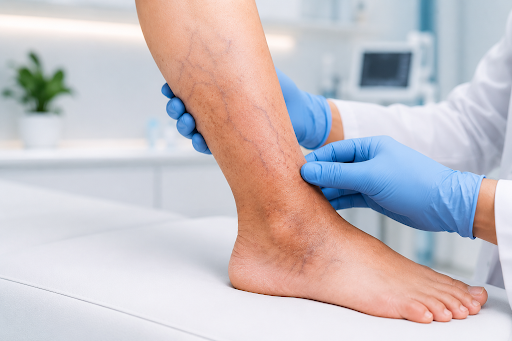
The physical exam. Your legs will be examined while you’re standing. That’s important because vein problems are most visible and most detectable under the pressure of standing. The specialist is looking at the pattern, size, and location of any visible veins, as well as checking the condition of the skin.
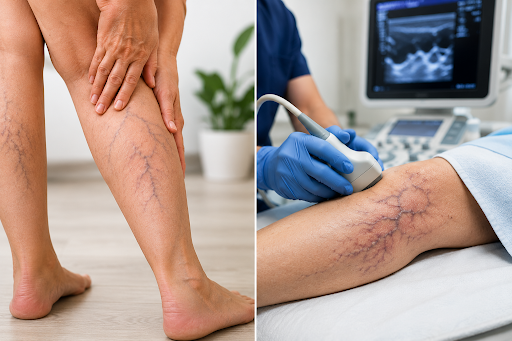
The venous duplex ultrasound. This is the most important part of the evaluation. A duplex ultrasound uses sound waves to create a real-time image of the veins and measure blood flow direction and speed. It can detect valve failure, blood clots, and the exact location and severity of venous insufficiency. The test is painless, takes 20 to 30 minutes, and doesn’t involve any needles or dye.
The results tell your specialist which veins are failing, how significant the reflux is, and which treatment approach is most appropriate. Without an ultrasound, any vein treatment plan is essentially guesswork.
Vein Treatment Options for Leg Swelling in Pennsylvania
If the evaluation confirms venous insufficiency is contributing to your swelling, treatment is very manageable. Modern vein procedures are done in the office, take less than an hour, and require minimal recovery time.
Radiofrequency Ablation
Radiofrequency ablation (RFA) is the most commonly used treatment for venous insufficiency affecting the great saphenous vein, the large vein running along the inner leg that’s responsible for most cases of varicose veins and swelling.
A thin catheter is inserted into the vein under local anesthesia. Radiofrequency energy heats the vein wall from the inside, causing it to permanently close. Blood reroutes through nearby healthy veins. Patients typically walk out of the clinic the same day and notice a gradual reduction in swelling and heaviness over the following weeks.
Sclerotherapy
Sclerotherapy is used for smaller varicose veins and spider veins. A solution is injected directly into the vein, causing it to scar and fade. It’s a common follow-up to ablation for treating residual surface veins, or a standalone treatment for patients whose insufficiency is limited to smaller vessels.
Microphlebectomy
For larger surface varicose veins that need to be removed rather than collapsed, microphlebectomy removes them through tiny incisions made along the vein. It’s done under local anesthesia in the office, requires no stitches, and leaves minimal scarring.
Compression Therapy
Compression isn’t a cure, but it’s an important part of management, both before treatment (as a conservative first step required by most insurance plans) and after treatment to support healing. Properly fitted medical-grade compression stockings are different from the ones sold at pharmacies and are worth the investment if you’re managing active symptoms.
Vein Care Across Pennsylvania: Locations That Serve You
MVM Health provides vein evaluations and treatment at multiple locations across Pennsylvania, so patients don’t have to travel far for specialized care.
Vein Specialist in East Stroudsburg
Most patients in the Pocono region put off vein care assuming they’d have to drive to Philadelphia or Allentown to see a vein specialist in East Stroudsburg. MVM Health brings board-certified vein care close to home for residents of Monroe County and surrounding communities. If you’ve been managing leg swelling, varicose veins, or aching legs and haven’t had an evaluation, a specialist is closer than you think.
Vein Treatment in Bethlehem
Bethlehem and the broader Lehigh Valley area is well served by MVM Health’s vein specialists. Patients from Allentown, Easton, and surrounding areas regularly come in for vein evaluations and treatment. If you’re looking for vein treatment in Bethlehem that goes beyond a surface-level cosmetic consult and gets to the root of what’s causing your symptoms, a full diagnostic evaluation with ultrasound is the right starting point.
Vein Treatment Near King of Prussia
King of Prussia is one of Pennsylvania’s busiest corridors, and a lot of people working and living here are on their feet for long hours. Vein problems are common in this area and often go untreated. If you’re looking for vein treatment near King of Prussia, MVM Health offers full vein evaluations and minimally invasive procedures, including radiofrequency ablation and sclerotherapy, close to the Main Line and western Philadelphia suburbs.
Varicose Vein Treatment in Reading
Reading and Berks County residents have access to vein care through MVM Health’s Pennsylvania network. Varicose vein treatment in Reading is available for patients dealing with chronic leg swelling, painful varicose veins, skin changes, or spider veins. The evaluation process is the same at every location: a thorough consultation, physical exam, and diagnostic ultrasound before any treatment is recommended.
Does Insurance Cover Treatment for Vein-Related Swelling?
In many cases, yes and patients are often surprised to learn this.
When leg swelling is caused by documented venous insufficiency, treatment is generally considered medically necessary rather than cosmetic. Insurance coverage typically requires proof of symptoms like swelling, aching, or skin changes, evidence of valve failure on ultrasound, and a trial of compression therapy, usually four to six weeks.
Medicare and most major private insurance plans cover the diagnostic ultrasound and the primary treatment procedures when these criteria are met. The MVM Health team verifies insurance benefits before any procedure and walks patients through what to expect in terms of coverage and costs.
Frequently Asked Questions
Can leg swelling from vein disease be reversed?
Treating the underlying venous insufficiency stops the primary cause of the swelling. Many patients see meaningful improvement within weeks of treatment. Significant skin changes that have been present for a long time may not fully reverse, but they typically stabilize and improve with proper treatment.
Is a venous ultrasound necessary, or can a doctor just look at my veins?
A visual exam gives useful information, but an ultrasound is essential for an accurate diagnosis. Valve failure and the extent of reflux are not visible to the naked eye. Treatment without ultrasound guidance is not considered the standard of care for venous insufficiency.
How long until I notice improvement in my swelling after treatment?
Most patients notice a reduction in heaviness and aching within the first few weeks. Swelling improvement typically follows over the following four to eight weeks as the treated vein is absorbed and circulation improves.
Can I treat vein disease without procedures?
Compression stockings, leg elevation, regular walking, and weight management all help manage symptoms. They don’t repair damaged valves, but they can slow progression and reduce day-to-day discomfort. For many patients, procedures are eventually the most effective path to lasting improvement.
What if I have swelling in both legs?
Bilateral leg swelling can have multiple causes. A vein evaluation can determine whether venous insufficiency is present in both legs. Systemic causes like heart or kidney issues are typically ruled out by your primary care doctor first or in parallel.
How do I book an evaluation at an MVM Health location near me?
You can call directly or book online. No referral is required. The team handles insurance verification and will guide you through the process from first appointment to treatment.