
Varicose veins skin changes usually mean vein disease has started affecting the skin and tissue around the lower legs. Common signs include brown or reddish ankle discoloration, dry or itchy patches, thick or leathery skin, swelling, and sores that are slow to heal. These changes often happen when damaged vein valves allow blood to pool in the legs, increasing pressure in the surrounding tissue over time.
That’s why these changes shouldn’t be treated like a simple cosmetic issue. The skin is often where the deeper vein problem finally becomes visible. If your ankles or lower legs have started changing color, texture, or sensitivity, it may be time to see a vein specialist before the problem becomes harder to manage.
Why Varicose Veins Start Affecting the Skin
Varicose veins happen when the valves inside your leg veins stop closing all the way. Blood that’s supposed to head back up to your heart flows backward instead and sits in the lower leg. Do that long enough and the pressure in the small vessels near the skin’s surface climbs – venous hypertension, in medical terms.
Under that pressure, capillaries start to leak. Red blood cells break down in the tissue and release iron in the form of hemosiderin, which is exactly what gives the skin that rusty, brownish tint people notice around the ankle. Keep the pressure on for years and the skin itself starts to change structurally – collagen builds up unevenly, the fat layer underneath can harden, and the tissue loses elasticity.
There’s a chemical piece to this too, and it’s easy to overlook. Along with red blood cells, plasma proteins and white blood cells leak into the surrounding tissue, which kicks off a low-grade inflammatory response that doesn’t really shut off as long as the vein keeps malfunctioning. Enzymes responsible for breaking down and rebuilding skin get thrown off balance in the process – part of why the skin thickens and scars the longer this goes untreated. It’s not just pigment sitting on the surface. Something is actively happening under there.
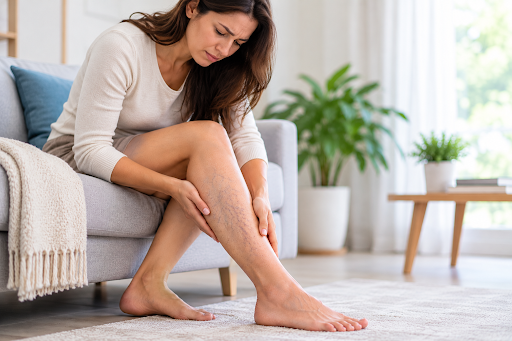
That’s the reason varicose veins’ skin changes rarely show up overnight. Someone notices a faint discoloration one year, and a few years later, the skin around the ankle just looks different. It usually starts as a patch that’s a shade darker after a long day on your feet, or an itch that hangs around longer than it should. Because the change is slow, plenty of people adjust without ever noticing that it’s actually progressing.
Who’s More Likely to Develop These Skin Changes
Not everyone with varicose veins ends up dealing with skin changes. A handful of factors make it more likely:
- Varicose veins that have been around for years, treated or not – time is the main driver here.
- Jobs with long hours standing or sitting: nurses, teachers, retail staff, and desk workers all put sustained pressure on leg veins.
- A prior blood clot (DVT), which can damage a valve and speed up venous hypertension.
- Obesity or a significant amount of weight gain, which raises pressure on pelvic and leg veins.
- Pregnancy, particularly more than one, thanks to hormonal shifts and added blood volume.
- Age past 50 – vein valves lose elasticity right around the time skin does too, so changes tend to show up faster.
- A family history of varicose veins or venous disease, which suggests the vein walls themselves may just be more prone to weakening.
Types of Skin Changes to Watch For
Not all skin changes look alike, and the type usually tells a specialist how far along the vein disease actually is.
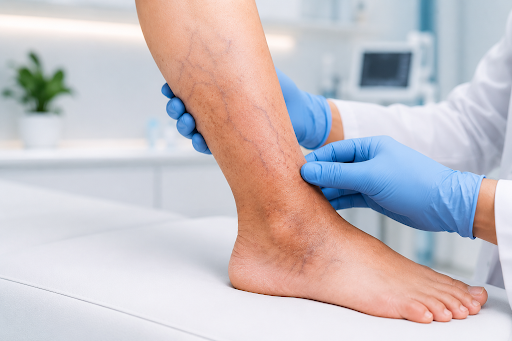
- Brown or reddish staining (hemosiderin staining), usually starting around the ankle from iron left behind after capillaries leak.
- Dry, itchy, scaly patches – often mistaken for regular eczema, but really venous stasis dermatitis, inflammation caused by poor circulation rather than an allergy.
- Thickened, hardened, almost “woody” skin. This is lipodermatosclerosis, where chronic inflammation scars and tightens the fat layer under the skin, sometimes narrowing the ankle in a way that gives the lower leg an odd, tapered shape.
- Skin that looks shiny or feels leathery – a sign of sustained pressure over a long stretch of time.
- Small, smooth, ivory-white scar-like patches (atrophie blanche), which tend to show up as the disease progresses.
- Sores near the ankle that won’t heal. These are at the advanced stage and need care fairly quickly.
A lot of people get this misdiagnosed. Stasis dermatitis in particular looks a lot like regular eczema, an allergic reaction, or even a fungal infection – the redness, dryness, and itching aren’t especially distinctive on their own. A few clues usually point toward a venous cause instead: it tends to affect both legs (or be worse on whichever leg has more visible varicose veins), it sits mostly around the ankle and lower shin, and it comes with a background of swelling or heaviness rather than appearing suddenly after contact with something new. Early, acute lipodermatosclerosis can even be red and painful enough to get mistaken for cellulitis – one more reason a specialist should be the one looking, not a guess based on a photo search.
When These Changes Mean It’s Time to See a Specialist
Not every vein is dangerous, and not every skin change is caused by vein disease. But certain patterns should be checked instead of ignored.
You should schedule a vein evaluation if you notice:
- Brown, red, or rusty discoloration around the ankle
- Skin that feels tight, thick, hard, shiny, or leathery
- Itching, dryness, or rash near visible varicose veins
- Swelling that gets worse later in the day
- Skin changes along with heaviness, aching, or leg fatigue
- A sore near the ankle that does not heal
- Worsening skin color or texture over several months
A sore, open wound, sudden one-sided swelling, warmth, redness, or strong pain should be checked promptly. These symptoms may need faster medical attention.
One important point: pain is not always a reliable warning sign. Some people have visible skin changes for months or years before the area becomes painful. Waiting until it hurts can allow the condition to progress further.
One misconception worth correcting: people assume that if it doesn’t hurt, it isn’t serious. But varicose veins skin changes can quietly progress for years with barely any discomfort before suddenly turning into an ulcer or a painful lipodermatosclerosis flare. Pain just isn’t a reliable measure of how advanced things are – which is exactly why waiting until it hurts to get checked usually means a bigger treatment plan than if it had been caught earlier.
How Vein Specialists Find the Underlying Cause
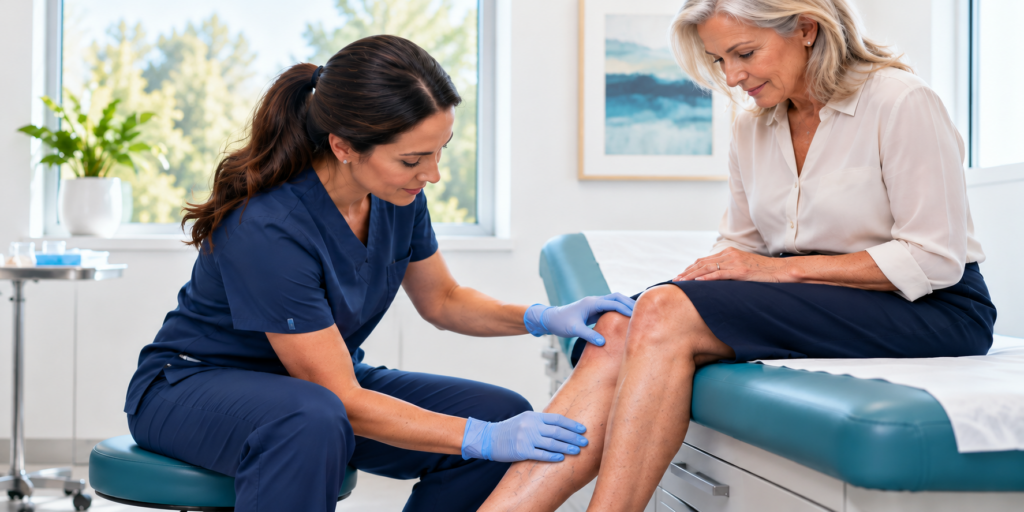
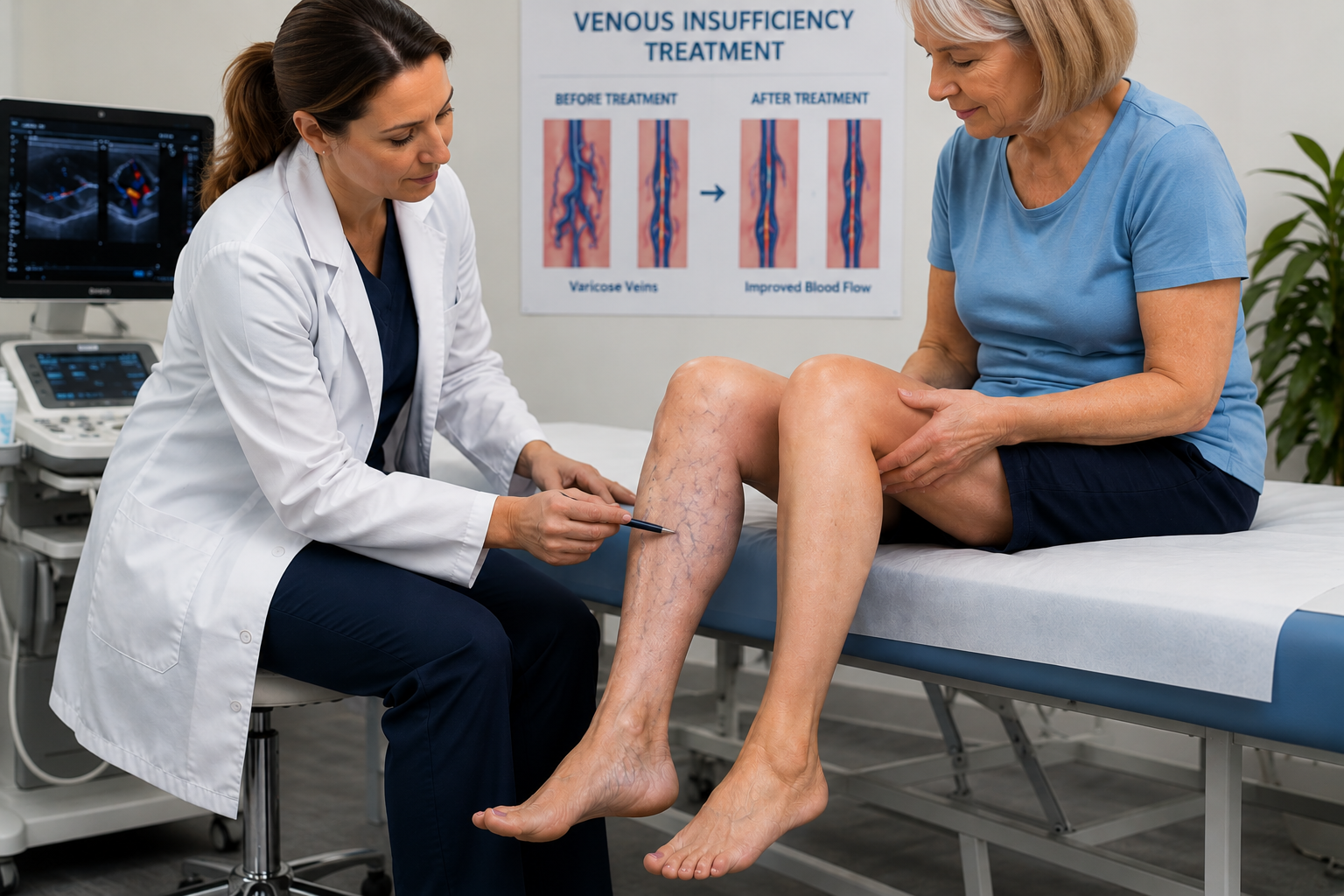
Skin changes are a symptom, not a diagnosis. The real first step is figuring out which specific vein is malfunctioning and how much reflux is going on. Most evaluations start with a duplex ultrasound – painless, non-invasive, and it maps blood flow through the legs to pinpoint exactly which valves have stopped working.
This matters more than people expect. Two patients can have nearly identical-looking discoloration and completely different veins causing it, and treating the wrong one won’t touch the skin problem. A proper ultrasound-guided evaluation is what makes sure the plan actually goes after the source instead of just the surface.
During the scan, the technician or physician checks how blood moves through both the superficial and deep veins, looking for reflux – blood flowing the wrong way – and timing how long it lasts. That helps classify how advanced the venous disease is and identify exactly which segments are feeding the skin changes. A physical exam alone can be misleading here, since a vein that looks small on the surface can be connected to a much bigger pattern of reflux underneath. The good news: the scan itself is quick, no needles, no radiation, and it’s usually done right in the office as part of the same visit.
Treatment Options for Varicose Veins and Skin Changes
Once the source vein is identified, treatment is usually a combination of a few things, depending on how far along the skin changes already are.
- Compression therapy: graduated compression stockings ease pressure in the leg veins and are often the starting point, especially for milder skin changes.
- Lifestyle adjustments: leg elevation, regular movement, and keeping weight in a healthy range all reduce the pressure that’s driving the skin damage in the first place.
- Sclerotherapy: a solution injected into smaller veins causes them to close and fade, useful for smaller varicose or spider veins contributing to the skin changes.
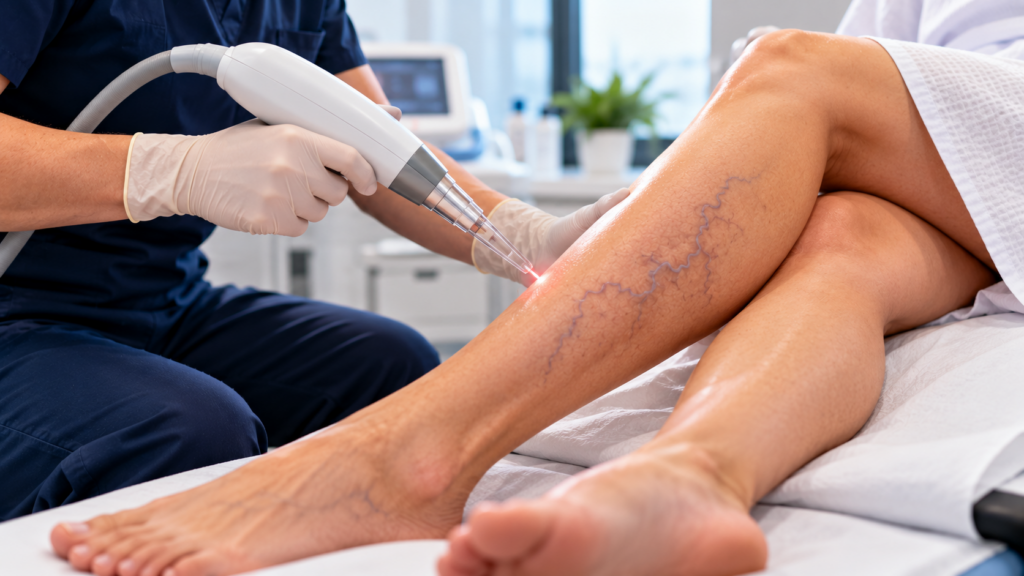
- Endovenous ablation (laser or radiofrequency): heat delivered through a thin catheter closes off a larger malfunctioning vein, and blood reroutes through healthier veins nearby. Usually done in-office, short recovery.
- Ambulatory phlebectomy: for larger, bulging veins near the surface, the vein is removed through tiny incisions under local anesthesia.
- Wound care for ulcers: when the skin has already broken down, treatment combines compression, wound management, and a procedure on the underlying vein. Treating the wound alone without fixing the vein behind it tends to bring it right back.
- Topical care for inflamed or itchy skin: doesn’t touch the underlying vein, but gentle moisturizers and, sometimes, short-term topical treatments can calm inflammati on and break the itch-scratch cycle while the main plan takes effect.
Most people think treating varicose veins is about how the leg looks. But once skin changes are already present, the goal shifts – it’s about stopping ongoing tissue damage before it turns into something harder to reverse, like an ulcer. That’s usually why a specialist pushes for treating the vein itself instead of just managing symptoms with creams. Treat the surface without treating the source, and the same problem tends to come back within months.
Why Early Evaluation Makes a Real Difference
Venous disease is progressive. Left alone, the same pressure that caused that first faint discoloration keeps building, and skin that was once just a little discolored can become thickened, then fragile, then prone to ulcers that take months to close. Catching varicose veins skin changes early, while the skin is still just discolored and not yet damaged, generally means treatment is simpler and faster, with less chance of needing repeat procedures down the road.
At MVM Health, evaluations across our Pennsylvania locations start with mapping out exactly what’s happening in the vein behind the skin changes, so the plan is built around your specific anatomy rather than a one-size-fits-all approach. If your legs or ankles have started looking or feeling different than they used to, getting that checked now is a much smaller step than dealing with it once it’s advanced.
Schedule a Vein Evaluation at MVM Health
Skin changes around the ankles or lower legs should not be ignored, especially when they appear with varicose veins, swelling, itching, heaviness, or sores that do not heal.
At MVM Health | Pain, Vein & Wellness, our vein care team evaluates symptoms, performs vein testing when needed, and recommends treatment based on what is causing the problem.
Request an appointment with MVM Health today and take the next step toward healthier legs.
Medical Disclaimer:
This article is for educational purposes only and should not replace a medical evaluation, diagnosis, or treatment plan. If you have sudden leg swelling, warmth, redness, severe pain, or an open sore that is not healing, seek medical care promptly.