
Heavy, tired legs paired with evening swelling are two of the most common early symptoms of chronic venous insufficiency, a condition where weakened vein valves let blood pool in the lower legs instead of flowing efficiently back to the heart. For chronic venous insufficiency Reading, PA, patients, this combination is often the first sign something’s going on, well before any veins become visibly enlarged or bulging.
Berks County’s mix of manufacturing and warehouse work, healthcare shifts at the area’s hospital systems, and a sizable retiree population along the Route 222 and Route 422 corridors means our Reading-area patients present with this exact symptom pattern often: legs that feel heavy by mid-afternoon, ankles that are visibly puffier by dinner, and both symptoms disappearing by the next morning. That daily cycle isn’t a coincidence; it’s one of the clearest signals of an underlying vein problem.
What Is Chronic Venous Insufficiency?
Chronic venous insufficiency (CVI) happens when the one-way valves inside your leg veins weaken or stop closing properly, letting blood flow backward and pool in the lower leg instead of moving efficiently toward the heart. That pooled blood raises pressure inside the vein, and over time, that pressure produces the heaviness, swelling, and eventually the visible varicose veins many people associate with vein disease.
CVI is progressive by nature. It doesn’t tend to resolve on its own, and symptoms generally build gradually rather than appearing suddenly.
Why Heavy Legs Are Often the First Symptom
Leg heaviness is frequently the earliest noticeable sign of CVI, often showing up well before any veins are visibly enlarged. Patients describe a dull, tired, “full” feeling that builds through the day, particularly after standing for long stretches or sitting still for hours at a desk.
Your calf muscles normally act as a secondary pump, helping push blood back up your leg with every step. Long periods without that movement, whether standing on a factory floor or sitting through a workday, let blood pool more easily, which is why heaviness is often the first thing you feel before any visible changes appear.
What to watch for: Heaviness that’s consistently worse by the end of the day and noticeably better after elevating your legs or a night’s sleep. That daily cycle, worse when upright, better when horizontal, points toward a circulatory cause rather than general fatigue.
Why Swelling Follows the Same Pattern
Swelling, especially around the ankles, develops through a related mechanism. As pressure builds inside the vein from pooled blood, fluid gets pushed into the surrounding tissue. This is why ankle swelling from CVI tends to follow the same evening-worse, morning-better cycle as leg heaviness, redistributing more evenly overnight while you’re lying flat, then reaccumulating as you spend the day upright again.

Patients often notice this through practical details rather than the swelling itself: a tighter sock line by the end of a shift, shoes that feel snugger after a long day, or a ring that no longer fits comfortably after a few hours of driving.
Why These Two Symptoms Together Matter More Than Either Alone
Heaviness or swelling on their own can have several possible explanations, such as standing too long, hot weather, or simple fatigue. But when the two show up together, consistently, and follow the same daily pattern, that combination is a much stronger indicator of an underlying vein problem specifically, rather than a one-off or unrelated cause.
This is exactly the pattern we look for during an evaluation, since it points toward venous insufficiency more reliably than either symptom in isolation.
Other Symptoms That Often Accompany Heavy, Swollen Legs
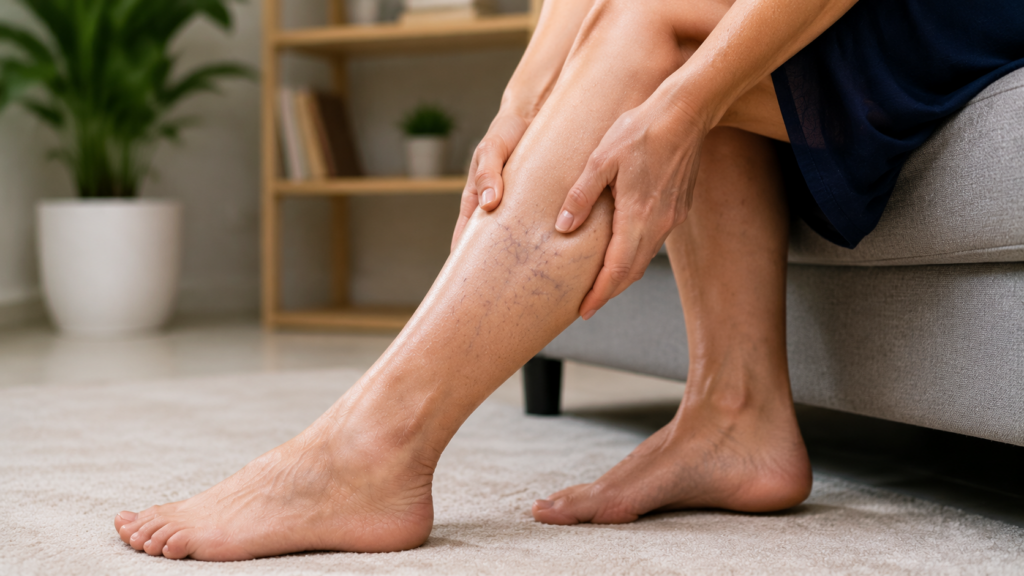
CVI rarely produces just one symptom in isolation. Alongside heaviness and swelling, many patients also notice aching or throbbing by end of day, itching or mild burning near the ankle, nighttime leg cramping, small visible veins that haven’t yet bulged, or skin that feels slightly tight or dry near the ankle. Noticing several of these together strengthens the case for a proper evaluation rather than waiting to see if symptoms resolve on their own.
Because CVI is progressive, symptoms that start as mild evening heaviness and swelling tend to build over time rather than fade. Left unaddressed, the same underlying pressure can eventually lead to visible varicose veins and skin changes that are harder to reverse. Catching the pattern early, while it’s still just heaviness and swelling, generally means simpler treatment and a faster path to relief.
How Chronic Venous Insufficiency Is Diagnosed
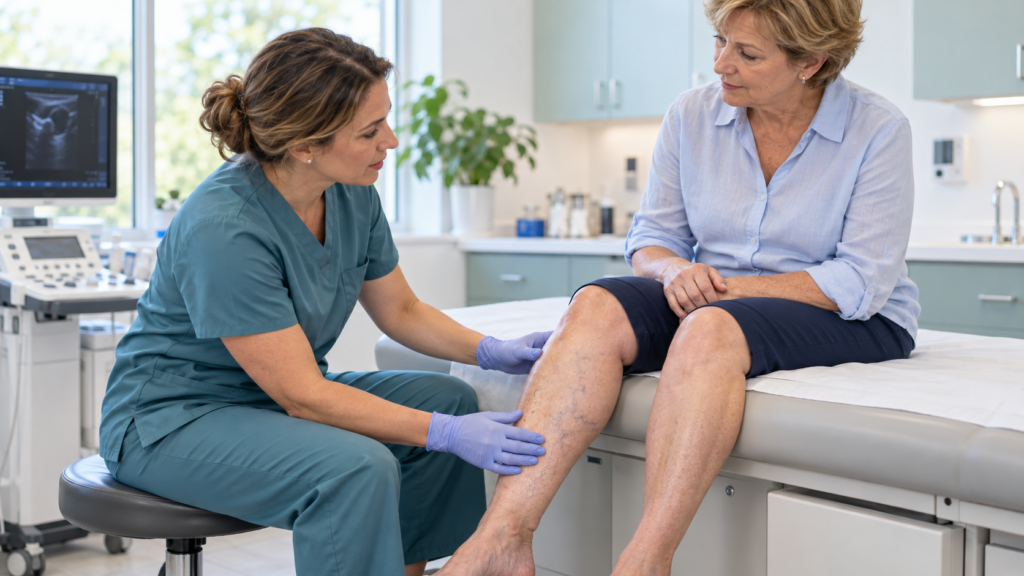
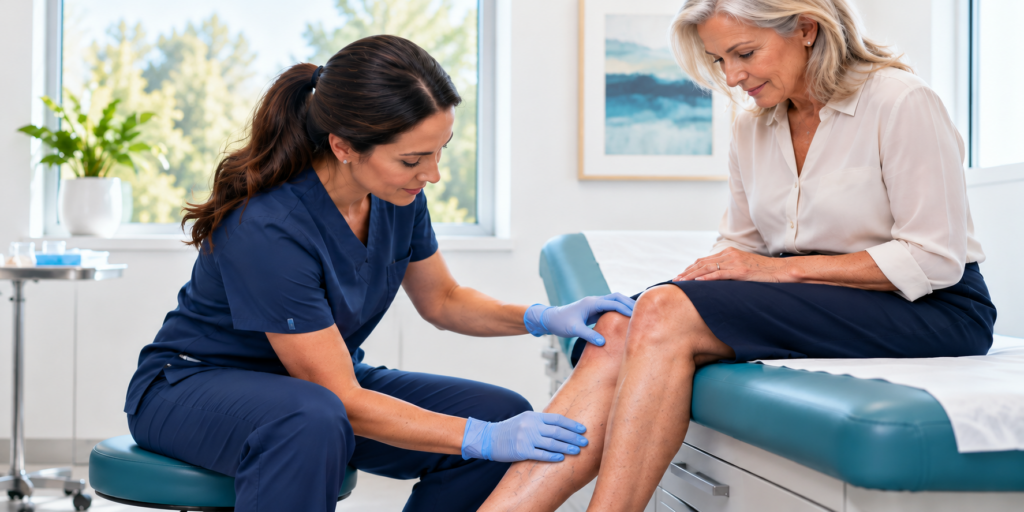
An accurate diagnosis starts with a physical exam and a conversation about when your symptoms happen and what makes them better or worse. From there, most evaluations include a duplex ultrasound, a painless imaging test that shows exactly how blood is flowing through your leg veins and identifies which valves aren’t functioning properly.
Don’t Wait for Visible Veins to Get Answers
Heavy legs and evening swelling are easy to dismiss as just a long day, but together, they’re one of the clearest early signals of chronic venous insufficiency. At MVM Health, our Reading-area patients get a full ultrasound-based evaluation that can identify the cause before symptoms progress further. Schedule a consultation to find out what your legs are actually telling you.
This step matters because heaviness and swelling can technically have other causes too, including heart, kidney, or medication-related factors. Ultrasound confirmation is what separates an educated guess from an actual diagnosis, and it’s typically the documentation insurance companies require before approving treatment.
Insurance Coverage for Heavy Legs and Swelling Evaluation
A common misconception is that insurance-covered vein treatment only applies once veins are visibly advanced. In practice, coverage is usually based on documented functional symptoms, heaviness, swelling, aching, that affect your daily life, not on how the veins happen to look. If you’ve been managing these symptoms quietly, assuming they weren’t “bad enough” to be covered, it’s worth having them formally evaluated rather than continuing to guess.
Our team verifies insurance benefits ahead of your appointment whenever possible, so you have a clear picture of coverage and any out-of-pocket costs before treatment decisions come up.
What Treatment Looks Like
Treatment depends on what your ultrasound shows and how symptoms are affecting your daily life. Options generally range from conservative to more involved: compression stockings and leg elevation for milder cases, activity adjustments like movement breaks during long shifts, or minimally invasive procedures such as radiofrequency ablation, endovenous laser therapy, VenaSeal, or sclerotherapy for more significant venous reflux.
Most in-office procedures take under an hour, use local anesthesia, and allow patients to resume normal activity the same or next day. For a full comparison of these procedures, see our guide: Vein Treatments: Comparing RFA, VenaSeal, Sclerotherapy & More.
When to See a Vein Specialist in King of Prussia, PA
Consider scheduling an evaluation if you notice:
- Leg heaviness that consistently builds through the day
- Ankle or lower leg swelling that’s worse by evening and better by morning
- Aching, cramping, or itching alongside the heaviness or swelling
- Small visible veins near the ankle or calf
- A family history of varicose veins or vein disease
At MVM Health, our team provides personalized care in Reading PA, using advanced, minimally invasive treatments designed around your individual needs.
Seek prompt medical attention if you experience sudden swelling in one leg, especially when accompanied by pain, warmth, or redness, as these symptoms may require immediate evaluation.
Meet Our Vein Care Team
Our board-certified providers evaluate heavy legs and swelling as a combined symptom pattern every day, and can tell you clearly whether what you’re experiencing reflects venous insufficiency or another cause entirely. Learn more about our vein care providers before scheduling your visit.
Finding a Vein Doctor Near Reading, PA
If you’ve been searching for a vein doctor near me in Berks County, look for a practice that performs duplex ultrasound in-office during your first visit, verifies insurance ahead of time, and can explain your specific diagnosis rather than a generic assumption based on appearance.
If you’re located elsewhere in Pennsylvania, we also see patients at our other locations. Patients closer to Montgomery County can read about early symptom recognition on our King of Prussia varicose veins page, and patients in the Lehigh Valley can find our full first-visit walkthrough on our Bethlehem vein consultation page.
Don’t Wait for Visible Veins to Get Answers
Heavy legs and evening swelling are easy to dismiss as just a long day, but together, they can be early signs of chronic venous insufficiency. At MVM Health, our Reading, PA patients receive a comprehensive evaluation, including ultrasound-based testing, to help identify the underlying cause of vein symptoms before they progress.
If you’re experiencing leg heaviness, swelling, aching, or visible veins, our team is here to help you understand your options.
Get Directions to our MVM Health Reading office or schedule your vein consultation today to take the