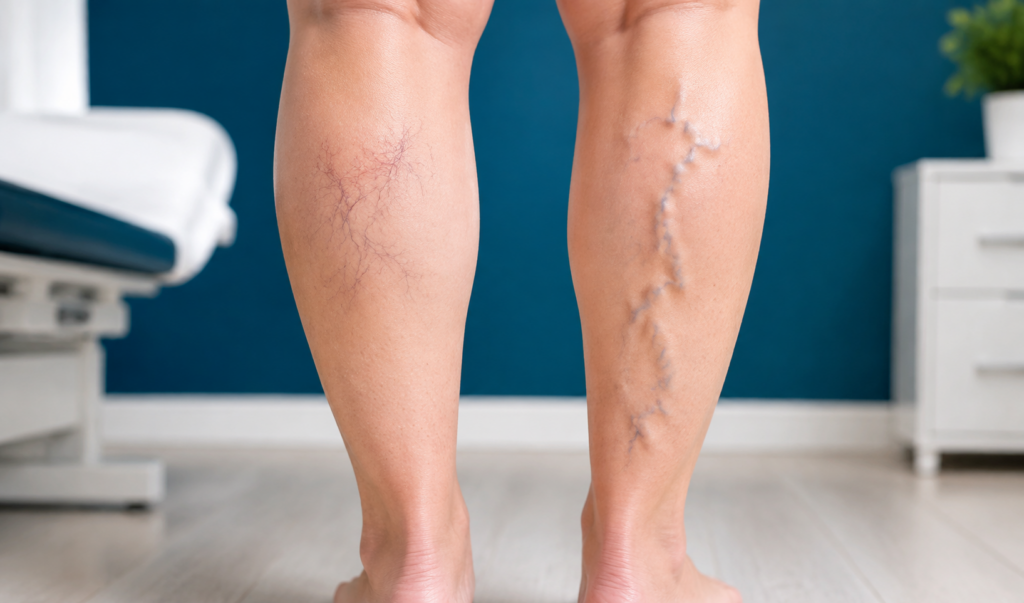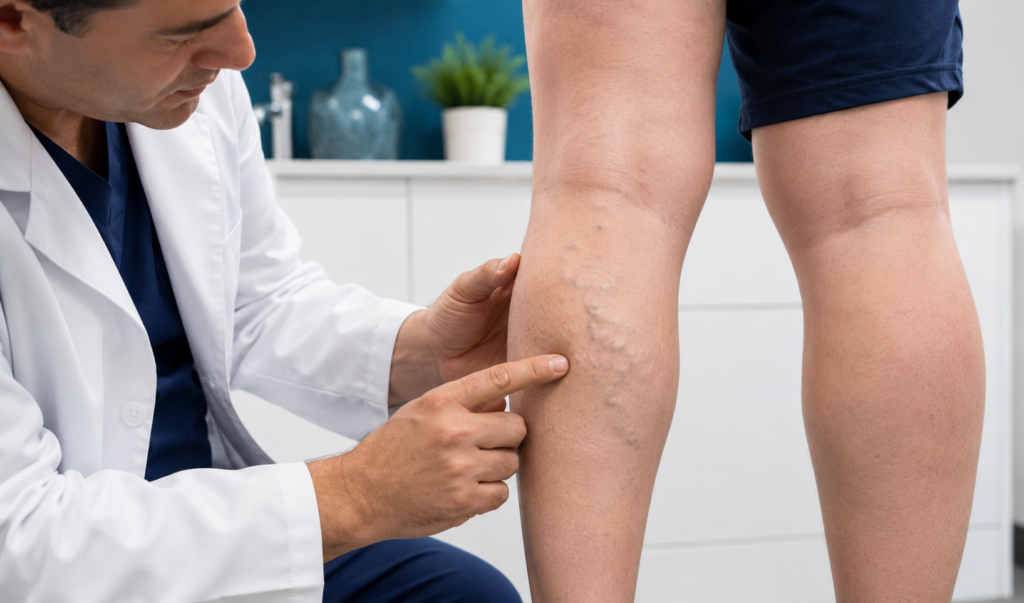

Burning legs at night can be caused by poor vein circulation, specifically chronic venous insufficiency, along with other conditions like peripheral neuropathy, restless legs syndrome, or peripheral artery disease. Venous burning tends to build throughout the day, worsen with prolonged standing or sitting, and ease with leg elevation or movement, which sets it apart from the other common causes. If it’s a recurring pattern, it’s worth having a vein evaluation rather than assuming it’s “just” nerve pain or restlessness.
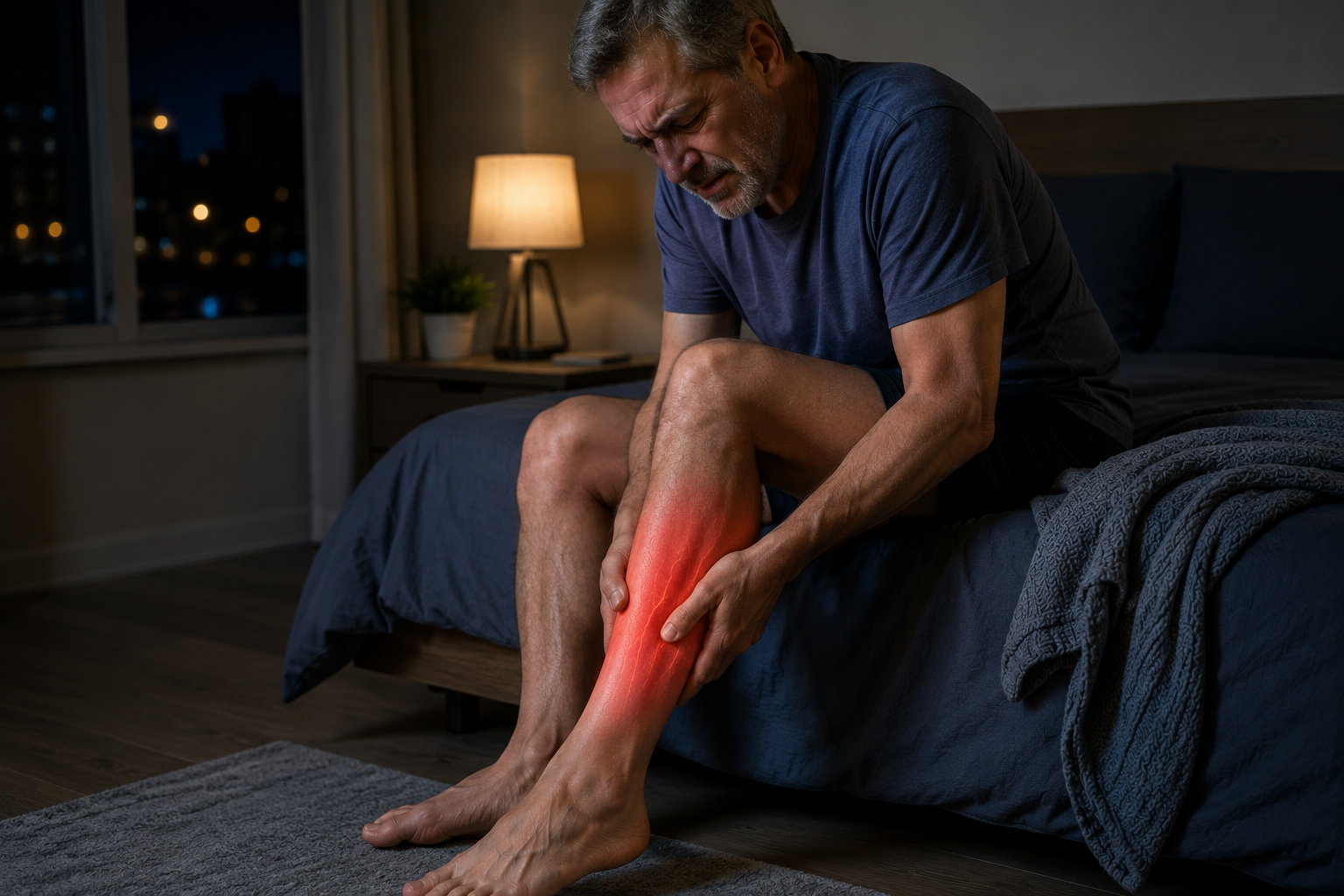
If you’ve ever gone to bed and felt your legs start to burn, tingle, or ache the moment you lie down, you’re not imagining it, and you’re far from alone. Nighttime leg burning is a common complaint, and it’s often brushed off as restless legs or blamed vaguely on “poor circulation” without ever getting a real answer. One of the most overlooked explanations is chronic venous insufficiency, a condition where the valves in your leg veins aren’t working properly. At MVM Health, we see this pattern often enough that it’s worth walking through exactly how to recognize it.
Why Do Legs Burn Specifically at Night?
Several things happen at once when you lie down that can make circulation-related symptoms more noticeable at night:
- The day’s pressure catches up with you. Hours of standing, sitting, or walking allow blood to gradually pool in the lower legs if vein valves aren’t functioning well. By evening, that accumulated pressure is at its highest.
- You’re no longer distracted. During the day, movement and activity mask mild discomfort. At rest, with fewer distractions, the same sensations become much more noticeable.
- Blood flow shifts when you lie flat. Changing position can change how blood redistributes in the legs, which can intensify sensations that were more tolerable while upright.
This is part of why so many circulation-related leg symptoms– heaviness, aching, burning, are worse in the evening and at night, even though the underlying vein problem has been present all day.
Is It Poor Vein Circulation, or Something Else?
Burning legs at night isn’t caused by just one thing, and the exact pattern of your symptoms is the best clue to what’s actually going on. Here’s how the most common causes tend to differ.
| Condition | What It Feels Like | Key Pattern |
| Venous insufficiency | Burning, aching, or heaviness, sometimes with visible swelling or veins | Builds throughout the day, worse after standing/sitting, improves with elevation or movement |
| Peripheral neuropathy | Burning, tingling, “pins and needles,” sometimes numbness | Often starts in the feet, frequently linked to diabetes, doesn’t reliably improve with elevation |
| Restless legs syndrome (RLS) | An urge to move the legs, often with burning, crawling, or itching sensations | Occurs specifically at rest or inactivity, relieved by movement, not by elevation |
| Peripheral artery disease (PAD) | Cramping, aching, sometimes burning | Often worsens with leg elevation (opposite of venous causes) and improves when legs hang down |
The elevation response is one of the more useful clues here: venous-related burning typically eases when you prop your legs up, while PAD-related pain often does the opposite. If you’re not sure which pattern fits, that ambiguity itself is a good reason to get evaluated rather than guess.
Signs Your Burning Legs Point to a Vein Problem
Burning that’s related to venous insufficiency usually shows up alongside other vein-specific signs, not as an isolated symptom. Watch for:
- A heavy or tired feeling in the legs that builds through the day
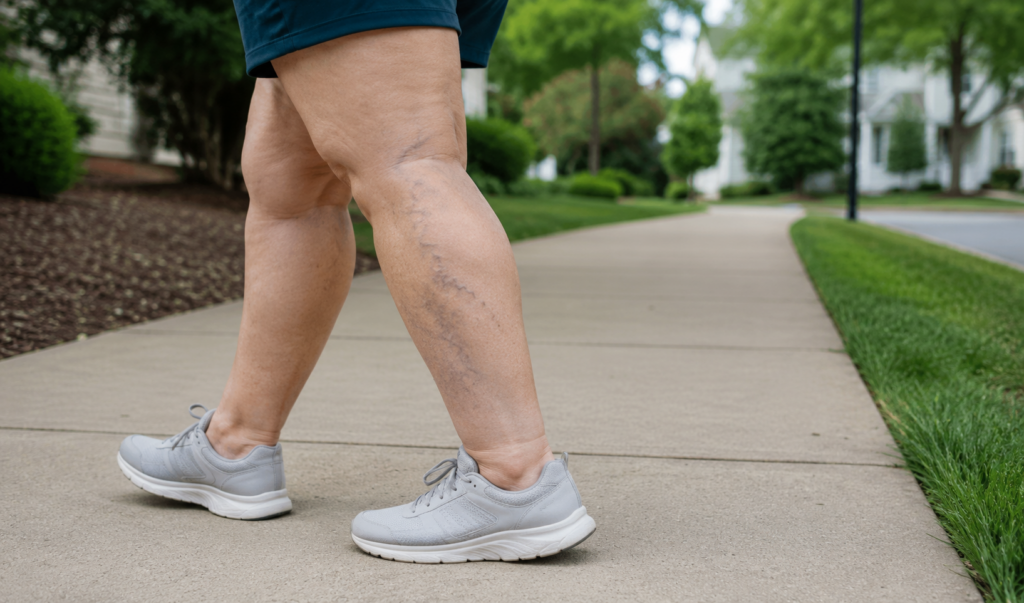
- Visible swelling around the ankles, especially by evening
- Visible varicose or spider veins, even mild ones
- Itching or dry, discolored skin near the ankles
- Symptoms that noticeably improve when you elevate your legs or wear compression stockings
If several of these are present alongside the burning sensation, venous insufficiency becomes a much more likely explanation than a purely neurological cause.
What Poor Vein Circulation Has to Do With It
When the one-way valves inside your leg veins weaken, blood doesn’t move as efficiently back toward your heart. Some of it pools instead, increasing pressure inside the vein walls. That pressure irritates surrounding nerve endings and tissue, which is one of the mechanisms believed to produce the burning, aching, and heaviness people describe. This is the same underlying process that, over time, can also lead to visible varicose veins, ankle swelling, and skin changes, so burning legs at night is often one of the earlier signals in a broader pattern covered in our full guide to vein symptoms, rather than a standalone issue.
Is Burning Legs at Night Affecting Your Sleep?
A burning sensation in your legs may be more than simple discomfort. If poor vein circulation or venous insufficiency is contributing to your symptoms, a proper evaluation can help identify the cause. At MVM Health, our vein specialists use advanced diagnostic testing, including duplex ultrasound when needed, to understand your vein health and recommend the right treatment approach.
When to See a Vein Specialist
Nighttime leg burning is worth a proper evaluation, rather than continued guessing, if:
- It happens more nights than not, rather than as an occasional occurrence
- It’s accompanied by swelling, visible veins, or skin changes
- Elevation or compression stockings noticeably help, which points toward a vein cause
- It’s disrupting your sleep on a regular basis
- Over-the-counter remedies for “restless legs” haven’t made a meaningful difference
A vascular specialist can perform a duplex ultrasound, a simple, painless imaging test, to see exactly how blood is flowing through your leg veins and confirm whether venous insufficiency is contributing to your symptoms.
Wondering If Your Burning Legs Are Vein-Related? The MVM Health team can evaluate your symptoms with a duplex ultrasound and let you know exactly what’s driving the burning, whether it’s venous insufficiency or something else that needs a different kind of care.
Schedule Your Vein Evaluation with MVM Health or call our office today
Frequently Asked Questions
Can poor vein circulation really cause a burning sensation in the legs?
Yes. When vein valves weaken and blood pools in the lower legs, the resulting pressure can irritate nearby nerve endings and tissue, producing a burning or aching sensation. This is a recognized symptom of chronic venous insufficiency, not just a coincidental complaint.
Why does my leg burn more when I lie down at night?
Lying down changes how blood redistributes in your legs and removes the daytime distractions that mask mild discomfort. If venous insufficiency has caused pressure to build up over the day, that pressure, and the sensations it causes, often becomes most noticeable once you’re finally at rest.
How can I tell if my burning legs are from veins or nerve damage?
Venous-related burning tends to build gradually through the day, worsen after standing or sitting, and ease with leg elevation. Nerve-related burning (peripheral neuropathy) often starts in the feet, may include numbness or tingling, and doesn’t reliably improve with elevation. If you’re unsure, a vein evaluation with ultrasound can help clarify the cause.
Is burning legs at night the same as restless legs syndrome?
Not necessarily. Restless legs syndrome specifically involves an urge to move the legs, along with uncomfortable sensations, and is relieved by movement rather than elevation. Venous insufficiency can also cause nighttime discomfort, but it’s more consistently linked to standing/sitting patterns during the day and tends to respond to elevation or compression rather than movement alone.
What can I do at home for burning legs before seeing a specialist?
Elevating your legs above heart level for 15–20 minutes before bed, wearing graduated compression stockings during the day, and avoiding long periods of completely static standing or sitting can all help if the cause is venous. If these steps don’t meaningfully improve your symptoms within a couple of weeks, it’s a reasonable point to schedule an evaluation.
Does MVM Health treat burning legs caused by vein problems?
Yes. MVM Health’s vascular specialists evaluate symptoms like burning, heaviness, and swelling with a duplex ultrasound to confirm whether venous insufficiency is the cause, then build a treatment plan that can include compression therapy, sclerotherapy, or minimally invasive procedures depending on what the evaluation shows.
Which vitamin deficiency causes leg burning?
A deficiency in vitamin B12 is one of the most common vitamin-related causes of burning legs or feet because it can damage peripheral nerves. Low levels of vitamins B1, B6, and vitamin E may also contribute to burning sensations. However, burning legs can also result from poor vein circulation, diabetes, or other medical conditions, so a proper evaluation is important.
How do I stop my leg from burning?
The best treatment depends on the underlying cause. Elevating your legs, staying active, wearing compression stockings (if recommended), and avoiding prolonged sitting or standing may help if poor circulation is the cause. If the burning is severe, persistent, or accompanied by swelling, visible veins, or skin changes, you should see a healthcare provider for an accurate diagnosis.
How do I treat a burn on my leg?
If you have a heat or chemical burn, cool the area under running water for about 20 minutes, cover it with a clean, non-stick dressing, and avoid applying ice directly to the skin. If you’re referring to a burning sensation in your leg rather than an actual burn, treatment depends on the cause, such as vein disease, nerve problems, or another medical condition.
Can heart problems cause burning legs?
Heart disease does not usually cause burning legs directly. However, heart conditions that lead to poor circulation or fluid buildup can contribute to leg discomfort. Burning legs are more commonly associated with chronic venous insufficiency, peripheral neuropathy, diabetes, or peripheral artery disease. A medical evaluation can help determine the cause.
How do I treat a burning sensation in my legs naturally?
Some people find relief by elevating their legs, walking regularly, maintaining a healthy weight, staying hydrated, stretching, and avoiding long periods of sitting or standing. If poor vein circulation is contributing to your symptoms, compression stockings may also help when recommended by your provider. Persistent or worsening symptoms should be evaluated by a vein specialist.
Does low B12 cause burning feet?
Yes. A vitamin B12 deficiency can damage nerves, leading to burning, tingling, numbness, or weakness in the feet and legs. Blood testing can confirm a deficiency, and treatment often includes vitamin B12 supplements or injections under a healthcare provider’s guidance.
What foods should I avoid with burning feet?
If burning feet are related to diabetes or inflammation, limiting added sugars, refined carbohydrates, highly processed foods, excessive alcohol, and foods high in unhealthy fats may help support overall nerve and vascular health. Eating a balanced diet rich in vegetables, fruits, lean proteins, whole grains, and B vitamins can promote healthy circulation and nerve function. If your symptoms are caused by vein disease, dietary changes alone will not treat the underlying condition, and medical evaluation may be needed.
Key Takeaways
- Burning legs at night can stem from venous insufficiency, peripheral neuropathy, restless legs syndrome, or peripheral artery disease, and the pattern of symptoms helps tell them apart.
- Venous-related burning typically builds through the day and improves with elevation; PAD often does the opposite.
- Burning alongside swelling, visible veins, or skin changes points more strongly toward a vein cause.
- A duplex ultrasound is the most reliable way to confirm whether poor vein circulation is behind your symptoms.
- Recurring nighttime burning that disrupts sleep is worth a real evaluation rather than ongoing guesswork.
If nighttime leg burning has become a regular part of your routine, it doesn’t have to stay that way. MVM Health’s vein specialists can help you find out exactly what’s causing it and build a plan to get your legs, and your sleep, back to normal.