
Can Vein Disease Cause Leg Pain?
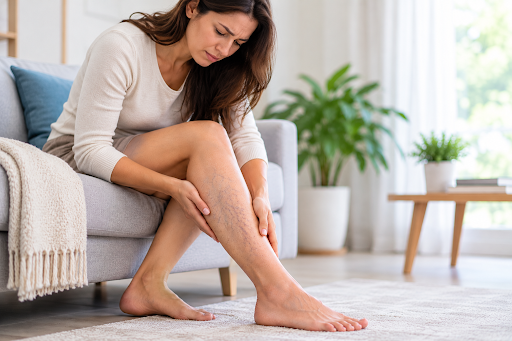
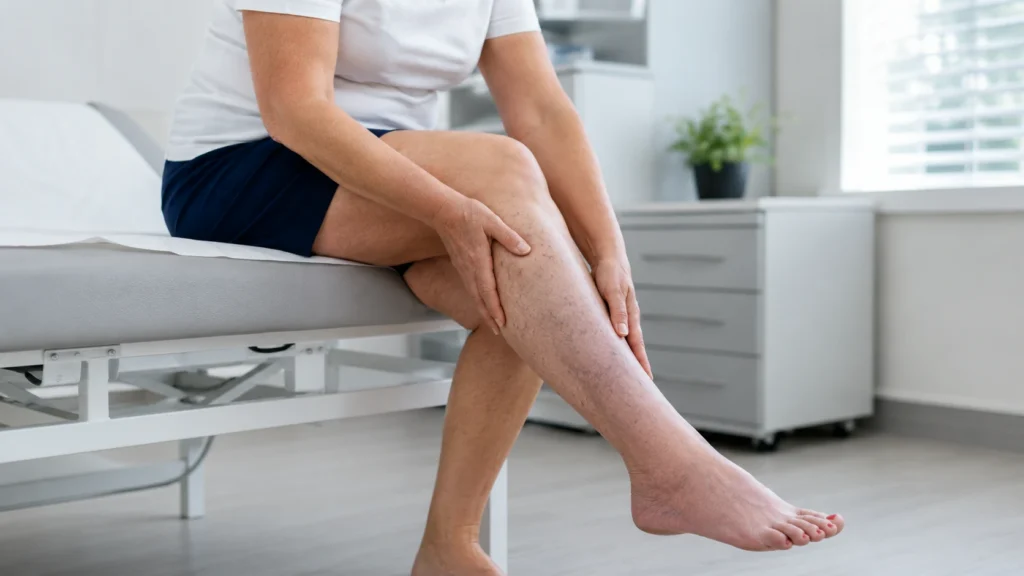
Yes. Vein disease can cause leg pain when weakened vein valves allow blood to move backward and collect in the lower legs. The resulting pressure may create a dull ache, heaviness, throbbing, burning, cramping, or tightness that becomes more noticeable after long periods of standing or sitting.
The strongest clue is often not how intense the pain feels. It is how the pain changes throughout the day.
Vein-related discomfort commonly:
- Builds as the day continues
- Worsens after standing or sitting for a long time
- Occurs with ankle or lower-leg swelling
- Improves with walking, elevation, or overnight rest
- Appears alongside varicose veins, itching, or skin changes
However, leg pain can also come from nerves, joints, muscles, arteries, or blood clots. Symptoms alone cannot confirm the cause. A comprehensive physical examination and vascular ultrasound can determine whether leg pain & vein disease East Stroudsburg are connected and help identify the most appropriate treatment.
The Pattern of Your Pain May Matter More Than the Pain Level
A patient may describe leg pain as a three out of ten and still have meaningful venous reflux. Another person may report severe calf pain that has nothing to do with the veins.
That is why the number on a pain scale rarely tells the whole story.
When trying to understand unexplained leg discomfort, pay attention to three questions:
1. What time of day does it feel the worst?
Venous discomfort often becomes more noticeable in the afternoon or evening. Gravity has been working against the leg veins for hours, especially if the day involves prolonged standing or sitting.
A person may wake with relatively comfortable legs but notice aching, tight shoes, sock marks, or swelling around the ankles by dinner.
2. What position makes it better or worse?
Vein-related pain often worsens when the legs remain below the heart without much muscle movement.
Standing at work, sitting through a long drive, or remaining at a desk may allow more blood to collect in the lower legs. Walking activates the calf muscles, while elevation helps gravity move blood away from the feet.
3. What appears with the pain?
Pain accompanied by swelling, heaviness, visible veins, itching, warmth, skin discoloration, or recurring nighttime cramps may deserve a vein evaluation.
One symptom alone can be vague. A pattern of related symptoms provides more useful information.
Why Faulty Vein Valves Can Make the Legs Hurt
Veins carry blood back toward the heart. Because leg veins work against gravity, they contain one-way valves that help prevent blood from falling backward.
When those valves weaken or fail, some blood moves in the wrong direction. This is known as venous reflux.
The backward flow increases pressure inside the vein. Over time, that pressure can affect nearby branches and tissues, contributing to:
- Aching
- Swelling
- Leg fatigue
- Heaviness
- Throbbing
- Burning or itching
- Muscle cramping
- Skin inflammation
- Enlarged surface veins
When this valve problem becomes persistent, it may be diagnosed as chronic venous insufficiency.
The pain does not always come directly from a vein that is visible through the skin. A deeper superficial vein may be malfunctioning while the surface of the leg looks relatively normal.
That is one reason people sometimes dismiss early vein disease. They expect to see large, twisted veins before considering circulation as a cause.
Can You Have Vein Disease Without Visible Varicose Veins?
Yes. A person can have venous reflux without prominent varicose veins.
The earliest signs may be easy to explain away:
- Legs feel unusually tired after work
- Ankles look slightly fuller in the evening
- Socks leave deeper marks than before
- Calves ache after standing
- The skin around the ankle feels itchy
- Restless or cramping sensations interrupt sleep
- One leg consistently feels heavier
Visible varicose veins may appear later, but they are not required for vein disease to be present.
The opposite is also possible. Some visible veins cause few symptoms. Appearance alone does not reveal how well the vein valves are working.
Bring the Pattern, Not Just the Pain Score
Request a vein evaluation at MVM Health in East Stroudsburg. Bring details about when your discomfort starts, what makes it worse, whether swelling appears, and what changes after elevation. Those clues – combined with an examination and ultrasound when appropriate-can provide a clearer answer than the pain score alone.
The “End-of-Day Test” for Leg Symptoms
This simple observation cannot diagnose vein disease, but it may help you describe your symptoms more accurately during an appointment.
For several days, notice your legs at three points:
In the Morning
Ask yourself:
- Is the pain absent or reduced after sleeping?
- Has the swelling decreased overnight?
- Do shoes and socks fit normally?
Late in the Day
Look for:
- Ankle swelling
- New tightness in shoes
- Deep sock marks
- Heaviness
- Aching after standing
- More prominent veins
- Burning or itching near the ankles
After Elevating the Legs
Notice whether 15 to 30 minutes of elevation reduces pressure, swelling, or aching.
Symptoms that repeatedly build during the day and improve with elevation may suggest a venous component. They do not prove that veins are the cause, but the pattern gives your provider useful diagnostic information.
Patients experiencing this specific weighed-down sensation can also read about what causes heavy legs and when to seek vein care in East Stroudsburg.
What Does Vein-Related Leg Pain Feel Like?
There is no single sensation that every patient experiences.
Vein-related discomfort may feel like:
- A dull ache deep in the calf
- Pressure or fullness in the lower leg
- Throbbing around a bulging vein
- Burning or warmth near the skin
- Tightness around the ankle
- Fatigue that makes the legs feel heavy
- Cramping after a long day
- Tenderness over a visible vein
- Restlessness when trying to sleep
The discomfort may affect one leg more than the other, although both legs can be involved.
Symptoms often become worse after:
- Standing through a work shift
- Sitting at a desk for several hours
- Taking a long car trip
- Remaining inactive
- Spending time in hot weather
- Reaching the end of an active day
The pain may improve after walking because the calf muscles help push venous blood upward. However, improvement with walking is only one clue and should not be used as a diagnosis.
Leg Pain Is Not Always a Vein Problem
Choosing a treatment before identifying the cause can lead to disappointing results.
Vein disease is one possible source of leg pain, but several other conditions can create similar symptoms.
Vein Pain Versus Nerve Pain
Nerve-related pain is often described as:
- Shooting
- Electric
- Tingling
- Numb
- Pins and needles
- Burning along a narrow path
- Pain that begins in the back or hip and travels down the leg
Nerve pain may change with spinal position, bending, coughing, or prolonged sitting. Weakness or numbness may also occur.
Vein-related pain is more likely to feel heavy, achy, swollen, or pressured and may worsen as the day continues.
The two conditions can also exist simultaneously. MVM Health’s guide to radiculopathy and nerve-root symptoms explains how compressed or irritated nerves can affect the legs.
Seven Clues That Leg Pain May Be Connected to Vein Disease
A vein evaluation may be appropriate when several of these clues occur together.
1. Pain Gets Worse While Standing
Long periods without calf-muscle movement can make venous pooling more noticeable.
2. The Ankles Swell by Evening
Swelling that builds during the day and improves overnight is a common reason patients seek vein care.
3. Elevation Brings Relief
Raising the legs may reduce pressure and swelling by assisting venous return.
4. Visible Veins Are Changing
Veins may become larger, more twisted, tender, or more noticeable over time.
5. The Skin Near the Ankle Is Changing
Persistent redness, itching, flaking, darkening, thickening, or hardening may indicate more advanced venous pressure.
6. The Legs Feel Heavy Rather Than Simply Sore
Patients often describe venous discomfort as carrying extra weight in the lower legs rather than experiencing one sharp painful spot.
7. Compression Helps Only While You Wear It
Compression stockings may reduce swelling and discomfort, but they do not repair a damaged valve. Symptoms may return after the stockings are removed.
These clues do not replace diagnostic testing. They help identify when testing may be worthwhile.
Why the Visible Vein May Not Be the Real Source
Imagine seeing water on a floor beneath a ceiling stain. Drying the floor does not repair the pipe causing the leak.
Visible veins can work the same way.
A bulging branch near the calf may be receiving excessive pressure from a malfunctioning vein higher in the leg. Treating only the branch may improve what is visible without addressing the source of the backward blood flow.
A proper vein evaluation attempts to answer:
- Which vein is refluxing?
- Where does the reflux begin?
- Is the abnormal flow connected to the painful area?
- Are the deeper veins open?
- Is another condition more likely to be causing the symptoms?
MVM Health provides information about additional vein conditions and the symptoms they may cause.
How Is Vein-Related Leg Pain Diagnosed?
A responsible diagnosis begins before any treatment is selected.
Step 1: The Symptom Pattern Is Reviewed
Your provider may ask:
- When did the pain begin?
- Is one leg worse?
- What happens after standing?
- Does elevation help?
- Do you experience swelling?
- Have your veins or skin changed?
- Have you had previous blood clots or vein procedures?
- Does pain occur during walking or afterward?
- Is there numbness, weakness, or back pain?
Specific answers are more useful than simply saying the leg “hurts.”
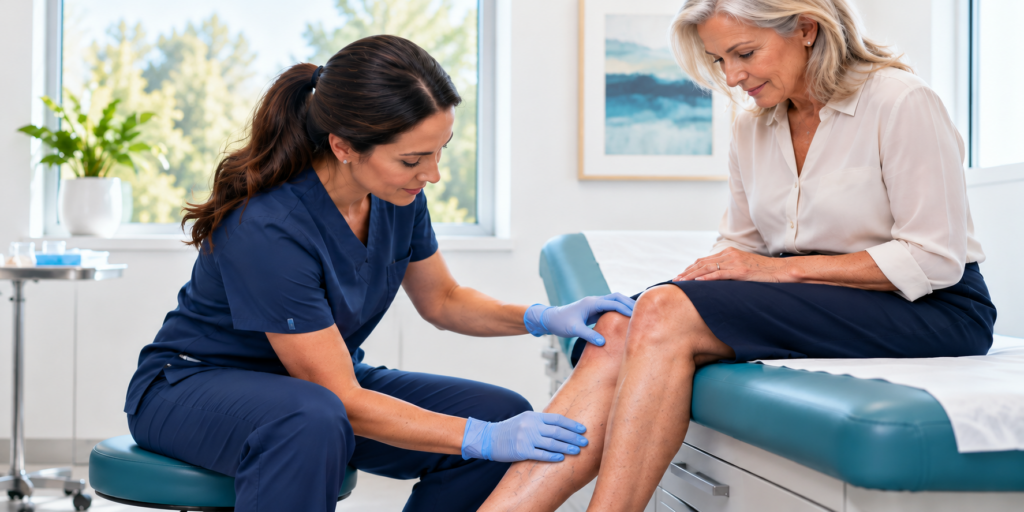
Step 2: The Legs Are Examined
The examination may include checking:
- Visible veins
- Areas of swelling
- Skin color and texture
- Tenderness
- Temperature
- Pulses
- Wounds or irritated areas
- Differences between the legs
This helps determine whether the symptoms appear venous, arterial, neurologic, orthopedic, or potentially related to another medical condition.
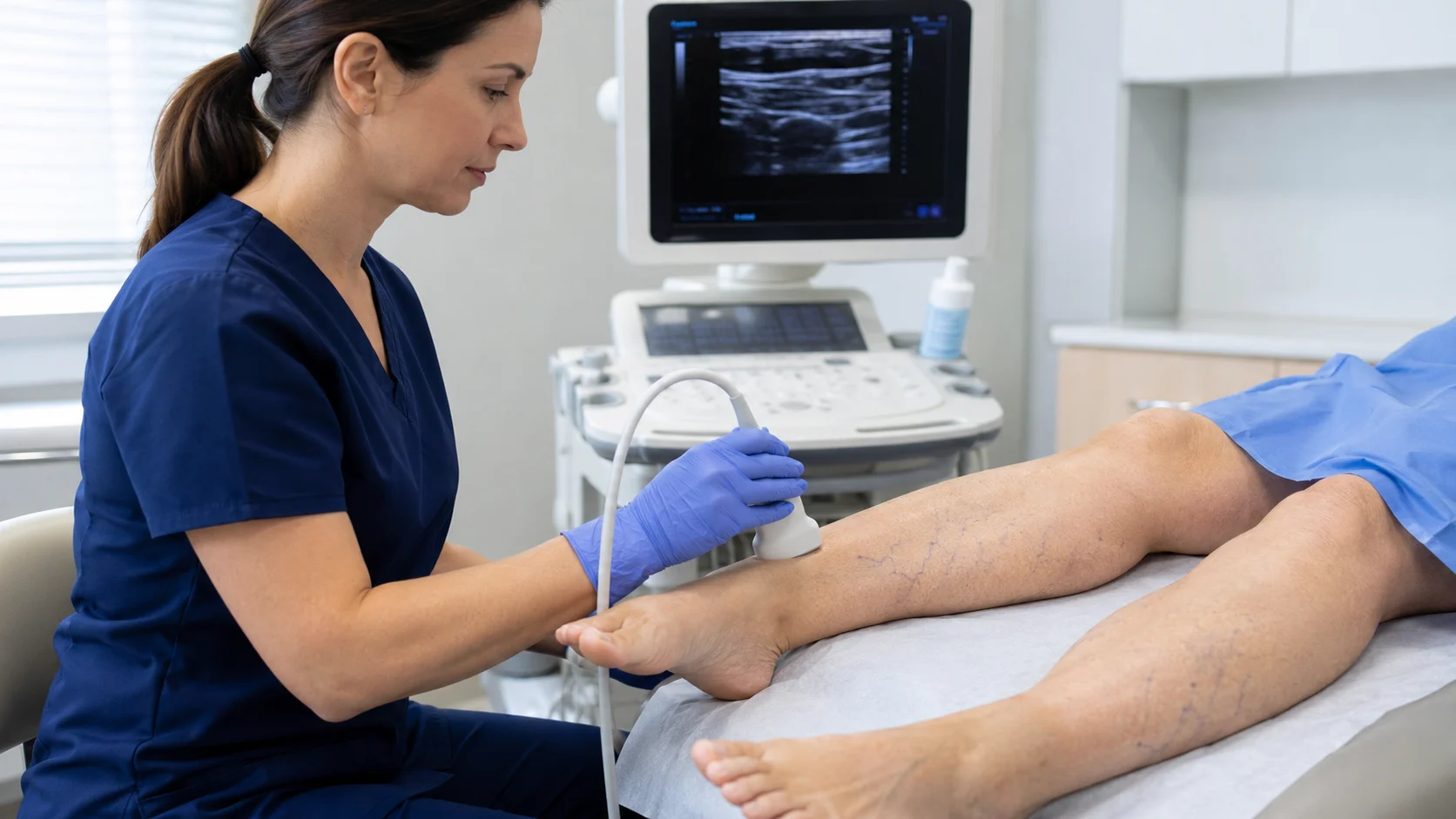
Step 3: Duplex Ultrasound Evaluates Blood Flow
Duplex ultrasound uses sound waves to examine the veins and measure the direction of blood flow.
The test may show:
- Whether a vein valve is leaking
- Which vein is affected
- How blood moves when the patient changes position
- Whether a vein is obstructed
- Whether the deep veins remain open
- Whether the treatment of a superficial vein may be appropriate
The scan is noninvasive and does not use radiation.
Most importantly, ultrasound can reveal a problem that cannot be detected by examining the surface of the leg.
What Happens If Venous Reflux Is Found?
Treatment depends on the vein involved, symptom severity, ultrasound findings, health history, and treatment goals.
Not every patient requires a procedure.
Conservative Symptom Management
A treatment plan may begin with:
- Regular walking
- Avoiding prolonged immobility
- Leg elevation
- Weight management when appropriate
- Compression stockings
- Skin care
- Managing related medical conditions
Walking activates the calf-muscle pump and may reduce pooling. Read more about walking and venous insufficiency.
These measures may control symptoms, but they generally do not restore a damaged vein valve.
Radiofrequency Ablation
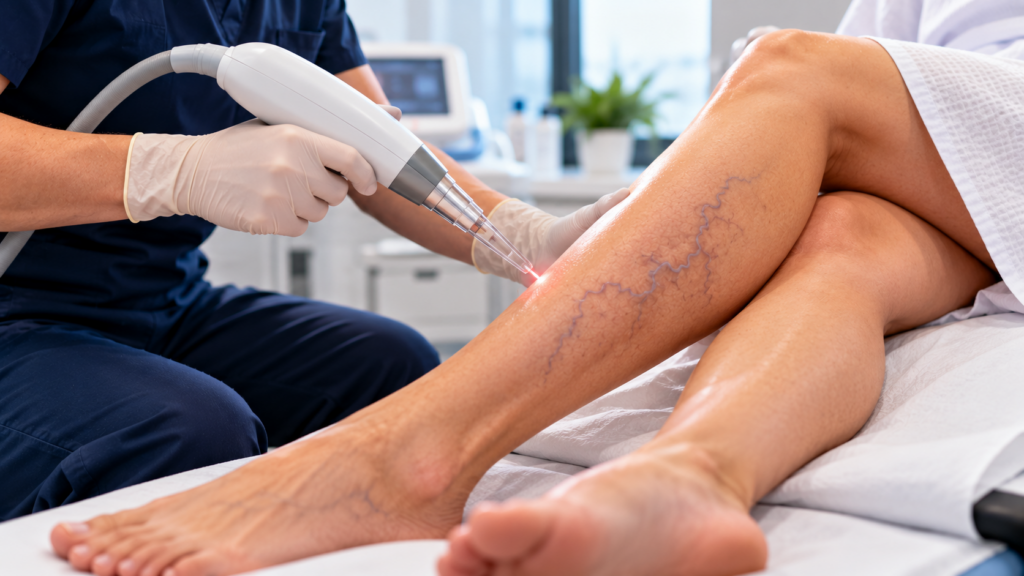
Radiofrequency ablation uses controlled thermal energy to close a refluxing superficial vein from the inside.
A thin catheter is placed into the vein under ultrasound guidance. Once the faulty vein closes, blood is redirected through healthier pathways.
This procedure is often performed in an outpatient setting using local anesthetic.
Sclerotherapy
Sclerotherapy involves injecting a medical solution into a targeted vein so it closes.
It may be used for spider veins, smaller varicose veins, or selected abnormal branches depending on the patient’s anatomy and ultrasound findings.
Ambulatory Phlebectomy
Ambulatory phlebectomy removes raised surface veins through very small skin openings.
It treats visible branches, while another procedure may be needed if an underlying source vein is also refluxing.
Endovenous Laser Treatment
Endovenous laser therapy also uses heat to close an unhealthy vein. The difference is the type of energy used.
The appropriate technique depends on the vein, anatomy, provider assessment, and individual medical considerations.
Patients can review MVM Health’s range of minimally invasive vein treatments before discussing which option fits their diagnosis.
Vein Evaluation in East Stroudsburg, PA
People searching for answers about leg pain and vein disease in East Stroudsburg are often caught between two assumptions:
Either the pain is “just part of getting older,” or the veins are “only cosmetic.”
Neither assumption is reliable.
MVM Health evaluates vein-related symptoms at its East Stroudsburg office:
MVM Health – East Stroudsburg
296 East Brown Street, Suite D
East Stroudsburg, PA 18301
The location serves patients from East Stroudsburg, Stroudsburg, Bartonsville, Tannersville, Mount Pocono, and surrounding Monroe County communities.
Visit the MVM Health vein specialist in East Stroudsburg page for location and appointment information.
Do Not Ask Only, “Where Does It Hurt?”
The more useful question may be:
What happens to the pain when gravity, movement, and time of day change?
That pattern can reveal why discomfort keeps returning even when rest, pain relievers, or new shoes provide temporary relief.
A vein evaluation can help determine whether blood is moving in the wrong direction, whether another condition should be investigated, and which treatment – if any – matches the actual source of the symptoms.