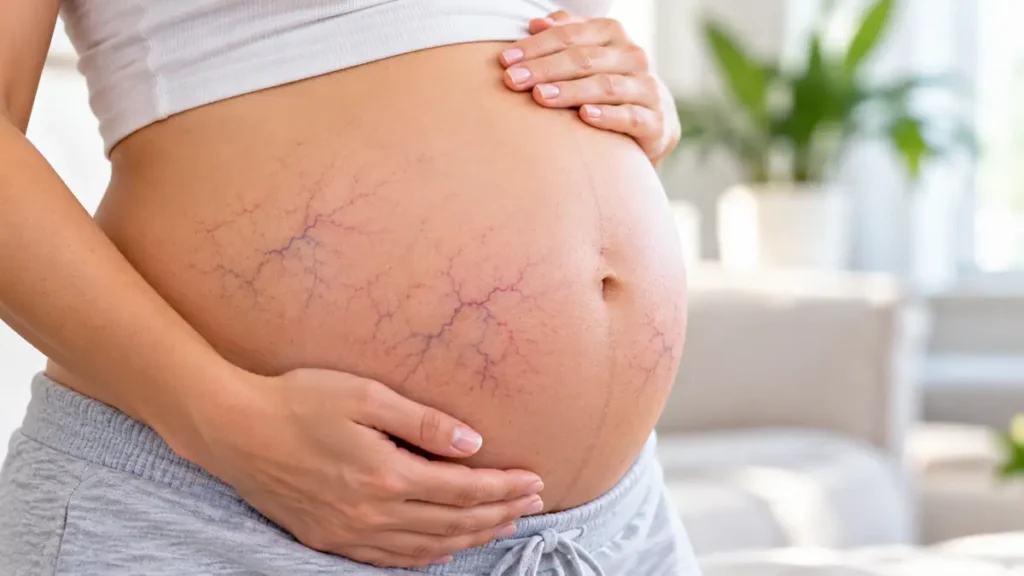

Seeing raised, twisted veins on your legs may make you wonder whether you have varicose veins or a deeper circulation problem. You might also hear a specialist mention venous reflux during an evaluation and wonder whether it means the same thing.
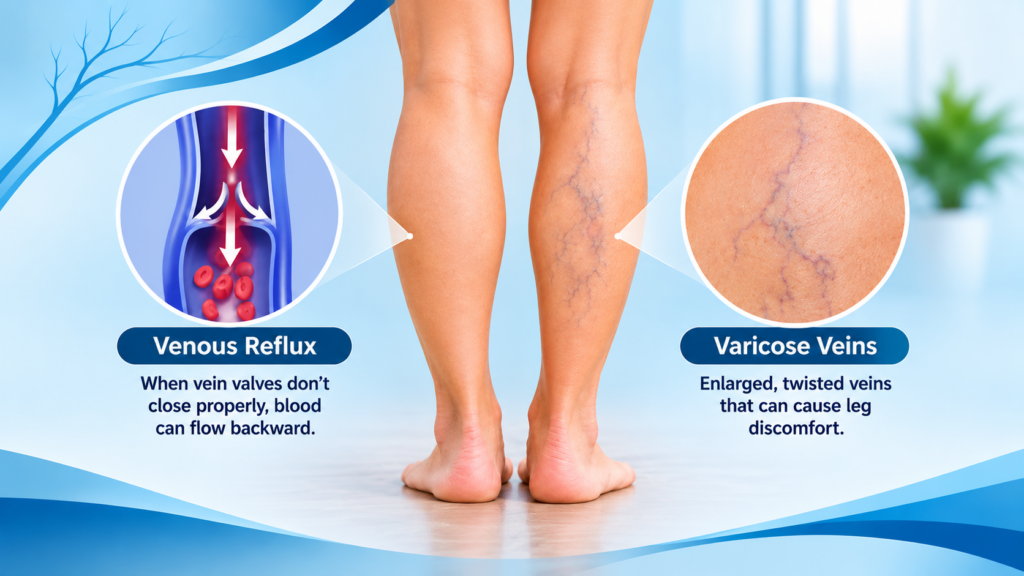
The key difference between venous reflux vs varicose veins is that venous reflux describes blood flowing backward through veins, while varicose veins are enlarged, twisted veins that can often be seen beneath the skin.
For patients in Scotch Plains, NJ, understanding this distinction can help explain why a vein evaluation may involve more than examining visible veins.
Venous Reflux vs. Varicose Veins: Understanding the Main Differences
Although these conditions are closely related, they describe different aspects of vein health.
| Feature | Venous Reflux | Varicose Veins |
| What it means | Backward blood flow caused by valves that do not close properly | Enlarged, twisted veins, usually near the skin |
| Visibility | Usually cannot be identified by appearance alone | Often visible as raised or bulging veins |
| Main concern | Abnormal blood flow and increased pressure within affected veins | Structural changes in the affected vein |
| Possible symptoms | Heaviness, aching, swelling, or other venous symptoms | Aching, throbbing, itching, heaviness, or no symptoms |
| Diagnosis | Usually evaluated using duplex ultrasound | Often recognized during examination; ultrasound may assess underlying reflux |
The important point: Varicose veins may develop because of venous reflux, but not every visible varicose vein indicates significant reflux, and reflux can occur without obvious bulging veins.
How Does Venous Reflux Develop Inside the Legs?
Healthy leg veins contain one-way valves that help blood move upward toward the heart. Calf-muscle movement also supports this process.
When these valves become weakened or damaged, they may not close completely. This allows some blood to flow backward, increasing pressure within the affected veins.
This backward flow is called venous reflux.
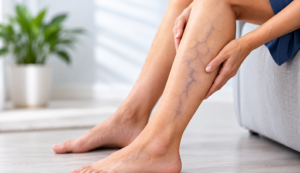
Over time, increased venous pressure may contribute to swelling, aching, heaviness, and changes in the veins or surrounding tissues. Venous reflux is one possible contributor to chronic venous insufficiency, although these terms are not interchangeable.
Risk factors for venous disease can include family history, aging, pregnancy, previous blood clots, excess body weight, and prolonged standing.
The Society for Vascular Surgery’s clinical practice guidelines recommend duplex ultrasound as the diagnostic test of choice when evaluating venous reflux in patients with chronic venous disease.
Why Do Some People Develop Varicose Veins?
Varicose veins form when superficial veins become enlarged and distorted. They may appear blue or purple and can look twisted, rope-like, or raised beneath the skin.
In many cases, increased pressure associated with poorly functioning vein valves contributes to their development.
However, their appearance does not always reflect the severity of an underlying circulation problem. Some people have prominent varicose veins with relatively few symptoms. Others experience discomfort despite having less noticeable surface changes.
If you are comparing different visible vein conditions, MVM Health’s article on varicose and spider veins in Scotch Plains provides additional information about their appearance and associated concerns.
Can Venous Reflux Exist Without Visible Varicose Veins?
Yes. Venous reflux can affect veins beneath the skin without producing prominent varicose veins.
Someone may experience recurring leg heaviness, aching, or ankle swelling even when their legs appear relatively normal.
On the other hand, visible spider veins do not automatically indicate clinically significant venous reflux.
This is why appearance alone cannot establish the cause of leg symptoms.
For a closer look at small surface veins, read MVM Health’s related blog, Can Spider Veins Cause Symptoms in Scotch Plains, NJ?.
How Can a Vein Ultrasound Clarify the Difference?
A venous duplex ultrasound combines imaging with blood-flow measurements to help clinicians examine the veins and their function.
During the examination, a trained professional may assess whether blood is moving in the expected direction, whether reflux is present, and which veins are affected.
The findings help distinguish visible surface changes from underlying blood-flow abnormalities.
For example, a patient may have a bulging vein connected to a larger vein with reflux. Another patient may have visible varicose veins without the same underlying pattern.
These differences matter because treatment decisions depend on the location and significance of the problem, symptoms, and overall medical history.
An ultrasound is not automatically required for every small visible vein. Your provider can determine whether imaging is appropriate based on your examination.
Not Sure What’s Causing Your Vein Symptoms?
Visible varicose veins and underlying venous reflux may require different considerations during evaluation.
At MVM Health in Scotch Plains, patients can discuss recurring leg symptoms, visible vein changes, and whether further testing is appropriate.
Does the Difference Affect Treatment Decisions?
Yes. Treatment planning is based on the underlying diagnosis rather than appearance alone.
For some patients, regular movement, leg elevation, or properly selected compression stockings may help manage discomfort. These measures can support symptom control but do not repair damaged vein valves.
When clinically significant reflux is identified, a specialist may discuss minimally invasive procedures that close an affected vein and redirect blood through healthier pathways. Treatment options can include endovenous thermal ablation, medical adhesive closure, or other procedures when appropriate.
Smaller surface veins may sometimes be addressed using sclerotherapy or another suitable method. Not every patient needs a procedure, and treating visible veins without understanding associated reflux may leave an underlying problem unaddressed.
MVM Health’s article on lifestyle changes and vein health in Scotch Plains explains which daily habits may support comfort and where their limitations lie.
When Should You Have Your Veins Evaluated?
Consider scheduling a routine evaluation if you notice persistent leg heaviness, recurring aching, swelling, bulging veins, or skin changes near the ankles.
A medical assessment is especially important when symptoms begin interfering with walking, standing, work, or everyday activities.
Sudden painful swelling in one leg, particularly with redness or warmth, requires prompt medical attention because a blood clot is one possible cause. Seek emergency care for sudden shortness of breath, chest pain, or fainting.
These symptoms should not be assumed to result from ordinary varicose veins or uncomplicated venous reflux.
Understanding Your Vein Health in Scotch Plains
MVM Health provides evaluation-based care for people experiencing varicose veins, spider veins, leg swelling, and other possible vein-related symptoms.
The Scotch Plains clinic is located at 1949 Westfield Ave, Scotch Plains, NJ 07076, serving patients from nearby communities including Westfield, Fanwood, Cranford, Plainfield, and Clark.
During a consultation, a provider can review your symptoms, medical history, and examination findings to determine whether further investigation is appropriate.
Visit the MVM Health Scotch Plains vein treatment page to learn more about local care options.
Venous Reflux and Varicose Veins: When to Seek Care
Varicose veins describe changes in the appearance and structure of veins, while venous reflux describes an abnormal blood-flow pattern that may contribute to those changes. Understanding venous reflux vs varicose veins can help patients recognize why visible veins and underlying circulation problems are not always the same.
If you notice persistent discomfort, swelling, or changing veins, an evaluation at MVM Health in Scotch Plains can help clarify the possible cause and guide appropriate next steps.