

Varicose veins fall into several distinct categories: trunk, reticular, spider (telangiectasias), perforator, pelvic, and, in advanced cases, varicose ulcers. They range from a purely cosmetic concern to a sign of more significant venous insufficiency, so identifying which type you have is the first step toward the right treatment.
Varicose veins affect millions of people and show up differently from one person to the next: some notice a faint web of red lines on the thigh, others develop large, rope-like veins that ache by the end of the day. Understanding which type you’re dealing with matters because it changes both the urgency and the treatment approach. This guide walks through each type, what causes them, and when it’s time to see a specialist rather than just a cosmetic concern.
Understanding Varicose Veins
Varicose veins develop when the one-way valves inside your veins weaken or become damaged. Normally, these valves keep blood moving in a single direction, back toward the heart, against gravity. When a valve fails, blood pools instead of moving efficiently, and the vein gradually stretches, twists, and enlarges under the extra pressure. Because the legs and feet bear the most weight and pressure from standing and walking, they’re where varicose veins most commonly appear.
Vein specialists often describe the severity of venous disease using the CEAP classification system, which ranges from C0 (no visible signs) to C6 (an active venous ulcer). The types below roughly track that spectrum, from the mildest, purely cosmetic presentations to the more advanced stages that need medical treatment.
Types of Varicose Veins
Trunk Varicose Veins
Trunk varicose veins are the type most people picture when they hear “varicose veins”: large, bulging, rope-like veins visible just beneath the skin, usually on the legs. They develop from significant venous insufficiency in the larger superficial veins.
Symptoms: Aching, heaviness, and discomfort in the affected leg, especially after standing or sitting for long stretches. Left untreated, trunk varicose veins can progress toward skin changes, ulcers, or blood clots.
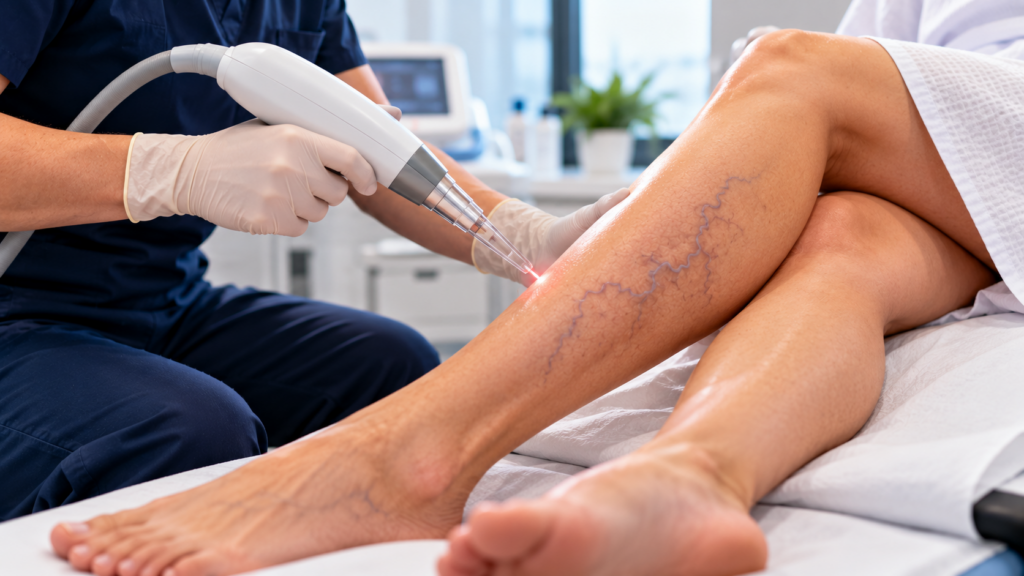
Treatment: Lifestyle changes and compression stockings for milder cases, with sclerotherapy, laser treatment, or procedures like endovenous laser therapy (EVLT) or vein stripping for more advanced cases.
Reticular Veins
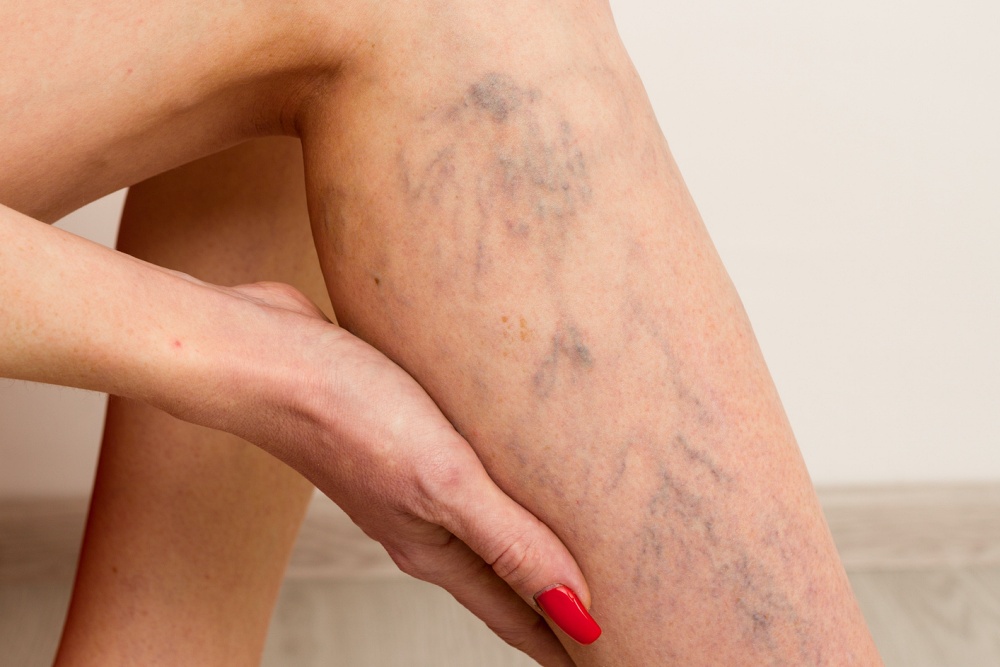
Reticular veins are smaller and less prominent than trunk varicose veins, appearing as blue or greenish veins under the skin, often in clusters on the thighs, knees, or ankles.
Symptoms: Usually mild, occasional itching or a burning sensation rather than significant pain. Reticular veins are also frequently connected to the development of spider veins nearby.
Treatment: Sclerotherapy or laser treatment, similar to trunk varicose veins, with compression stockings sometimes used to ease symptoms and slow progression.
Spider Veins (Telangiectasias)
Spider veins are the smallest and most superficial type, appearing as thin, web-like red, blue, or purple lines just under the skin, most often on the face, thighs, or legs.
Symptoms: Spider veins are typically painless and considered a cosmetic concern, though they can sometimes signal underlying venous insufficiency that isn’t yet visible on the surface.
Treatment: Sclerotherapy or laser therapy, both of which can significantly reduce or eliminate their appearance with minimal downtime.
Perforator Varicose Veins
Perforator veins connect the superficial venous system to the deeper veins beneath the muscle. When the valves in these connecting veins fail, blood can flow backward from the deep system into the superficial one, often appearing as bulging veins near the ankle.
Not Sure Which Type of Varicose Veins You Have?
Request a vein evaluation at MVM Health in East Stroudsburg. Bring details about when your discomfort starts, what makes it worse, whether swelling appears, and what changes after elevation. Those clues – combined with an examination and ultrasound when appropriate-can provide a clearer answer than the pain score alone.
Symptoms: Localized bulging, swelling, and, in more advanced cases, skin discoloration or changes near the ankle that can progress toward ulceration if left untreated.
Treatment: Because perforator vein problems sit at the connection point between two venous systems, treatment often requires targeted approaches like ultrasound-guided sclerotherapy or minimally invasive closure procedures rather than compression alone.
Pelvic Varicose Veins
Pelvic varicose veins develop in the veins around the pelvis and are more common in women, particularly during or after pregnancy, when increased blood volume and hormonal changes put extra pressure on pelvic veins.
Symptoms: A dull, aching pelvic pain that often worsens with prolonged standing or toward the end of the day, sometimes alongside varicose veins visible on the thigh or buttock.
Treatment: Evaluation typically starts with ultrasound or specialized imaging, since pelvic varicose veins aren’t visible the way leg veins are. Treatment can include ovarian vein embolization or other minimally invasive procedures depending on severity.
Varicose Ulcers
Varicose ulcers represent the most advanced complication of untreated varicose veins: open sores that develop on the skin, most often near the ankle, from prolonged venous insufficiency.
Symptoms: Persistent pain, swelling, and discharge from the sore, often with discolored or hardened skin around the wound.
Treatment: Managing a varicose ulcer means treating the wound itself and the underlying venous insufficiency together, typically through wound care, compression therapy, and procedures to restore healthier venous circulation.
Not Sure Which Type of Varicose Veins You Have?
Some types are purely cosmetic, while others signal deeper venous insufficiency that gets worse without treatment. An ultrasound evaluation can tell you exactly what’s going on beneath the surface and which treatment fits your situation.
Schedule Your Vein Evaluation or call our office today
Causes and Risk Factors
Several factors increase the likelihood of developing varicose veins:
- Age. Veins lose elasticity over time, and valves are more prone to weakening.
- Gender. Women develop varicose veins more often, partly due to hormonal shifts during pregnancy, menstruation, and menopause.
- Genetics. A family history of varicose veins raises your own risk significantly.
- Obesity. Extra weight adds pressure on the veins in the lower body.
- Prolonged standing or sitting. Jobs that keep you in one position for long periods increase risk.
- Pregnancy. Increased blood volume and pressure on leg veins during pregnancy commonly triggers new varicose veins.
For a closer look at these contributors, read about the eight risk factors for varicose veins.
Diagnosis and When to Seek Treatment
An accurate diagnosis starts with a physical exam and, in many cases, an ultrasound to assess how well blood is flowing through the veins and identify which valves have failed. This is especially important for types like perforator or pelvic varicose veins, which aren’t always obvious just by looking at the skin.
You should seek treatment if you experience:
- Pain, aching, or heaviness in the legs
- Swelling in the legs or ankles
- Skin changes or ulcers near the ankles
- Bleeding from a varicose vein
- Signs of infection, such as redness, warmth, or pus
Frequently Asked Questions
What are the different types of varicose veins?
The main types are trunk varicose veins, reticular veins, spider veins (telangiectasias), perforator varicose veins, pelvic varicose veins, and, in advanced cases, varicose ulcers. They range from a cosmetic concern to a sign of significant venous insufficiency that needs medical treatment.
What is the difference between spider veins and varicose veins?
Spider veins are small, thin, web-like veins near the skin’s surface and are usually a cosmetic issue. Varicose veins are larger, bulging, and often twisted, and are more likely to cause pain, swelling, or complications like ulcers if left untreated. Spider veins can sometimes indicate underlying venous insufficiency even when they look purely cosmetic.
Do reticular veins turn into varicose veins?
Reticular veins don’t automatically become varicose veins, but the two are often related, appearing in the same areas and pointing to a similar underlying issue with valve function. In some cases, untreated venous insufficiency behind reticular veins can progress to larger varicose veins over time.
Can varicose veins be a sign of something serious?
In most cases, varicose veins are a manageable venous condition rather than an emergency. That said, certain types, particularly trunk, perforator, and pelvic varicose veins, can signal more significant venous insufficiency and, if untreated, can progress to skin changes, ulcers, or blood clots. Symptoms like sudden swelling, redness, or bleeding warrant prompt evaluation.
How do I know which type of varicose veins I have?
The type is usually identifiable through a physical exam, though smaller or hidden types like perforator or pelvic varicose veins typically require an ultrasound to confirm. A vein specialist can determine the exact type and stage, and recommend treatment based on that diagnosis rather than the appearance alone.