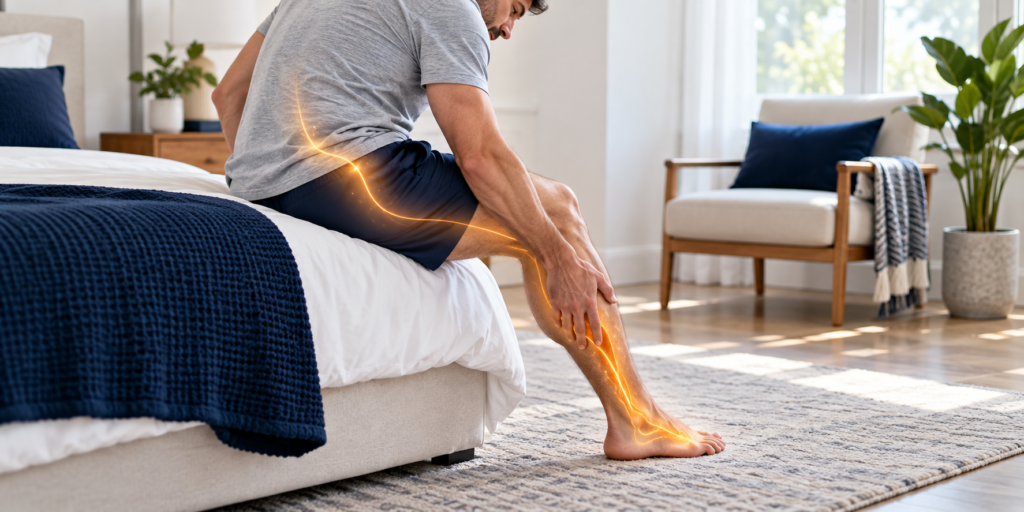


Not always. Subtalar fusion can relieve arthritis pain in the joint below your ankle, but it’s a permanent, irreversible procedure — and for many patients, non-surgical options like targeted ortho-biologic injections can relieve the same pain without giving up joint motion. Here’s how to know which path is right for you.
What Is the Subtalar Joint?
The subtalar joint sits just below your main ankle joint, where your heel bone (calcaneus) meets your ankle bone (talus). It’s actually made up of three small facet joints working together.
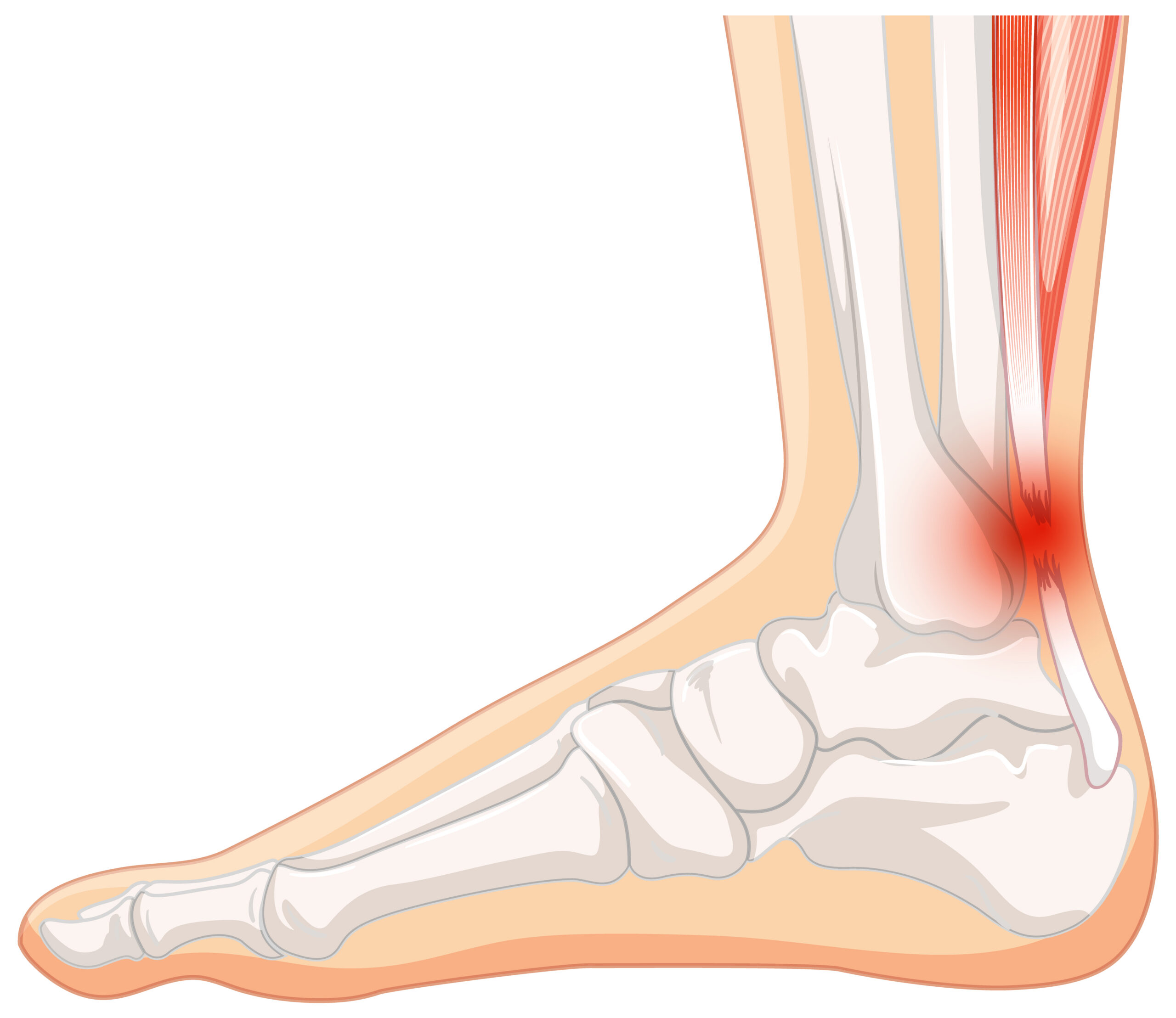
Its job: letting your heel and foot tilt side to side so you can walk comfortably on uneven ground a curb, a trail, an uneven sidewalk. It’s easy to overlook compared to the larger ankle joint above it, but when it’s damaged, everyday walking can become genuinely painful.
What Does Subtalar Arthritis Feel Like?
Subtalar arthritis develops when the cartilage cushioning this joint wears down or is injured, sometimes leading to bone spurs. Patients typically describe:
- A deep ache on the outer or inner side of the back of the foot, just below the ankle
- Pain that gets worse after standing or walking
- Occasional swelling in the same area
- A feeling of instability on uneven ground
If this sounds familiar, the next question is usually: does this mean I need surgery?
What Is Subtalar Fusion?
Subtalar fusion (also called subtalar arthrodesis) is a surgery that permanently joins the bones of the subtalar joint using screws or plates, stopping the joint from moving. Removing motion removes the painful friction but it also means that side-to-side flexibility is gone for good.
Recovery Timeline After Subtalar Fusion
|
Phase |
What to expect |
|
First 6–8 weeks |
No weight-bearing on the affected foot |
|
1.5–4 months |
Gradual return to full weight-bearing |
|
Up to 1 year |
Complete healing and return to normal activity |
Running is generally discouraged after subtalar fusion. The forces involved can overload neighboring joints, a pattern doctors call Adjacent Segment Disease (ASD) essentially, arthritis accelerating in the joints just above or below the one that was fused. Even without running, ASD can develop over time in some patients, which is one reason surgeons often reserve fusion for cases where non-surgical care hasn’t worked.
Can Subtalar Arthritis Be Treated Without Surgery?
Often, yes. A common underlying cause of subtalar joint problems is lax (loose) ankle ligaments, which let the joint move more than it should and gradually wears down the cartilage. Two ligaments do most of the stabilizing work here:
- The deltoid ligament sometimes described as the “duct tape” of the inner ankle, providing major support to the subtalar joint. Learn more about deltoid ligament injuries →
- The sinus tarsi ligaments smaller stabilizing ligaments on the outside of the foot
When these ligaments are the root cause, regenerative medicine techniques precise, ultrasound- and X-ray-guided injections of platelets or bone marrow stem cells can tighten the ligaments and reduce the excess joint motion that’s driving the damage, without the recovery time or permanence of fusion surgery.
When to See a Foot & Ankle Specialist
Don’t wait if you’re noticing:
- Foot pain that hasn’t improved after a few weeks of rest, ice, or over-the-counter pain relief
- Pain specifically below the ankle that worsens with walking on uneven ground
- Swelling or instability that’s affecting your daily activity
- Foot pain following a previous ankle injury, even an old one
Early evaluation matters the earlier a specialist can assess ligament laxity or cartilage wear, the more non-surgical options are usually still on the table.
A related condition worth ruling out: if your pain involves the joint itself rather than just the area below your ankle, it’s also worth reading about knee and joint arthritis symptoms, since arthritis often shows up in more than one joint over time.
FAQ
Can subtalar fusion completely eliminate pain?
It often relieves pain from the fused joint itself, but Adjacent Segment Disease can cause new pain to develop in nearby joints over time.
How long is recovery after subtalar fusion?
Most patients reach full weight-bearing within 1.5–4 months, with complete healing and return to normal activity taking up to a year.
Is running okay after subtalar fusion?
It’s generally not recommended, since the added force can accelerate arthritis in the joints above and below the fusion.
Are there real alternatives to subtalar fusion?
For many patients, yes addressing the underlying ligament laxity with platelet or stem cell injections can relieve pain without removing joint motion.
Is subtalar arthritis common?
It’s a fairly common source of hindfoot pain, often building gradually from years of wear or developing after a prior ankle injury. Addressing ligament instability early may help prevent progression.
Talk to a Specialist Before You Decide
Whether subtalar fusion is right for you depends on your specific joint, your ligaments, and how you’ve responded to conservative treatment so far. Our team can help you understand your options surgical and non-surgical before you commit to either one.
Schedule an Appointment or call (610) 936-8214
MVM Health East Stroudsburg 296 E Brown St D, East Stroudsburg, PA 18301 Get directions / visit our East Stroudsburg location →