


Walking into a pain consultation without knowing what to bring can leave you scrambling to remember details on the spot when the pain started, what you’ve already tried, which medications you’re on. Coming prepared makes the visit shorter, more accurate, and more useful for both you and your provider. Here’s exactly what to bring to your first pain consultation in East Stroudsburg, PA, and why each item matters.
Why Preparation Matters for a Pain Consultation
A well-prepared first visit helps your provider understand your condition faster and recommend a more accurate plan. Pain is inherently subjective, and details that seem minor to you like which movements make symptoms worse are often exactly what a specialist needs to narrow down the underlying cause.
Walking in unprepared isn’t a dealbreaker; a good provider will still ask the right questions. But bringing the items below can save you an extra visit and help your first consultation actually accomplish something concrete.
1. A List of Your Current Medications
Bring a written or printed list of every medication and supplement you’re currently taking, including dosages. This includes prescription medications, over-the-counter pain relievers, and any supplements you take regularly. Some pain treatments can interact with existing medications, and a clear list prevents your provider from having to guess or piece this together from memory.
If you’ve already tried medications specifically for your current pain, note which ones helped, which didn’t, and any side effects you experienced.
2. Any Prior Imaging or Test Results
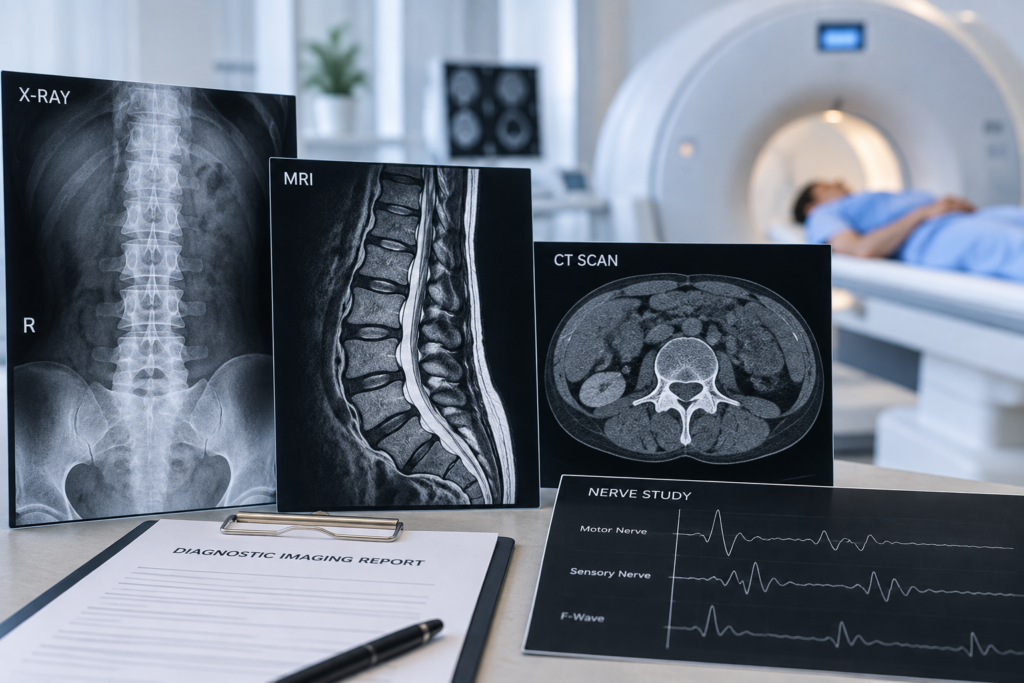
If you’ve had an X-ray, MRI, CT scan, or nerve study related to your pain, bring copies or have them sent ahead of your visit. Imaging can save significant time by giving your provider a starting point, rather than needing to order new tests before any real discussion of treatment can happen.
If you’re not sure whether older imaging is still relevant, bring it anyway a provider can decide whether it’s useful.
3. A Written Timeline of Your Symptoms
A simple, honest timeline of when your pain started, how it’s changed, and what makes it better or worse is one of the most useful things you can bring. Try to include:
- When the pain first started, and whether it began suddenly or gradually
- Whether it’s stayed the same, gotten worse, or come and gone
- What activities or positions make it better or worse
- Whether the pain radiates anywhere else, like down a leg or arm
- Any numbness, tingling, or weakness you’ve noticed alongside the pain
You don’t need to write an essay a few bullet points are enough to jog your memory during the appointment and make sure nothing important gets left out.
4. Your Insurance Card and Photo ID
Bringing your insurance card and a valid photo ID ensures your visit can be processed smoothly and your benefits verified accurately. If you’re unsure whether your plan covers pain management consultations, it’s worth calling ahead so there are no surprises about cost.
5. A List of Questions You Want Answered
Writing down your questions beforehand means you won’t forget to ask something important once you’re in the room. Common questions patients bring include:

- What’s likely causing my pain?
- What are my treatment options, starting with the least invasive?
- How long until I might notice improvement?
- Are there activities I should avoid in the meantime?
- Will this require ongoing visits, or is this a one-time evaluation?
There’s no such thing as a question that’s too basic. A good provider would rather answer it clearly than have you leave the office still unsure.
6. Records From Other Providers, If Relevant
If you’ve already seen a primary care doctor, physical therapist, chiropractor, or another specialist for this same issue, bring any notes or summaries from those visits. This helps avoid repeating tests or treatments that didn’t work, and gives your new provider a fuller picture of what’s already been tried.
7. Comfortable Clothing
Wear clothing that makes it easy to move the area that’s bothering you, since a physical exam is a standard part of most first visits. If your pain is in your back, loose-fitting clothing that allows for bending and stretching is more practical than restrictive clothing. If it’s in a joint like your knee or shoulder, clothing that allows easy access to that area helps the exam go smoothly.
8. A Family Member or Friend, If You’d Like Support
Bringing a trusted family member or friend to your appointment can help you remember details afterward and ask questions you might not think of in the moment. This is entirely optional, but especially useful for patients who feel anxious about medical visits or who are managing a complex history with multiple prior treatments.
Ready to Schedule Your Pain Consultation?
Coming prepared can make your first visit more productive from the very start. Schedule your pain consultation at MVM Health’s East Stroudsburg, PA office and bring this checklist along to make the most of your appointment.
What Happens During the Consultation Itself?
Once you arrive prepared, a typical first pain consultation usually includes:
- A detailed conversation about your symptoms, using the timeline and history you’ve brought
- A physical exam relevant to your specific pain
- A review of any imaging or records you’ve brought, or a discussion of what additional imaging might be needed
- A conversation about possible next steps, ranging from conservative options to more targeted treatments, depending on what’s found
You shouldn’t expect a final treatment decision to be made before this process is complete a responsible provider builds a plan around what the exam and history actually show, not around assumptions made before you’ve even sat down.
What If I Forget Something?
Forgetting an item on this list isn’t a reason to worry or cancel your appointment.
A pain consultation is a conversation, not a test you can fail. If you don’t have imaging on hand, your provider can request records be sent over, or order new imaging if it’s clinically appropriate. The goal of this list is simply to make your visit as efficient and useful as possible not to create pressure around a perfect first appointment.
Scheduling a Pain Consultation in East Stroudsburg, PA
MVM Health’s East Stroudsburg office is located at 296 E Brown St, Suite D, East Stroudsburg, PA 18301, open Monday through Friday, 8:00 am – 5:00 pm. Full details on the practice are available on our East Stroudsburg location page. You can reach the office directly at (610) 936-8214 or request an appointment online.
For pain and spine-specific evaluation details at this office, visit our pain management page for East Stroudsburg, PA, where the care team evaluates conditions such as back pain, neck pain, herniated disc, spinal stenosis, and sciatica, with non-surgical options like epidural injections, medial branch blocks, and radiofrequency ablation.
MVM Health can verify your insurance benefits before your visit, and also serves nearby Pennsylvania communities, including Bethlehem, PA and King of Prussia, PA, if either is more convenient for your schedule.