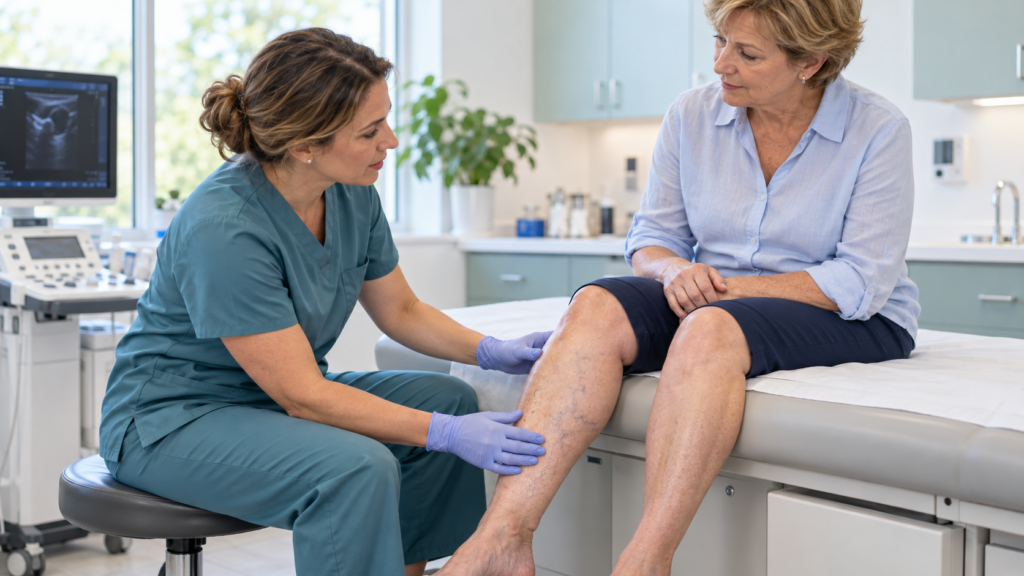


You get home, sit down, and finally notice it: your legs feel like they’re made of lead, and your socks have left a mark around your ankles that wasn’t there this morning. Most people chalk this up to a long day and move on. But when that heavy, swollen feeling becomes a regular part of your evenings rather than an occasional one, it’s often your body’s way of flagging a common, very treatable condition called chronic venous insufficiency. Here’s what’s actually happening beneath the surface, and when it’s worth talking to a vein specialist near King of Prussia, PA.
What Is Chronic Venous Insufficiency, in Plain Language?
Chronic venous insufficiency, or CVI, happens when the valves inside your leg veins stop working as well as they used to, letting blood pool in the lower legs instead of flowing efficiently back up to the heart. Think of those valves like tiny one-way doors when they’re healthy, they only let blood move in one direction. When they weaken, some blood slips backward and settles in the legs, which is what leads to that heavy, swollen feeling by the end of the day.
CVI isn’t rare, and it isn’t something to feel embarrassed or alarmed about. It’s a common, well-understood condition, and for most patients it’s manageable with the right care the key is recognizing the pattern early rather than assuming it’s just tiredness.
Why Do Heavy Legs and Swelling Happen?
Heavy, swollen legs happen because pooled blood adds pressure and fluid to the tissue in your lower legs, which your body registers as heaviness, tightness, or visible puffiness around the ankles. The longer that blood sits without moving efficiently, the more noticeable the symptoms tend to become, especially by the end of the day, after standing at work, or after a long drive.

Several things can make this more likely to happen:
- Getting older, since vein valves can weaken naturally over time
- Jobs that involve a lot of standing or sitting without much movement
- Pregnancy, which adds pressure on leg veins
- A family history of vein problems
- Carrying extra body weight, which adds strain on the venous system
- A previous blood clot or vein injury
- Long periods of inactivity, such as frequent long-distance travel
Having one or more of these doesn’t mean you’re guaranteed to develop CVI it just means it’s a bit more likely, depending on your own health history and how your body responds over time.
What Does Chronic Venous Insufficiency Actually Feel Like?
For a lot of patients, it starts subtly. You might notice:
- Legs that feel heavy, tired, or achy, especially by evening
- Swelling around the ankles that seems to go down overnight but comes back the next day
- A tight, uncomfortable feeling in the lower legs after standing for a while
- Visible surface veins, or skin that looks slightly darker near the ankles
- Itching or mild irritation over certain areas of the leg
- Restless legs or cramping, especially at night
- A sensation of tightness in your shoes or socks by the afternoon
If any of this sounds familiar, you’re not alone these are some of the most common reasons patients in King of Prussia and the surrounding communities schedule a vein evaluation each year.
When Should You See a Doctor About Heavy or Swollen Legs?
If heaviness or swelling shows up occasionally after a long day, it’s usually nothing urgent, but if it’s happening regularly, getting worse, or sticking around longer than it used to, that’s a good reason to get it checked. Waiting isn’t dangerous in most cases, but earlier evaluation generally means more treatment options stay available, and symptoms are easier to manage before they progress.
Symptoms Worth Scheduling an Evaluation For
- Swelling that happens most days, not just occasionally
- Heaviness or aching that’s starting to affect your daily activities
- Visible veins that are becoming more noticeable over time
- Skin changes, like discoloration or dryness, near the ankles
- Symptoms that don’t fully resolve with rest or elevation overnight
Warning Signs That Need Prompt Attention
A smaller group of symptoms shouldn’t wait for a routine appointment. Contact a doctor promptly, or seek urgent care, if you notice:
- Sudden swelling in just one leg, especially with pain
- Redness or warmth in the leg that feels hot to the touch
- An open sore or ulcer near the ankle that isn’t healing
- Sudden, severe leg pain
In rare cases, these can point to a blood clot or another condition that needs immediate medical attention rather than routine vein care.
Is Chronic Venous Insufficiency Treatable Without Surgery?
Yes, for most patients, chronic venous insufficiency can be managed with minimally invasive vein procedures that don’t involve major surgery, incisions, or extended time off your feet. The right approach depends on how advanced the condition is and which veins are affected, which is why a proper evaluation matters more than guessing from symptoms alone.
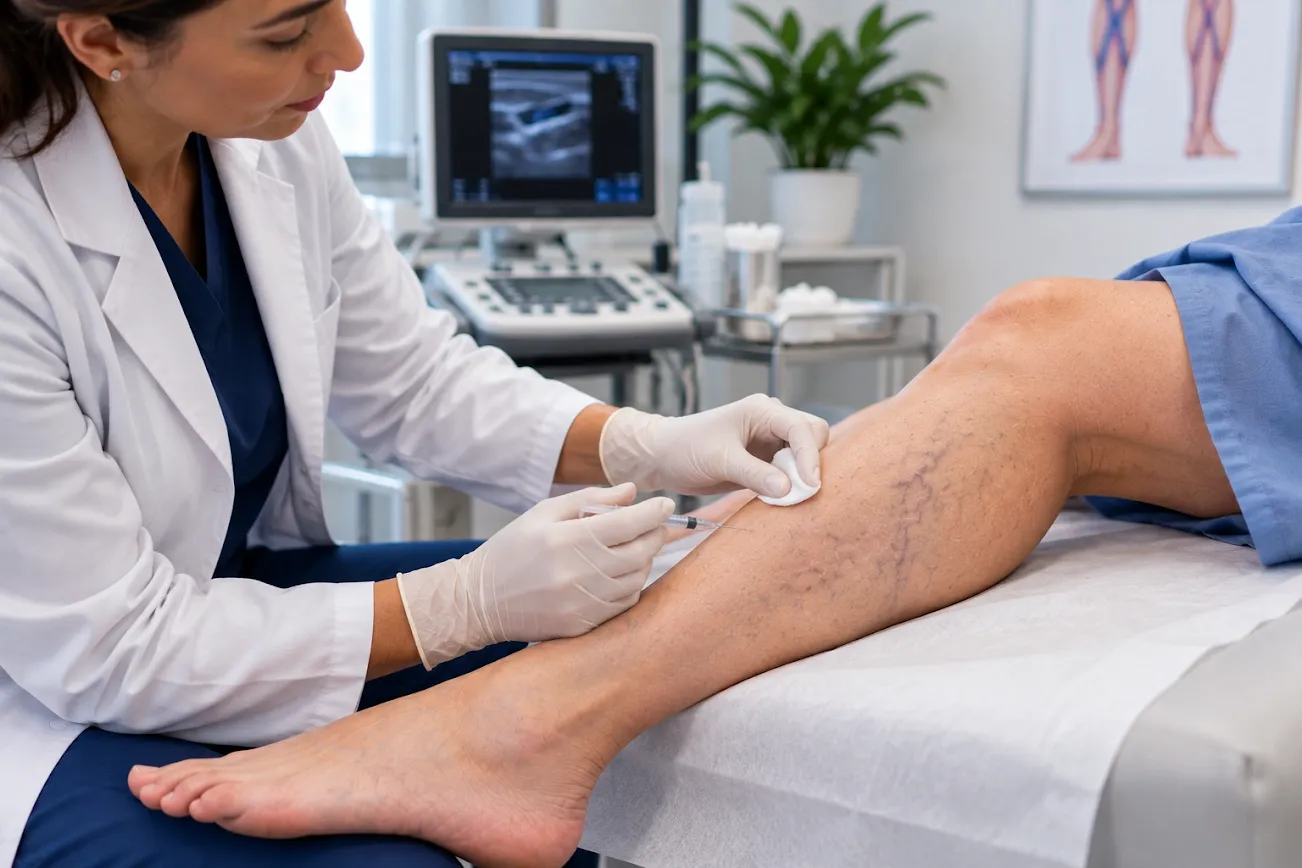
Depending on your specific situation, a specialist may talk with you about options like:
- Radiofrequency ablation : uses gentle heat to close off the vein that’s causing the backward blood flow, so circulation reroutes through healthier veins nearby
- Sclerotherapy : a solution injected into smaller, affected veins to help them fade over time
- VenaSeal : a medical adhesive that seals the problem vein closed
- Laser ablation : a similar heat-based approach using laser energy instead of radio waves
- Ambulatory phlebectomy: removes larger surface veins through very small incisions, typically for more advanced cases
Many patients are relieved to learn that leg vein treatment today looks very different from the vein stripping surgery of decades past — most options are outpatient, done in under an hour, with a relatively quick return to normal activity.
What Actually Happens at a Vein Evaluation?
It’s normal to feel a little unsure about what a first visit involves. Here’s what patients can typically expect:
Ready to Get Answers Specific to Your Legs?
Don’t ignore persistent heaviness, swelling, or aching in your legs. Schedule a vein evaluation with MVM Health in King of Prussia, PA to understand the cause and discuss treatment options tailored to your needs.
- A conversation about your symptoms when they started, how they’ve changed, and what makes them better or worse
- A physical exam of your legs
- A painless ultrasound, if needed, to see how blood is flowing through the veins beneath your skin
- A discussion of what your options actually are, based on what the exam shows not a one-size-fits-all recommendation
You should never feel rushed into a treatment decision before this evaluation is finished. A good specialist explains what they’re seeing and why they’re recommending a particular next step, in plain language you can actually follow.
What Happens If Symptoms Are Left Untreated?
Chronic venous insufficiency tends to be a progressive condition, meaning it can, in some cases, get gradually worse over time if it’s never addressed more persistent swelling, more noticeable veins, or skin changes near the ankles. This doesn’t happen to everyone, and the pace varies a lot from person to person. But it’s one of the main reasons providers encourage patients not to wait too long once symptoms become a regular part of daily life, rather than something that only shows up occasionally.
Everyday Habits That May Help Alongside Treatment
While these habits don’t replace a medical evaluation, some patients find that a few simple adjustments make daily symptoms more manageable:
- Elevating your legs above heart level for short periods during the day
- Taking short walking breaks if your job involves long stretches of sitting or standing
- Wearing properly fitted compression stockings, if recommended by your provider
- Staying hydrated and maintaining a healthy weight for your body
These steps can support your comfort day to day, but they’re not a substitute for a professional evaluation if symptoms are persistent or worsening.
Finding Leg Vein Treatment Near You in King of Prussia, PA
MVM Health’s King of Prussia office is located at 2200 Renaissance Boulevard, Suite 180, King of Prussia, PA 19406, and details on the practice can be found on our King of Prussia location page. You can reach the office at (610) 936-8214 or request an appointment online to talk with the care team about your symptoms.
For vein-specific evaluation and treatment details for this office, visit our vein specialist page for King of Prussia, PA. If heaviness and swelling are accompanied by back, hip, or joint discomfort, our King of Prussia team also provides pain and spine care at the same location, so related symptoms can be evaluated together rather than separately.
Most vein treatments can be checked against your insurance benefits before your visit, so you’re not left guessing about cost. If it’s more convenient, MVM Health also has nearby Pennsylvania offices in East Stroudsburg and Bethlehem.
Frequently Asked Questions
Is chronic venous insufficiency serious?
For most patients, it’s a manageable, common condition rather than a dangerous one. That said, ignoring it long-term can allow symptoms to progress, which is why evaluation is worth prioritizing rather than putting off indefinitely.
Will my insurance cover vein treatment?
It depends on your specific plan and whether the treatment is considered medically necessary. Verifying your benefits ahead of time is the most reliable way to understand your costs.
Is minimally invasive vein treatment painful?
Experiences vary by patient and by procedure, but most options involve little discomfort and don’t require significant downtime.
Can lifestyle changes help with heavy or swollen legs?
Some patients find that elevating their legs, staying active, and wearing compression stockings help manage day-to-day symptoms. These approaches can support treatment but generally don’t replace an evaluation if symptoms are persistent.
How long does treatment for CVI typically take?
This varies depending on the treatment chosen and how many veins are involved. A specialist can give you a timeline specific to your situation after your evaluation.
Do I need a referral to see a vein specialist?
This depends on your insurance plan. Some plans require a referral from your primary care provider, while others allow direct scheduling.
Will I need more than one treatment session? Some patients see meaningful improvement after a single session, while others need a combination of treatments depending on how many veins are affected and how advanced the condition is.
Ready to Get Some Answers?
If heavy or swollen legs have become part of your daily routine, it’s worth finding out why. Schedule a consultation at MVM Health’s King of Prussia, PA office to talk through your symptoms and learn what your options actually are.