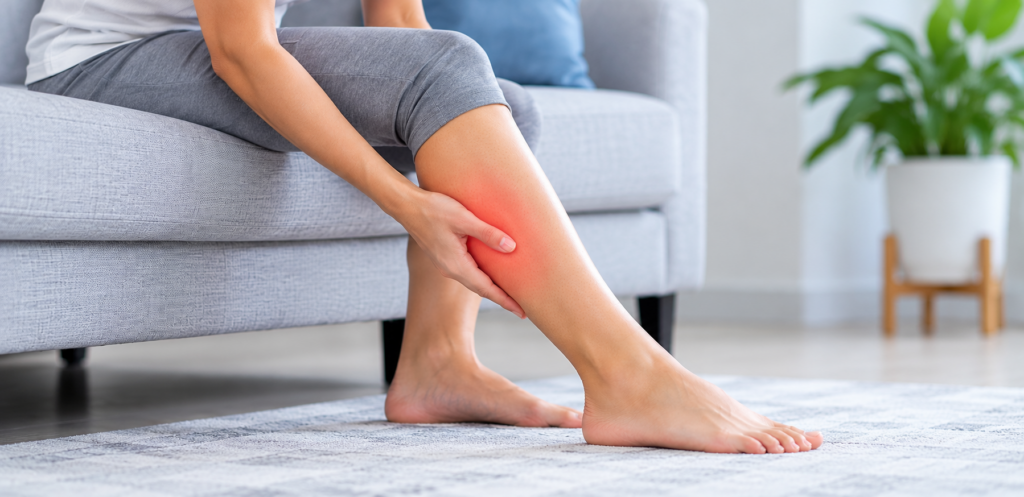


Your legs feel fine when you wake up. You get ready for work, drive through Mesa, spend hours standing or sitting, and continue with your daily routine. But by late afternoon, something changes. Your calves feel tired, your ankles seem slightly swollen, or your legs develop a dull ache that wasn’t there earlier.
If this sounds familiar, you’re not alone. Heavy, aching legs in Mesa, AZ can have several possible causes, including muscle fatigue, prolonged inactivity, and certain vein conditions.
What matters is how your symptoms develop, whether they improve with movement or rest, and whether they keep returning.
This guide explains why legs may feel heavier toward evening, which symptoms to track, and when a professional vein evaluation may be helpful.
Why Do Your Legs Feel Heavy at the End of the Day?
Your leg veins work against gravity to return blood toward your heart. Small valves inside these veins help prevent blood from flowing backward, while your calf muscles assist circulation as you walk.
When you spend long periods standing or sitting, blood can temporarily pool in the lower legs. For some people, this contributes to feelings of heaviness, tightness, or mild swelling.
If the valves inside certain veins are not working properly, blood may flow backward and increase pressure within the veins. This is called venous reflux and can contribute to chronic venous insufficiency.
However, legs feeling heavy at the end of the day do not automatically indicate a vein disorder. Muscle fatigue, medications, joint conditions, and other health concerns may produce similar symptoms.
Understanding the daily pattern can help identify when further evaluation is appropriate.

From Morning to Evening: How Leg Symptoms May Change
One of the most useful ways to understand recurring leg discomfort is to observe how it changes throughout the day.
1. Morning: Your Legs Feel Relatively Comfortable
Some people with vein-related symptoms notice that their legs feel more comfortable after sleeping.
During the night, the legs are generally positioned more horizontally, which can reduce the effects of gravity on blood pooling.
You may wake up without noticeable swelling or aching, even if your legs felt uncomfortable the previous evening.
What to track: Do your legs feel normal when you wake up? Is any swelling present before you begin moving?
2. Midmorning: Standing or Sitting Begins to Add Up
As your day progresses, you may spend several hours at a desk, behind the wheel, or standing at work.
For Mesa residents, this might involve commuting, working in retail or healthcare, or completing errands throughout the East Valley.
Remaining in one position for extended periods can reduce the calf-muscle activity that normally helps move blood through the leg veins.
What to track: How many consecutive hours do you spend sitting or standing? Do short walking breaks change how your legs feel?
3. Afternoon: Heaviness or Aching Becomes Noticeable
By afternoon, some people begin experiencing aching legs after standing or sitting for prolonged periods.
Symptoms may include:
- A dull ache around the calves
- Heavy or tired-feeling legs
- Tightness around the ankles
- Mild throbbing or discomfort
- A sensation of fullness in the lower legs
These symptoms may be more noticeable after a particularly inactive day or a long period on your feet.
What to track: When does discomfort first appear, and does it affect one leg or both?
4. Evening: Your Legs Feel Tired or Swollen
For some people, discomfort becomes most noticeable at the end of the day.
You may notice sock marks around your ankles, shoes feeling tighter than usual, or a heavy sensation that makes you want to sit down.
Tired legs in the evening can occur for several reasons. However, recurring heaviness accompanied by ankle swelling or visible varicose veins may suggest that vein health deserves attention.
What to track: Does swelling develop gradually? Are visible veins becoming more prominent? Does discomfort interfere with walking or relaxing?
5. After Rest: Does Leg Elevation Help?
Some people notice that leg heaviness or mild swelling improves when they rest with their legs elevated.
Elevation can help reduce the effects of gravity on fluid accumulation in the lower legs.
However, improvement with elevation does not confirm a vein condition. Other causes of swelling may also respond to changes in position.
What to track: Does discomfort improve after resting or elevating your legs? How quickly do symptoms return when you resume normal activities?
What Does Your Daily Leg Symptom Pattern Tell You?
Use this simple timeline to record recurring changes.
| Time of day | Symptoms to observe | What to record |
|---|---|---|
| Morning | Comfortable legs or existing swelling | How your legs feel after waking |
| Midmorning | Tightness after sitting or standing | Activity and movement breaks |
| Afternoon | Aching, heaviness, or fatigue | When symptoms begin |
| Evening | Swelling, visible veins, or discomfort | Symptom intensity and location |
| After rest | Improvement or persistent symptoms | Response to walking or elevation |
Tracking these patterns for several days can help you explain your concerns during a medical appointment.
5 Signs Evening Leg Heaviness May Be Related to Vein Problems
Not every episode of leg fatigue indicates a circulation problem. However, certain accompanying symptoms are worth discussing with a healthcare professional.
1. Visible Varicose Veins
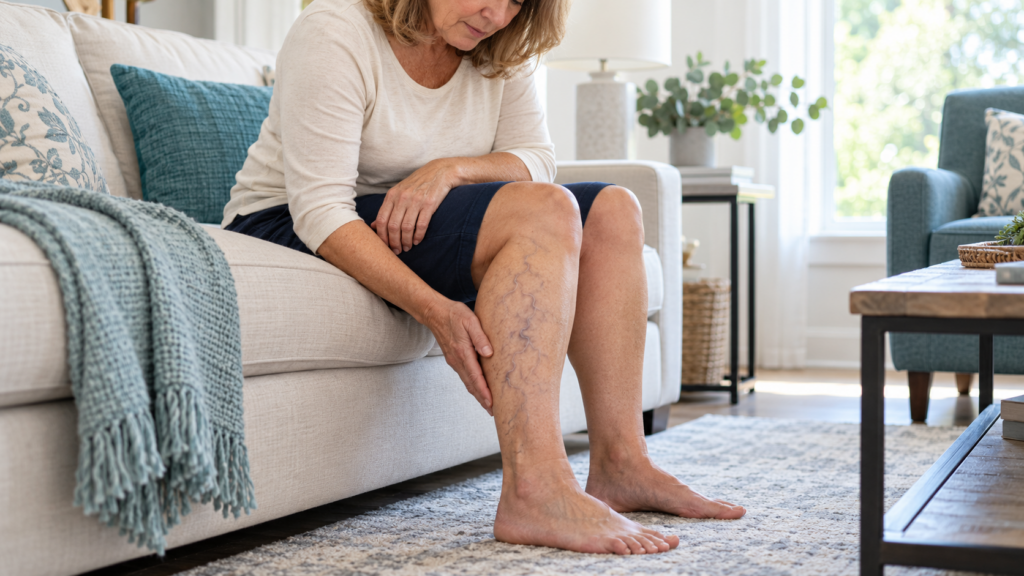
Enlarged, twisted, or bulging veins may indicate increased pressure within superficial leg veins.
Some varicose veins are painless, while others may be associated with aching or heaviness.
2. Recurring Ankle or Lower-Leg Swelling
Swelling that develops during the day and improves overnight can occur with venous insufficiency.
However, leg swelling may also be caused by medications or other medical conditions, so its cause should not be assumed.
3. Aching That Worsens After Prolonged Standing
If your legs regularly become uncomfortable after long periods on your feet, consider recording the pattern.
Vein-related symptoms can sometimes become more noticeable during prolonged standing.
4. Itching or Skin Discoloration
Persistent itching, irritation, or brownish discoloration around the ankles may be associated with chronic venous disease.
Skin changes deserve medical attention, particularly when they are progressing.
5. Symptoms That Keep Returning
Occasional leg fatigue after an unusually active day may be temporary.
However, recurring heaviness, aching, or swelling that interferes with daily activities may warrant evaluation.
Could Mesa’s Hot Weather Be Making Your Legs Feel Heavier?
Mesa’s warm climate can influence daily activity habits and comfort.
Heat can cause blood vessels near the skin to widen, which may make swelling more noticeable in some people. Hot weather can also affect hydration and the amount of time people spend sitting indoors.
However, Mesa’s desert climate should not automatically be blamed for persistent leg heaviness or swelling.
Recurring symptoms may involve vein function or other medical factors that require evaluation.
Instead of focusing only on the temperature, pay attention to whether your symptoms change with activity, prolonged standing, rest, and elevation.
Simple Habits That May Help Mild Leg Heaviness
If your symptoms are mild and you do not have concerning warning signs, certain daily habits may help support leg comfort.
- Take regular walking breaks. Calf-muscle movement helps move blood through the leg veins.
- Avoid prolonged sitting or standing. Change positions when possible throughout the day.
- Elevate your legs when comfortable. This may temporarily reduce mild swelling.
- Stay physically active. Walking and other suitable exercises support circulation and overall health.
- Maintain adequate hydration. This supports general health, especially during warm weather.
- Ask about compression stockings. A healthcare professional can help determine whether compression is appropriate for your symptoms.
These strategies may help some people manage mild discomfort, but they cannot correct every underlying vein problem.
When Should You See a Vein Specialist in Mesa, AZ?
Consider scheduling a professional evaluation if you experience:
- Leg heaviness or aching on most evenings
- Recurring ankle or lower-leg swelling
- Bulging or increasingly noticeable varicose veins
- Persistent itching or skin discoloration
- Symptoms that interfere with walking, work, or daily activities
- Discomfort that continues despite reasonable activity adjustments
Seek prompt medical attention if one leg suddenly becomes swollen, painful, red, or warm, as this can indicate a blood clot (deep vein thrombosis).
Sudden shortness of breath, chest pain, or coughing up blood requires emergency care.
A vein evaluation can help determine whether venous insufficiency or another condition may be contributing to your symptoms.
What Happens During a Vein Evaluation at MVM Health in Mesa?
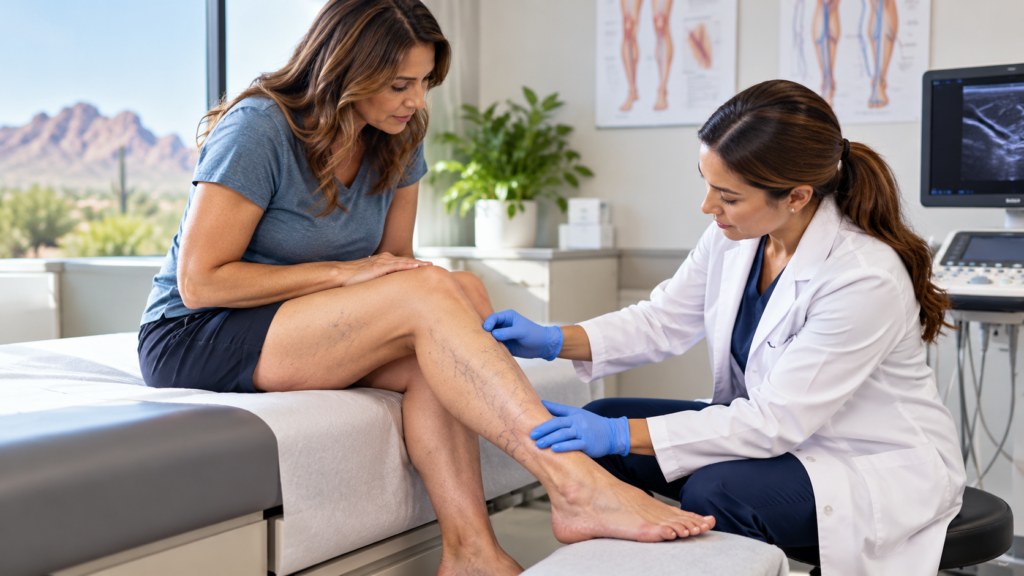
At MVM Health, a vein evaluation begins with understanding your symptoms and how they change throughout the day.
Your provider may ask when your legs begin feeling heavy, whether swelling develops, and whether rest or elevation changes your discomfort.
A physical examination may include checking for enlarged veins, swelling, tenderness, or skin changes.
When clinically appropriate, a duplex ultrasound may be recommended to assess blood flow and evaluate how the vein valves are functioning.
Depending on the findings, your provider can discuss suitable management or treatment options based on your individual needs.
You can learn more about available services on our Mesa Vein Treatment page.
Evening Leg Heaviness Keeps Returning? Talk With Our Mesa Vein Team
Heavy or aching legs at the end of the day can be frustrating, particularly when symptoms repeatedly affect your comfort and daily routine.
At MVM Health, our Mesa vein care team provides personalized evaluations for patients experiencing varicose veins, leg swelling, aching, and other possible vein-related symptoms.
Noticing recurring evening leg heaviness?
Book a vein evaluation at MVM Health. Understanding what’s contributing to your discomfort is the first step toward exploring appropriate care.
Frequently Asked Questions
Why do my legs feel heavy and achy at night?
Leg heaviness in the evening may result from prolonged standing, sitting, muscle fatigue, or fluid accumulation. In some people, it may be associated with venous insufficiency. Recurring symptoms should be evaluated rather than attributed to one cause.
Can poor circulation cause aching legs after standing?
Certain circulation problems, including chronic venous insufficiency, can contribute to leg aching or heaviness after prolonged standing. However, aching legs can also have muscular, joint-related, or other causes.
Why does elevating my legs make them feel better?
Elevation can help reduce the effects of gravity on blood and fluid accumulation in the lower legs. Temporary improvement may occur with several conditions and does not confirm a vein disorder.
Are heavy legs a sign of varicose veins?
They can be. Varicose veins may be associated with aching, heaviness, swelling, or discomfort. However, heavy legs can occur without visible varicose veins, and a medical evaluation may be needed to identify the cause.
Can Mesa’s hot weather cause leg swelling?
Heat may make mild swelling more noticeable in some people because blood vessels near the skin widen. However, persistent or recurring swelling should not automatically be attributed to hot weather.
When should I see a vein specialist for evening leg discomfort?
Consider an evaluation if leg heaviness, aching, or swelling keeps returning, worsens, or interferes with daily activities. Sudden one-sided swelling or other concerning symptoms may require urgent medical assessment.