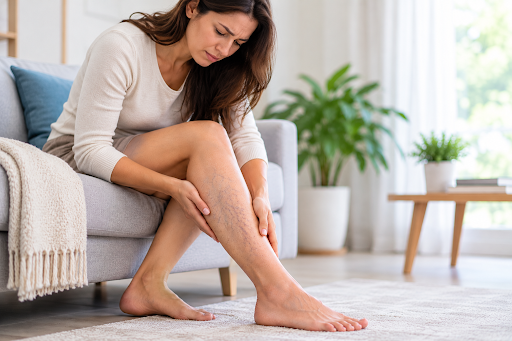

You notice it at the end of a long shift or after an afternoon of errands at the King of Prussia Mall. Your legs feel heavy, your ankles look a little puffy, and that vein behind your knee seems bigger than it did last year. So you start searching, and suddenly you’re reading about laser treatment, VenaSeal® and sclerotherapy, each one sounding a little different from the last.
Here’s the good news: all three are well-established, office-based treatments, and none of them looks anything like the old vein stripping surgery your parents may remember. The tricky part is knowing which one actually fits your legs.
It’s a question our team at the Pain, Vein & Wellness Clinic in King of Prussia hears often. Below, we break down how each option works, who it’s best for and what to expect from your first visit through recovery, so you can approach vein treatment in King of Prussia, PA, feeling prepared.
Every Vein Treatment Starts With the Same Goal
Leg veins use tiny one-way valves to carry blood back to the heart. When those valves weaken, blood pools and the veins stretch, causing bulging veins, swelling, cramping and a heavy, tired feeling. Over time, some people develop chronic venous insufficiency, with skin changes near the ankles.
Almost every modern treatment fixes this the same way: it closes the faulty vein so blood reroutes through healthier veins nearby. What changes from one option to the next is how the vein is closed and which veins each method handles best.
Your Evaluation Decides Which Option Fits
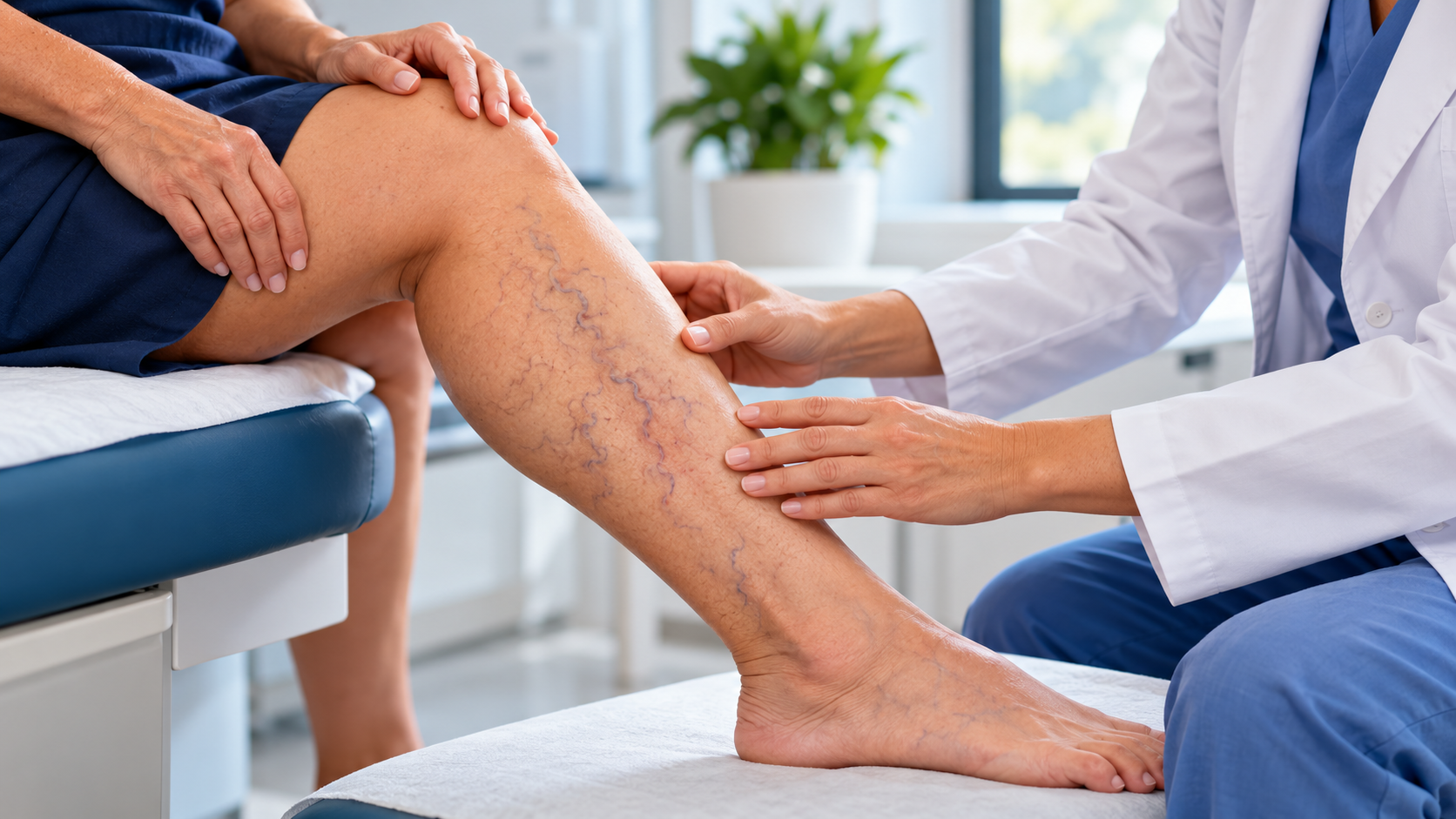
You don’t have to pick a treatment on your own. At MVM Health, our board-certified vein specialists and nurse practitioners start by asking about your symptoms, then examine your legs. An ultrasound may be recommended to check vein size, depth and blood flow, the details that point to the right treatment.
To get the most from that first visit:
- Wear loose pants or shorts so your legs are easy to examine
- Bring your insurance card, photo ID and a list of current medications
- Note when symptoms are worst, such as after work or on hot days
- Bring records of any past vein treatment or imaging
Sclerotherapy: The Usual Choice for Spider Veins
Sclerotherapy uses a fine needle to inject a solution into small veins. The solution irritates the vein wall so it closes and gradually fades. It’s most often used for spider veins and small varicose veins close to the skin.
There’s no catheter and no heat, and you can walk right away. Mild bruising is common, and treated veins fade over several weeks. Many people need more than one session for the look they want.
Laser and Radiofrequency Ablation: Heat-Based Options for Larger Veins
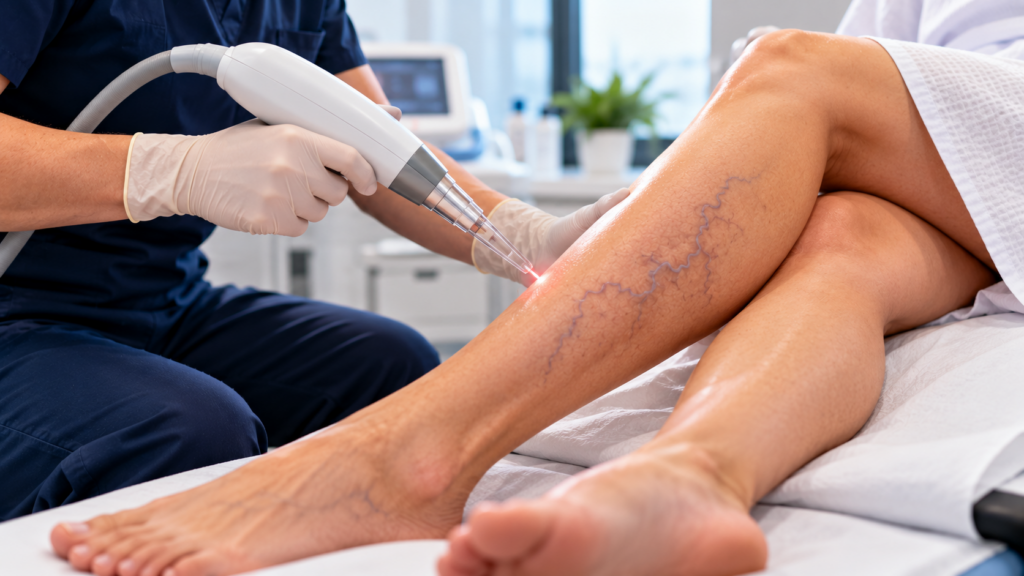
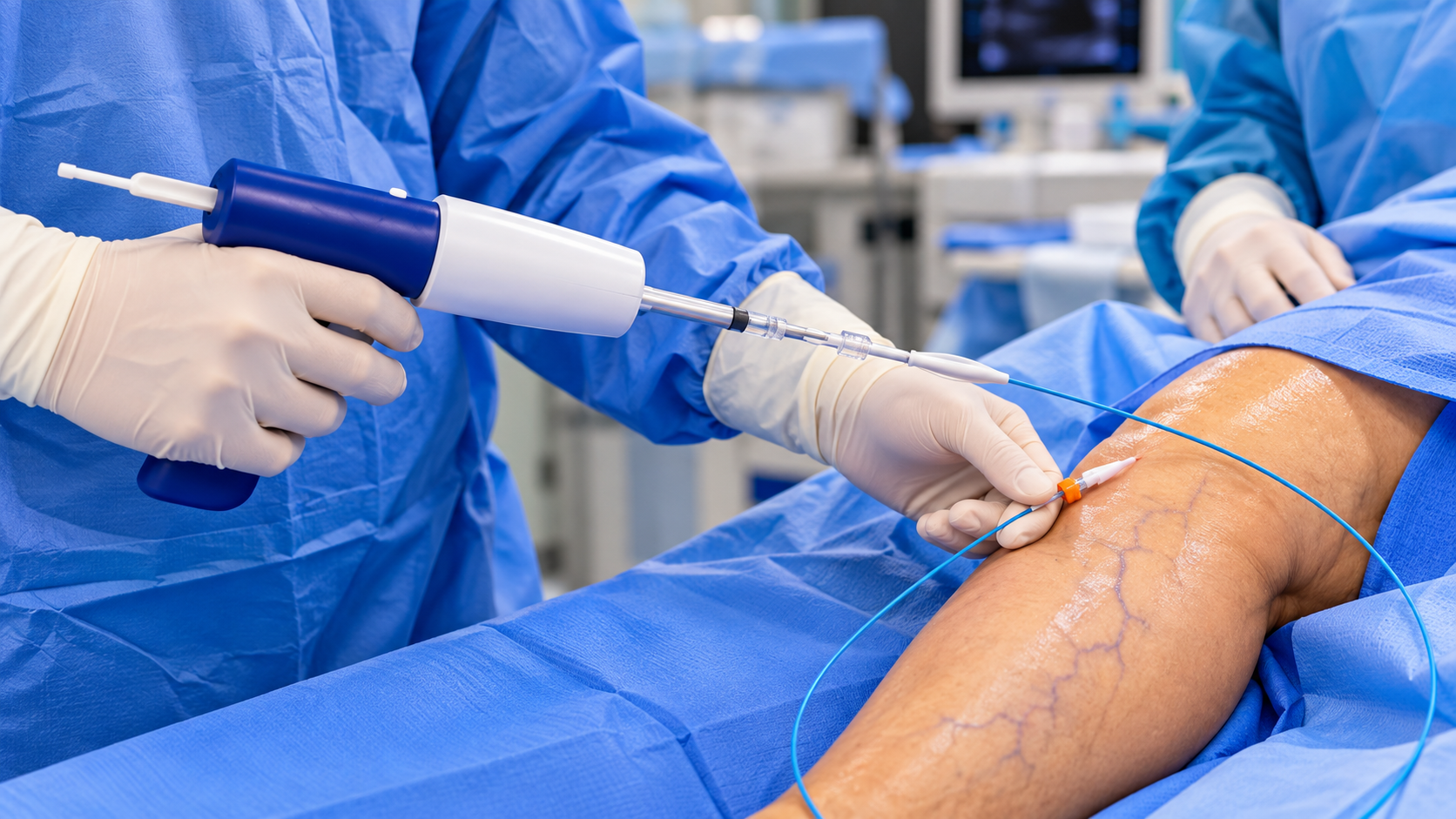
When a larger vein deeper in the leg is causing heaviness, aching or swelling, heat-based closure is a common choice. Endovenous laser treatment and radiofrequency ablation both use a thin catheter placed through a tiny entry point. Laser or radiofrequency energy then seals the vein from the inside.
Both are done with local numbing, and most patients walk out the same day. Compression stockings are usually worn for a short time afterward. Your provider may prefer one over the other based on the size and path of your vein.
VenaSeal: Closing Veins Without Heat
VenaSeal® treats the same larger veins as laser and RFA but uses a medical adhesive instead of heat. Because no heat is used, it needs fewer numbing injections along the leg, and many patients return to normal routines quickly. It isn’t the right fit for everyone, so your provider will check whether you’re a good candidate.
Other Options Your Provider May Suggest
Some veins call for a different tool. Varithena® uses a prescription foam to fill and close twisted or hard-to-reach varicose veins. Ambulatory phlebectomy removes large, rope-like surface veins through tiny nicks. Many patients combine treatments, such as ablation for the main vein followed by sclerotherapy for smaller branches.
Comparing Your Options at a Glance
| Treatment | Best suited for | How it closes the vein | Typical recovery |
| Sclerotherapy | Spider veins, small varicose veins | Injected solution | Walk right away; veins fade over weeks |
| Laser treatment | Larger, deeper varicose veins | Laser heat through a catheter | Walk the same day; short-term compression |
| Radiofrequency ablation | Larger veins, venous insufficiency | Radiofrequency heat through a catheter | Walk the same day; short-term compression |
| VenaSeal® | Larger veins in suitable patients | Medical adhesive, no heat | Often a quick return to routines |
| Varithena® | Twisted or hard-to-reach veins | Prescription foam | Walk the same day |
| Ambulatory phlebectomy | Bulging surface veins | Removal through tiny nicks | Walk the same day; small marks fade |
For a deeper look, read our side-by-side comparison of RFA, VenaSeal, sclerotherapy and more (link to the pillar post once live). You can also learn how we approach vein treatment in King of Prussia, PA on our local vein page.
Recovery, Cost and Coverage Can Tip the Decision
When two treatments could both work, practical factors often decide. If you want the quickest return to routine, VenaSeal or sclerotherapy may appeal. If insurance coverage matters most, it helps to know that treatment for symptoms like pain, swelling or skin changes is often covered as medically necessary, while spider vein care for appearance is usually self-pay. Some plans ask for an ultrasound or a trial of compression stockings first.
Our team verifies your benefits and explains expected costs before you commit. After treatment, staying active and keeping a healthy weight supports your veins, and some patients add a provider-guided medical weight loss program to their plan.
Ready to Find the Right Fit for Your Legs?
You don’t need to know whether laser, VenaSeal or sclerotherapy is right for you before you reach out. That’s our job. In one visit, a King of Prussia vein specialist will look at what’s going on, walk you through your options and give you a clear plan, with no pressure to decide on the spot.
When the Problem Isn’t Your Veins
Not every aching leg needs vein treatment. Pain that shoots, burns or tingles down one leg often comes from a pinched nerve in the lower back. Because MVM Health also offers pain treatment in King of Prussia in the same clinic, your provider can check both and make sure you choose the right care.